Home › Best Wet/Dry Shop Vacs
Independently tested. Never sponsored
The Best 6.5 Peak HP Wet/Dry Shop Vacs of 2026
A powerful shop vac should make garage, workshop, and wet cleanup easier. We bought five 6.5 peak HP wet/dry vacuums and compared their power, pickup, attachments, and everyday usability. Craftsman earned both best overall and best value in that comparison, with Ridgid and the steel-tank Vacmaster rounding out our top three.
Our recommendations come from independent, unsponsored studio evaluations. We bought the five shop vacuums in this comparison and looked at measured performance alongside the practical details that affect everyday cleanup.
The tests covered suction and airflow, heavy debris, water and hard-floor pickup, car-cleaning attachments, handling, storage, noise, and filtration. Value reflects the prices available at the time of the comparison; check retailer links for current pricing.
The ranking
Our Top 3 Wet/Dry Shop Vac Picks
Best overall and best value: Craftsman CMXEVBE17595. Runner-up: Ridgid NXT 16-gallon. Third overall: Vacmaster Beast 14-gallon steel tank.
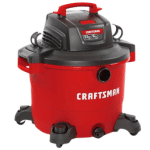
Craftsman CMXEVBE17595 16-Gallon Wet/Dry Vacuum
The Craftsman CMXEVBE17595 earned both our best overall and best value awards in our five-model shop-vac comparison. It posted the highest Power Score and led our heavy-debris test, while finishing a close second in water pickup. We also liked its useful attachments, including a claw tool for car cleaning, and its practical tool storage and cord and hose management. Its 16-gallon tank, 7-foot hose, and 20-foot cord make it a versatile setup for larger wet and dry cleanup jobs. Its strong performance across the tests, rather than its advertised horsepower alone, made it our top pick. See additional info
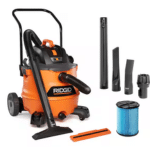
Ridgid NXT 16-Gallon Wet/Dry Vacuum
The Ridgid NXT 16-Gallon finished second overall in our five-model comparison and was the best performer in our water-pickup test. Its Power Score of 276 was also second in the group. We liked its attachment set: the squeegee worked well on water and hard-floor debris, and the included claw tool was useful for car cleaning. The 7-foot hose, 20-foot cord, and 16-gallon tank provide a practical setup for larger jobs. Its large rear wheels helped when moving it between locations, although it did not follow us around during cleaning as easily as models with four caster wheels. See additional info
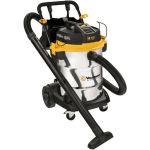
Vacmaster Beast VJE1412SW0201 14-Gallon
The Vacmaster Beast VJE1412SW0201 placed third overall in our five-model comparison, with a Power Score of 250. Its 14-gallon steel tank set it apart from the plastic drums in the group, and it had our favorite tool-storage layout, along with useful cord and hose management. We also appreciated its locking wheel, a feature the other tested models lacked. Its main weakness was the attachment package: the supplied squeegee struggled with water and fine debris, and there was no dedicated claw tool for car cleaning. It finished fourth in the water-pickup test, so storage and handling were stronger reasons to choose it. See additional info
About this comparison
The rankings, test figures, and video on this page describe our original comparison of these five models. They explain why we chose Craftsman, Ridgid, and the 14-gallon Vacmaster. Prices, availability, and included accessory packages can change, so confirm the model and package when shopping.
Buying guide
How to choose the best wet/dry shop vac
How we tested 6.5 peak HP shop vacs
A shop vacuum needs to do more than move a lot of air. It should pick up the debris you encounter, handle water with the right setup, and give you useful places to store its tools. We bought five models with the same advertised 6.5 peak HP rating to see how those details affected performance.
The five wet/dry shop vacs we tested
- Craftsman CMXEVBE17595: 16-gallon wet/dry vacuum.
- Ridgid NXT: 16-gallon wet/dry shop vacuum.
- Vacmaster Beast VJE1412SW0201: 14-gallon model with a steel tank.
- Vacmaster Beast VJH1612PF0201: 16-gallon model with a black plastic tank.
- Workshop WS1600VA: 16-gallon wet/dry vacuum.

What all five had in common
Each model came with a 7-foot hose, a 20-foot power cord, and 2.5-inch attachments. Those shared dimensions made the comparison useful: differences in pickup could not simply be explained by one vacuum having a much longer hose or a completely different attachment size.

We compared suction and airflow, heavy-debris pickup, water pickup, hard-floor debris pickup, and the tools supplied for cleaning a car. We also considered handling, storage, noise, filtration, and the prices available when we ran the comparison.
Peak horsepower, suction, and airflow
What peak HP tells you
All five vacuums were advertised at 6.5 peak horsepower. Peak HP is a motor test rating used for comparison; it does not describe the power a wet/dry vacuum continuously delivers during normal cleaning. The manufacturer’s peak-horsepower explanation makes that distinction.
Suction and airflow
We looked beyond that shared rating by comparing suction and airflow. The five shop vacs averaged approximately 197 CFM of airflow. For context, the upright vacuums in our comparison data at the time averaged about 83 CFM at the hose. These are figures from those tested groups, rather than a claim that every shop vacuum will double an upright’s airflow.
How we used the Power Score
For this comparison, we added each vacuum’s maximum airflow and suction readings to create a Power Score. It was a way to compare this group, and we considered it alongside the pickup tests and practical features.
The Craftsman led with 303, followed by Ridgid at 276, Workshop at 271, and the 14-gallon Vacmaster at 250. The black 16-gallon Vacmaster trailed at 190. The strongest suction figure alone belonged to the 14-gallon Vacmaster, while the Craftsman had the highest airflow and combined score.
Heavy-debris pickup
We challenged each vacuum with progressively heavier nut-and-bolt combinations. The results followed the same general pattern as the Power Scores: the Craftsman performed best, while the black 16-gallon Vacmaster struggled most.

This was one reason the Craftsman stood out for workshop cleanup. Its strong airflow and combined power result were backed up by a practical pickup test, rather than resting on the advertised horsepower rating alone.
Water pickup and wet-use setup
All five vacuums included a wide squeegee attachment and two extensions for cleaning water from a floor. We found that having those tools was only part of the equation: the way the squeegee met the floor also affected pickup.

The Ridgid NXT finished first, with the Craftsman very close in second. Workshop placed third, the 14-gallon steel-tank Vacmaster fourth, and the black 16-gallon Vacmaster fifth. We had more difficulty removing water with the supplied squeegees on both Vacmaster models.
If floor-water cleanup is your main priority, Ridgid’s result gives it an advantage in this comparison. The Craftsman remains a strong alternative because its water pickup was close while its heavy-debris performance was better.
Prepare the vacuum for wet pickup
Use a vacuum specifically rated for wet pickup and follow its manufacturer’s instructions before collecting water. The required bag and filter arrangement can differ from the setup for dry debris, so check the manual for the model you own.
Hard-floor debris and car-cleaning tools
Hard-floor debris pickup
We tested debris pickup on hard floors with workshop messes such as sawdust and fine material in mind. The squeegee attachments on the Craftsman, Ridgid, and Workshop worked well. The openings on the two Vacmaster squeegees were too small for good performance in this test.

Each vacuum also included a utility tool. With that tool, all five performed about the same on a mix of smaller and larger debris. It required more care to guide across the floor because the opening could seal against the surface unless we maintained a little space.
Claw tools for cleaning a car
For vehicle interiors, we preferred the claw attachment, also called a car tool. Craftsman, Ridgid, and Workshop included one, and all three worked similarly well in our comparison.
Neither Vacmaster included a claw tool in the package we tested. We used their utility attachments instead and found them less effective for that job. If car cleaning will be a regular task, check the included tools before comparing prices. Our best car vacuum guide covers additional options for vehicle cleanup.
Tank size, wheels, and handling
The Craftsman, Ridgid, black Vacmaster, and Workshop all had 16-gallon tanks. The steel-tank Vacmaster was the exception at 14 gallons. It was also the only steel drum in the group; the other four used plastic.
Ridgid and the 14-gallon Vacmaster used two larger rear wheels. We liked that arrangement for moving the vacuum from one location to another, although those models did not follow us around while cleaning as easily as the three models with four caster wheels.

The 14-gallon Vacmaster’s locking wheel was a useful extra. It was the only model in this comparison that let us lock a wheel to help keep the vacuum in place.
When choosing a tank size, think about where you will store the vacuum and how often you will move it around furniture, a vehicle, or a workshop. In this group, the wheel arrangement was a meaningful difference even though the overall shapes were similar.
Storage, noise, and filtration
Tool, cord, and hose storage
The 14-gallon Vacmaster was our favorite for tool storage, with a place for every included attachment. Its cord and hose management also worked well. Craftsman had a practical storage layout too, which helped make it a balanced overall choice.

Workshop had the weakest storage design in this group. It lacked a place to wrap the cord and had very little spare room for the attachments. Those details matter when you want to put everything away quickly after a job.
Noise
All five were loud, but the Workshop was noticeably louder and higher-pitched than the others. We found that sound particularly unpleasant. The remaining four were closer together, so noise did less to separate them.
Filtration
We evaluated filtration and did not find a meaningful difference between these five vacuums in our test, even though some were advertised with different filter claims. Filtration therefore did little to change the order of this particular comparison.
Results for all five shop vacs
The following results come from the original five-model comparison. Each vacuum was rated at 6.5 peak HP and came with a 7-foot hose, 20-foot cord, and 2.5-inch attachments. Airflow, Power Score, water-pickup placement, and the noise assessments reflect our independent testing; the suction and capacity figures are those reported in the original comparison.
Craftsman CMXEVBE17595
Airflow: 248 CFM. Reported suction: 55 inches. Power Score: 303. Water pickup: second. Tank: 16 gallons. Noise: loud. Craftsman had the highest airflow and Power Score and won our heavy-debris test.
Ridgid NXT 16-gallon
Airflow: 219 CFM. Reported suction: 57 inches. Power Score: 276. Water pickup: first. Tank: 16 gallons. Noise: loud. Ridgid paired strong power with the best floor-water pickup in the group.
Vacmaster Beast VJE1412SW0201, 14-gallon steel tank
Airflow: 162 CFM. Reported suction: 88 inches. Power Score: 250. Water pickup: fourth. Tank: 14 gallons. Noise: loud. This Vacmaster had the highest reported suction, useful storage, and a locking wheel, but the supplied squeegee held back its floor pickup.
Vacmaster Beast VJH1612PF0201, 16-gallon plastic tank
Airflow: 131 CFM. Reported suction: 59 inches. Power Score: 190. Water pickup: fifth. Tank: 16 gallons. Noise: loud. This model had the lowest airflow and Power Score and struggled most with heavy debris, although utility-tool pickup was similar across the group.
Workshop WS1600VA
Airflow: 225 CFM. Reported suction: 46 inches. Power Score: 271. Water pickup: third. Tank: 16 gallons. Noise: very loud. Workshop’s strong airflow and useful floor and car tools were offset by its noise and less convenient storage.
Which shop vac should you choose?
Best overall and best value: Craftsman CMXEVBE17595
The Craftsman CMXEVBE17595 was the most complete package in this group. It led the combined Power Score and heavy-debris test, finished a close second for water pickup, and included well-designed tools for common jobs.

Its practical tool holders, cord storage, and hose management also made it easy to live with. At the prices available when we ran the comparison, that balance earned it best overall and best value.
Runner-up: Ridgid NXT 16-gallon
The Ridgid NXT 16-gallon finished just behind Craftsman overall and led the water-pickup test. It also had a useful set of attachments, including the claw tool for car interiors. Its larger rear wheels were helpful for transport, though we preferred four casters when pulling a vacuum around during a job.
Third overall: Vacmaster Beast 14-gallon steel tank
The Vacmaster Beast VJE1412SW0201 stood out for its steel tank, excellent tool storage, and locking wheel. It finished third overall, making it an option for buyers who place a high value on those practical features.
Its limitations were the supplied squeegee and lack of a claw tool in the tested package. It placed fourth in floor-water pickup, so Ridgid or Craftsman would be our stronger choices for that particular job.
Price and value
The five models were in a similar price range when we tested them. From highest to lowest at that time, they were the steel-tank Vacmaster, Ridgid, black Vacmaster, Craftsman, and Workshop. Those prices helped Craftsman earn the value award, but retailer pricing can change. Check the product links above when comparing today’s options.

Watch our wet/dry shop-vac comparison
The video shows the original comparison of these five models. Use the chapters above to revisit the results for power, floor-water pickup, attachments, handling, and storage.
Why trust us
We buy and test the shop vacs ourselves
We purchased all five vacuums for this comparison and tested them in our studio. Our recommendations weigh cleaning results alongside attachments, handling, storage, and value. We do not accept free products from manufacturers or participate in sponsored reviews.
Independently purchasedIndependent studio testsTransparent methodsNever sponsored
FAQ
Frequently asked questions about wet/dry shop vacs
What is the best 6.5 peak HP wet/dry shop vac?
The Craftsman CMXEVBE17595 earned best overall and best value in our five-model comparison. It combined the highest Power Score with strong pickup, useful attachments, and practical storage. Ridgid NXT was our runner-up.
Which shop vac was best at picking up water?
The Ridgid NXT finished first in our floor-water pickup test, followed closely by Craftsman. Workshop placed third, the 14-gallon steel-tank Vacmaster fourth, and the black 16-gallon Vacmaster fifth. These results reflect the supplied floor attachments used in our comparison.
How many horsepower should a shop vac have?
Choose a shop vac for the cleanup tasks, tank size, reach, and attachments you need, then compare its pickup results. The peak-horsepower label alone is not enough: all five models here were rated at 6.5 peak HP, yet their airflow and pickup performance differed substantially.
What is considered a strong shop vac?
We look at suction, airflow, and practical pickup results together. In this group, Craftsman produced the highest airflow and combined Power Score and performed best with heavy debris. The steel-tank Vacmaster had the highest reported suction figure, showing why one specification does not tell the whole story.
What does peak HP mean for a wet/dry shop vac?
Peak HP is a motor test rating used to compare products. It is not the horsepower a wet/dry vacuum continuously produces in normal use. See the manufacturer’s explanation of peak horsepower. Compare airflow, suction, and pickup results as well as the advertised rating.
Is it OK to vacuum water with a shop vac?
Yes, if the model is specifically designed for wet pickup. Follow its manufacturer’s instructions for the correct filter and bag setup before collecting water. A wide squeegee tool and extension wands can make floor cleanup easier; all five models in this comparison included those attachments.
Which of these shop vacs is good for cleaning a car?
Craftsman, Ridgid, and Workshop included claw tools that performed similarly well in our car-cleaning comparison. The two Vacmasters did not include a claw tool in the packages we tested, and their utility tools were less effective for that task. See our best car vacuum guide for more options.
What is different about the two Vacmaster Beast models?
The VJE1412SW0201 has a 14-gallon steel tank, larger rear wheels, a locking wheel, and particularly good tool storage. The VJH1612PF0201 has a 16-gallon plastic tank and four casters. The steel-tank model scored 250 for combined power versus 190 for the plastic model and finished ahead of it in water pickup.