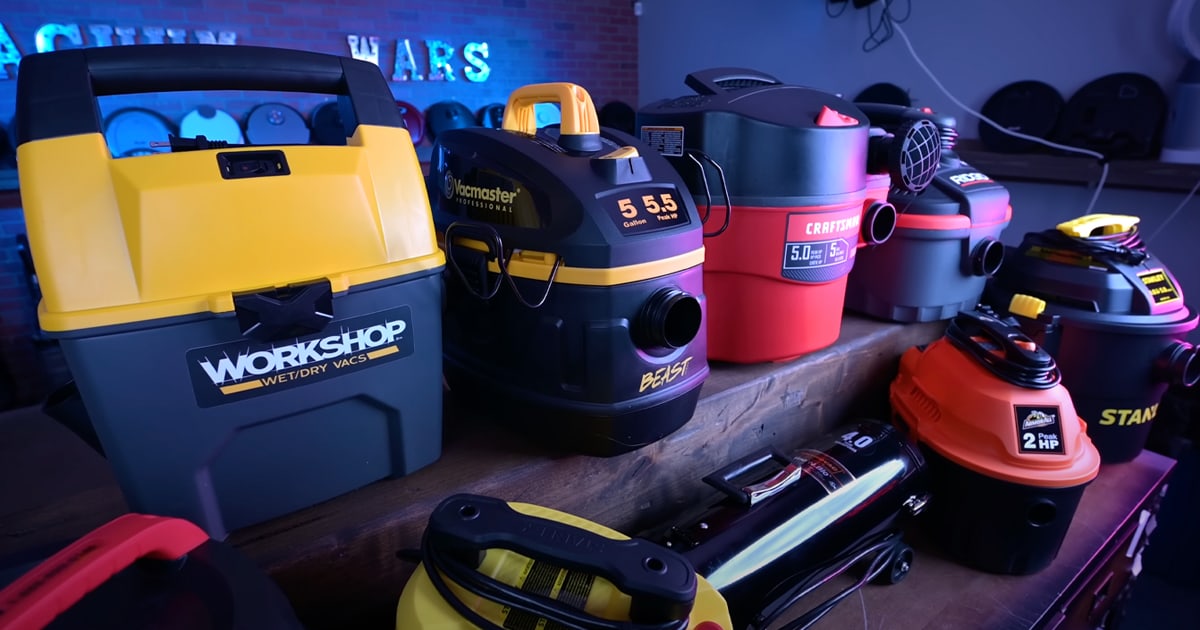
People searching for the best vacuum for car cleaning are often presented with small cordless models that look convenient but may not have enough power to clean embedded dirt, sand, crumbs, and pet hair from automotive carpet and upholstery.
After independently evaluating every major type of vacuum that could reasonably be used inside a vehicle, our conclusion is straightforward: the Armor All AA255W 2.5-gallon wet/dry vacuum is the best car vacuum for most people.
We reached that conclusion after testing Shop-Vac-style wet/dry vacuums, full-size cordless vacuums, handheld Dustbuster-style models, miniature battery-powered vacuums, vacuums that plug into a vehicle’s DC outlet, and even professional coin-operated car vacuums. Each category has advantages, but the Armor All AA255W provides the best overall combination of suction power, portability, useful car-cleaning attachments, and affordability.
Armor All AA255W
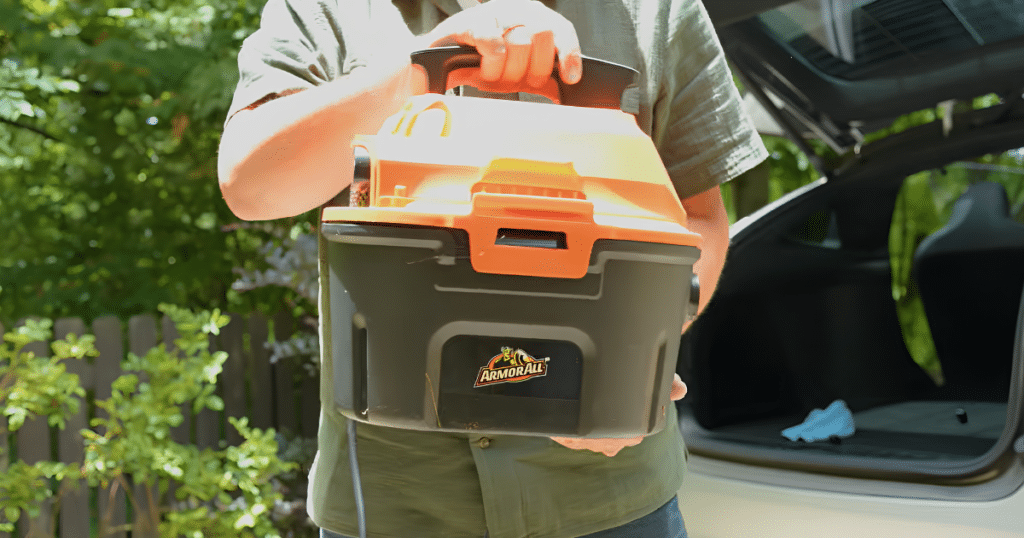
The Armor All AA255W is our pick for the best car vacuum for most people, combining strong suction, a compact design, and useful detailing tools at an affordable price. In our studio testing, it measured 66 inches of water-lift suction, slightly above our wet/dry vacuum average. Its 2.5-gallon body is easy to carry around a vehicle, while the included claw nozzle and small detailing brushes help clean carpets, upholstery, vents, and tight gaps. It needs an electrical outlet and may require an extension cord. Heavily embedded pet hair may also need a separate brush or manual tool to loosen it. See additional info
What Should You Look for When Buying a Vacuum for Car Cleaning?
The four most important considerations when choosing a vacuum for a car are:
- Suction power
- Portability
- Proper automotive attachments
- Overall value
Many products satisfy one or two of these requirements. Far fewer provide all four.
A small cordless vacuum may be easy to store, for example, but convenience does not help much if the vacuum cannot remove sand from automotive carpet. A large wet/dry vacuum may provide excellent suction, but it can be cumbersome to move around a vehicle. The best car vacuum must balance cleaning ability with practical day-to-day usability.
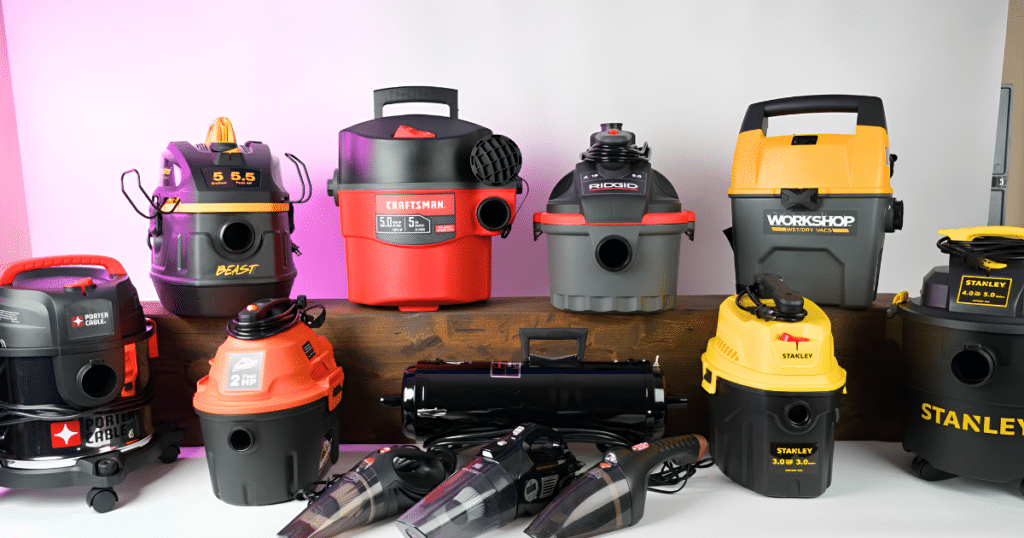
Why Suction Power Matters More When Vacuuming a Car
One of the most common mistakes people make when shopping for a car vacuum is prioritizing size and cordless convenience over suction.
Car interiors are more difficult to vacuum than they initially appear. Sand, soil, crumbs, and pet hair become embedded in dense carpet and upholstery fibers. Removing that material requires considerably more pulling force than collecting loose debris from a kitchen counter.
Small attachments also create a different cleaning environment than a full-size vacuum floorhead. When vacuuming narrow gaps between seats or cleaning automotive fabric with a compact nozzle, suction becomes especially important.
There are situations in floor care where raw suction is not the primary factor determining cleaning performance. Cleaning a car interior is not one of them.
Are Mini Cordless Car Vacuums Powerful Enough?
In our experience, most miniature battery-powered vacuums marketed specifically for cars are not powerful enough for thorough automotive cleaning. These models have become especially prominent in online marketplace results. They are compact, lightweight, and often designed to look more powerful than they are. Many can collect loose crumbs or surface dust, but they frequently struggle with debris embedded in carpet and fabric.
In our studio evaluations, the miniature battery-powered car vacuums we tested averaged approximately 5 inches of water lift. By comparison, the professional coin-operated car vacuums we evaluated averaged approximately 75 inches of water lift. That makes the miniature cordless category roughly 15 times weaker than the strongest category in this comparison. A tiny cordless vacuum can still be useful for occasional touch-ups. It should not, however, be confused with a vacuum capable of deep-cleaning automotive carpet and upholstery.
Car Vacuum Suction Comparison
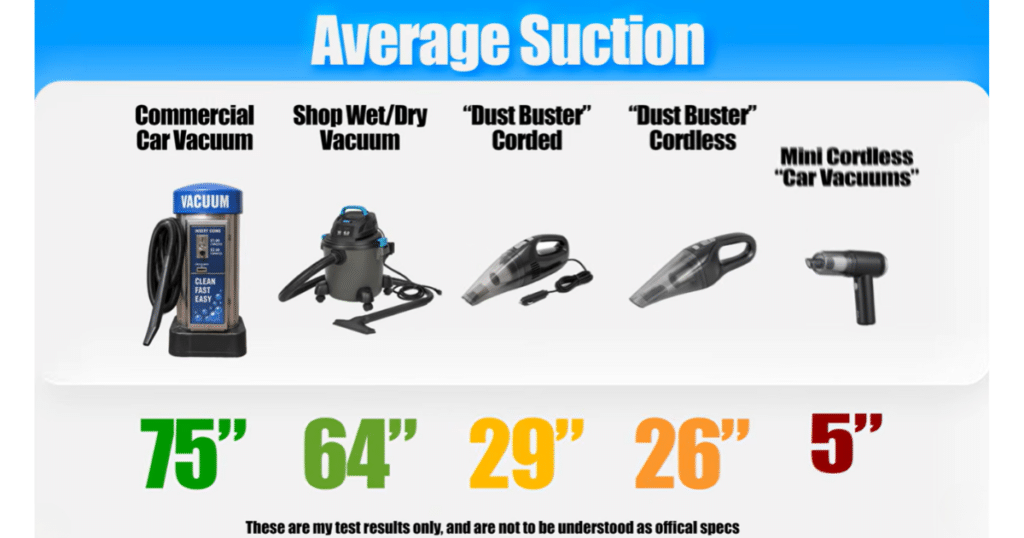
The following averages are based on the vacuum categories we evaluated:
| Car vacuum type | Average suction |
|---|---|
| Professional coin-operated car vacuum | 75 inches of water lift |
| Shop vacuum or wet/dry vacuum | 64 inches of water lift |
| DC-powered Dustbuster-style car vacuum | 29 inches of water lift |
| Larger handheld Dustbuster-style vacuum | 26 inches of water lift |
| Mini battery-powered car vacuum | 5 inches of water lift |
These results explain why wet/dry shop vacuums remain difficult to beat for automotive cleaning.
A well-designed compact shop vacuum can provide suction approaching that of a professional car-wash vacuum while remaining small enough for home use.
What Type of Vacuum Is Best for Removing Sand From Car Carpet?
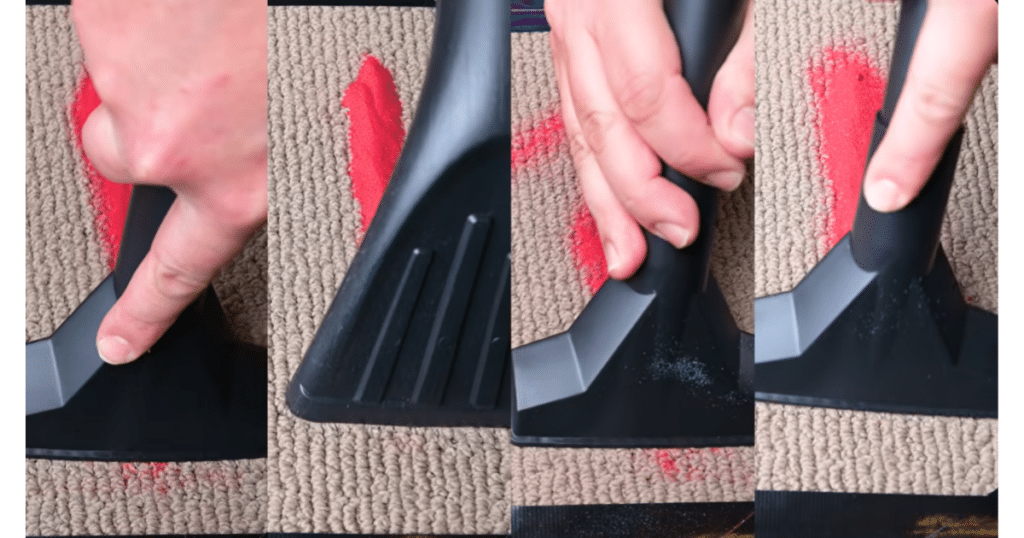
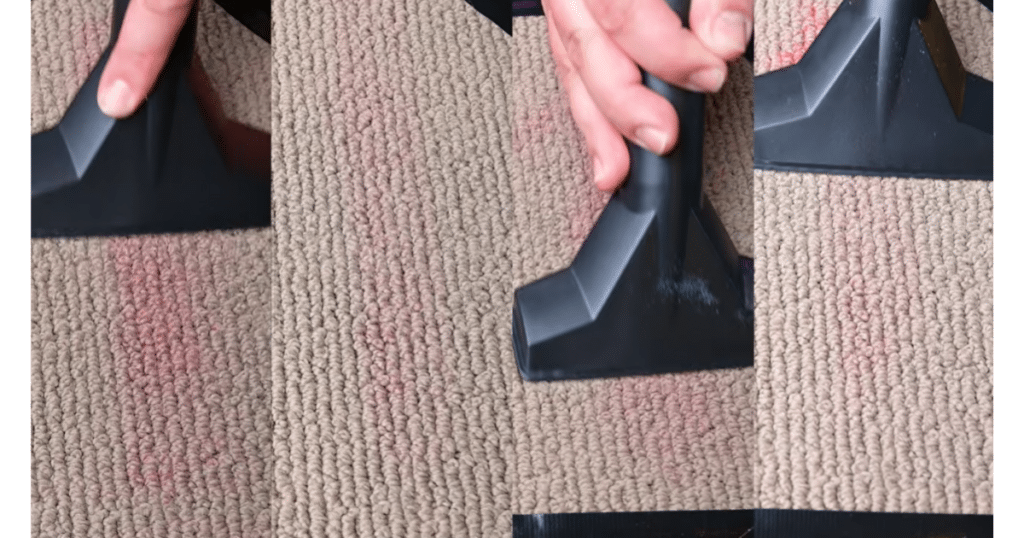
A compact corded wet/dry vacuum is generally the best choice for removing sand from automotive carpet. Sand settles between carpet fibers and can be difficult to remove with weak suction.
A small battery-powered vacuum may collect the visible material at the surface while leaving much of the embedded debris behind.
The combination of strong suction and a narrow automotive nozzle allows a wet/dry vacuum to pull material from deeper within the carpet. Agitating the carpet with a stiff brush before vacuuming can also improve sand removal, particularly on floor mats and heavily textured automotive carpeting.
What Is the Best Car Vacuum for Pet Hair?
For car owners dealing with pet hair, suction and attachment design are both important. Pet hair can cling tightly to seat fabric, floor mats, and cargo-area carpeting. A strong vacuum helps, but the correct tool is also necessary to loosen the hair from the upholstery.
The Armor All AA255W is a strong general-purpose choice for car owners with moderate pet-hair needs because it combines substantial suction with useful detailing attachments.
For heavily embedded pet hair, a rubberized upholstery tool, pet-hair brush, or separate manual pet-hair remover may still be helpful. No vacuum attachment can always release deeply woven hair without some form of agitation.
Why Not Use a Powerful Cordless Stick Vacuum in a Car?
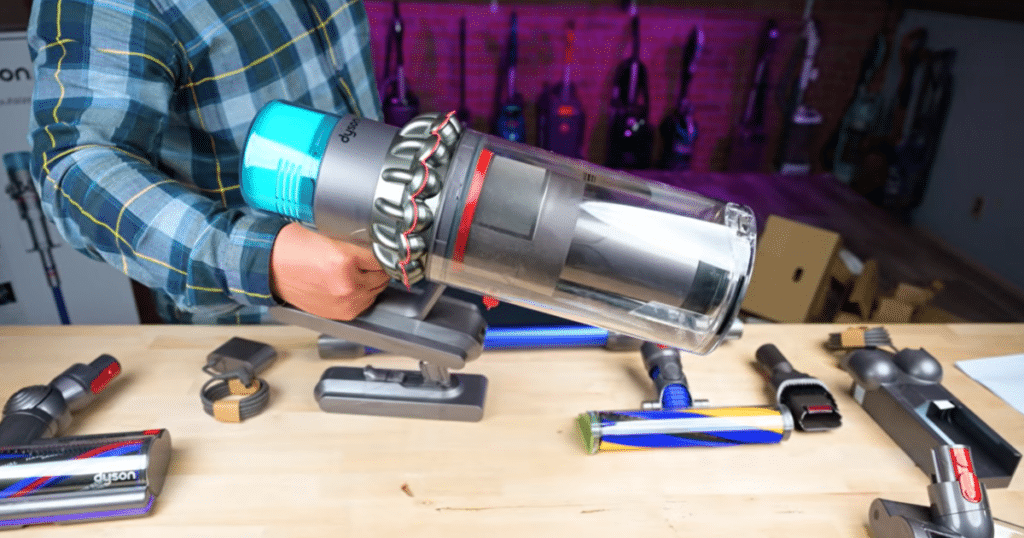
A premium cordless stick vacuum can generate considerably more suction than a miniature handheld vacuum. Models from companies such as Dyson can therefore provide enough power for many automotive cleaning tasks.
The problem is physical design. The handheld portion of a cordless stick vacuum normally contains the motor, battery, dustbin, filters, and controls. This makes the unit relatively bulky and heavy when used between car seats, beneath dashboards, or around narrow footwells.
A cordless stick vacuum may work well when cleaning open areas such as floor mats, seats, and cargo spaces. It becomes less comfortable when maneuverability is the priority. Many cordless vacuums also require specialized attachment kits to be fully effective inside a vehicle.
For shoppers who already own a powerful cordless vacuum, purchasing a compatible hose and automotive detailing kit may be reasonable. For someone buying a vacuum primarily for car cleaning, a compact wet/dry vacuum is usually the more practical tool.
What Size Shop Vacuum Is Best for Cleaning a Car?
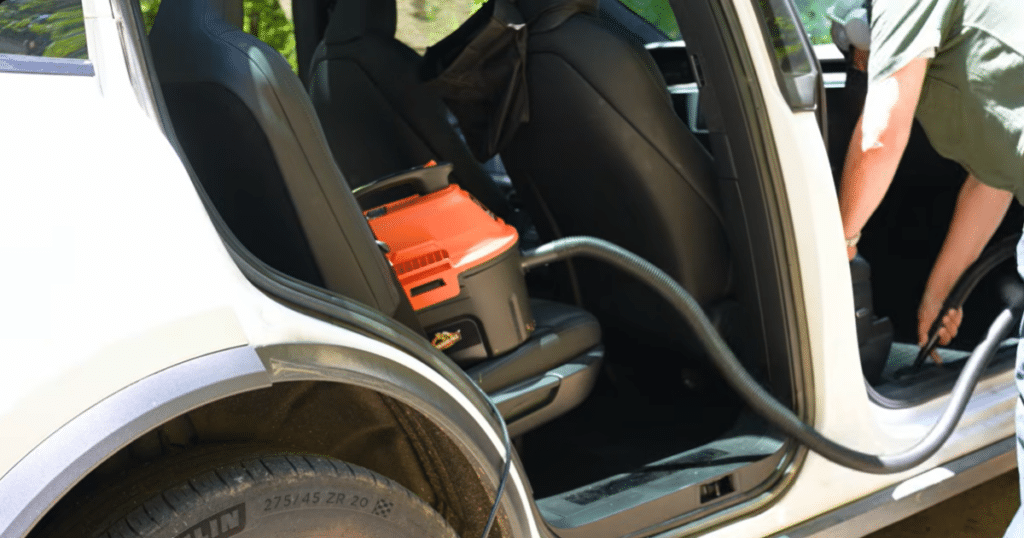
A shop vacuum does not need to be large to produce strong suction. In fact, a smaller model is often preferable for car cleaning because it can be placed closer to the area being vacuumed. This reduces the need for an excessively long hose and makes the vacuum easier to move from one side of the vehicle to the other.
The Armor All AA255W has a 2.5-gallon capacity, which we consider close to ideal for this application. It is compact enough to carry easily and potentially store in a trunk or garage without occupying much space. At the same time, it produces 66 inches of water-lift suction, which is slightly higher than the average suction we measured across wet/dry shop vacuums of all sizes.
Larger models can also work. The 5-gallon Vacmaster Beast, for example, remains within the upper size range we would consider practical for dedicated car cleaning.
Beyond that point, portability begins to suffer. A large vacuum may need to remain outside the vehicle, requiring a longer hose and making the entire process less convenient.
Can a Small Shop Vacuum Be as Powerful as a Large One?
Yes. Tank capacity and suction power are not the same thing. A larger tank determines how much debris or liquid the vacuum can hold before it needs to be emptied. It does not automatically mean the vacuum produces stronger suction. Our results show that some compact wet/dry vacuums can equal or outperform much larger machines in water-lift measurements.
For cleaning a car, a large-capacity tank provides little practical advantage. Most people will not collect enough debris during a routine interior cleaning session to fill even a small tank. A compact vacuum with strong suction is therefore preferable to a large vacuum selected only because of its gallon capacity.
Which Attachments Do You Need for Vacuuming a Car?
Attachment selection is one of the most overlooked parts of choosing a car vacuum. Two tools are especially important:
A Wide Claw-Style Automotive Nozzle
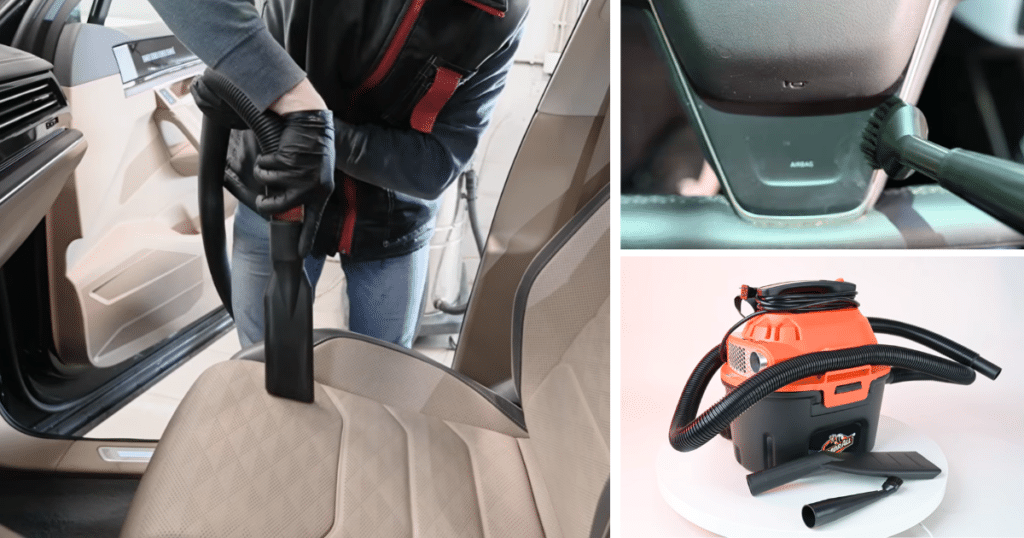
Professional coin-operated car vacuums almost universally use a wide, angled claw nozzle. That is not an accident. This style of tool works well on automotive carpet, seats, floor mats, and upholstery. Its opening is broad enough to cover a useful amount of surface area while remaining narrow enough to concentrate suction.
Despite its usefulness, surprisingly few consumer vacuums include a properly sized claw tool. The Armor All AA255W includes one of the better examples we have evaluated. Some competing vacuums also include claw-style tools, but their nozzles may be too small to clean larger surfaces efficiently.
An Ultra-Small Detailing Brush
A small brush with relatively long bristles is also essential for cleaning a car thoroughly.
Car interiors contain numerous seams, vents, buttons, trim edges, cup holders, console gaps, and other narrow areas where dust accumulates. A detailing brush loosens the dust while the vacuum removes it. This is particularly useful around:
- Air vents
- Dashboard controls
- Gear selectors
- Seat rails
- Door pockets
- Center consoles
- Cup holders
- Speaker grilles
- Upholstery seams
Many vacuums include a standard dusting brush, but those attachments are often too large for automotive detailing. The small brushes included with the Armor All are unusually well suited to these areas.
Why the Armor All AA255W Is Our Best Car Vacuum Pick
The Armor All AA255W stands out because it does not require a major compromise in any of the areas that matter most.
- It produces 66 inches of water-lift suction, placing it slightly above the average for the shop vacuums we have tested. That gives it enough power to remove substantially more embedded material than the miniature cordless vacuums commonly marketed for cars.
- Its 2.5-gallon body is also compact enough to carry around a vehicle without the inconvenience associated with larger wet/dry vacuums.
- Most importantly, its included attachments are genuinely useful for automotive cleaning. The claw-style nozzle works well across carpeted areas, while the small detailing brushes help reach the many narrow spaces inside a vehicle.
- It also competes well on cost. The AA255W is generally more affordable than larger premium wet/dry vacuums and can even cost less than some cordless handheld models.
That combination of performance, size, attachment quality, and value is why we consider it the best vacuum for cleaning a car in most situations.
How Does the Armor All Compare With Other Car Vacuum Options?
Armor All AA255W vs. Mini Cordless Car Vacuums
The Armor All is substantially more powerful and better suited to carpet, upholstery, sand, and pet hair.
Mini cordless vacuums are easier to store and use for quick surface cleanups, but they are not equivalent cleaning tools.
Armor All AA255W vs. Cordless Handheld Vacuums
A larger handheld vacuum offers more convenience because it does not require a cord. However, our category averages show that traditional handhelds still produce considerably less suction than compact wet/dry vacuums.
The Armor All is the better choice for deeper cleaning. A handheld is better for small, frequent messes.
Armor All AA255W vs. Full-Size Shop Vacuums
Larger shop vacuums may offer bigger tanks, longer hoses, or additional wet/dry cleaning capabilities. Those advantages are rarely necessary when cleaning a passenger vehicle.
The smaller Armor All is easier to carry, position, and store while still producing competitive suction.
Armor All AA255W vs. Professional Coin-Operated Vacuums
Professional car-wash vacuums produced the highest average suction in our comparison. They also use effective claw-style automotive nozzles.
The disadvantage is that they require a trip to a car wash and may impose time limits. The Armor All provides a similar style of cleaning setup at home, though with somewhat less average suction than the professional category.
Our Final Recommendation
The best vacuum for car cleaning is not necessarily the smallest model or the first product labeled “car vacuum” in an online marketplace.
A useful car vacuum needs enough suction to remove dirt and sand from dense automotive carpet, a compact body that is easy to move around the vehicle, and attachments designed for upholstery and narrow interior spaces.
The Armor All AA255W meets those requirements better than the other categories we evaluated. Its 66 inches of water-lift suction place it above the average wet/dry vacuum in our testing, while its compact 2.5-gallon design remains practical for home and automotive use.
Its included claw nozzle and detailing brushes further separate it from competitors that may provide adequate power but lack the tools required for effective car cleaning.
For those reasons, the Armor All AA255W is our current recommendation for the best car vacuum for most people.
Frequently Asked Questions About Car Vacuums
What is the best type of vacuum for cleaning a car?
A compact corded wet/dry vacuum is generally the best type for thorough car cleaning. It offers more suction than most miniature cordless or handheld models while remaining portable enough to move around a vehicle.
What is the best vacuum for cleaning sand from a car?
A wet/dry shop vacuum with strong suction and a narrow claw-style nozzle is the best option for removing sand from automotive carpet and floor mats. Sand becomes embedded in the carpet fibers and can be difficult for low-powered cordless vacuums to remove.
Are small cordless car vacuums worth buying?
Small cordless car vacuums can be useful for loose crumbs, dust, and quick touch-ups. However, most do not produce enough suction for embedded sand, soil, or pet hair. They should be viewed as convenience tools rather than complete car-cleaning solutions.
How much suction does a good car vacuum need?
There is no single minimum measurement that guarantees good performance, but stronger suction becomes especially valuable when cleaning dense automotive carpet with small attachments. In our testing, compact shop vacuums averaged substantially more water lift than handheld and miniature cordless models.
Is the Armor All AA255W good for pet hair?
The Armor All AA255W has enough suction for moderate pet-hair cleanup and includes useful automotive tools. Heavily embedded pet hair may still require a rubberized brush or manual pet-hair removal tool to loosen it from upholstery before vacuuming.
Is a 2.5-gallon vacuum large enough for car cleaning?
Yes. A 2.5-gallon tank is more than sufficient for most vehicle-cleaning sessions. A larger tank adds bulk without providing much practical benefit unless the vacuum will also be used for major garage, workshop, or liquid-cleanup jobs.
Should I keep a car vacuum in my trunk?
A compact vacuum can be stored in a trunk, but a corded model will still require access to an outlet and possibly an extension cord. Avoid leaving batteries from cordless vacuums in vehicles exposed to extreme heat or cold.
Armor-All AA255W