At CES 2026, Dreame is signaling a shift in how it thinks about robot vacuums — not as incremental upgrades, but as platforms designed to overcome the everyday limitations that still define the category. Its latest robot vacuums sit at the center of that message, highlighting Dreame’s push toward ultra-thin designs, moving and organizing clutter, more specialized mopping systems, and even concept hardware aimed at multi-floor cleaning.
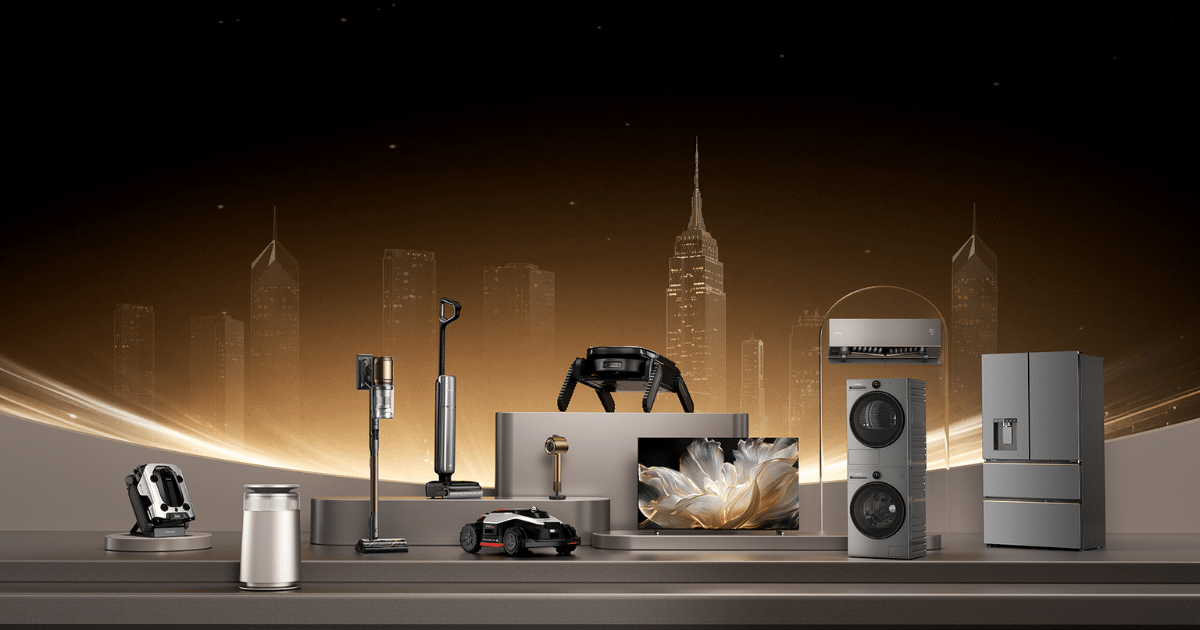
While at CES 2026, the company also says it’s building a connected “whole-home ecosystem” that spans everything from robot vacuums to kitchen appliances, personal care devices, and even wearables.
Dreame X60 Max Ultra Complete: A New Ultra-Thin Flagship
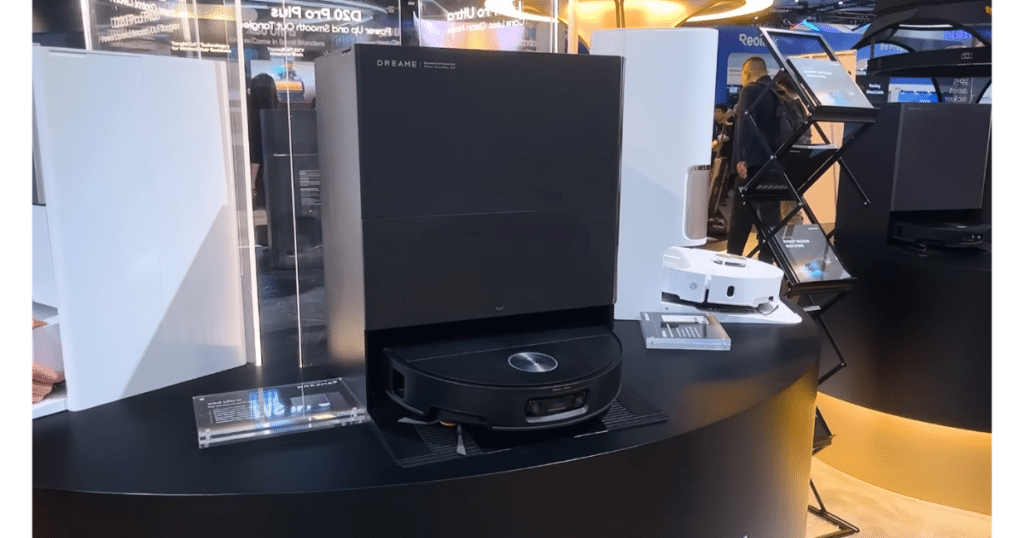
Dreame’s new X60 Max Ultra Complete (see at Amazon) appears to be an effort to refine the company’s X-series across multiple dimensions at once, with particular emphasis on reducing robot height without sacrificing performance or dock functionality. Dreame says the robot measures just 7.95 cm (3.13 inches) tall, which would make it the company’s lowest-profile robot vacuum to date and position it specifically for low-clearance cleaning.
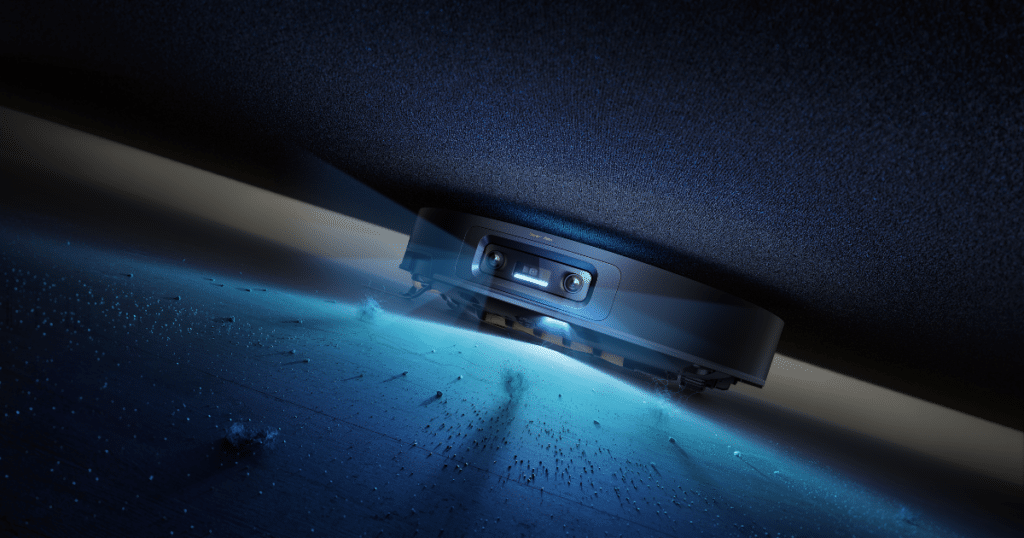
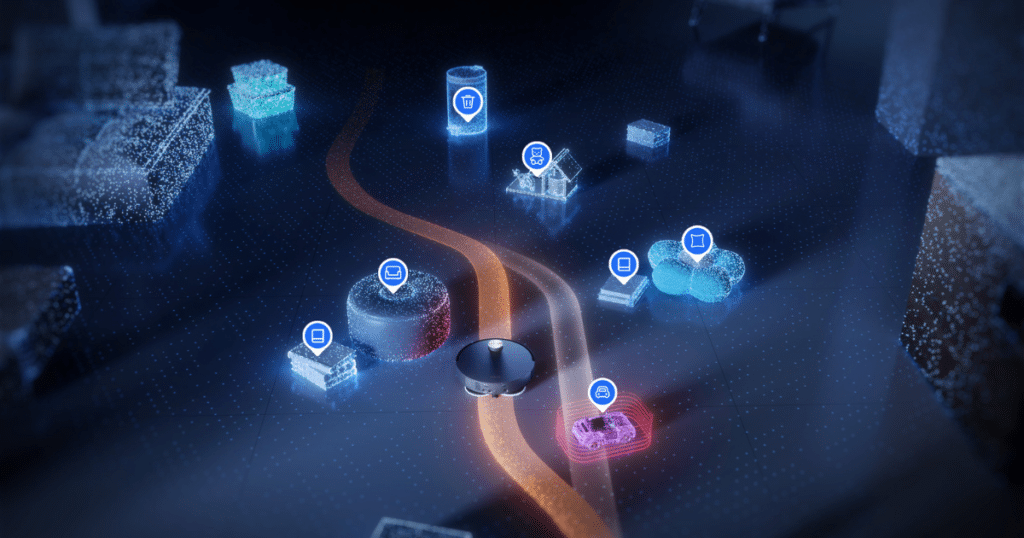
To achieve that slimmer profile, Dreame is using a retracting LiDAR system that lowers the sensor when navigating tight spaces, allowing the robot to maintain mapping capabilities without relying on a permanently raised sensor tower. If implemented reliably, this approach could help address one of the long-standing tradeoffs between advanced navigation and under-furniture access. That hardware design is paired with Dreame’s latest AI-Enhanced OmniSight™ navigation system, which the company claims enables 200% faster navigation compared to previous generations.
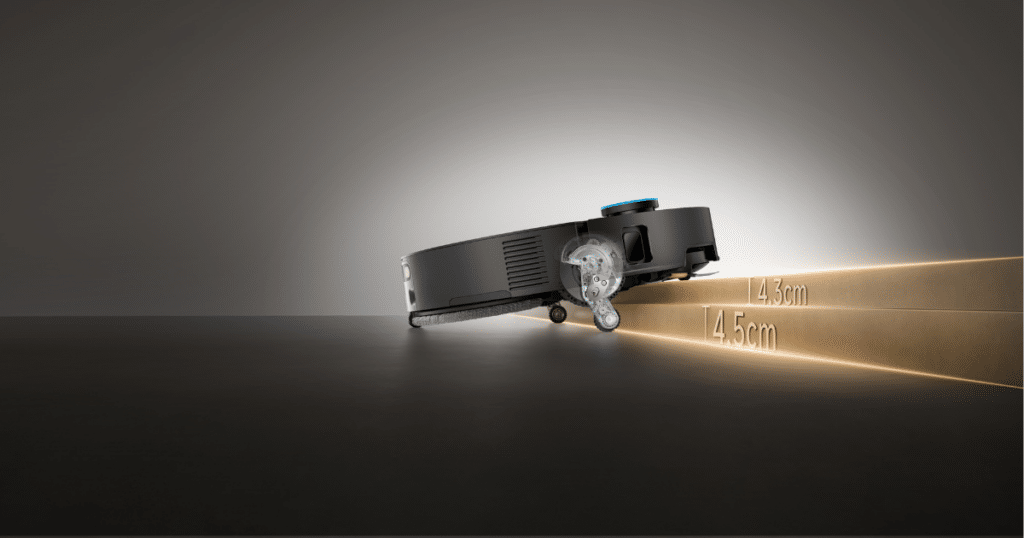
Dreame also highlights a new FlexiAdapt™ obstacle-crossing system on the X60 Max Ultra Complete, designed to help the robot actively navigate raised thresholds rather than avoid them. According to the company, the system uses retractable legs and swinging arms positioned ahead of each drive wheel to lift the robot over obstacles, with claimed clearance of 45 mm (4.5 cm) for single-layer steps and up to 88 mm (8.8 cm) for double-layer steps.
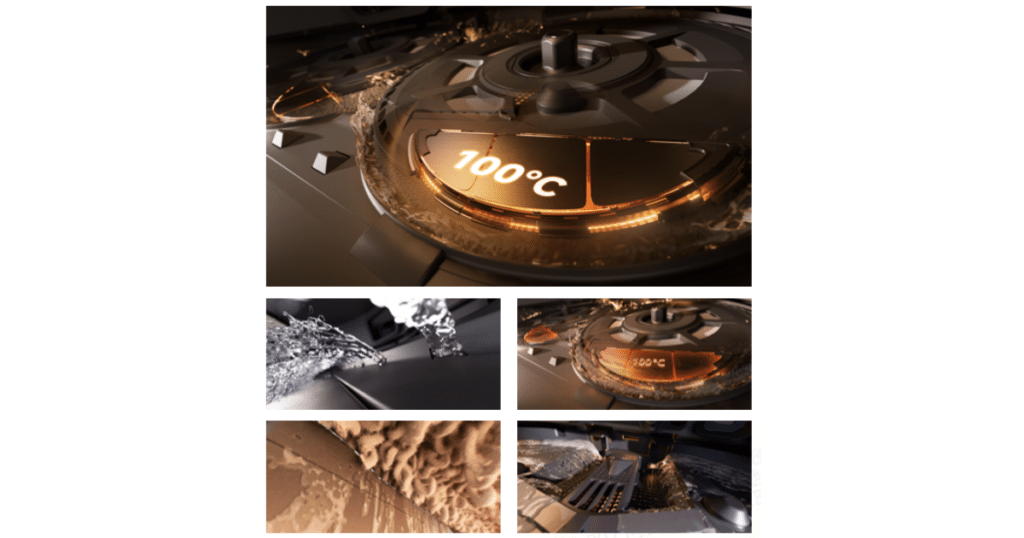
The X60 is paired with a high-end dock that includes ThermoHub™ mop self-cleaning, using 212°F (100°C) water to wash the mop pads. High-temperature mop washing is generally intended to improve hygiene, reduce odors, and dissolve residue more effectively than cooler washing cycles, while also cutting down on manual maintenance. According to Dreame, this is the first time this dock technology has appeared in the X-series.
Taken together, the X60 Max Ultra Complete appears positioned as a balanced flagship, combining an ultra-thin chassis, high suction output, advanced navigation, and a fully featured maintenance dock. If Dreame can also deliver consistent real-world performance, the X60 could stand out as one of the more interesting flagship robot vacuum designs heading into 2026.
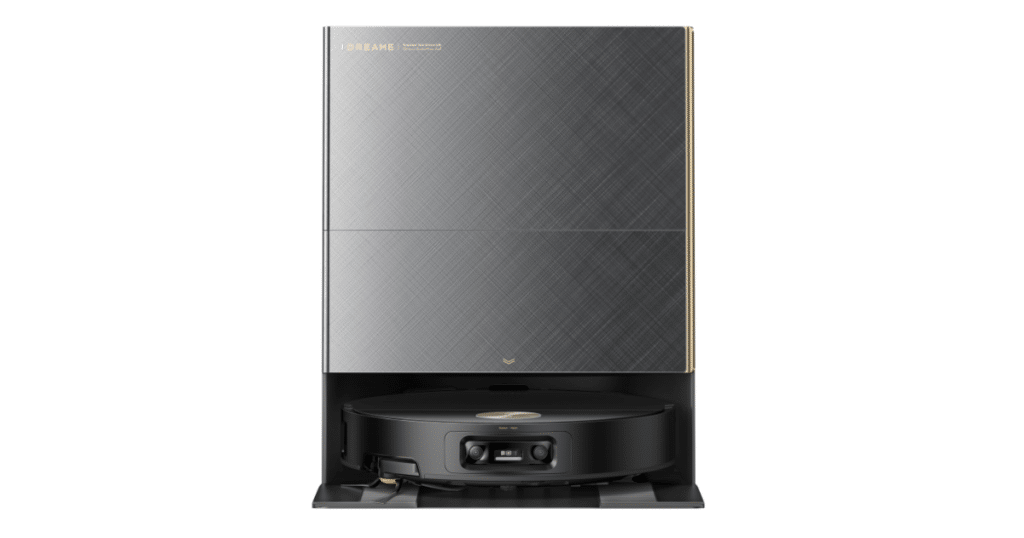
As with many CES reveals, pricing and full availability details have not yet been finalized, but Dreame has shared extensive technical details on their website and Amazon storefront outlining how the X60 Max Ultra is positioned at the top of its lineup. Update: the Dreame X60 Max Ultra Complete is available now at Amazon.
Dreame Cyber10 Ultra: Robotic Arm “Clutter Handling” and Tool Switching
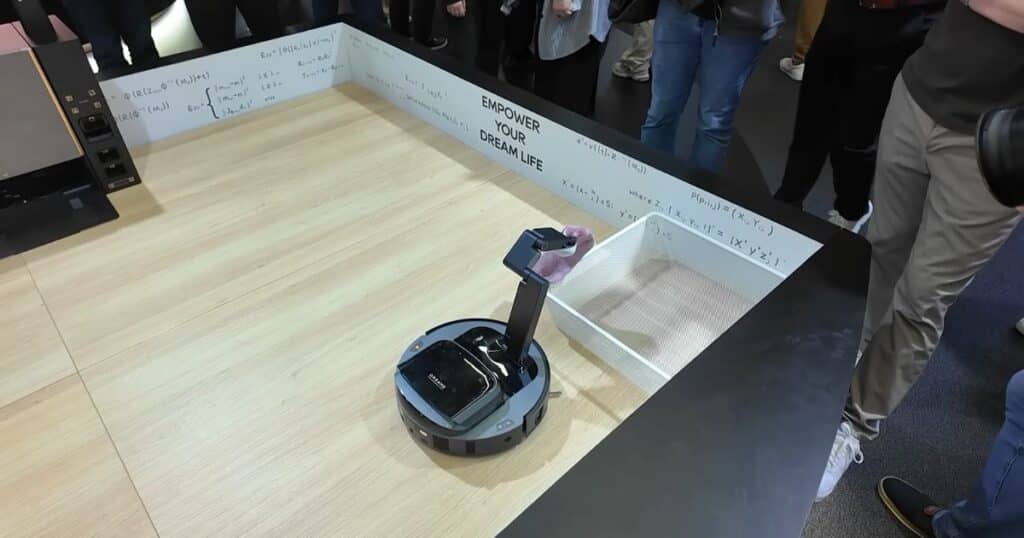
Dreame also showcased the Cyber10 Ultra, a concept-forward robot vacuum that represents one of the company’s more ambitious departures from traditional floor-cleaning design. First previewed at IFA 2025, the Cyber10 Ultra is built around what Dreame calls its CyberDex Bionic Ecosystem, which combines a multi-joint robotic arm, autonomous tool use, and advanced perception systems to move beyond simple obstacle avoidance.
At the center of the design is a robotic arm with four joints and five degrees of freedom, intended to mimic the movement of a human arm. Dreame says the arm can extend up to approximately 33–40 cm, depending on the attached tool, and is capable of lifting objects weighing up to 500 grams. In practical terms, the company positions this as a way for the robot to identify liftable clutter, move it out of the way, and then clean areas that would otherwise be skipped.
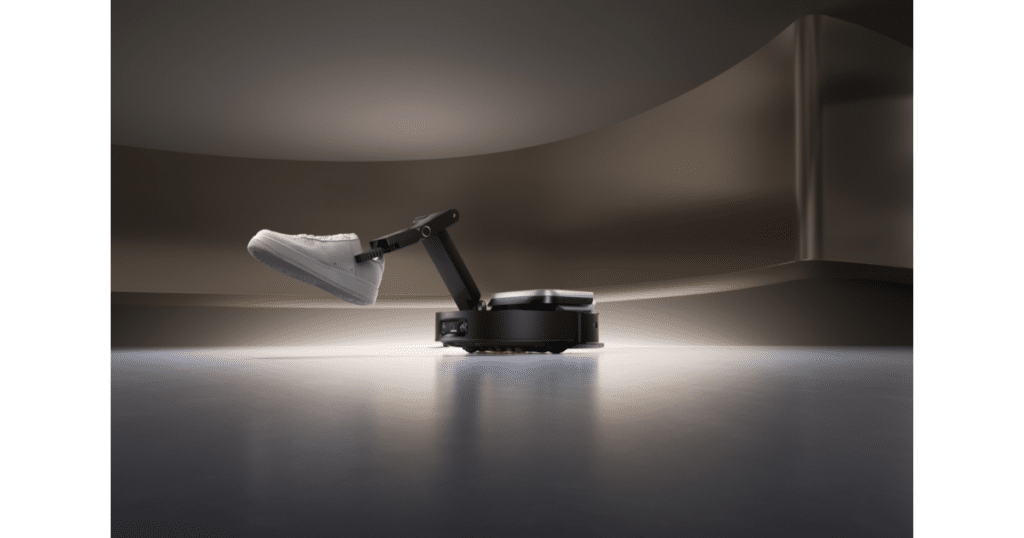
The Cyber10 Ultra is also designed to retrieve and use specialized cleaning tools stored in its base station. Dreame describes an autonomous tool-utility system that allows the robot to swap between brushes and vacuum nozzles, extending its reach into narrow gaps, baseboards, and tight spaces that are typically inaccessible to standard robot vacuums.
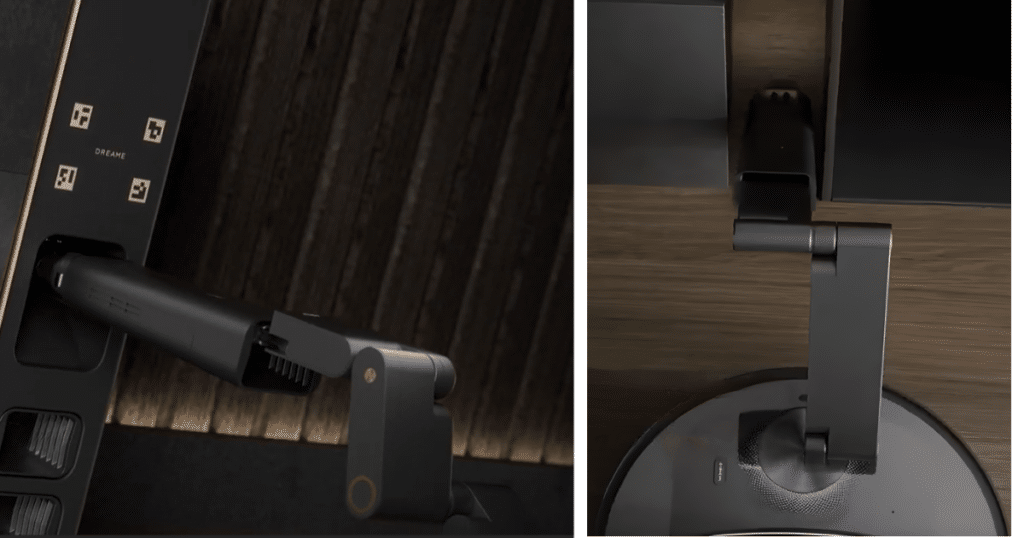
Navigation and perception are handled by what Dreame calls a TriSight™ Dynamic System, combining its AstroVision™ navigation, an OmniArm™ vision system mounted on the robotic arm, and StereoEdge™ lateral obstacle detection using laser ToF sensors. According to Dreame, this multi-layered approach allows the robot to recognize and classify objects of various sizes while maintaining a 360-degree field of view. The arm-mounted cameras are intended to reduce blind spots and improve object awareness during both navigation and manipulation.
Best Robot Vacuums – Vacuum Wars’ always up-to-date rankings of the best robot vacuums. Whether you call it a robot vacuum, a robotic hoover, or an automatic vacuum cleaner, our top picks will help you find the perfect cleaning companion for your home!
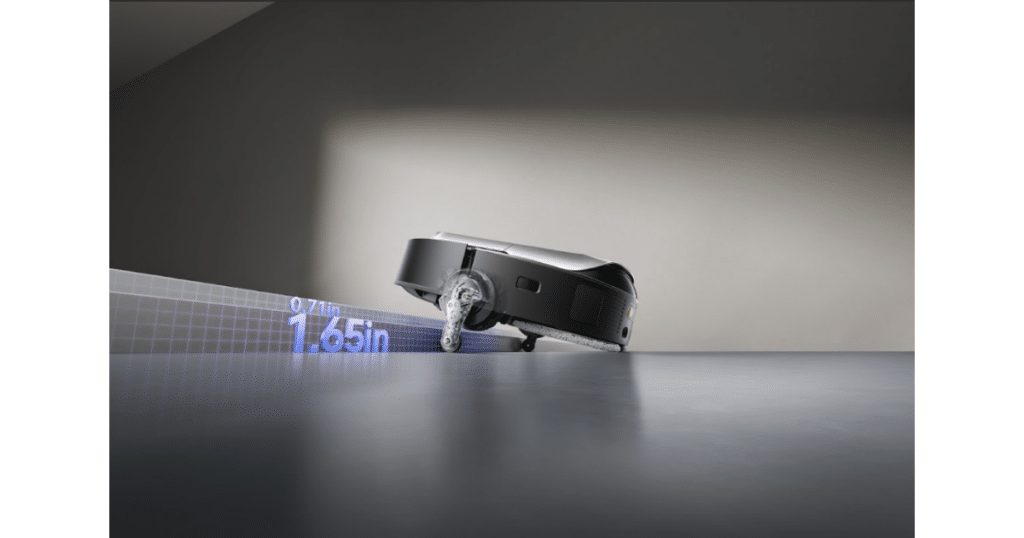
On the mobility side, the Cyber10 Ultra incorporates a FlexiAdapt™ obstacle-crossing system and an AgiLift™ chassis, which Dreame says allow the robot to actively climb thresholds rather than avoid them. The company claims the robot can clear single-layer steps up to roughly 4–5 cm and double-layer steps up to 6 cm, using either synchronized or sequential crossing motions depending on obstacle shape. Additional chassis lifting is also used to improve carpet cleaning and help protect rugs from moisture during mopping.
Taken together, the Cyber10 Ultra reads less like a near-term consumer robot and more like a technology showcase for where Dreame sees autonomous home cleaning heading. If Dreame can deliver reliable object handling, tool switching, and navigation without significantly slowing cleaning performance, the Cyber10 concept could point toward a future where robot vacuums actively manage clutter rather than simply navigating around it. For now, it stands as one of the more technically ambitious robot vacuum designs shown at CES 2026.
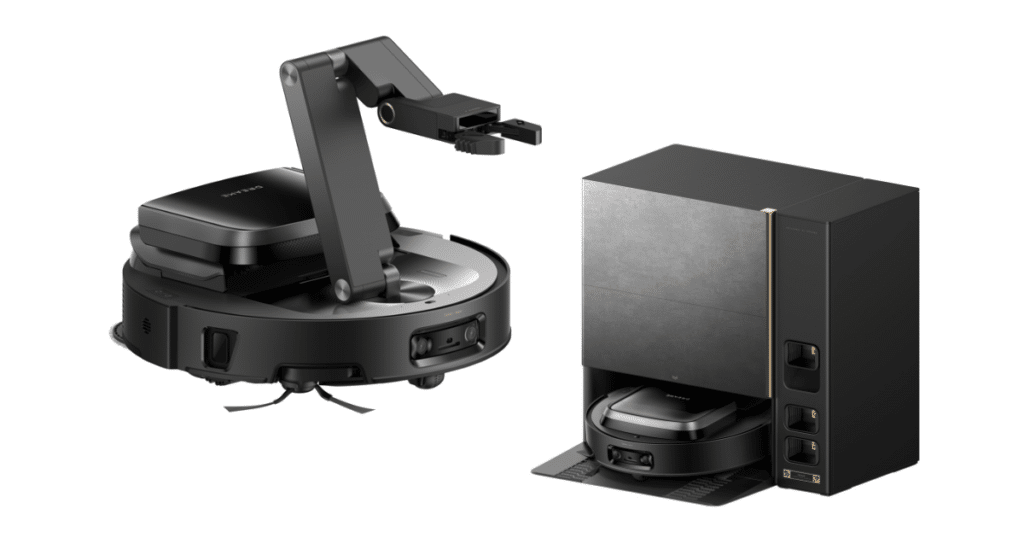
See our first look at IFA 2025: Dreame Cyber10 Ultra Debuts at IFA 2025 with Robotic Arm and 30,000 Pa Suction
Don’t miss Vacuum Wars’ full CES 2026 coverage: Get expert insights, previews, and analysis of the newest robot vacuums and floorcare products unveiled at CES. Explore CES News
Cyber X Concept: Dreame’s Stair-Climbing Vision
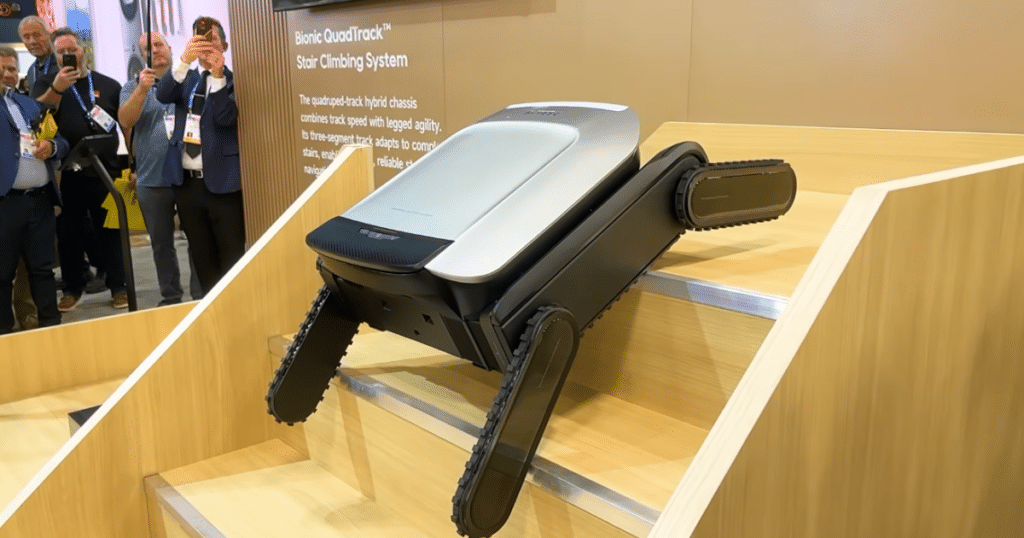
Dreame displayed its Cyber X concept, which we also saw first at IFA 2025. The Cyber X is a separate “Bionic QuadTrack™” chassis that can transport a Dreame robot vacuum up and down stairs. Instead of building stair-climbing into the vacuum itself, Cyber X is described as a floor-climbing machine that can carry a robot vacuum up and down stairs.
Dreame says the system uses a biomimetic quadruped crawler mechanism, combining tank-like tracks for speed with foot-like flexibility for stability, allowing it to climb stairs up to 25 cm (9.8 inches) at a claimed speed of 0.2 m/s.
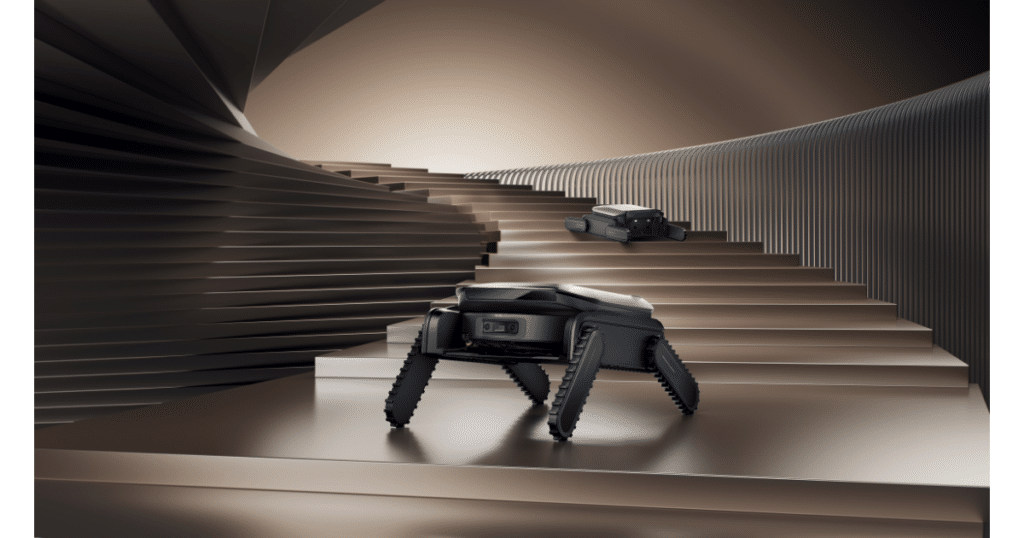
For navigation, it uses a dual-line laser system plus an AI camera to recognize stair height, steepness, and surroundings, then plan a climbing path automatically. Dreame also claims a triple braking protection system — self-locking, physical locking, and rollback prevention — designed to keep the module stable on wood, hard floors, and carpeted stairs, even in low-power conditions.
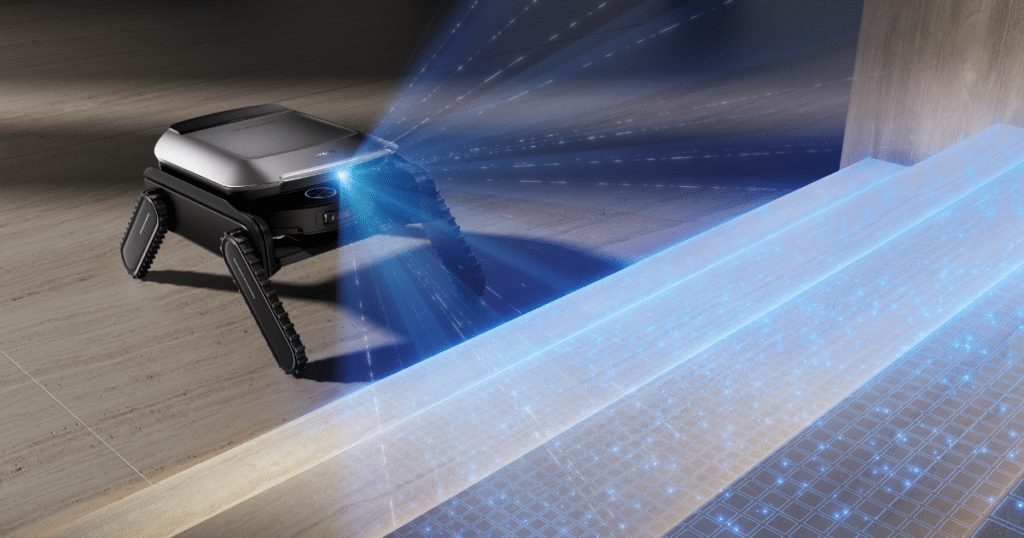
The big takeaway is the unique direction Dreame is exploring: a modular approach to stair-climbing that could eventually make true “whole-home” robot cleaning possible for multi-level households.
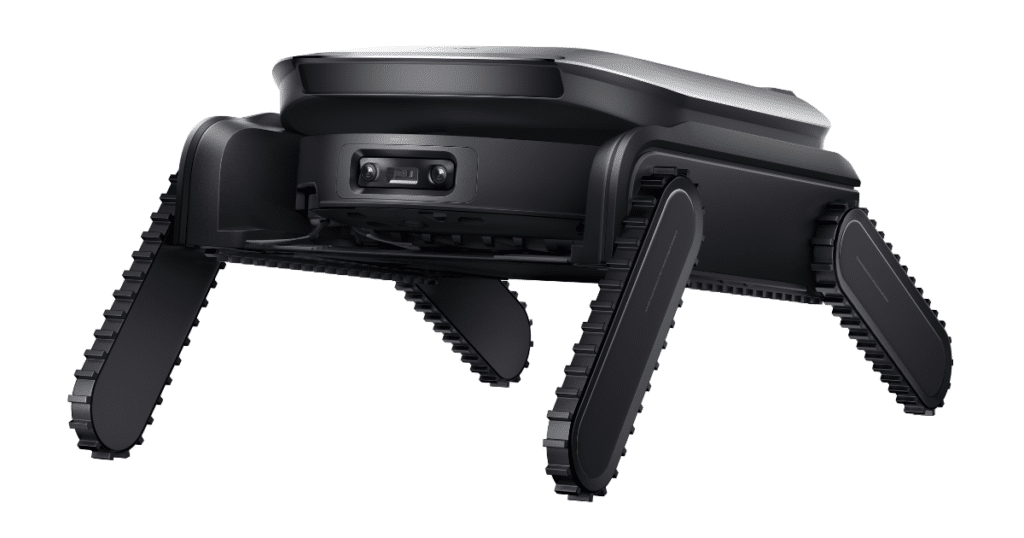
See our first look at IFA 2025: Dreame CyberX Robot Vacuum with Stair-Climbing Tech Unveiled at IFA 2025
Wet/Dry Vacuums: H15 Pro Heat and the New Aero Series
Dreame also previewed its wet/dry lineup — including both the H15 Pro Heat, which was named a CES Innovation Awards 2026 Honoree and a new Aero Series that looks more design-focused and lightweight.
Dreame H15 Pro Heat: Hot Water Cleaning With AI Edge Coverage
Dreame is positioning the H15 Pro Heat as its most advanced wet/dry vacuum to date, combining hot water floor cleaning with AI-assisted edge coverage. According to the company, the H15 Pro Heat is designed to target sticky kitchen messes and dried-on residue more effectively than cold-water systems by using 185°F hot water during cleaning.
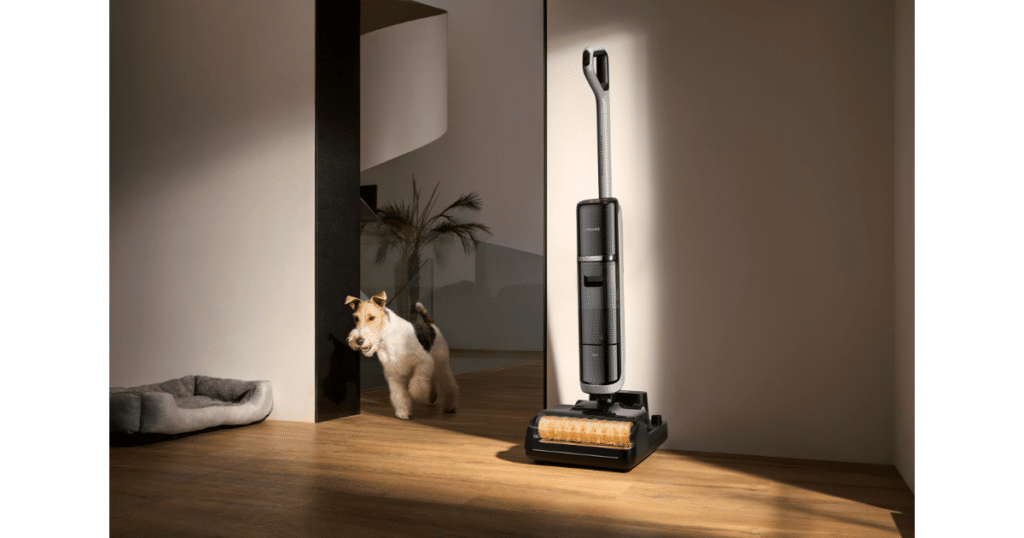
Dreame claims the hot water system improves cleaning efficiency by up to three times compared to cold-water mopping and is certified for 100% stain removal on difficult messes such as grease. While those claims will ultimately depend on real-world performance, they reflect Dreame’s broader push toward more aggressive wet cleaning solutions that reduce the need for repeat passes.
One of the H15 Pro Heat’s more distinctive features is its GapFree™ system, which uses an AI-powered robotic arm and scraper to address the common front-edge blind spot found on many wet/dry vacuums. Dreame says this system is designed to maintain closer contact with baseboards and edges, helping reduce streaking and uncleaned strips along walls.
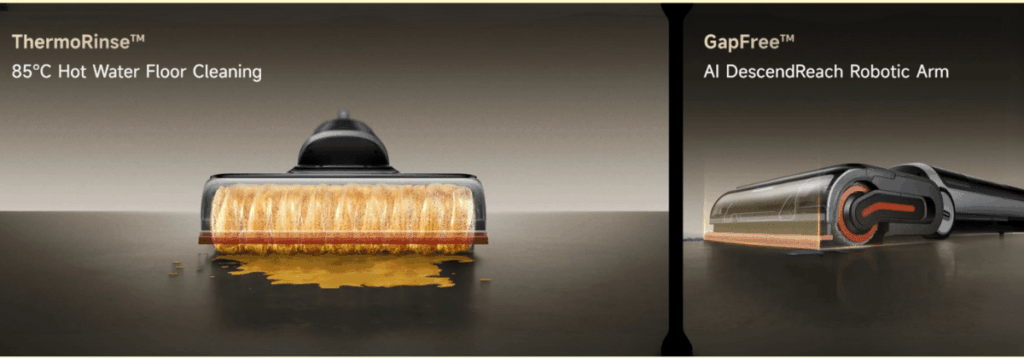
In terms of core performance, the H15 Pro Heat is listed with 22,000Pa suction and up to 72 minutes of runtime in quiet mode, though runtime drops to roughly 20 minutes when hot water cleaning is active. Dreame pairs the vacuum with a maintenance dock that washes the brush at 212°F, dries it using AI-controlled heated air at up to 194°F, and includes a 5-minute quick-dry mode intended to minimize downtime between cleaning sessions.
Overall, the H15 Pro Heat appears aimed at users who prioritize deep wet cleaning and edge coverage over lighter weight or minimal design. Within Dreame’s CES 2026 lineup, it sits as the more power- and hygiene-focused counterpart to the slimmer Aero Series, reinforcing the company’s strategy of offering distinct wet/dry platforms for different cleaning priorities.
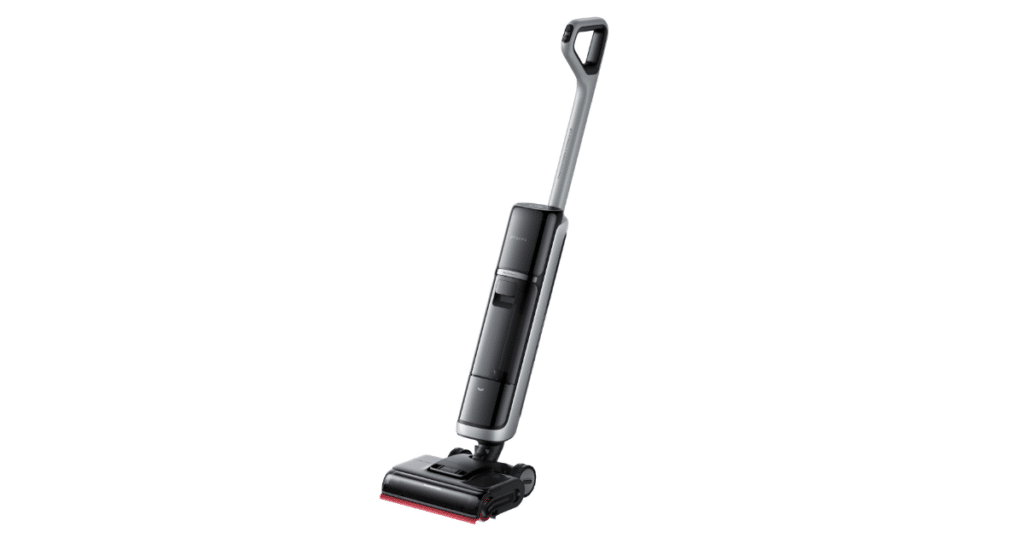
Aero Series: A New Lightweight, Design-Forward Wet/Dry Line
Dreame is also using CES 2026 to introduce its new Aero Series, a wet/dry vacuum lineup that the company is positioning as a more lightweight and design-forward alternative within its floor care portfolio. Dreame says the Aero Series is built to combine vacuuming and mopping in a single pass while prioritizing a slimmer, easier-to-handle form factor for everyday use.
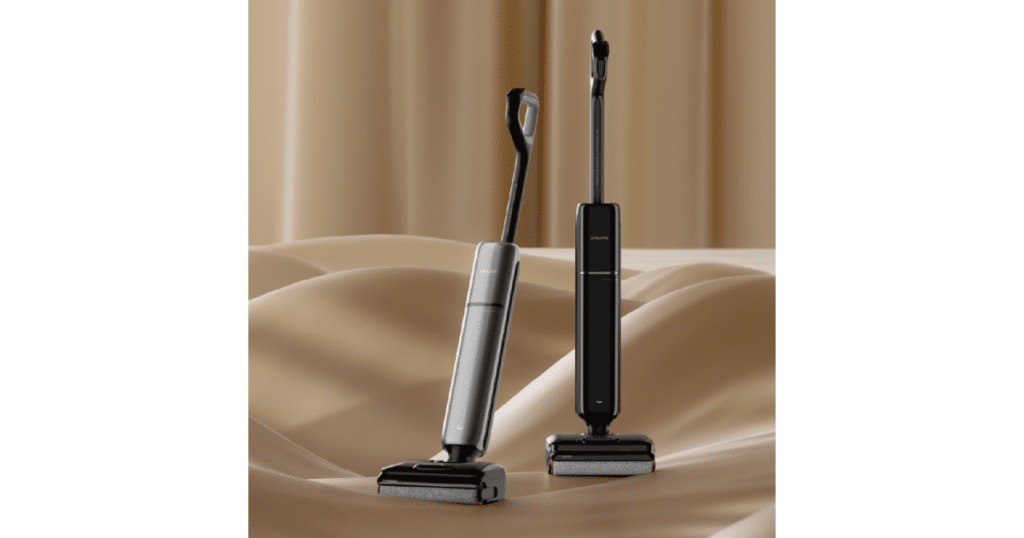
Across the line, Dreame highlights a fresh-water cleaning system with dual tanks, which keeps clean and dirty water separated during mopping. The company also emphasizes one-touch self-cleaning and drying through the dock, designed to rinse the roller and reduce manual maintenance between uses.
The standard Aero is listed with 25,000Pa suction, an 180° lie-flat cleaning profile for reaching under furniture, and up to 40 minutes runtime. The Aero Pro (see on Amazon) adds Dreame’s TangleCut™ 2.0 hair management system, along with 185°F hot-wash self-cleaning, a 5-minute flash drying mode, and an extended 60 minutes runtime. Together, the two models suggest Dreame is aiming to cover both lighter daily cleaning and higher-maintenance households under a simpler, more streamlined wet/dry platform.
Dreame’s “Whole-Home” Ecosystem
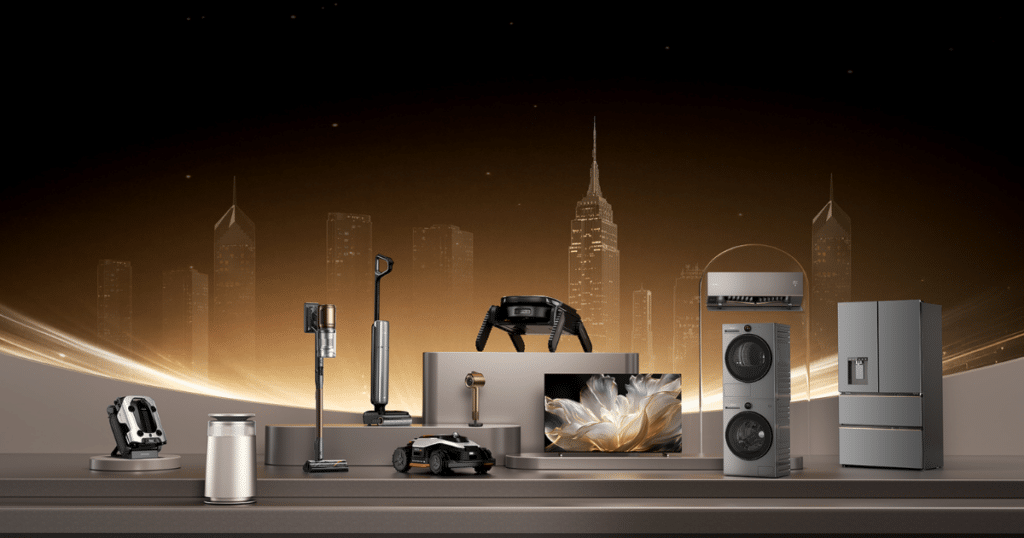
Alongside its floor care announcements, Dreame used CES 2026 to reinforce a broader “whole-home” ecosystem strategy that extends beyond cleaning. While robot vacuums and wet/dry cleaners remain the company’s most established categories, Dreame is positioning those products as part of a larger connected hardware platform built around automation and intelligent devices.
Outside of floor care, the lineup includes personal care tools such as high-speed hair dryers and AI-assisted grooming devices, as well as large appliances and kitchen products like refrigerators, washers, air conditioners, and televisions. Dreame also highlighted smart home security and lighting, outdoor robotics such as robotic lawn and pool cleaners, and a small selection of consumer electronics and emerging wearables.
For now, these categories appear intended to support Dreame’s long-term ecosystem vision rather than compete directly with its cleaning portfolio.
Final Takeaway
This year’s reveal is Dreame leaning hard into a “whole-home” strategy, with cleaning tech positioned as just one part of a broader connected lineup. The company’s expansion suggests it wants to compete as an ecosystem brand, not just a robot vacuum maker. If Dreame can keep its innovation pace while delivering consistent real-world results, it may be one of the more influential companies shaping what the next generation of smart home tech looks like.
See the Dreame press release: Dreame Reimagines Smart Living at CES 2026 with Debut of AI-powered Whole-home Smart Ecosystem