Vacuum Wars is reader supported. When you make a purchase using links on our site we may earn a commission. Details.

The Best Robot Vacuums with Obstacle Avoidance

We’ve Independently Tested 150+ Robot Vacuums

Welcome to Vacuum Wars’ definitive guide to the best robot vacuums with obstacle avoidance! Because we buy every model ourselves, our picks are based on actual lab tests of their navigation smarts (not just spec sheets). Having reviewed over 150 robot vacuums, we know how much obstacle avoidance tech can vary. Our trials separate gimmicks from real game-changers that let robots roam freely without getting stuck. In short, if you’re tired of babysitting your bot to clear cords, toys, or pet accidents, these obstacle-dodging robots will run with minimal fuss. Want to see how we keep the process fair? Why You Can Trust Vacuum Wars Robot Vacuum Reviews.

Note: Our rankings are updated frequently and can change daily based on several factors. These can include fluctuations in updated review scores, adjustments to our ranking algorithm, and whether a product has been discontinued. This ensures that our list remains as accurate and up-to-date as possible.

  • How Vacuum Wars Tests Robot Vacuums: Step into the world of Vacuum Wars, where real-world tests, straight-forward reviews, and no sponsored products redefine robot vacuum evaluations.

Why You Can Trust Vacuum Wars Robot Vacuum Reviews

Vacuum Wars stays fully independent and reader-supported. Every robot vacuum we review is bought at full retail price, with no freebies or input from manufacturers. We put each unit through the exact same obstacle course and cleaning tests, ensuring our comparisons are data-driven and unbiased. For an in-depth look at our methods, check out the How We Test Robot Vacuums page.

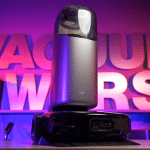
Roborock Saros 10R Robot Vacuum at Vacuum Wars

The Roborock Saros 10R delivered flawless obstacle avoidance in our evaluations—so much so that it earned our Best Obstacle Avoidance award for Mid-2025. At just 3.14 inches tall, its StarSight Autonomous System 2.0 combines time-of-flight sensing with an RGB camera to reliably detect and weave around cables, toys, and low-lying furniture. VertiBeam lateral-beam technology and hyper-responsive path planning ensure it sidesteps obstacles without hesitation, while HyperForce suction and a zero-tangle brush roll tackle debris across all floor types. Its AdaptiLift chassis effortlessly mounts thresholds up to 4 cm and lifts the mop on carpets, and the 10-in-one dock handles dust collection, mop washing, heated drying, and more—earning a perfect 24/24 score in our lab and setting a new standard for obstacle avoidance in home robotics. See additional info

Price as of December 24, 2025

Auto Empty Station: Self Empties Debris | Washes Mop Pad | Washes Mop Pad with Hot Water | Dries Mop Pad | Dries Mop Pad with Heated Air| Self Cleaning

Mopping: Lifts Mop Pads on Carpets | Extending Mop Pad for Hard to Reach Areas | Can Leave Pads at Base while Vacuuming

Hardware: Auto Extending Side Brush for Hard to Reach Areas | 40mm Threshold Crossing | Removes Hair from Brush Roll

Performance: Carpet Boost Settings

Mapping / Navigation: Multi Level Maps | Virtual Barriers and No Go Zones

Obstacle Avoidance: 108 Objects Recognized

Pet Features: Live Video Monitoring | Pet Checkup or Similar

Controls: Virtual Assistant Options

ScoresRoborock Saros 10RAverage Robot Vacuum Tested
Vacuum Wars Overall3.67

2.58

Features3.99

3.28

Mopping Performance2.98

2.39

Obstacle Avoidance5.0

3.41

Pet4.78

3.42

Navigation3.44

3.21

Battery2.83

2.56

Performance3.69

3.56

Official Battery Life: 180 MinutesNavigation Type: 3D ToF Lidar
Official Suction Power: UnknownDust Bin Size: 270ml
Obstacle Avoidance Type: VertiBeam LateralObjects Recognized: 108
Multi Level Maps: YesVirtual Barriers: Yes
Detergent Capacity: 590 mlDisposable Bag: 2.7L

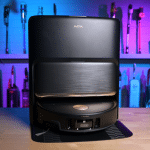
The Eufy E28 Omni robot vacuum/mop combo features advanced specifications designed for comprehensive home cleaning. It boasts a robust 20,000 Pa turbo suction capable of deep-cleaning carpets and floors. Its innovative HydroJet System includes dual water reservoirs and a dual-scraper structure, refreshing the mop continuously by cleaning the roller 360 times per minute. The E28 uniquely integrates a detachable FlexiOne portable deep cleaner for fabric surfaces and carpets. DuoSpiral detangle brushes ensure minimal hair tangling and lower maintenance requirements. Enhanced edge cleaning is provided by the CornerRover Arm, covering edges fully without manual intervention. Its all-in-one station offers self-emptying, self-cleaning, hot-air drying, automatic detergent dispensing, wastewater collection, and self-refilling. Additionally, the robot recognizes over 30 stain types and supports Matter protocol but operates exclusively on 2.4GHz Wi-Fi networks. See additional info

Price as of December 24, 2025

Auto Empty Station: Self Empties Debris | Washes Mop Roller | Dries Mop Roller | Dries Mop Roller with Heated Air | Dirty Water Sensor

Mopping: Lifts Mop Roller on Carpets | Self Cleaning

Hardware: Auto Extending Side Brush for Hard to Reach Areas | 21mm Threshold Crossing | Removes Hair from Brush Roll

Performance: Carpet Boost Settings

Mapping / Navigation: Multi Level Maps | Virtual Barriers and No Go Zones

Obstacle Avoidance: 200 Objects Recognized

ScoresEufy E28 OmniAverage Robot Vacuum Tested
Vacuum Wars Overall3.46

2.58

Features3.81

3.28

Mopping Performance3.06

2.39

Obstacle Avoidance4.80

3.41

Pet4.31

3.42

Navigation3.66

3.21

Battery2.72

2.56

Performance4.0

3.56

Official Battery Life: 216 MinutesNavigation Type: Spinning Lidar
Official Suction Power: 20000 PaDust Bin Size: 300ml
Obstacle Avoidance Type: Single Camera & LEDObjects Recognized: 200
Multi Level Maps: YesVirtual Barriers: Yes
Detergent Capacity: unknownDisposable Bag: 3L
Narwal Freo Z


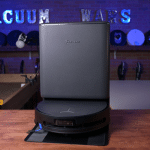
The Narwal Freo Z Ultra robot vacuum mop combo features advanced AI navigation and powerful cleaning. Equipped with dual HD cameras and dual-chip AI, it identifies and avoids over 120 obstacle types for safe cleaning. Its 12,000Pa suction handles dirt and pet hair; EdgeSwing cleans to walls, and a module tackles baseboard dust. Dual rotating mop heads apply 1.2 kg force at 180 RPM to remove stubborn stains. The docking station offers hands-free use, with self-cleaning and drying for mops, keeping it hygienic for up to 120 days. See additional info

Price as of December 24, 2025

Auto Empty Station: Self Empties Debris | Washes Mop Pad | Washes Mop Pad with Hot Water | Dries Mop Pad | Dries Mop Pad with Heated Air| Self Cleaning | Ionized Water |

Mopping: Lifts Mop Pads on Carpets

Hardware: 30mm Threshold Crossing | Removes Hair from Brush Roll | Baseboard Cleaning

Mapping / Navigation: Multi Level Maps | Virtual Barriers and No Go Zones

Obstacle Avoidance: 120 Objects Recognized

Pet Features: Live Video Monitoring | Pet Checkup or Similar

ScoresNarwal Freo ZAverage Robot Vacuum Tested
Vacuum Wars Overall3.09

2.58

Features3.61

3.28

Mopping Performance2.82

2.39

Obstacle Avoidance4.80

3.41

Pet4.43

3.42

Navigation3.27

3.21

Battery2.28

2.56

Performance3.49

3.56

Official Battery Life: 210 MinutesNavigation Type: Spinning Lidar
Official Suction Power: 12000 PaDust Bin Size: 480ml
Obstacle Avoidance Type: Dual CamerasObjects Recognized: 120
Multi Level Maps: YVirtual Barriers: Y
Detergent Capacity: 580mlDisposable Bag: 2.5L

Roborock Saros Z70 in studio 450

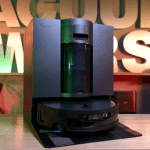
The Roborock Saros Z70 earned our Most Innovative award for Mid-2025 thanks to its groundbreaking OmniGrip mechanical arm—the first of its kind to autonomously stow small objects into a user-defined compartment—alongside industry-leading mopping performance, near-flawless 3D Time-of-Flight obstacle avoidance, and a multifunction dock that washes, dries, and dispenses detergent for its mop pads. It also features ultra-quiet cleaning mode with noise levels as low as 50 dB, precision edge-cleaning brushes for skirting boards, customizable multi-floor mapping with auto-switch profiles, an extended 6,400 mAh battery delivering up to 300 minutes of runtime, and an AI-powered app that offers real-time cleaning reports and self-updating firmware. While its five-axis arm worked only about half the time in our tests, no other robot this year has pushed the boundaries of home robotics quite like the Z70. See additional info

Price as of December 24, 2025

Auto Empty Station: Self Empties Debris | Washes Mop Pad | Washes Mop Pad with Hot Water | Dries Mop Pad | Dries Mop Pad with Heated Air| Self Cleaning | Dirty Water Sensor

Mopping: Lifts Mop Pads on Carpets | Extending Mop Pad for Hard to Reach Areas | Can Leave Pads at Base while Vacuuming

Hardware: Auto Extending Side Brush for Hard to Reach Areas | 40mm Threshold Crossing | Removes Hair from Brush Roll | OmniGrip Five-Axis Mechanical Arm

Performance: Carpet Boost Settings

Mapping / Navigation: Multi Level Maps | Virtual Barriers and No Go Zones

Obstacle Avoidance: 108 Objects Recognized

Pet Features: Live Video Monitoring | Pet Checkup

Controls: Virtual Assistant Options

ScoresRoborock Saros Z70Average Robot Vacuum Tested
Vacuum Wars Overall3.30

2.58

Features4.18

3.28

Mopping Performance3.64

2.39

Obstacle Avoidance4.59

3.41

Pet4.11

3.42

Navigation3.31

3.21

Battery2.58

2.56

Performance2.93

3.56

Official Battery Life: 180 MinutesNavigation Type: 3D ToF LiDAR
Official Suction Power: 22000 PaDust Bin Size: 180ml
Obstacle Avoidance Type: VertiBeam LateralObjects Recognized: 108
Multi Level Maps: YesVirtual Barriers: Yes
Detergent Capacity: 590mlDisposable Bag: 2.7L
Dreame X40 Master


The Dreame X40 Master is a high-end robot vacuum and mop combo equipped with advanced automatic refilling and draining capabilities via an 8-in-1 hands-free base station that connects to the home’s plumbing. This multifunctional hub streamlines maintenance by managing water, self-cleaning, self-drying, and self-emptying tasks. Designed with a sleek, low-profile build at just 11 inches tall, the base station is crafted to blend seamlessly into modern home environments. In our in-studio evaluations, the X40 Master delivered excellent overall performance, particularly standing out in navigation efficiency and battery life. See additional info

Price as of December 24, 2025

Auto Empty Station: Self Empties Debris | Washes Mop Pad | Washes Mop Pad with Hot Water | Dries Mop Pad | Dries Mop Pad with Heated Air| Self Cleaning | Dirty Water Sensor | Plumbing Option

Mopping: Lifts Mop Pads on Carpets | Extending Mop Pad for Hard to Reach Areas | Can Leave Pads at Base while Vacuuming

Hardware: Auto Extending Side Brush for Hard to Reach Areas | 22mm Threshold Crossing

Performance: Carpet Boost Settings

Mapping / Navigation: Multi Level Maps | Virtual Barriers and No Go Zones

Obstacle Avoidance: 120 Objects Recognized

Pet Features: Live Video Monitoring | Pet Checkup or Similar

ScoresDreame X40 MasterAverage Robot Vacuum Tested
Vacuum Wars Overall3.64

2.58

Features3.90

3.28

Mopping Performance3.02

2.39

Obstacle Avoidance4.59

3.41

Pet4.41

3.42

Navigation4.04

3.21

Battery3.88

2.56

Performance4.19

3.56

Official Battery Life: 198 MinutesNavigation Type: Spinning Lidar
Official Suction Power: 12000 PaDust Bin Size: 350ml
Obstacle Avoidance Type: Single Camera & 3D Structured LightObjects Recognized: 120
Multi Level Maps: YVirtual Barriers: Y
Detergent Capacity: UnknownDisposable Bag: 3.2L

Exploring the Evolution of Obstacle Avoidance in Robot Vacuums

In the early days, robot vacuums didn’t have any obstacle avoidance at all. The only way to ensure a smooth run was to clear any clutter off the floor before starting the vacuum — a task that’s still necessary with most budget-friendly models today. If you didn’t “robot-proof” your house, the vacuum was bound to get stuck on something.

Looking back at how obstacle avoidance has evolved helps explain why modern robot vacuums rely on more advanced sensor combinations today.

At that time, the only sensor was a simple bump sensor. If the robot ran into something solid and heavy, the bump sensor would trigger, and the vacuum would move around the object. This worked reasonably well for avoiding furniture, but it didn’t help with smaller, lighter objects.

Vacuum Wars' obstacle avoidance evaluations over the years.
Our obstacle avoidance evaluations have evolved over the years. © Vacuum Wars

Soon, infrared (IR) sensors were added to most models. While these didn’t avoid obstacles outright, they helped the robot detect when it was approaching a wall or another large object, allowing for gentler navigation.

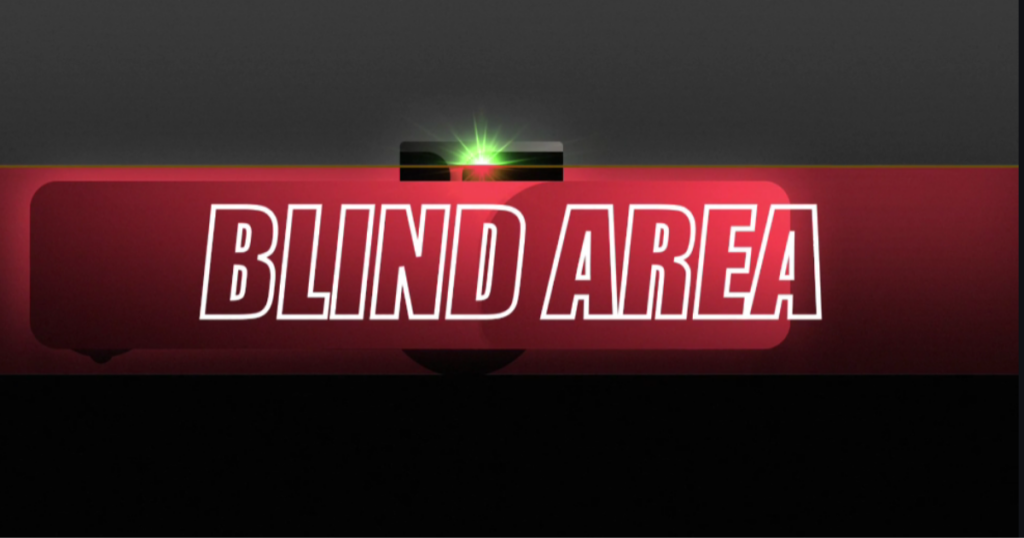
Then came the introduction of LiDAR — a spinning laser on top of the robot that greatly improved navigation. LiDAR allowed robots to map their surroundings more accurately, but since the laser sits several inches off the ground, it couldn’t detect smaller objects or anything below the sensor’s height. As a result, these robots would still run over low-profile objects, which is why modern obstacle avoidance systems rely on additional front-facing sensors positioned closer to the floor.

Lasers on top of the robot vacuum can be too high for some objects.
Technology on top of a robot vacuum can be too high to see some objects. © Vacuum Wars

Our First Obstacle Avoidance Review

Vacuum Wars has been testing robot vacuums for years, including their obstacle avoidance capabilities. The first robot vacuum we tested with a dedicated obstacle avoidance system was the Ecovacs T8 AIVI in 2020. (Watch our review on YouTube) It used a front-facing camera to recognize and avoid obstacles, and it worked reasonably well for a first attempt. However, it quickly became apparent that there were multiple ways to approach obstacle avoidance, each with its own strengths and weaknesses.

The Arrival of Dedicated Obstacle Avoidance Systems

A few years ago, robot vacuums underwent a significant transformation. Manufacturers began introducing additional sensors that allowed these machines to detect and avoid household objects their traditional navigation systems couldn’t. This was a major improvement, as robot vacuums became far less likely to get stuck on — or worse, run over — items like cords, toys, or pet waste.

While these early obstacle avoidance systems significantly improved the robot vacuum experience, they were far from perfect. Now, nearly five years after their initial release, it’s clear that manufacturers still haven’t settled on a single optimal sensor arrangement or configuration. That said, we’re beginning to see more consistent trends and best practices emerge as these systems continue to evolve.

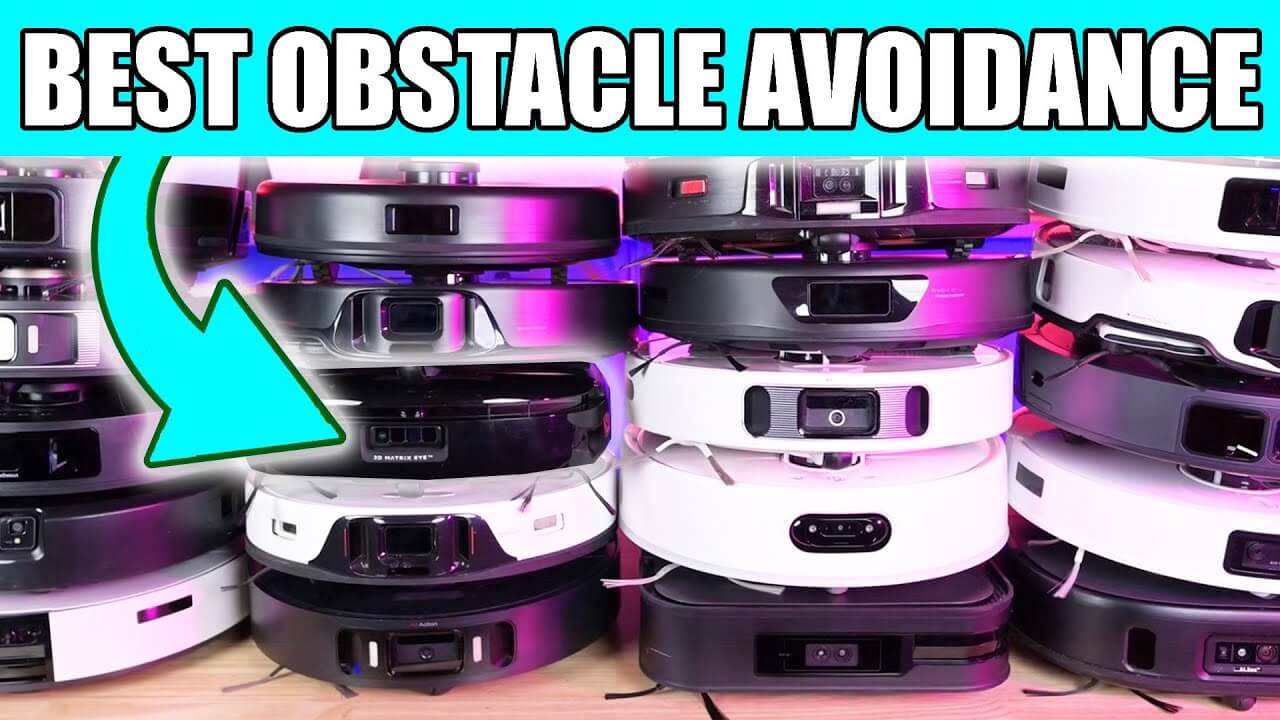
All the robot vacuums vacuum Wars has evaluated.
Many of the robot vacuums we have evaluated. © Vacuum Wars

Current Obstacle Avoidance Systems

Here’s a breakdown of the different obstacle avoidance systems we see in robot vacuums today:

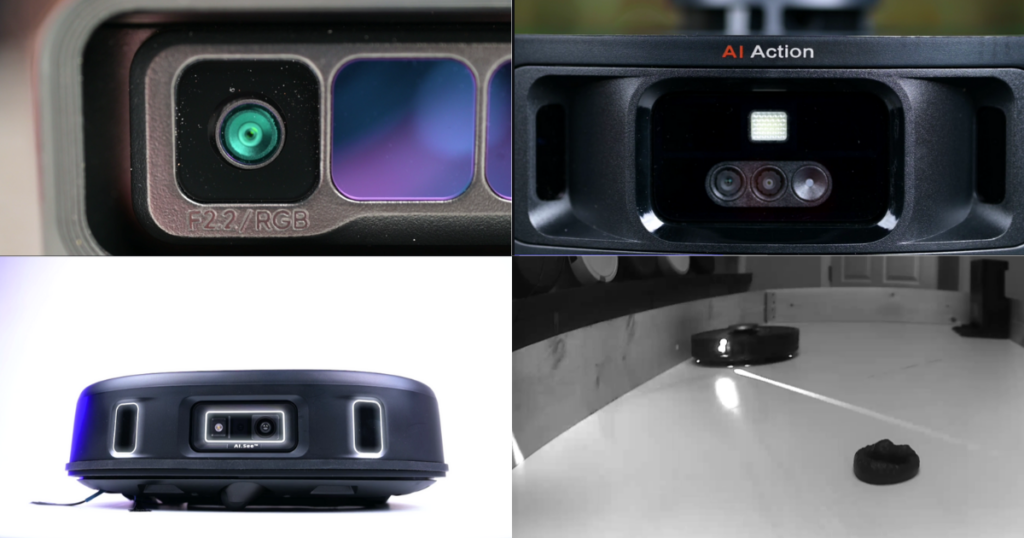
Cameras

High-end robot vacuums commonly rely on front-facing cameras for obstacle avoidance. Early implementations, such as the Ecovacs T8, used a single RGB camera. Today, camera-based systems are typically paired with additional sensors and infrared illumination, allowing the robot to better detect and identify objects in a wider range of lighting conditions. Many modern models also use onboard AI models to help classify common household obstacles rather than simply detecting their presence.

IR Laser / Dual-Line Laser Systems

Many mid-to-high-end robot vacuums use active infrared laser systems that project one or more IR lines in front of the robot. These projected beams—often referred to in marketing as crossed lasers or dual-line lasers—help the robot detect objects in its path by analyzing how the light reflects back. This approach has become extremely popular due to its reliability in low-light environments and is often combined with cameras for improved obstacle recognition.

3D Structured Light

3D structured light systems project a pattern of infrared light onto the environment and detect obstacles by analyzing how that pattern is distorted. This allows the robot to build a depth-based understanding of nearby objects. Structured light is frequently paired with RGB cameras and IR laser systems to provide more detailed obstacle detection and classification, particularly in premium robot vacuum models.

Time of Flight (ToF) Sensors

Time of Flight (ToF) technology emits pulses of light and measures how long they take to return to the sensor, enabling the robot to estimate the distance and size of nearby objects. ToF sensors are most commonly found in flagship and premium models and are often integrated into camera modules rather than marketed as standalone systems. While ToF excels at precise depth measurement, it is typically used alongside cameras or structured light systems for more reliable obstacle identification. An example of this technology can be found in models like the Eufy S1.

Looking at various obstacle avoidance technologies at the Vacuum Wars studio.
Looking at various obstacle avoidance technologies at the Vacuum Wars studio. © Vacuum Wars

How These Systems Work Together

Most modern robot vacuums do not rely on a single obstacle avoidance technology. Instead, manufacturers combine multiple sensor types to balance detection accuracy, object recognition, and reliability across different lighting and floor conditions.

Cameras are typically responsible for object classification, helping the robot identify common household obstacles such as cords, shoes, or pet waste. IR laser and structured light systems provide consistent detection in low-light environments, where cameras alone may struggle. Time of Flight sensors contribute precise depth measurements, improving the robot’s ability to judge distance, object size, and clearance.

By fusing data from these systems, robot vacuums can more effectively decide when to slow down, navigate around an object, or avoid an area altogether. The effectiveness of obstacle avoidance depends not only on the hardware used, but also on how well the robot’s software integrates and interprets information from each sensor.

How Vacuum Wars Tests Obstacle Avoidance

At Vacuum Wars, obstacle avoidance testing focuses on how reliably a robot vacuum detects and avoids real-world household obstacles rather than how advanced its sensor hardware appears on paper.

Testing is conducted using a standardized set of common objects placed in the robot’s path, such as cords, shoes, and other low-profile items that typically cause navigation issues. Each robot is evaluated on its ability to detect obstacles early, avoid direct contact, and maintain consistent performance across multiple passes.

Special attention is given to how well obstacle avoidance systems perform in different lighting conditions, since camera-based solutions can be affected by low light, while IR-based systems tend to remain more consistent. Robots that rely on sensor fusion are evaluated on how smoothly and confidently they navigate around obstacles without excessive hesitation or unnecessary detours.

Rather than scoring individual sensor types, Vacuum Wars’ testing reflects the real-world effectiveness of the complete obstacle avoidance system as experienced during normal use.

Our Updated Testing System

We recently decided it was time to update our obstacle avoidance tests. With rapid advancements in robot vacuum technology, our previous tests were no longer challenging enough, so we revamped them to push these machines further.

Previously, our tests involved running robots through a pre-mapped room where each test run featured a specific category of obstacles—usually light, low-profile items designed to challenge avoidance systems. The highest possible score was 12, with the average robot scoring around 9. As systems continued to improve, we began seeing a few perfect scores, which signaled that it was time to introduce a more demanding challenge.

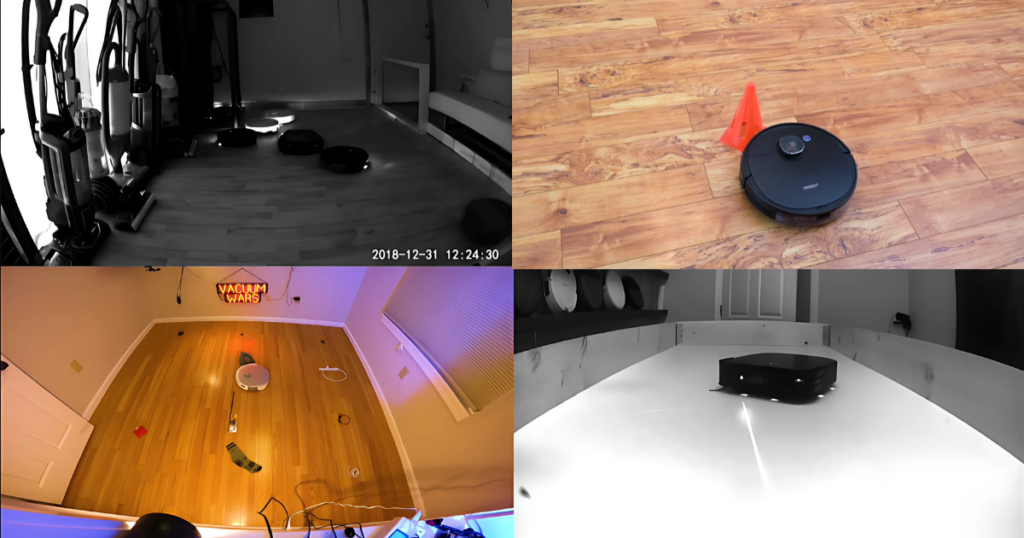
Four unique images of robot vacuum obstacle avoidance tests at Vacuum Wars.
How Vacuum Wars used to evaluate robot vacuum obstacle avoidance capabilities. © Vacuum Wars

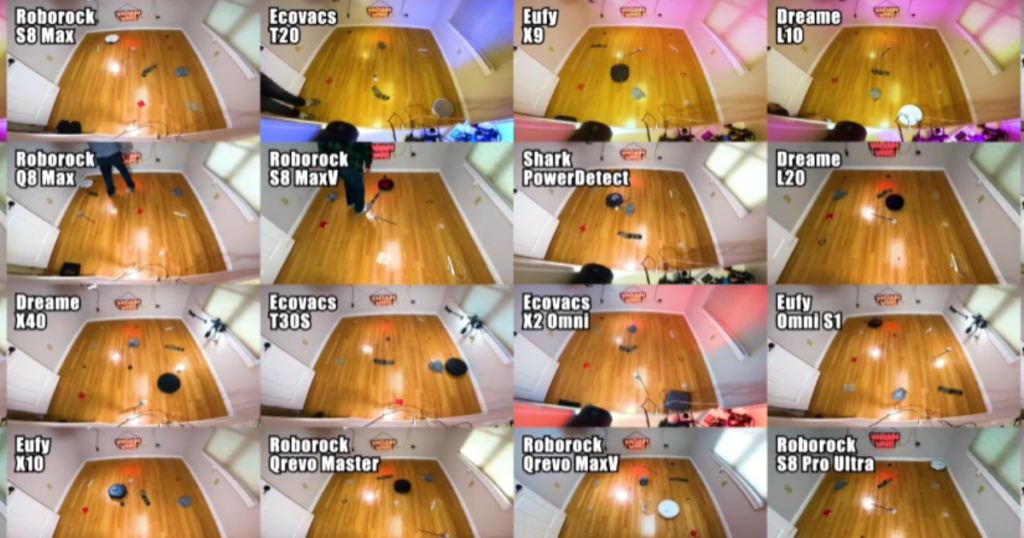
In our new torture test, we used the same objects but placed them all in the room at once, creating a more chaotic environment. This test doesn’t just challenge the robots’ sensors—it also puts their navigation algorithms and processing power to the test as they work to avoid multiple obstacles simultaneously.

We combined the results of both tests to determine the best obstacle avoidance systems currently available.

Our latest robot vacuum obstacle avoidance evaluations.

What We Learned: Lower-Scoring Systems

Robots that rely solely on structured light without a camera or IR laser system have been among the lowest-scoring models we’ve evaluated. At this point, this configuration—often found on lower-end models—simply doesn’t perform well if obstacle avoidance is a priority.

Final Thoughts

While there still isn’t a consensus on the best obstacle avoidance system, we’re getting closer to a solution every day. These technologies continue to improve, and we expect to see even more advancements in the near future.

For historical reference, our original AI and Obstacle Avoidance competition from 2022 is included below.

What we test for

We wouldn’t recommend a robot vacuum just because it could avoid pet waste (although that’s an awesome feature), cords, and other unexpected objects, no matter how good it was at those tasks. A robot vacuum needs to do much more than just those.

Robot Vacuums with Obstacle Avoidance
The robot vacuums with obstacle avoidance and AI we tested. © Vacuum Wars

So, while we created new tests to gauge object avoidance systems, we also incorporated a number of other key robot vacuum performance metrics, too. Those metrics included how well they cleaned on carpets and hard floors, their pickup ability with debris of various sizes, their features, as well as how owners rated them.

Results

Our final scoring involved new tests we developed that were specifically designed to test robot vacuum obstacle avoidance and AI as well as several criteria which we believe to be important to any robot vacuum.

Looking for a more basic robot vacuum? We’ve compiled our list of the Best budget robot vacuum cleaners you can buy in 2025 – check it out!

While the Roborock S7 MaxV was the overall winner, five brands made it into the top five finishers with Dreametech, Samsung, Ecovacs, and iRobot all represented.

The Dreametech Bot Z10 Pro made an impressive showing. Not only did it capture second place, but it was also our budget choice too.

Roborock S7 MaxV: Best robot vacuum with obstacle avoidance and AI

Roborock S7 MaxV Ultra
Our pick for best robot vacuum with obstacle avoidance: Roborock S7 MaxV Ultra.

When we factored in all the criteria for the best robot vacuum with obstacle avoidance the Roborock S7 MaxV came out on top. The S7 MaxV Ultra excelled at just about everything with one obvious shortcoming – its price.

The S7 MaxV is available in three different packages. In each, the robot vacuum and mop itself are identical. What’s different is the docking station and its capabilities. The more sophisticated the dock, the more expensive it is.

One package includes the S7 MaxV as a standalone robot vacuum and mop and it comes with a simple charging dock. A second option, the Roborock S7 MaxV Ultra, is one of the most sophisticated docking stations on the market. Beyond charging the robot, it also empties its dustbin, washes its mopping pads, and refills the robot’s water tank.

Roborocks ReactiveAI Cameras and Sensors
Cameras and sensors used by Roborock’s ReactiveAI object recognition system. © Vacuum Wars

The final variation is in between the two we’ve described and is called the S7 MaxV Plus. The Plus version’s dock charges the robot and empties its dustbin. It is priced between the other two options while closer to the Ultra.

Dreametech Bot Z10 Pro: Best obstacle avoidance robot vacuum value

Dreametech Bot Z10 Pro
Runner up and best value-priced robot vacuum with obstacle avoidance: Dreametech Bot Z10 Pro.

When pricing was factored into the equation, the Dreametech Bot Z10 Pro was the clear winner. Unlike our overall winner, there is only one Z10 Dreametech model, the Z10 Pro. Like the middle-of-the road S7 MaxV, it both charges the robot and empties its dustbin.

Comparing the price of the two, we’ve seen the Z10 Pro sell for nearly ½ the price of the comparable Roborock S7 MaxV variant.

But price wasn’t why the Z10 was picked as our budget robot with obstacle avoidance. It’s because it scored well in all the tests and did so with that more approachable price tag too.

How we tested obstacle avoidance equipped robot vacuums

We mentioned earlier that we developed new tests to better evaluate robot vacuum obstacle avoidance. We created the tests based on strong points, shortcomings, and curious behavior we have observed when using robot vacuums with these systems.

Sensors for Obstacle Avoidance and Navigation - Samsung Jet Bot AI
Samsung’s Jet Bot AI has several sensors for navigation and obstacle avoidance. © Vacuum Wars

All the robots we tested

In this round of testing, we included ten robot vacuums, each with obstacle avoidance and most with artificial intelligence of some kind. The ten robots were:

Robot Vacuum VacuumMop
Dreametech Bot Z10YesYes
Ecovacs Deebot N8 ProYesYes
Ecovacs Deebot Ozmo T8 AIVIYesYes
Ecovacs Deebot Ozmo 960YesYes
Ecovacs Deebot X1 OmniYesYes
iRobot Roomba j7YesNo
Roborock S6 MaxVYesYes
Roborock S7 MaxVYesYes
Samsung Jet Bot AIYesNo
Shark AI VacmopYesYes
Robot vacuums with obstacle avoidance that we tested.

Six Standard Objects test

This test involves six objects spaced out evenly on a hard floor. Each of the objects is something we would expect robot vacuums with obstacle avoidance to have programmed in their image library and therefore able to identify and avoid.

The objects were a few cords, novelty pet waste, a cloth, and a small toy vacuum. The test was to see how good the robotic vacuums were at not only getting stuck, but avoiding contact with the objects.

Top performers

  • Roborock S7 MaxV – perfect score, tie for 1st
  • Samsung Jet Bot AI – perfect score, tie for 1st
  • iRobot Roomba j7 – 2nd
AI and Obstacle Avoidance Equipped Robot Vacuum and Mops
Some of the AI and obstacle avoidance-equipped robots we tested. © Vacuum Wars

The Pet Waste test

In this test, the same layout was used as in the six standard objects test, but each of the six items was simulated pet waste.

Top performers

We’re providing five top performers for the pet waste test, as there was a five-way tie for first place with each robot getting a perfect score. Our fake pet waste looks pretty real – this must be something engineers worked hard on with their AI algorithms and object library training.

  • Ecovacs Deebot X1 Omni – perfect score, tie for 1st
  • iRobot Roomba j7 – perfect score, tie for 1st
  • Roborock S6 MaxV – perfect score, tie for 1st
  • Roborock S7 MaxV – perfect score, tie for 1st
  • Samsung Jet Bot AI – perfect score, tie for 1st

High performer

The Deebot X1 Omni not only did well with obstacle avoidance, it did well all around! Check out our Deebot X1 Omni review if you’re in the market for a premium robot vacuum and mop and our comparison of the S7 MaxV Ultra and Deebot X1 Omni.

The Cones test

The cones test is the same as the Pet Waste test but with cones. Once again, it is the same layout.

In the end, this test was a better reflection of how aggressive each robot was as opposed to being a great gauge of its object avoidance and artificial intelligence.

Confused Robot Vacuum with Obstacle Avoidance
Non-standard objects and patterns pose challenges for obstacle avoidance tech. © Vacuum Wars

The Torture test

We also set up a seven object torture test. This test included both common objects, like shoes and socks but also objects that most likely weren’t programmed into any of the image libraries the robots used.

For this test, the pattern was also more random with some obstacles closer to others. We also included two rugs with objects placed on them. One rug was solid red with red items. The other rug had a pattern with a contrasting item placed in its center.

High Scoring AI-based Obstacle Avoidance - Samsung Jet Bot AI
Samsung’s Jet Bot AI demonstrating its excellent obstacle avoidance capabilities. © Vacuum Wars

Top performers

There were no perfect scores in the obstacle avoidance torture test, but there was a clear first, second, and third place.

  • Samsung Jet Bot AI – 1st
  • Roborock S7 MaxV – 2nd
  • Dreametech Bot Z10 – 3rd

The Blue-on-blue test

In this test, three different blue items were placed on a blue carpet with a complicated pattern.

Robot Vacuum Obstacle Avoidance Testing
A robot vacuum completing a new obstacle avoidance test. © Vacuum Wars

This test was based on some behavior previously seen where a robot would avoid an object on hard flooring, but run into or over it on a more complicated surface such as carpet.

Top performers

In the top four finishers, there were two ties, so we have four robots below.

  • iRobot Roomba j7 – perfect score, tie for 1st
  • Samsung Jet Bot AI – perfect score, tie for 1st
  • Ecovacs Deebot Ozmo T8 AIVI – tie for 2nd
  • Roborock S7 MaxV – tie for 2nd
Robot Vacuum Real World Use
A robot vacuum pushing an object around while cleaning. © Vacuum Wars

The Timed test

This final new test was to see how efficient each robot vacuum was. First, each robot mapped out a room without any obstacles. Next, three obstacles were added to the room. Finally, the robot was tasked with cleaning that room.

Each robot was timed to see how long it took to complete the test.

Top performers

  • Ecovacs Deebot X1 Omni – tie for 1st
  • Ecovacs Deebot Ozmo T8 AIVI – tie for 1st
  • Dreametech Bot Z10 – 2nd

Results of obstacle avoidance tests alone

We aren’t making our final picks based solely on the obstacle avoidance tests. We also took into consideration several key aspects that make a robot vacuum a good one.

If we only look at the results from the new, obstacle avoidance-specific tests, first place would go to the Samsung Jet Bot AI, which won by a decent margin. Second place would go to the Roborock S7 MaxV. Rounding out the top three would be iRobot’s Roomba j7.

Roborock S7 MaxV Vacuuming
Our top pick excels at everything that makes a robot vacuum good. © Vacuum Wars

Conclusion

We’re glad we took the time and created some new ways of evaluating robot vacuums with obstacle avoidance. By incorporating other key characteristics in the best robot vacuums we think we have found a good foundation for future tests.

At the end of the day, one thing is very clear – no robot vacuum is perfect at obstacle avoidance. That might be the most important takeaway for anyone shopping for one at this time. What’s exciting is how far they have come from the first robot vacuums and how fast they are evolving.

More Best Robot Vacuums: Top 20 | Under $300 | $300 to $600 | $600 to $1,000 | $1,000 to $1,300 | $1,300 to $1,600 | $1,600 and Up | Obstacle Avoidance | Pet Hair | Mopping

Frequently Asked Questions About Robot Vacuum Obstacle Avoidance

What is obstacle avoidance in robot vacuums?

Obstacle avoidance refers to a robot vacuum’s ability to detect and navigate around objects on the floor, such as cords, shoes, toys, and pet waste. Unlike basic navigation systems that rely on bump sensors or wall detection, obstacle avoidance uses cameras, infrared lasers, structured light, or depth sensors to identify obstacles before the robot makes contact.

Do all robot vacuums have obstacle avoidance?

No. Many budget and entry-level robot vacuums still rely primarily on bump sensors and basic infrared sensors. These models can avoid walls and large furniture but often struggle with smaller or low-profile objects. Dedicated obstacle avoidance systems are most commonly found on mid-range to premium robot vacuums.

What is the most accurate obstacle avoidance system in robot vacuums?

There isn’t one sensor type that consistently performs best on its own. The most accurate systems typically combine multiple technologies, such as cameras for object recognition and infrared laser or structured light systems for reliable detection in low-light conditions. Sensor fusion and software tuning often have as much impact on performance as the hardware itself.

Are camera-based robot vacuums reliable in low light?

Camera-based obstacle avoidance can be less reliable in very low light if the system depends heavily on visible-light imaging. To compensate, many modern robots pair cameras with infrared illumination, structured light, or IR laser systems, which helps maintain more consistent obstacle detection in dim rooms.

Is LiDAR used for obstacle avoidance?

LiDAR is primarily used for navigation and mapping, not true obstacle avoidance. Because top-mounted LiDAR sensors sit several inches above the floor, they often can’t detect low-profile items like cords, socks, or small toys. That’s why robots that excel at obstacle avoidance usually include additional front-facing sensors positioned closer to the ground.

What types of obstacles are hardest for robot vacuums to avoid?

Thin, flexible, or very low-profile objects are usually the most challenging. Common examples include charging cables, drawstrings, socks, and lightweight fabric items. Performance varies widely depending on the robot’s sensor combination, object recognition software, lighting conditions, and floor type.

Does obstacle avoidance mean a robot will never hit objects?

No. Even advanced obstacle avoidance systems aren’t perfect. Occasional light bumps or close passes can still happen, and performance can vary based on lighting, object color, shape, reflectivity, and how cluttered the room is.

How does Vacuum Wars test obstacle avoidance?

Vacuum Wars evaluates obstacle avoidance using standardized household objects placed in the robot’s path. Models are tested across multiple runs to measure detection consistency, avoidance behavior, and performance under different lighting conditions. Rather than scoring individual sensor types, the testing focuses on the real-world effectiveness of the complete obstacle avoidance system.

Is obstacle avoidance worth paying extra for?

It often is, especially in homes with pets or everyday clutter. Better obstacle avoidance can reduce the risk of getting tangled in cords, dragging items around, or getting stuck mid-clean. It may also help prevent damage to the items or even the robot vacuum itself. If your floors are usually clear, the benefits may be less noticeable, and a simpler model may be sufficient.

Will obstacle avoidance systems continue to improve?

Yes. Obstacle avoidance is still improving through better AI-based object recognition, more accurate depth sensing, and stronger sensor fusion. While no system is flawless, newer models tend to be more consistent and reliable than earlier generations, especially in mixed lighting and cluttered environments.

Vacuum Wars independently buys and tests every vacuum and floorcare product we review—providing unbiased, data-driven insights so you can make informed buying decisions and find the right technology for your home. Read more about how we test robot vacuums.

More Robot Vacuum Reviews

  • MOVA S10 Robot Vacuum Review — Budget LiDAR Robot Vacuum With Mopping

    The MOVA S10 is one of the most capable budget robot vacuums we’ve tested, offering lidar navigation, mopping, strong suction, and standout battery life. Here’s how it performed in all our Vacuum Wars tests and how it compares to the Roomba 600 series.

  • Dreame Matrix10 Ultra Robot Vacuum Review: Hands-On Testing vs Dreame L50 Ultra

    The Dreame Matrix10 Ultra is Dreame’s latest and most innovative robot vacuum and mop combo, featuring a unique mop-switching system not found on any other model. We purchased one and tested it over several weeks to see how it performs in real-world use. In this Dreame Matrix10 Ultra review, we break down its pros and…

  • Matic Robot Vacuum Review: A New Approach to Robot Vacuum and Mop Design

    A fresh look at the innovative Matic robot vacuum, built from the ground up with a unique design that delivers impressive performance but also introduces some notable trade-offs. This review breaks down its strengths and weaknesses after extensive hands-on testing.

  • Top Robot Vacuums for Any Budget (Late 2025) — Our Picks by Price Range

    Robot vacuums can range from $150 to $2,500, with dramatically different features at each tier. In our Best Robot Vacuum for Any Budget – Late 2025 guide, we break down the winners by price range to help every shopper find the right fit—whether you need an affordable starter model or a top-tier robot vacuum mop…

  • Best Robot Vacuum Above $1600 – December 2025

    Explore Vacuum Wars’ top picks for robot vacuums above $1,600 — the frontier of home cleaning innovation. From robotic arms to multi-mop switching docks, these flagship models showcase the most advanced automation and smart features available today, all backed by Vacuum Wars’ independent testing and real performance data.

  • Best Robot Vacuum $1000 to $1300 – December 2025

    We buy and test every robot vacuum ourselves, and our $1000–$1300 pick is based on real data, not marketing claims. We look for premium performance as well as features like strong suction, advanced navigation, and self-empty docks without the ultra-premium price.

  • Best Robot Vacuum $1300 to $1600 – December 2025

    Looking for the best robot vacuum between $1300 and $1600? We buy every robot vacuum we test, so our rankings reflect real performance data. After evaluating 150+ models, we found standout robots in this range that deliver flagship-level cleaning without the ultra-premium price.

  • MOVA Z60 Ultra Roller Complete Robot Vacuum Review: Can It Outperform the Dreame Aqua10?

    We tested the MOVA Z60 Ultra Roller Complete, Dreame’s latest sub-brand flagship robot vacuum and mop combo, to see how it stacks up against the Dreame Aqua 10 Roller. Both impressed, but the Z60’s superior mopping performance and hair management helped it come out on top in our tests.

More Reviews

Home Best Vacuum Cleaners Best Robot Vacuums The Best Robot Vacuums with Obstacle Avoidance

Christopher White

author avatar
Christopher White CEO
Christopher White is the CEO of Vacuum Wars, the premier YouTube channel dedicated to vacuum cleaner reviews. Over the past eight years, Vacuum Wars has become a trusted resource, meticulously reviewing hundreds of robot vacuums, cordless vacuums, carpet cleaners, and various floor care products. Known for their comprehensive in-house testing, Vacuum Wars has built one of the most extensive databases of vacuum cleaner metrics available. Under Christopher’s leadership, the channel has maintained a strict no-sponsorship policy, ensuring that all reviews remain unbiased and trustworthy. This dedication to integrity has garnered a loyal following of over 300,000 subscribers who rely on their expert advice. Christopher is also a recognized authority on robot vacuums, boasting one of the largest private collections of these devices worldwide. Learn more.

Our Top Picks

Current Vacuum Wars product rankings:

Best Cordless Vacuums
Best Robot Vacuums
Best Upright Vacuums
Best Carpet Cleaners
Best Air Purifiers
Best Spot Cleaners