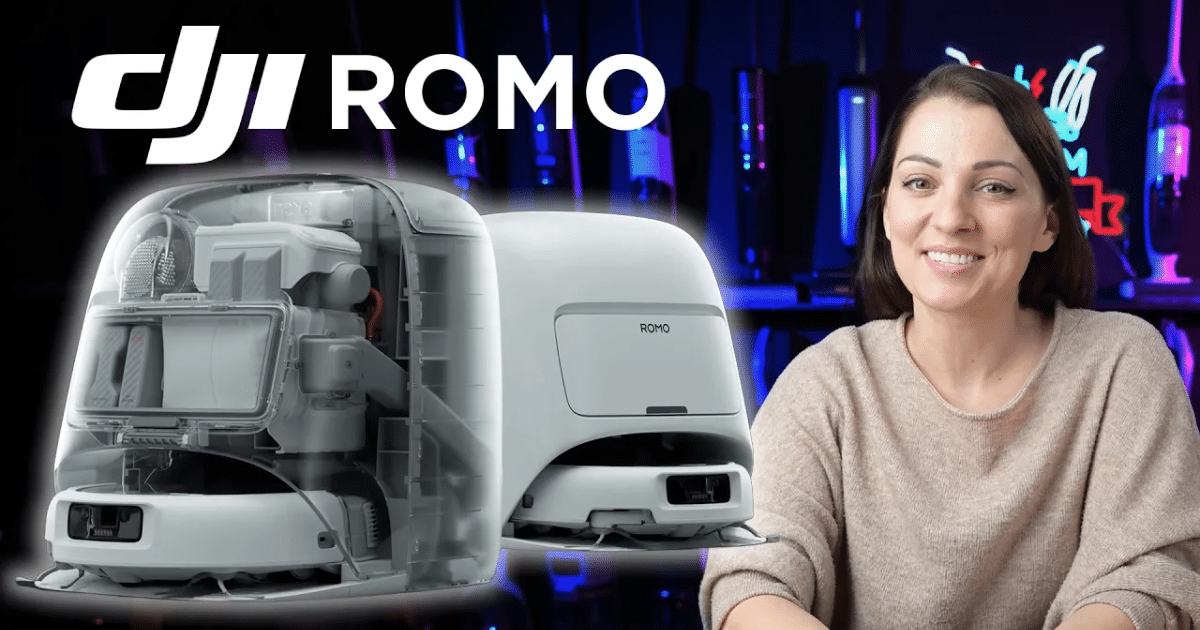
DJI is a major tech brand known for its groundbreaking drone technology, and it’s steadily expanding into broader robotics from its base in Shenzhen, China. The company has been a world leader in drone technology for years, so the prospect of the DJI Romo robot vacuum is understandably exciting for both users and tech enthusiasts. Given DJI’s success with drones, many people expect its robot vacuums to be especially strong in navigation, obstacle avoidance, hardware quality, and overall performance. Here’s what’s been publicly shared so far about the DJI Romo robot vacuum series.
What is the DJI Romo Robot Vacuum?
The widely discussed DJI Romo vacuum series consists of three models:
- Romo S (entry level)
- Romo A (mid-range)
- Romo P (premium)
Based on current pricing and positioning, these models range in list price from the upper end of the mid-range category to ultra-premium price tiers.
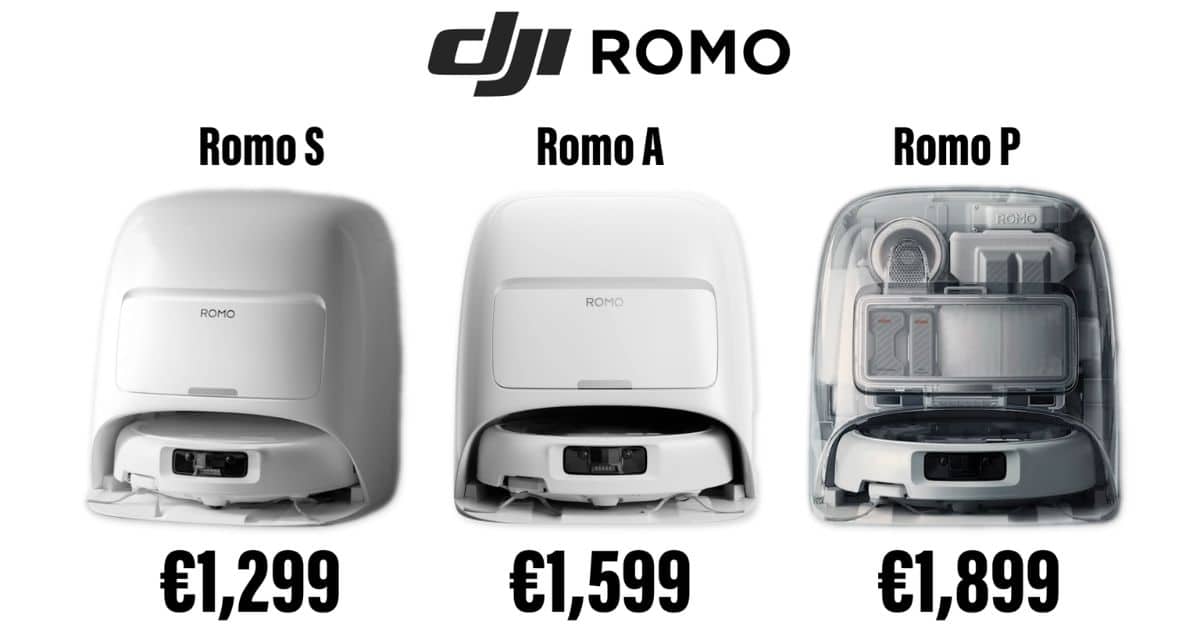
The Romo P is getting the most online attention. It appears to stand out for its almost completely transparent dock and robot body, a highly distinctive design choice compared to other robot vacuums on the market.
DJI Romo Navigation and Obstacle Avoidance Technology
One of the Romo’s most anticipated features is its navigation and obstacle avoidance system. It’s described as using fisheye lens cameras and dual-transmitter solid-state LiDAR for mapping and avoiding obstacles.
There’s also a machine learning component intended to recognize objects. The LiDAR appears to be embedded in the robot vacuum using a wide-angle window in the front, rather than a traditional top-mounted turret.
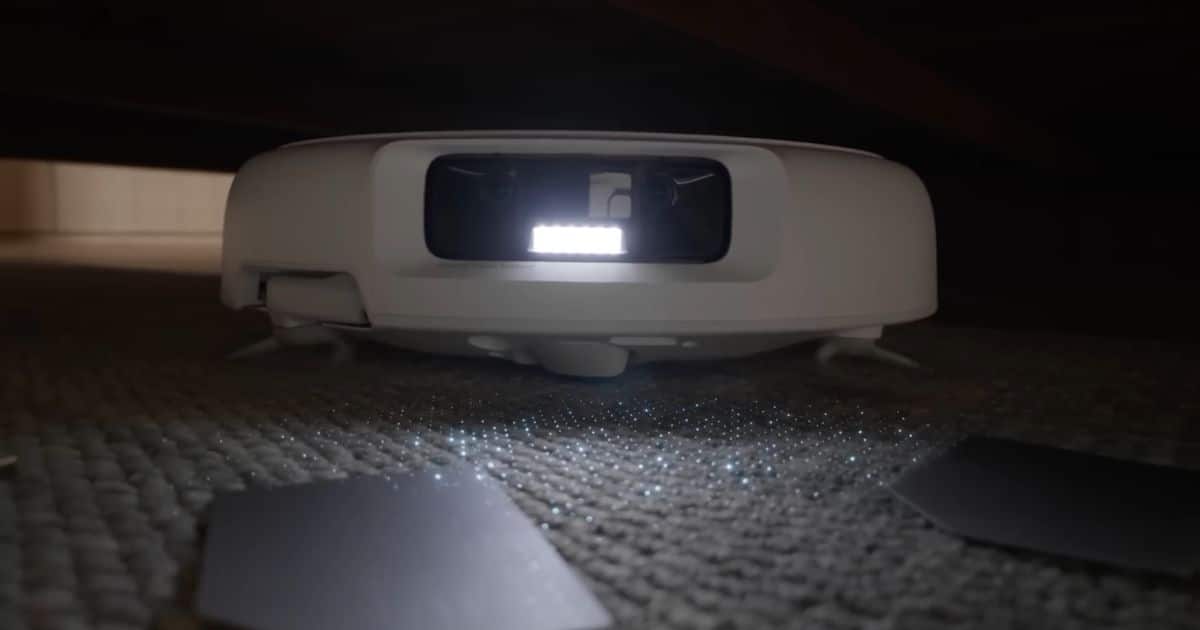
There’s considerable speculation about how DJI’s expertise in drone navigation may overlap with its robot vacuum technology. This is apparent even though the technologies required to prevent a drone from crashing into a tree at 20 mph differ significantly from those needed to enable a robot to navigate around cables in a living room.
Based on early impressions from international reviewers online, the DJI Romo robot vacuum appears to meet some of the expectations for navigation performance.
Cleaning Specs and Hardware
As for cleaning specifications, the DJI Romo robot vacuum lineup claims an official suction rating of up to 25,000 pascals.
According to available spec sheets, the main brush roller uses a dual rubber brush design with a gap between the brushes, similar to the configuration found on some Roborock models.
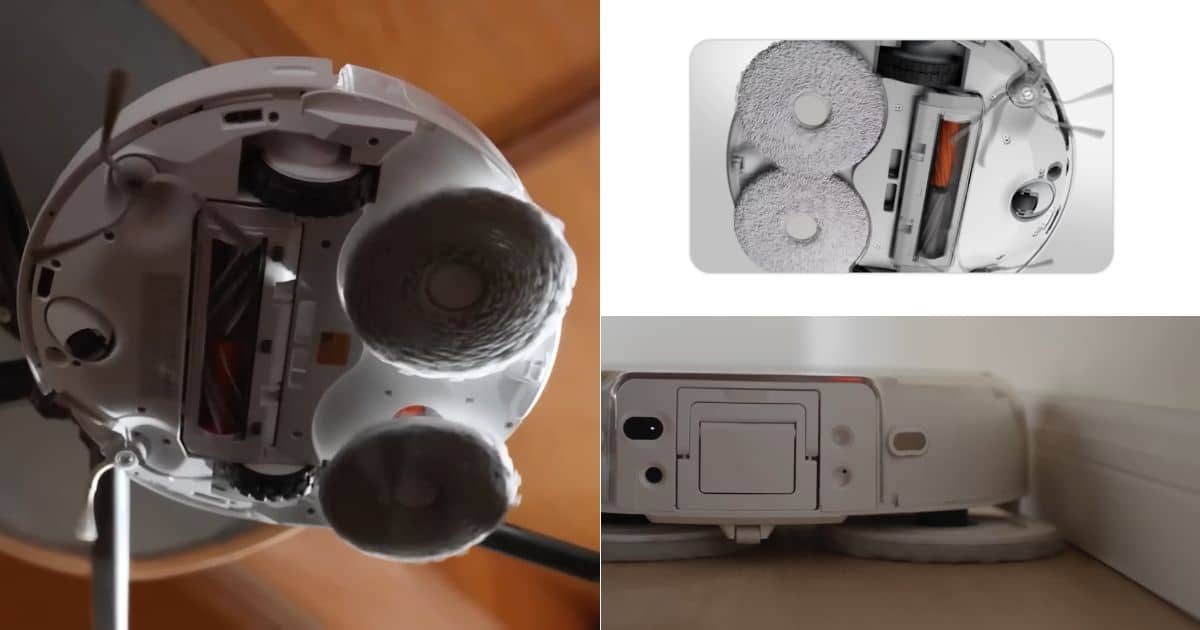
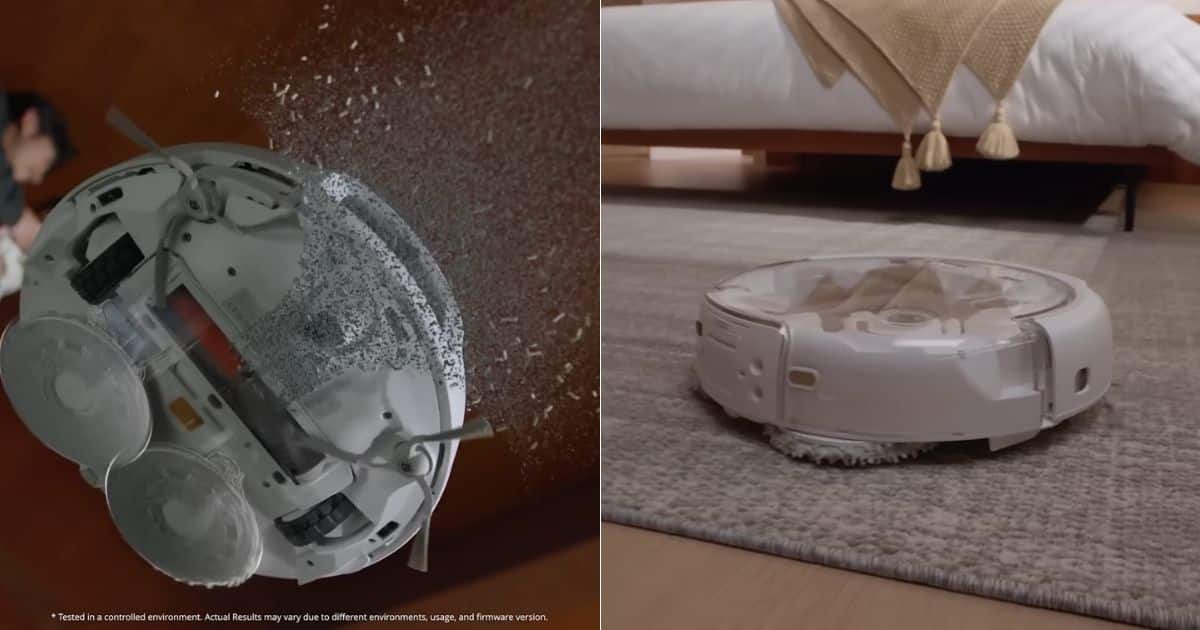
The Romo features two side brushes that can adjust their speed to help prevent debris from scattering during pickup. All three models include dual spinning mop pads. One of the mop pads is designed to extend outward to improve edge coverage along walls and cabinets.
The premium DJI Romo P base station is described as including two cleaning solutions: one for general cleaning and one for deodorizing. It also includes a UV light intended to disinfect the dust bag.
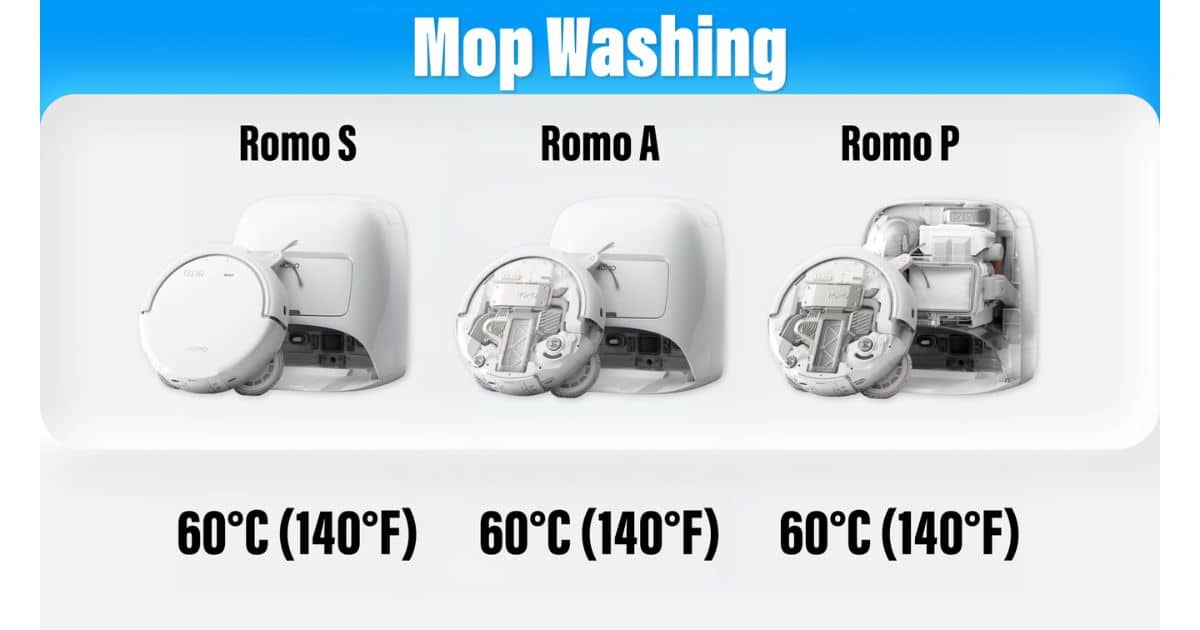
Additionally, the specifications list heated water for mopping and washing up to 60°C (140°F). They also use high-pressure water jets and apply downward pressure to the mop pads to support more forceful scrubbing during cleaning.
The robot’s internal dust bin empties into a disposable bag in the dock, and DJI claims up to 200 days of debris storage under typical use conditions.
Robot Vacuum Mop Systems Explained
Flat pad, dual spinning pad, and roller mop systems all clean differently. See how each design works—and what our real-world testing shows about stain removal and water handling. Learn About Robot Vacuum Mop Systems
Design and Feature Tradeoffs
Based on the available information, a few aspects of the DJI Romo series are worth noting.
Cost-to-Feature Ratio
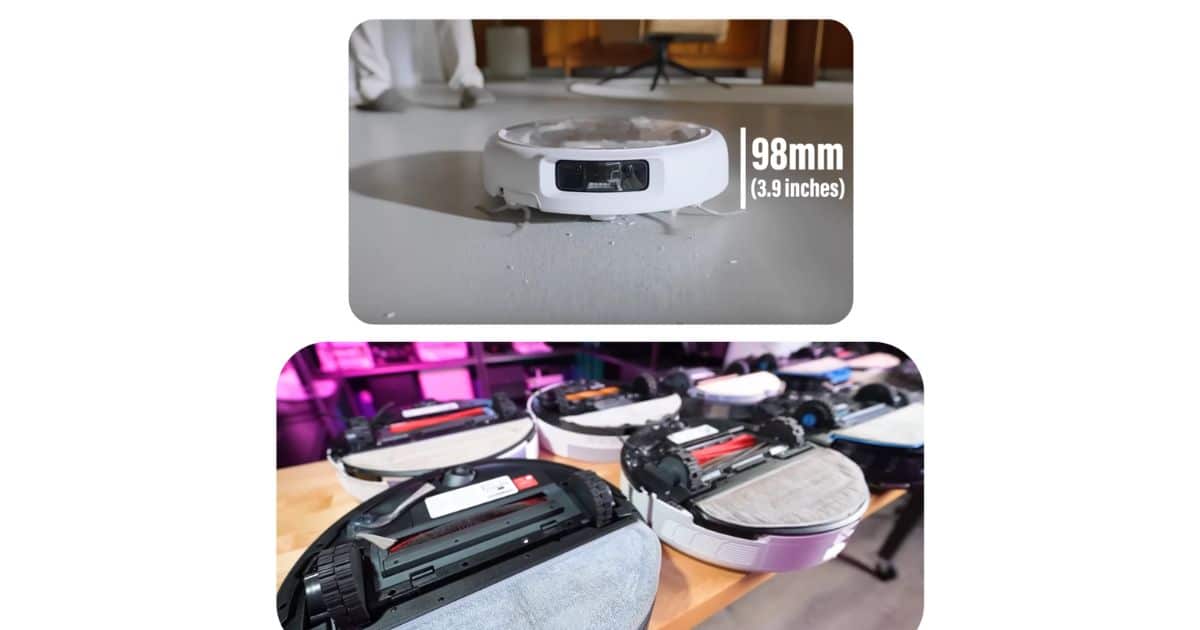
The robot’s height is listed at 98 mm, even though its LiDAR is embedded rather than turret-mounted. Many competitors at this price tier have been pushing toward shorter designs to improve access under low furniture, so 98 mm is somewhat tall by comparison.
Threshold Climbing
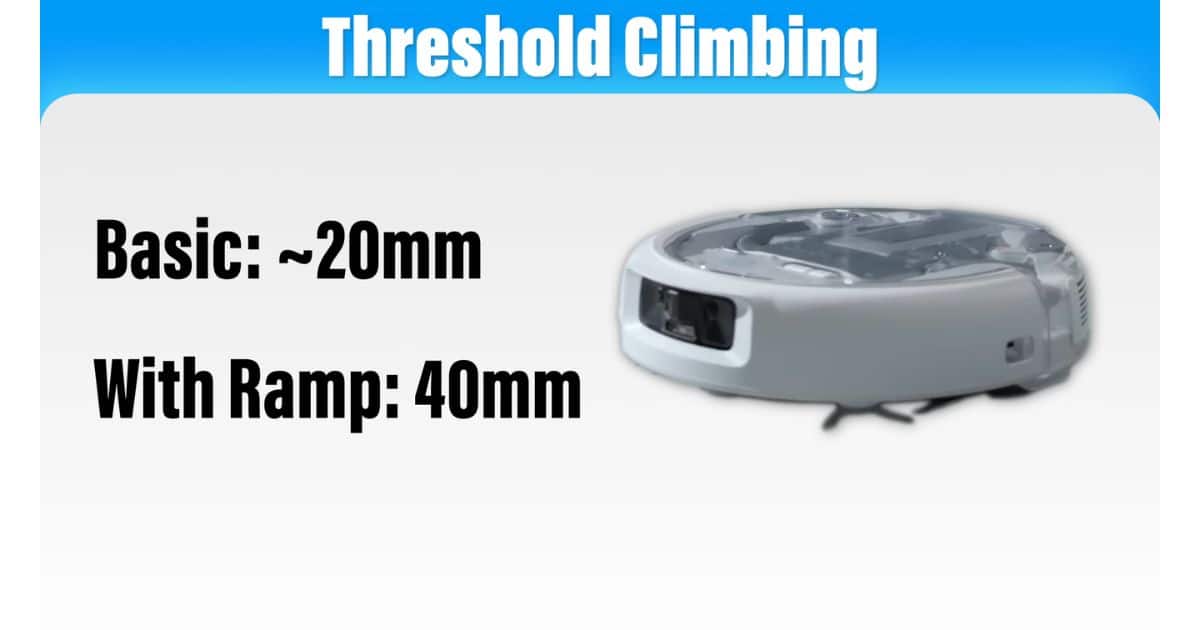
Threshold climbing capability appears to be standard, with no indication that it exceeds the typical 20 mm range. DJI also offers an accessory ramp marketed to help with 40 mm thresholds. Publicly available materials also suggest the robot vacuum will clean along thresholds as part of its obstacle recognition, reducing the need to go over them.
Mop Pads
The mop pads don’t appear to lift much, if at all. The robot vacuum also doesn’t leave the mop pads behind in the dock. For homes with extensive mixed flooring (hard floors and carpets), this may limit flexibility compared to some competitors.
Models Don’t Vary Much
Another concern is the differences between the three models. Aside from added features in the Romo P’s base station, there doesn’t appear to be a substantial variation between the entry-level and premium versions beyond aesthetics.
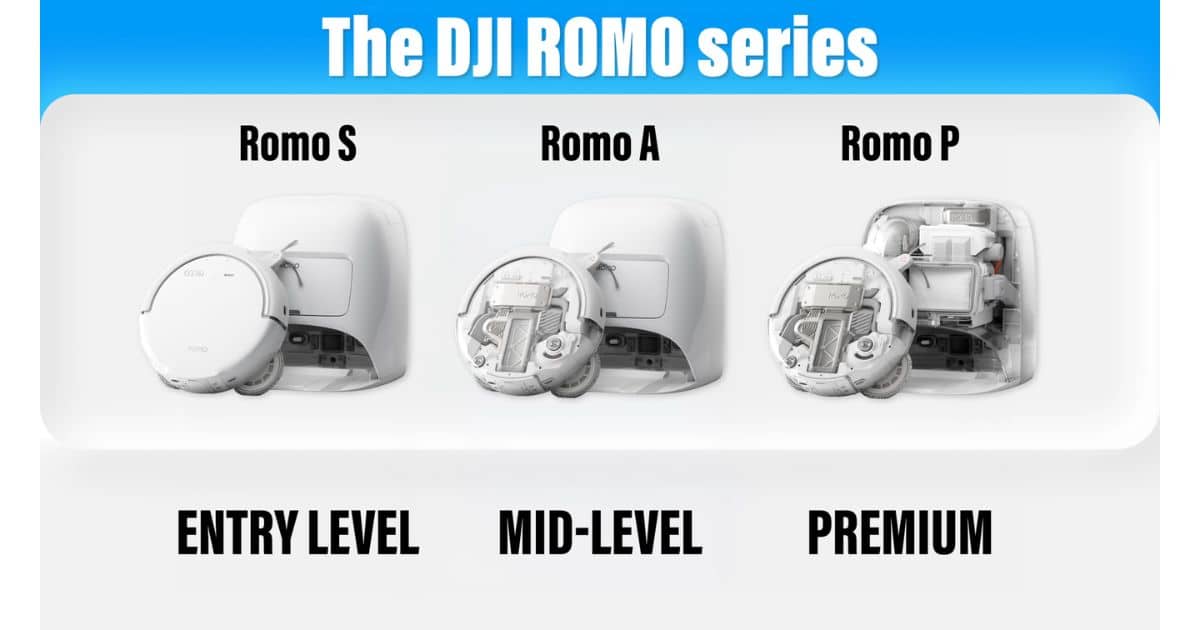
Given the several-hundred-dollar price range (€1299, €1599, and €1899), it’s not immediately obvious what justifies the gap. There may be distinctions not obvious from the available materials, but they are not clearly specified.
Design Considerations
There’s a broader design consideration regarding the transparent dock and robot vacuum body. In our experience working with robot vacuums, the base station dust bin tends to accumulate visible debris over time. A transparent enclosure may highlight this in a way some users would find undesirable.
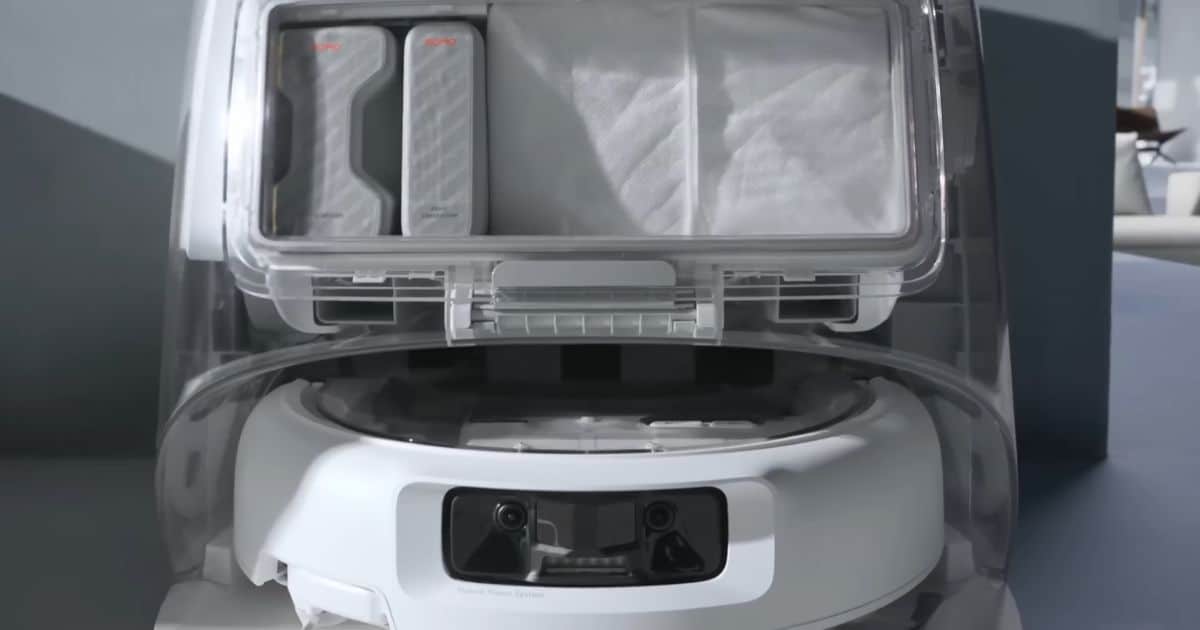
Unless DJI has implemented a method to prevent visible dust buildup, the transparent aesthetic could be a downside for some customers.
Why Isn’t the DJI Romo Robot Vacuum Available in the US?
The DJI Romo vacuum is not officially supported in the US at this time, and DJI has not announced a US launch timeline. More broadly, DJI has faced increasing US regulatory scrutiny for its drone products, particularly around communications hardware and security concerns. These include FCC actions that effectively blocked new DJI drone models from entering the market.
While the Romo isn’t a drone, DJI hasn’t launched it in the US at this time. Some tech-savvy users have reportedly experimented with VPNs or region-based workarounds. However, that places the product outside our review standards.
Our evaluation protocol is built around products we can purchase, evaluate, and use exactly as intended within our region.
Will Vacuum Wars Evaluate the DJI Romo Robot Vacuum?
If and when DJI officially launches the Romo series in the US, we would be very interested in evaluating it using our independent protocol. We purchase all robot vacuums ourselves and assess them in-house to ensure our recommendations are based solely on direct experience and standardized performance data.
Until the DJI Romo robot vacuum is officially supported in the US, we will continue to monitor developments and rely on publicly available information. If availability changes, we will update our coverage accordingly.
For current top-rated models available in the US, see our latest rankings on the Vacuum Wars Best Robot Vacuums page.
Top 20 Robot Vacuums
Vacuum Wars’ always up-to-date rankings of the best robot vacuums. Because we purchase every unit ourselves, each recommendation is built on hands-on data. Our work now spans more than 150 models, giving us a deep benchmark for judging cleaning power, navigation smarts, battery life, and advanced features such as obstacle avoidance and mopping.