Vacuum Wars is reader supported. When you make a purchase using links on our site we may earn a commission. Details.

DJI Romo Robot Vacuum Security Flaw Allowed Remote Camera and Data Access

A significant security vulnerability in the DJI Romo robot vacuum platform allowed unauthorized access to thousands of devices worldwide, potentially exposing live camera feeds, microphone audio, and home mapping data. The issue was first reported by The Verge.

According to the Verge report, the flaw was discovered by tech strategist Sammy Azdoufal while experimenting with a custom app designed to control his own Romo unit. Instead of connecting solely to his vacuum, the app reportedly received responses from approximately 7,000 Romo devices across at least 24 countries.

What Data Was Exposed

The vulnerability allowed access to sensitive device data, including:

  • Live video feeds from the robot’s onboard camera
  • Microphone audio
  • Real-time cleaning routes and 2D floor maps
  • Telemetry such as battery status and cleaning location

Because many modern robot vacuums use cameras for navigation and remote monitoring, this type of exposure raises obvious privacy concerns.
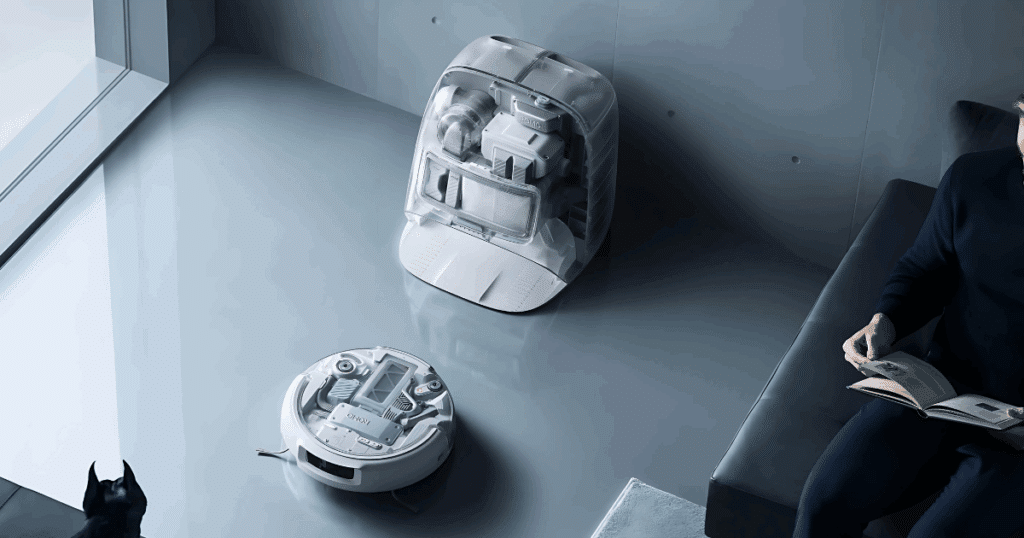
DJI Romo at Home
The DJI Romo robot vacuum, a camera-equipped smart cleaning device at the center of a reported security vulnerability. Image Source: DJI

What Caused the Issue

According to The Verge, the problem stemmed from backend cloud permission controls rather than a flaw in local device hardware. Once a client authenticated with DJI’s server infrastructure, it could subscribe to broader data channels than intended.

Although communications were encrypted in transit, encryption alone did not prevent improperly authorized access once connected to the cloud system.

DJI’s Response

DJI reportedly deployed two automatic patches on February 8 and February 10 intended to close the most serious vulnerabilities. The company stated that the updates did not require user action and were applied automatically to connected devices.

At the time of reporting, DJI indicated that additional fixes were forthcoming to address remaining issues.

Broader Smart Home Implications

The incident highlights ongoing security challenges within the smart home category, particularly for connected devices equipped with cameras and microphones. As robot vacuums increasingly incorporate advanced navigation systems and remote viewing capabilities, cloud-level access control becomes as important as device-level security.

For owners of DJI Romo units, ensuring the device remains online to receive updates is currently the most practical step.

Vacuum Wars will continue monitoring developments and update readers if further security guidance or firmware updates are announced.

Top 20 Robot Vacuums

Explore Vacuum Wars’ always up-to-date rankings of the best robot vacuums, based on independent, hands-on testing. We purchase every unit ourselves and have evaluated more than 150 models, giving us a deep benchmark for cleaning performance, navigation, battery life, and advanced features like obstacle avoidance and mopping.

Top 20 Best Robot Vacuums
author avatar
Lisa Tatar
Since joining Vacuum Wars in 2020, Lisa has contributed to in-depth product reviews and educational content focused on vacuum cleaners and floor-care technology. She also plays a key role in website strategy, content optimization, and site management, helping ensure accuracy, clarity, and a high-quality user experience. With a background in communications and hands-on experience as a working parent and pet owner, Lisa brings both professional expertise and real-world perspective to her work.

More News at Vacuum Wars

  • What the FCC’s New Robot Vacuum Rules Could Mean for Future Manufacturing

    The FCC's new rules for foreign-produced robot vacuums could reshape how future models are designed and manufactured. Rather than simply moving assembly to the United States, manufacturers may face a broader challenge involving batteries, semiconductors, motors, sensors, and other critical supply-chain components. Here's what the new rules require, what remains uncertain, and what it could…

  • Narwal Launches Freo 20 Robot Vacuum With Real-Time Self-Cleaning Flat Roller Mop

    Narwal has announced the Freo 20, a new robot vacuum and mop that brings the company’s FlowWash real-time self-cleaning mopping system to its more accessible Freo lineup. The Freo 20 combines a continuously washed roller mop with 31,000 Pa of claimed suction, dual-camera obstacle avoidance, anti-tangle brushes, edge-cleaning technology, and a redesigned multifunctional dock with…

  • Roborock Q Revo 2 Pro Robot Vacuum Launches With an Upgraded Multifunctional Dock

    Roborock’s Q Revo 2 Pro adds several notable upgrades to the company’s robot vacuum lineup, including 20,000 Pa suction, automatic mop removal, dual anti-tangle brushes, and improved edge cleaning. It also introduces a shorter, redesigned multifunctional dock with heated mop washing, warm-air drying, automatic emptying, water-tank refilling, and an upgraded cleaning tray with a soaking…

  • America’s Robot Vacuum Ban: What You Need to Know

    The FCC has expanded its Covered List to include foreign-produced advanced robotic devices, a category that appears to include most modern robot vacuums. While existing robots and current models remain unaffected, future foreign-produced models could face new hurdles before they can be sold in the United States.

  • Why Is the U.S. Restricting New Foreign Robot Vacuums? The Government’s National Security Concerns Explained

    Why is the federal government restricting new foreign-produced robot vacuums? We examine the FCC's official explanation, the national security concerns behind the new Covered List restrictions, and why officials believe connected robots pose cybersecurity and supply chain risks. We also explain what the changes mean for existing robot vacuums and why current owners are not…

  • Robot Vacuum Brands Respond to FCC Restrictions as U.S. Robotics Groups Voice Support

    Robot vacuum brands are reassuring customers that current products remain available and supported, while U.S. robotics companies and policy organizations are welcoming the FCC’s new restrictions as a step toward strengthening domestic manufacturing and technology supply chains.

  • Conditional Approval for FCC Authorization: What’s the Process for New Foreign-Produced Robot Vacuums?

    The FCC and Department of War have outlined the application process that could allow foreign-produced robot vacuums to continue receiving FCC authorization. Here's what manufacturers must submit and what it means for future robot vacuum releases.

  • Will Your Robot Vacuum Still Work? What the FCC’s New Rules Mean

    The FCC's new restrictions on foreign-produced advanced robotic devices have raised questions for robot vacuum owners. This article explains what the Covered List update actually does, why existing robot vacuums can still be bought and used, how firmware updates are handled, and what the new rules could mean for future robot vacuum models entering the…

More News

Home • News • DJI Romo Robot Vacuum Security Flaw Allowed Remote Camera and Data Access

Our Top Picks

Current Vacuum Wars product rankings:

Best Cordless Vacuums
Best Robot Vacuums
Best Upright Vacuums
Best Carpet Cleaners
Best Air Purifiers
Best Spot Cleaners