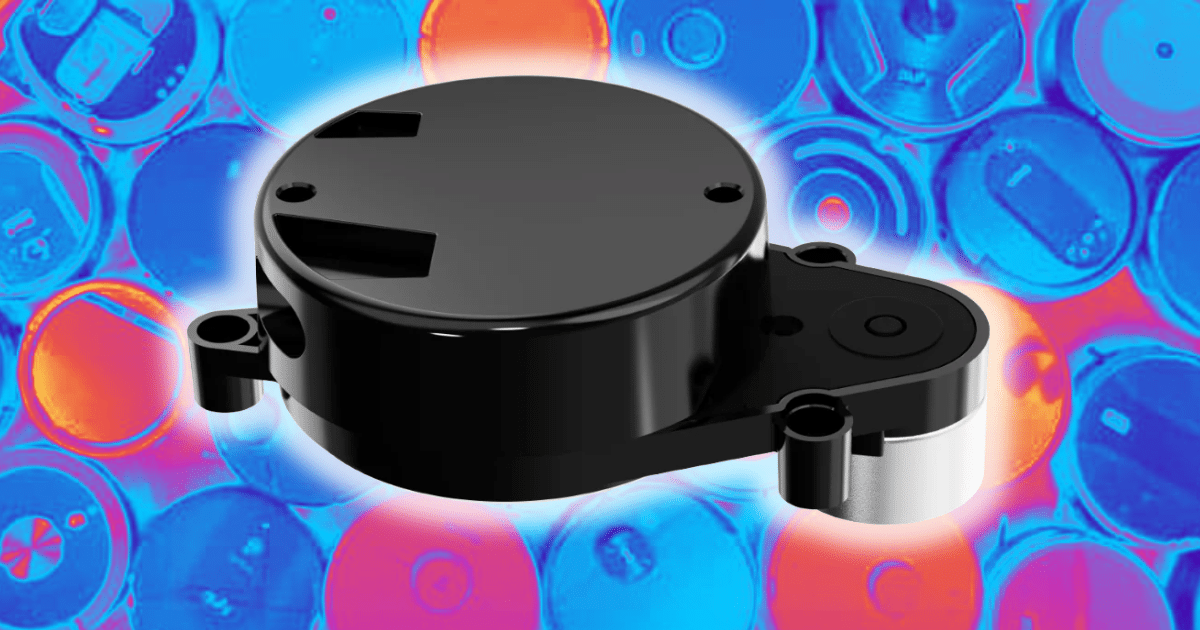
The laser sensors that help robot vacuums map homes are often made by companies consumers rarely hear about. Camsense is one of them. The Chinese sensor maker has supplied products to the supply chains of Roborock and Xiaomi, according to a recent industry report, and its rapid growth offers a closer look at the technology behind robot vacuum navigation.
A November 3 report by Denny You at World Clean Biz traces Camsense’s path from television motion-control systems to LiDAR sensors for cleaning robots. It also shows how rising shipments and falling component prices are reshaping the supplier market.
From Television Cameras to Robot Vacuum LiDAR
Camsense was founded in 2013 and initially worked on camera-based motion control and positioning technology for televisions and virtual reality. In 2017, a discussion with Ecovacs’ investment department helped direct the company’s attention toward LiDAR for robot vacuums, according to World Clean Biz.
That connection needs a distinction: the report describes Ecovacs’ role in prompting Camsense to investigate the market, but does not establish Ecovacs as a sensor customer. It identifies Roborock and Xiaomi as brands whose supply chains later included Camsense products, without naming the specific robot vacuums involved or when those relationships began.
Camsense introduced its X1 monocular LiDAR sensor in 2018. By then, laser navigation was already established in the category. Neato had introduced the XV-11 in 2009 and announced that it would begin shipping to consumers in June 2010. The XV-11 used a scanning laser rangefinder to help map rooms and plan systematic cleaning paths.
Shipments Nearly Double as Sensor Prices Fall
Camsense’s growth has been substantial. Its Hong Kong listing prospectus records approximately 4.76 million triangulation LiDAR units shipped in 2023, compared with 9.31 million in 2025. Over the same period, the average selling price for those sensors fell from RMB 68.6 to RMB 43.3 per unit, a decline of approximately 37%.
These are supplier-level figures rather than retail prices for finished robot vacuums. They illustrate the scale of component manufacturing and the pricing pressure in a competitive market, but do not establish that a particular model became cheaper as a result.
The company is also expanding beyond traditional triangulation LiDAR into direct time-of-flight sensors and line laser sensors. These technologies serve different sensing tasks. LiDAR-based navigation can help a robot build a map and plan routes, while additional sensing systems may support detection of nearby obstacles or changes in floor conditions.
What the Supplier Connection Means for Shoppers
Knowing who makes a sensor provides useful background, but it tells us little about how an individual robot will perform. Even robots with related sensing hardware can differ in software, sensor placement, mapping behavior and obstacle avoidance.
At Vacuum Wars, we evaluate navigation and obstacle avoidance as separate aspects of robot performance. A robot that maps a floor efficiently does not necessarily avoid small objects well, and the supplier behind its LiDAR cannot substitute for testing the finished product.

For a closer look at how individual models perform, explore our Top 20 Robot Vacuums list, with links to our in-depth reviews and independent test results.
Source: Denny You, “Camsense: From TV Motion Control to Ten Million Robot LiDAR Units a Year,” World Clean Biz, November 3, 2026.
Browse by category
Find the right robot for your home
Every list below is drawn from the same test data as this ranking.
By need
Mop CombosRobots that vacuum and mop in one pass, ranked by our 14 stain test.
Without MoppingVacuum only robots that give up nothing on carpet performance.
Obstacle AvoidanceThe robots that cleared the most of our 24 object course.
Pet HairTop pickup scores paired with genuine anti tangle brush rolls.
Hardwood Floors · soonComing as we finish the hard floor and water penalty round.
Large Homes · soonComing as we finish battery and coverage efficiency testing.
By price