Vacuum Wars evaluates cordless vacuums using a combination of standardized studio tests, manufacturer specifications, customer-review data, and feature assessments. Each metric is designed to measure a specific aspect of performance, usability, durability, or convenience, and the results are incorporated into our overall scoring system used to determine our Top 10 Cordless Vacuums rankings. The explanations below describe what each score represents, how the information is collected, and why that metric matters when comparing cordless vacuums.
Jump to: Cleaning Performance | Suction & Airflow | Hair Management | Battery & Efficiency | Filtration, Noise & Reliability | Ergonomics & Everyday Usability | Floorhead, Tools & Smart Features
Cleaning Performance
These scores measure how well a cordless vacuum handles the cleaning jobs that matter most in everyday use. We evaluate carpet deep cleaning, hard-floor and carpet surface pickup, crevice cleaning, and other debris-removal tasks to see how effectively each vacuum performs across different floor types and cleaning situations.
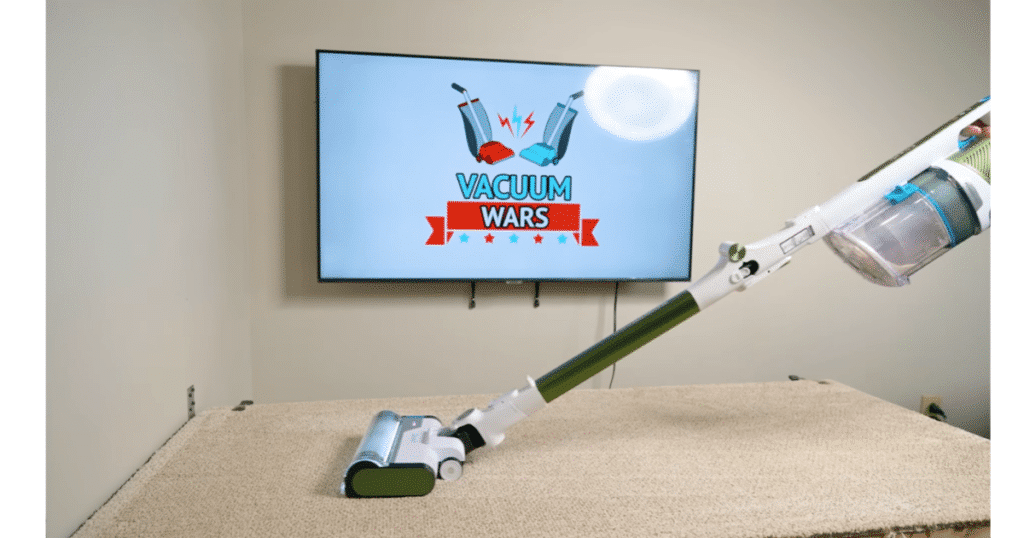
The Carpet Deep Clean Test Score measures how effectively a cordless vacuum removes embedded fine debris from carpet. This is one of Vacuum Wars’ signature performance tests and was developed in-house to provide a consistent, repeatable way to compare deep-cleaning performance across cordless vacuums. While the methodology is inspired by established industry deep-cleaning tests, it has been refined through extensive internal testing.
For every test, we use the same medium-pile carpet, ensuring that each vacuum is evaluated under identical conditions. We weigh out exactly 100 grams of fine pool sand, which we use because of its consistency from test to test. The sand is carefully distributed across the carpet and worked into the carpet fibers using a standardized process so that each vacuum faces the same cleaning challenge.
Each cordless vacuum is tested using its maximum power setting. We believe this represents the vacuum’s true cleaning potential and allows for fair comparisons between models. If the vacuum has an adjustable cleaner head or airflow setting, it is configured for its best possible carpet-cleaning performance. For example, if the cleaner head can be lowered to improve agitation and airflow, it is adjusted to its lowest appropriate setting.
The vacuum is then run over the test area using a fixed number of forward and backward passes. The speed of each pass is carefully timed to ensure that every vacuum is operated as consistently as possible.
To determine how much sand was removed, we weigh the vacuum’s dustbin immediately before and after the test. The difference in weight represents the amount of embedded sand the vacuum collected and is expressed as a percentage of the original 100 grams.
Each vacuum is tested three separate times. In most cases, the highest-performing run is used as the final score, although an average may occasionally be used when appropriate.
This test is one of the best indicators of a cordless vacuum’s ability to deep clean carpet. Historically, cordless vacuums have not matched the deep-cleaning performance of quality upright vacuums, but that gap has narrowed considerably over the years.
After testing more than 125 cordless vacuums, the current average performance is approximately 93% of the embedded sand removed. The highest-performing cordless vacuums consistently achieve 100% pickup, and many of the current top-ranked models earn perfect scores on this test. Performance begins to decline outside the top tier, with the weakest cordless vacuums tested collecting roughly 80% of the embedded sand.
In general, Vacuum Wars considers scores approaching 100% to represent excellent carpet deep-cleaning performance.
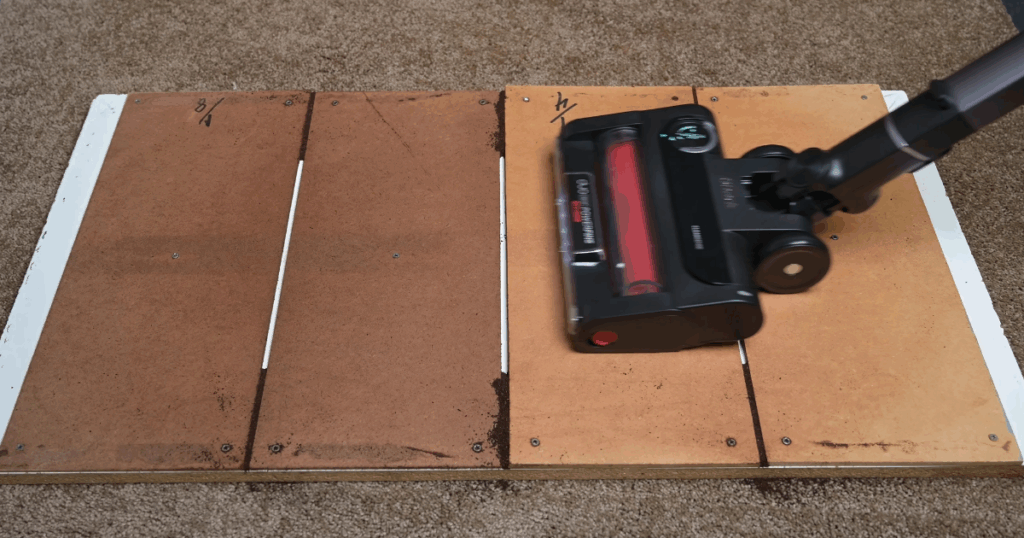
The Crevice Pickup Test Score measures how effectively a cordless vacuum removes debris from recessed gaps in hard flooring. This test is designed to evaluate both the suction available at the cleaner head and how well the floor head maintains a seal over narrow crevices.
The inspiration for this test came from demonstrations originally performed by Dyson, although Vacuum Wars developed its own standardized methodology to provide consistent comparisons across all cordless vacuums.
Our test uses a custom board containing three recessed crevices of varying dimensions. Two of the crevices have fixed, uniform widths—typically 1/8 inch and 1/4 inch—while the center crevice varies between those two depths, creating an uneven channel that better simulates real-world flooring.
Before each test, the crevices are completely filled with finely ground coffee, which serves as the test debris. The coffee is carefully worked into the recessed channels, and any excess material is removed from the surface of the board so that only the debris embedded inside the crevices remains. This ensures that the vacuum is evaluated only on its ability to extract debris from below the surface rather than from the flat portion of the board.
Each cordless vacuum is tested using its maximum power setting. If the cleaner head has adjustable height settings, airflow gates, or other user-adjustable features, it is configured for maximum cleaning performance. For example, adjustable front gates are fully closed, and adjustable cleaner heads are placed in their lowest appropriate position to give the vacuum the best possible opportunity to perform well.
The vacuum is then moved over the board using one forward pass and one backward pass at a consistent speed.
After the passes are complete, the board is visually inspected. A vacuum earns one point for each crevice that is completely cleared, revealing the underlying board. In borderline cases where a crevice is nearly—but not entirely—cleared, a half point may be awarded.
An additional bonus point may be awarded for exceptional performance if the vacuum removes virtually all of the coffee from every crevice, resulting in a nearly perfect cleaning result.
The Crevice Pickup Test is an effective way to evaluate how well a cleaner head seals against the floor while directing suction into recessed areas. It is particularly relevant for hard floors, including tile, stone, and other surfaces with grout lines or narrow gaps where debris tends to accumulate.
When considered alongside the Unsealed Suction Score, this test provides valuable insight into the effectiveness of the cleaner head’s design. Vacuums that perform well on both tests generally have cleaner heads that maintain strong suction where it matters most and are better equipped to clean debris from cracks, grout lines, and other hard-floor crevices.
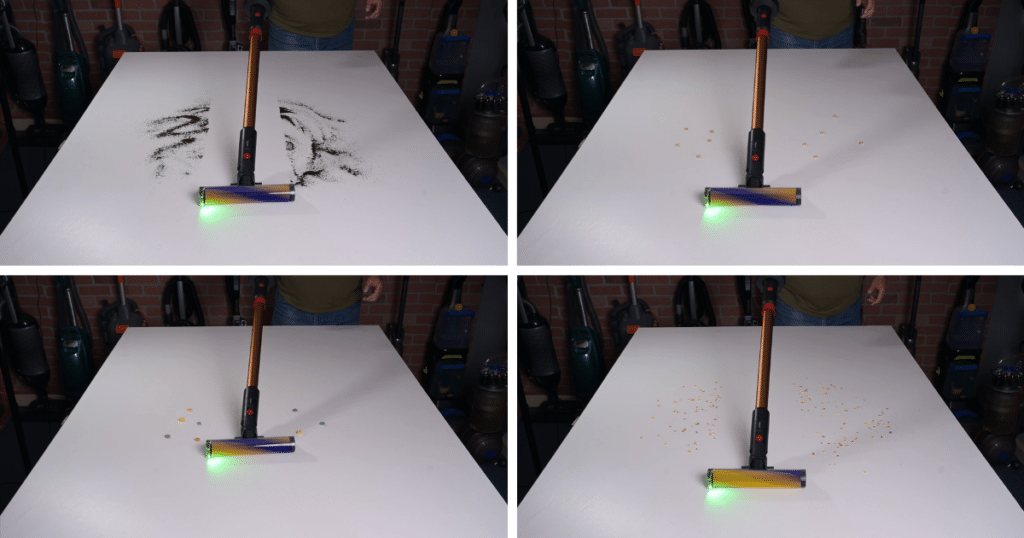
The Hard Floor Pickup Test Score measures how effectively a cordless vacuum picks up debris of varying sizes from hard flooring. This is one of Vacuum Wars’ most important practical performance tests because it closely reflects the type of cleaning consumers perform every day on surfaces such as hardwood, laminate, vinyl, and tile.
The test uses four different types of debris, arranged from the smallest particles to the largest:
- Ground coffee
- Fruity Pebbles
- Cheerios
- Fruit Loops
These materials were selected because they represent a wide range of debris sizes and present different challenges for a vacuum’s cleaner head. Fine particles test the vacuum’s ability to collect small debris without scattering it, while progressively larger cereal pieces evaluate how well the cleaner head can handle medium and large debris.
Each vacuum is tested using its maximum power setting and configured for its best hard-floor cleaning performance. The goal is to determine whether the vacuum can cleanly remove each type of debris without leaving significant material behind or pushing it forward.
Scoring is cumulative. A vacuum earns:
- One point for successfully picking up the ground coffee.
- A second point if it also cleanly removes the Fruity Pebbles.
- A third point if it successfully picks up the Cheerios.
- A fourth point if it also removes the Fruit Loops.
An additional bonus point is awarded only for exceptional performance. To receive a perfect score, the vacuum must not only pick up the Fruit Loops cleanly but also demonstrate excellent handling of large quantities of debris with minimal scattering or snowplowing. This distinguishes vacuums that merely handle large debris from those that do so consistently and efficiently.
The Hard Floor Pickup Test is one of the best predictors of real-world hard-floor cleaning performance. It evaluates how well the cleaner head manages debris across a wide range of particle sizes and helps identify designs that excel at everyday cleaning tasks.
In general, cordless vacuums equipped with soft roller cleaner heads tend to perform especially well in this test. Their design often allows them to capture both fine dust and larger debris more effectively than traditional bristle-style floor heads, making them particularly well suited for hard-floor cleaning.
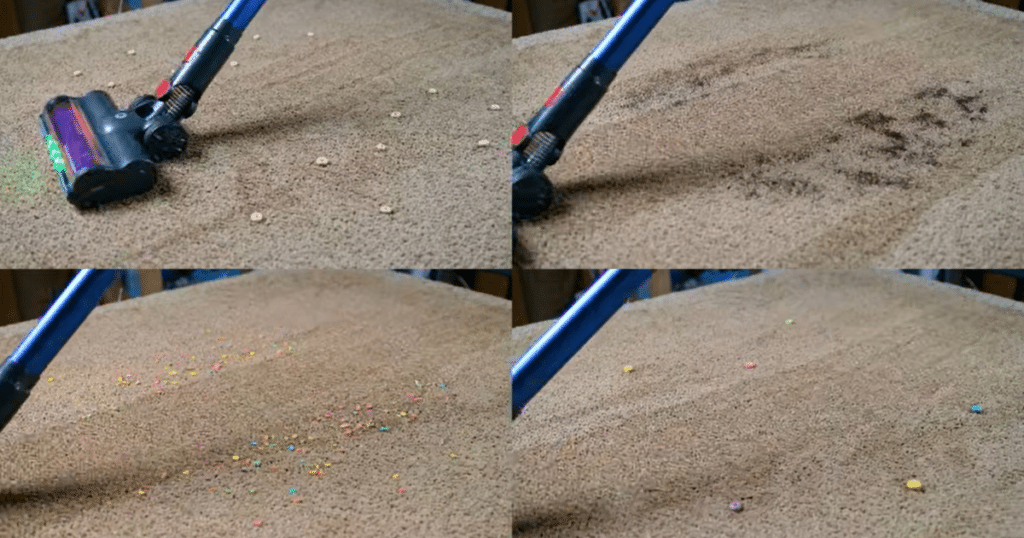
The Carpet Pickup Test Score measures how effectively a cordless vacuum picks up debris of different sizes from carpet. While the Carpet Deep Clean Test evaluates a vacuum’s ability to remove embedded dirt from carpet fibers, this test focuses on its ability to pick up surface debris, making it a practical indicator of everyday carpet cleaning performance.
The test is performed on a low-pile carpet using the same progression of debris types as the Hard Floor Pickup Test:
- Ground coffee
- Fruity Pebbles
- Cheerios
- Fruit Loops
These materials represent increasingly larger debris sizes, allowing us to evaluate how well each vacuum handles everything from fine particles to larger objects commonly found on carpet.
Each cordless vacuum is tested using its maximum power setting and configured for its best carpet-cleaning performance. The objective is to determine whether the vacuum can cleanly remove each type of debris from the carpet surface without leaving significant material behind.
Scoring is cumulative. A vacuum earns:
- One point for successfully picking up the ground coffee.
- A second point for also removing the Fruity Pebbles.
- A third point for successfully picking up the Cheerios.
- A fourth point for also removing the Fruit Loops.
A final bonus point is awarded for exceptional performance with the largest debris. This recognizes vacuums that not only remove all four debris types but also handle larger debris cleanly and consistently without excessive scattering or repeated passes.
The Carpet Pickup Test complements the Carpet Deep Clean Test by measuring a different aspect of carpet performance. Together, these two tests provide a more complete picture of how well a cordless vacuum cleans carpet. The Carpet Pickup Test reflects everyday surface cleaning, while the Carpet Deep Clean Test evaluates the vacuum’s ability to extract dirt embedded deep within the carpet fibers.
Suction & Airflow
Suction and airflow help explain how effectively a cordless vacuum moves debris from the floor into the dustbin. We measure both sealed and unsealed suction as well as airflow to better understand the vacuum’s raw power, floorhead sealing, and how efficiently that power is delivered during actual use.
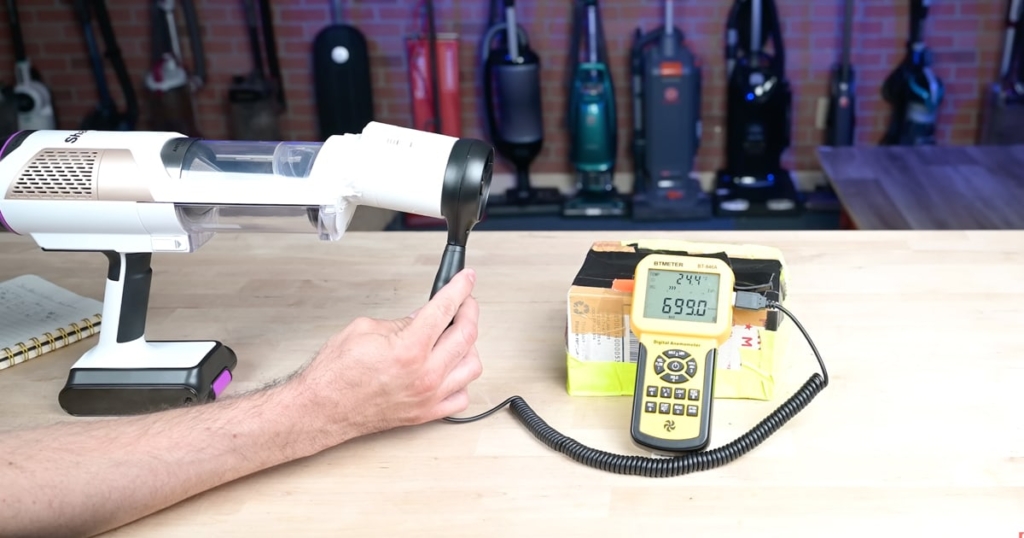
The Airflow Score measures the volume of air a cordless vacuum moves and is expressed in cubic feet per minute (CFM). Airflow is one of the core performance metrics measured during Vacuum Wars bench testing because it provides valuable insight into a vacuum’s cleaning capability.
Vacuum Wars measures airflow in two locations on every cordless vacuum:
- At the wand, with the cleaner head removed.
- At the cleaner head, with the floor head attached.
Both measurements are taken using the vacuum’s maximum power setting.
Testing at maximum power is intentional because it reveals the highest level of performance the vacuum is capable of delivering. While many cordless vacuums offer low, medium, and automatic power settings, those modes are largely manufacturer-defined operating limits. Measuring maximum power allows for a consistent comparison of each vacuum’s true performance potential.
Airflow is an important indicator of overall cleaning performance. When considered alongside suction, it provides a more complete picture of a vacuum’s power. Strong airflow helps transport dirt and debris through the vacuum’s air path and is especially beneficial for cleaning hard floors, where moving larger amounts of debris efficiently is important.
The Vacuum Wars Airflow Score is calculated by combining both airflow measurements-the airflow at the wand and the airflow at the cleaner head-into a single performance metric. This combined score reflects both the vacuum’s raw airflow capability and how effectively that airflow is maintained through the complete cleaning system.
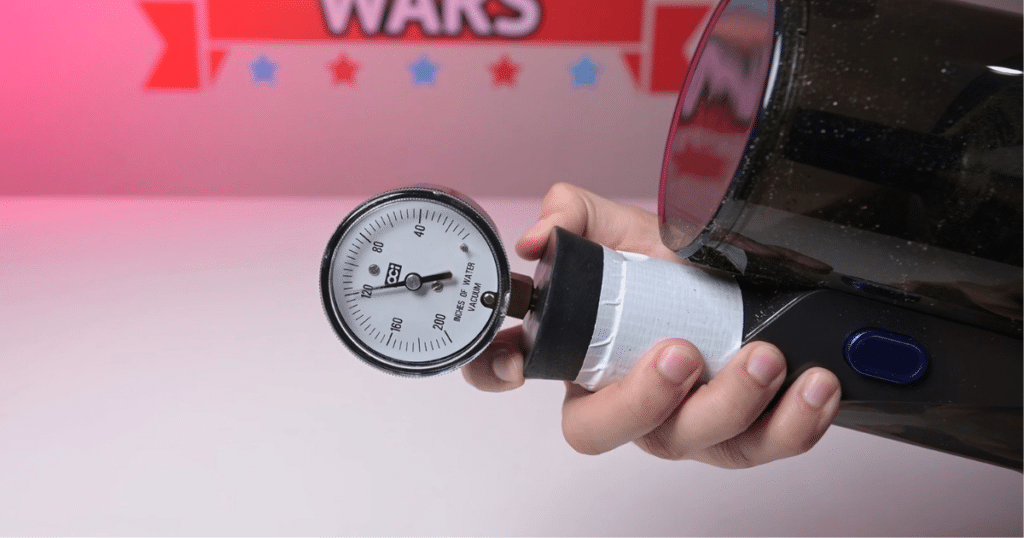
The Sealed Suction Score measures a cordless vacuum’s maximum suction force and is expressed in inches of water lift. This is one of the core bench tests performed by Vacuum Wars and serves as an important indicator of a vacuum’s overall power.
Sealed suction is measured using either an analog or digital manometer. Testing is typically performed at the lowest point in the vacuum’s air path, usually at the handle intake. The suction meter is sealed so that no air can escape, allowing us to measure the maximum vacuum pressure the motor can generate. The resulting measurement is recorded in inches of water lift.
All sealed suction testing is performed using the vacuum’s maximum power setting. We use the highest power mode because it represents the maximum performance the vacuum is capable of delivering. While many cordless vacuums offer multiple power settings, those lower settings are manufacturer-selected operating modes rather than the vacuum’s full potential.
Sealed suction is particularly important for above-floor cleaning, where attachments such as upholstery tools, dusting brushes, and crevice tools are commonly used. It also plays an important role when cleaning upholstered furniture and, to a lesser extent, thick carpets. In these situations, the tool is often pressed directly against the cleaning surface, greatly restricting airflow. Once airflow is reduced or eliminated, the vacuum’s ability to continue cleaning depends primarily on its sealed suction.
More broadly, sealed suction is an excellent indicator of overall vacuum power, especially when evaluated alongside the Airflow Score. Airflow measures how much air a vacuum moves, while sealed suction measures the force it can generate. Together, these two measurements provide a more complete picture of a vacuum’s cleaning capability across a variety of surface types.
Higher sealed suction values are generally found on premium cordless vacuums, and suction is one of the performance metrics that major manufacturers emphasize most heavily when developing and marketing their products. While there is ongoing debate about whether sealed suction is the single most important specification for consumers, it remains one of the industry’s primary benchmarks for measuring vacuum performance.
The Unsealed Suction Score, sometimes referred to as usable suction, measures how much suction a cordless vacuum produces under real-world operating conditions. Unlike a traditional sealed suction test, this method allows the vacuum to function exactly as it was designed, with air flowing naturally through the cleaner head.
Vacuum Wars first encountered this style of testing when a cordless vacuum manufacturer used it to demonstrate the real-world performance of its products. We found the concept compelling and developed our own standardized version of the test to compare all cordless vacuums under identical conditions.
To perform the test, we drill a small hole into a test board and connect that hole to a digital manometer using suction tubing. Rather than sealing the vacuum directly to the measuring device, we hold the cleaner head over the hole and carefully position it to find the point where the vacuum produces its maximum suction reading. Because even small changes in position can affect the measurement, this process requires careful adjustment and can be time-consuming.
As with all of our power-related bench tests, the vacuum is tested using its maximum power setting, which we believe best represents the product’s true performance potential.
The test is called unsealed suction because the cleaner head is not sealed to the measuring apparatus. Unlike the Sealed Suction Score, where the vacuum is completely blocked to measure its maximum vacuum pressure, this method allows air to continue flowing into the cleaner head just as it would during normal cleaning. This means the vacuum operates under conditions that closely resemble real-world use.
This distinction is particularly important because cordless vacuum cleaner heads vary significantly in their design. Manufacturers make different engineering tradeoffs regarding how much air is allowed to enter the cleaner head. A head with larger air gaps may excel at picking up larger debris but may generate lower usable suction at the floor. Conversely, a head with a tighter seal may produce stronger usable suction but may be less effective at handling larger debris. Of course, overall motor performance, airflow, sealed suction, and other design factors also influence the final result.
The Unsealed Suction Score is especially useful for estimating cleaning performance on hard floors, along edges, and in shallow crevices where the cleaner head is able to maintain a reasonably good seal with the floor surface. In most cases, this measurement should generally correlate with the vacuum’s other power metrics, such as sealed suction and airflow. However, some vacuums will perform differently due to the specific design of their cleaner heads, particularly models with taller heads or larger air channels that are optimized for handling larger debris rather than maximizing suction at the floor.
Hair Management
Hair performance is about more than simply picking hair up from the floor. These scores evaluate how well a vacuum resists hair wrapping around the brushroll and whether its anti-tangle or active hair-removal systems reduce the amount of manual maintenance required, particularly with longer hair.
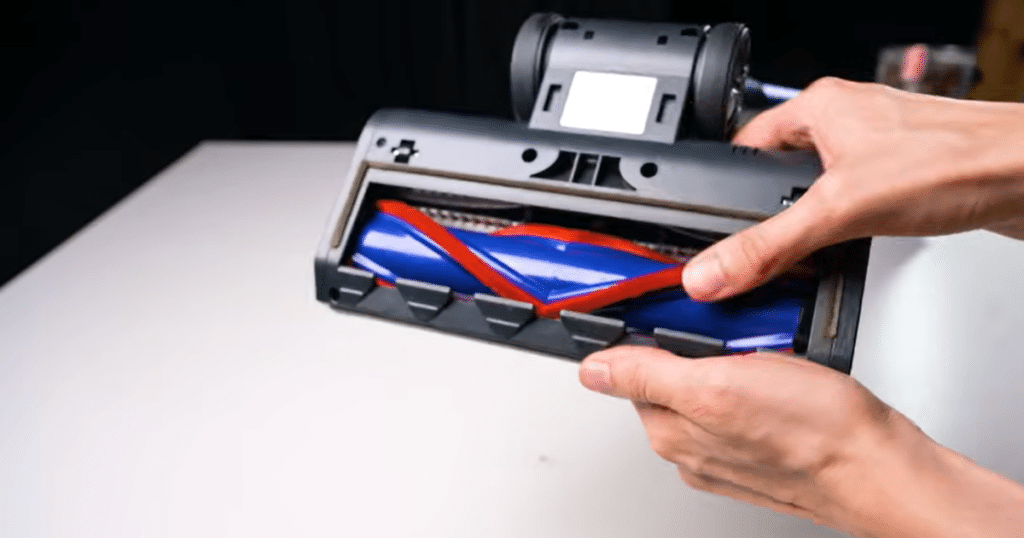
The 14-Inch Hair Test Score measures how effectively a cordless vacuum resists hair tangles when cleaning long human hair. Hair wrap is one of the most common maintenance issues for cordless vacuums, making this an important real-world performance test.
To perform the test, a fixed weight of 14-inch human hair is evenly distributed across a hard floor test surface. Using the same amount and length of hair for every evaluation ensures that each cordless vacuum is tested under identical conditions.
Each vacuum is operated on its maximum power setting and is moved over the test area using a timed series of forward and backward passes. The test intentionally gives the vacuum sufficient time to process the hair rather than evaluating only the initial pickup. This is especially important because many modern cordless vacuums include anti-tangle or self-cleaning brush roll systems that require several rotations of the brush roll before hair is directed away from the roller.
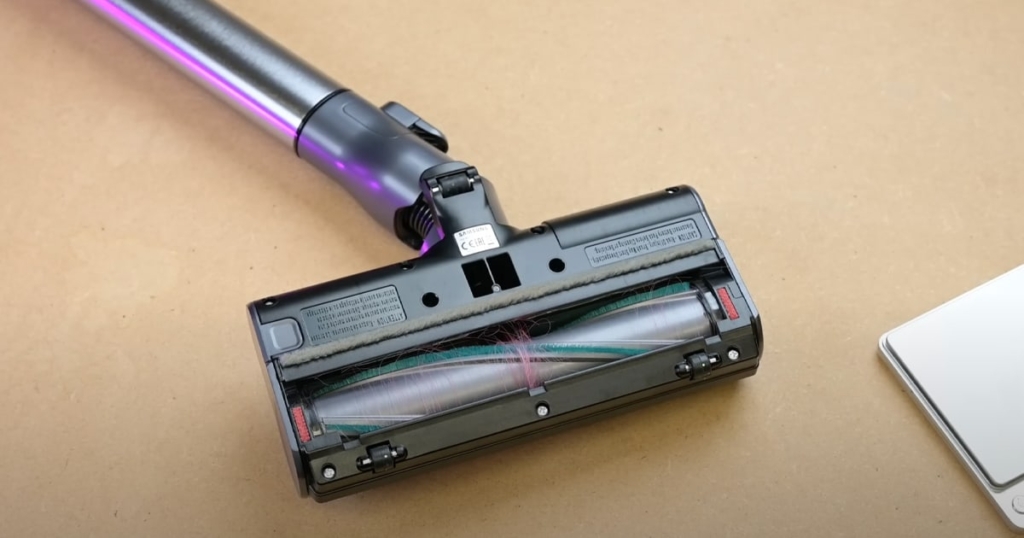
After the test is complete, the remaining hair wrapped around the brush roll is documented on camera. Rather than relying solely on a numerical measurement of the remaining hair, Vacuum Wars evaluates the recorded footage to determine how effectively the vacuum prevented tangles or removed hair from the brush roll during operation.
Each vacuum receives a score from 0 to 10, where:
- 10 represents outstanding anti-tangle performance with little or no hair remaining wrapped around the brush roll.
- 0 represents extremely poor performance, with nearly all of the test hair remaining tangled around the roller.
The 14-Inch Hair Test provides consumers with a practical indication of how much maintenance a vacuum is likely to require during normal use, particularly in homes with people or pets that shed long hair. Vacuums that earn high scores generally require less frequent brush roll cleaning and offer a more convenient ownership experience.
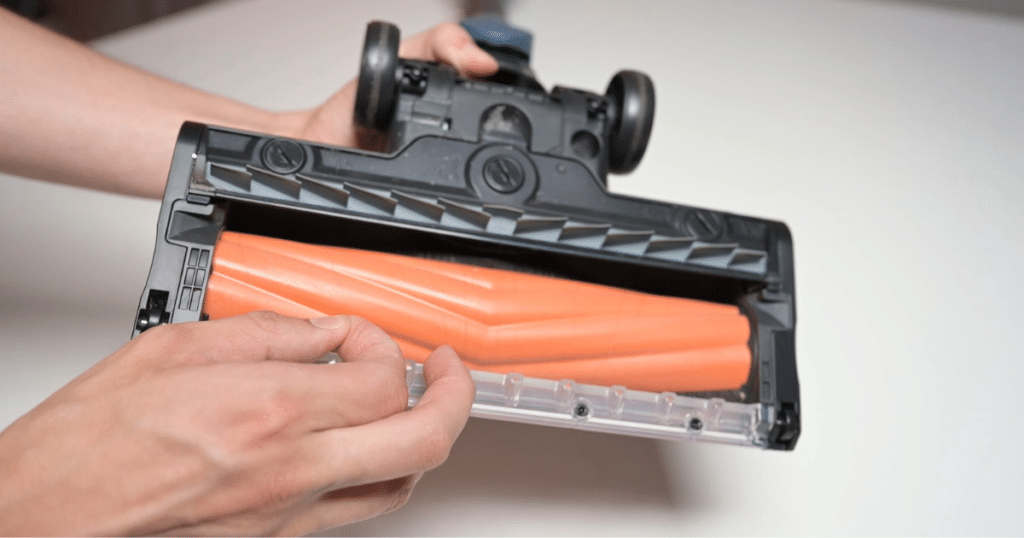
Vacuum Wars evaluates cordless vacuum anti-tangle performance using 14-inch human hair, then inspects the brush roll to determine how much hair remains wrapped after testing. © Vacuum Wars
The Active Hair Removal Score is a feature metric that records whether a cordless vacuum includes an advertised active hair removal system designed to prevent hair from wrapping around the brush roller during operation.
Unlike the 14-Inch Hair Test, which measures actual hair wrap performance through independent testing, this metric simply identifies whether the manufacturer claims the vacuum incorporates an active anti-tangle mechanism.
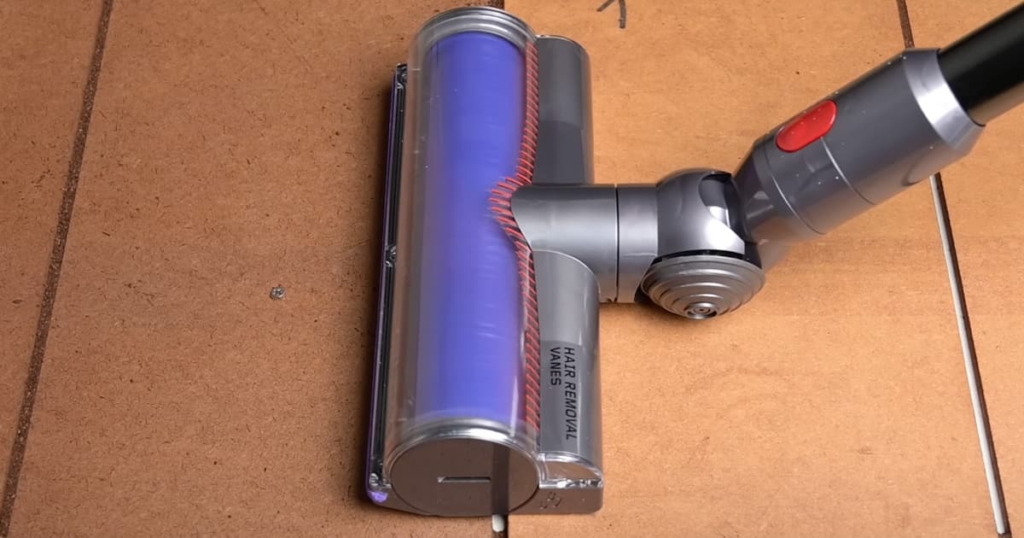
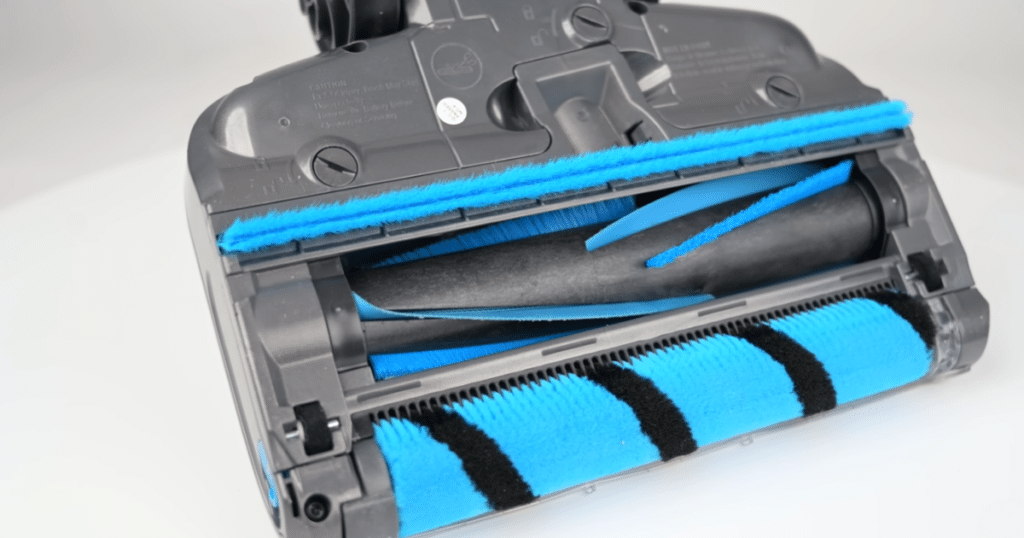
The most common implementation is a series of plastic combs or fins positioned inside the cleaner head. As the brush roll spins, these combs help strip hair from the roller before it has an opportunity to wrap tightly around it. However, manufacturers use a variety of different engineering approaches to achieve this goal. Some use specially shaped brush rolls, others incorporate flexible comb systems or channels that direct hair into the suction path, and some employ entirely proprietary designs.
For the purposes of this metric, Vacuum Wars does not evaluate how well the system works. The score simply records whether the manufacturer advertises an active hair removal feature as part of the product’s design.
As a result, the Active Hair Removal Score is a straightforward yes-or-no feature metric:
- Yes – The manufacturer advertises an active hair removal or anti-tangle brush roll system.
- No – The vacuum does not advertise such a feature.
This feature is included in the overall algorithm because active hair removal systems can reduce brush roll maintenance and improve the ownership experience, particularly in homes with long hair or shedding pets. However, the presence of the feature does not guarantee superior real-world performance. That is measured independently by the 14-Inch Hair Test Score, which evaluates how effectively the vacuum actually prevents hair from wrapping around the brush roll during use.
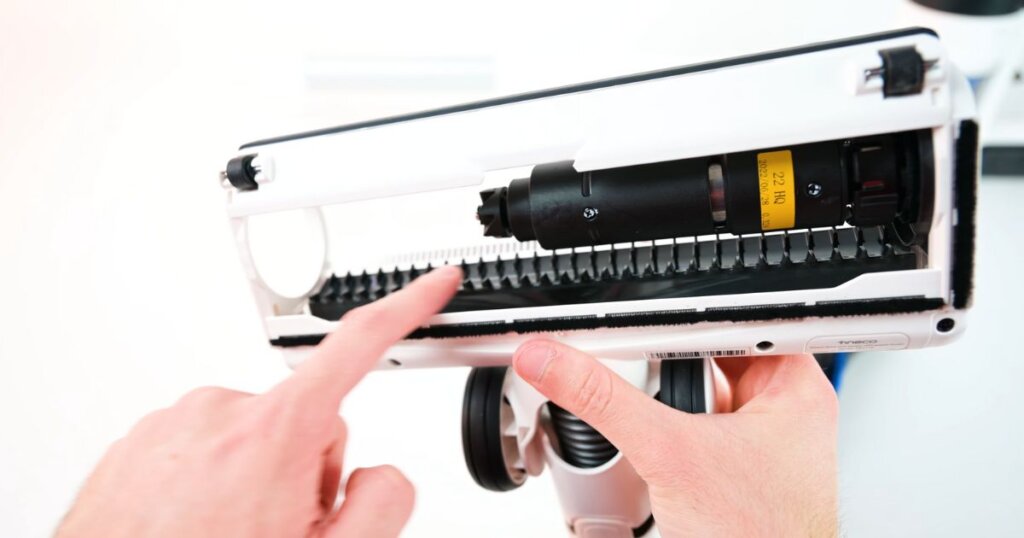
The Anti-Tangle Roller Score is a feature metric that records whether a cordless vacuum includes an advertised anti-tangle brush roller design. This score is based on the manufacturer’s claims and is distinct from both the Active Hair Removal Score and the independently measured 14-Inch Hair Test Score.
An anti-tangle roller is designed to reduce the amount of hair that wraps around the brush roll through the roller’s physical design. Manufacturers achieve this in a variety of ways, including changing the arrangement of the bristles, altering the shape or profile of the roller, using flexible fins instead of traditional bristles, or incorporating other design features intended to discourage hair from becoming tightly wrapped around the brush roll.
This should not be confused with active hair removal systems. Active hair removal refers to mechanisms that remove hair from the brush roll while it is spinning, such as combs or scrapers built into the cleaner head. By contrast, an anti-tangle roller attempts to prevent hair from wrapping in the first place through its design.
This feature represents a significant evolution from many earlier cordless vacuums, which typically used traditional, densely packed bristle brush rolls. Those conventional designs often accumulated large amounts of long hair, requiring users to periodically cut the hair away with scissors or manually remove it by hand.
For the purposes of this metric, Vacuum Wars simply records whether the manufacturer advertises an anti-tangle roller design. It is a straightforward yes-or-no feature score and does not attempt to measure how effective the design actually is.
The real-world effectiveness of any anti-tangle roller is evaluated separately through the 14-Inch Hair Test Score, which measures how much hair ultimately remains wrapped around the brush roll after standardized testing. Together, these metrics distinguish between the presence of an advertised anti-tangle design and its actual performance in use.
Battery & Efficiency
Cordless vacuums need to balance cleaning power with practical runtime. We measure battery life at different power levels and consider how much airflow the vacuum produces during that runtime, along with features such as detachable batteries and automatic suction adjustment that can improve battery management in everyday cleaning.
The Battery Runtime (Low Power) Score is based on the manufacturer’s published runtime specification for the cordless vacuum when operated in its lowest power mode. This is an official product specification rather than a Vacuum Wars performance test, but it is still included as one of the factors in our overall scoring algorithm.
Cordless vacuums typically offer multiple power settings, such as Eco, Low, Medium, Auto, and Max. Because runtime varies significantly depending on the selected power level, manufacturers almost always advertise the longest possible runtime, which is achieved using the lowest power setting.
When a manufacturer publishes multiple runtime figures for different operating modes, Vacuum Wars records the low-power runtime. If only a single runtime specification is provided, we use the manufacturer’s published value.
Although this metric is useful, it should be interpreted with some caution. Since it is a manufacturer specification rather than an independently measured test, differences in testing methodology between brands can affect the reported numbers. In addition, runtime in the lowest power mode does not necessarily reflect how consumers will use the vacuum in everyday cleaning, particularly on carpet or other demanding surfaces that often require higher power settings.
For these reasons, the Battery Runtime (Low Power) Score is included in our algorithm but is not one of the more heavily weighted battery metrics. It provides a standardized way to compare the maximum advertised endurance of cordless vacuums while being supplemented by our own independently measured battery performance tests.
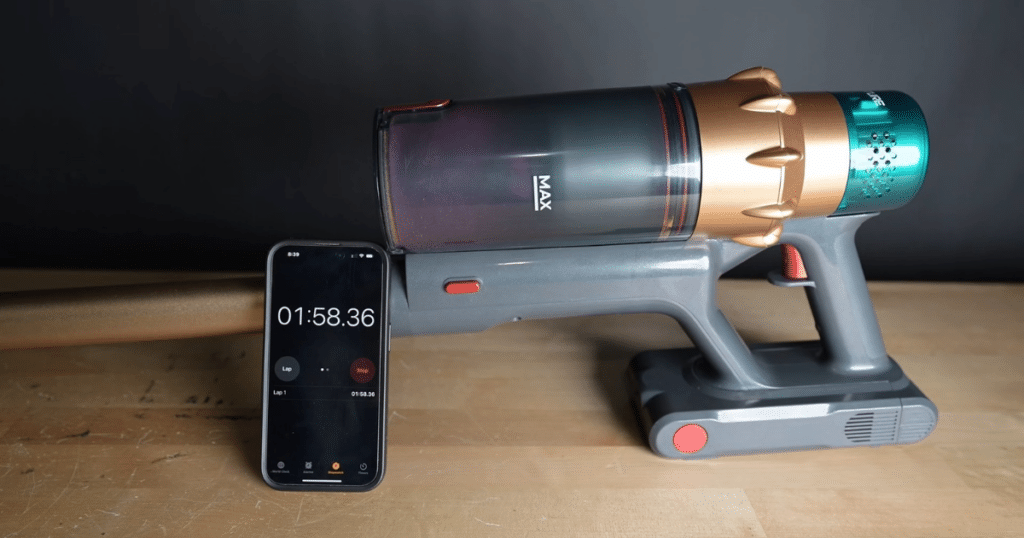
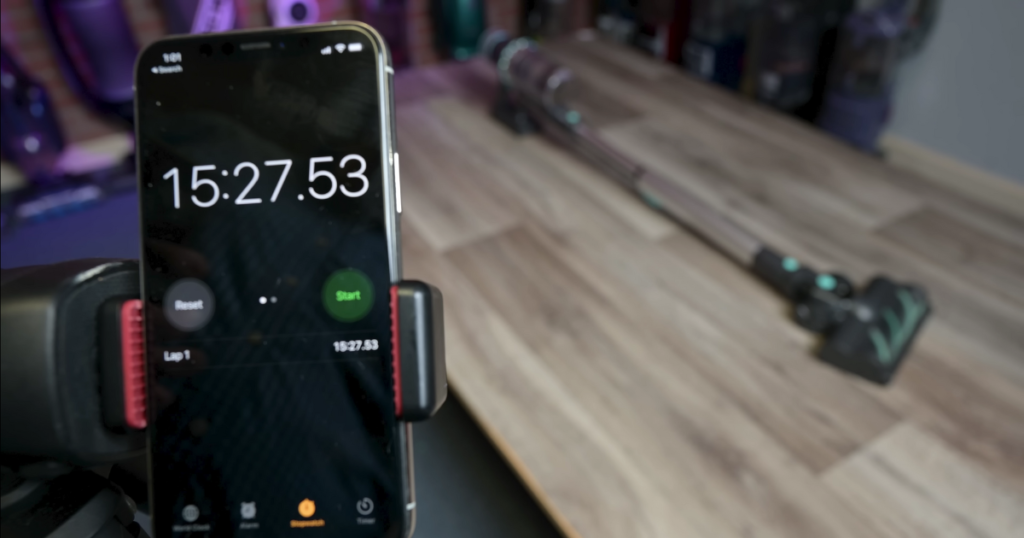
The Battery Runtime (Maximum Power) Score measures how long a cordless vacuum can operate continuously while using its maximum power setting. Unlike the Low Power Battery Runtime, which is based on the manufacturer’s published specifications, this is a Vacuum Wars bench test performed under standardized conditions.
To conduct the test, the cordless vacuum is equipped with its standard floor cleaner head and operated continuously at its highest power setting until the battery is depleted. Using the standard floor head allows the vacuum to be tested in a configuration that closely represents how it would typically be used for floor cleaning.
Testing at maximum power provides a meaningful comparison because it reveals how long the vacuum can sustain its highest level of cleaning performance. This can be particularly important for users who routinely clean thick carpets, heavily soiled areas, or other surfaces that benefit from maximum suction.
However, maximum runtime should always be interpreted in the context of the vacuum’s overall performance. Vacuums with exceptionally powerful motors often consume more energy, resulting in shorter runtimes when operated at full power. In many cases, these models do not need to be used on the maximum setting during normal cleaning because they provide excellent performance at lower power levels.
For this reason, a relatively short maximum runtime does not necessarily indicate a poor cordless vacuum. It may simply reflect a design that prioritizes cleaning power over endurance at the highest setting.
This consideration becomes even more important for vacuums equipped with automatic suction adjustment, which increase power only when additional cleaning performance is needed. Since these vacuums rarely operate at maximum power continuously during normal use, the maximum runtime test represents a worst-case scenario rather than a typical cleaning session.
The Battery Runtime (Maximum Power) Score is therefore an important battery metric, but it is evaluated alongside the vacuum’s overall cleaning performance, power, and battery management features to provide a more complete assessment of real-world usability.
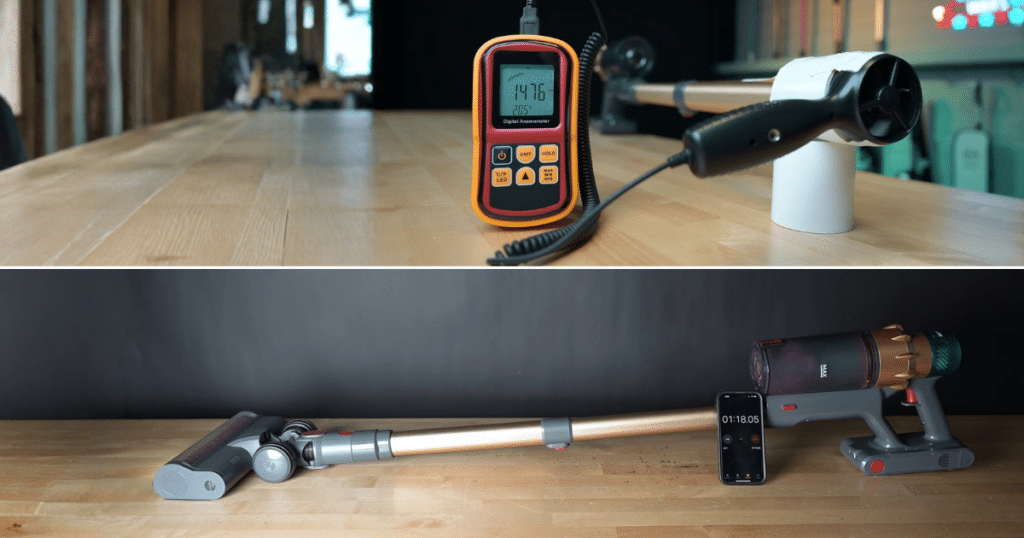
The Max Battery + Wand Airflow Score is one of Vacuum Wars’ most informative battery performance metrics. Rather than looking at battery runtime or cleaning power independently, this score combines maximum battery runtime with airflow at the wand to measure how efficiently a cordless vacuum converts battery energy into usable cleaning performance.
The metric is calculated by combining two separate Vacuum Wars tests:
- Battery Runtime (Maximum Power) – how long the vacuum runs continuously on its highest power setting.
- Wand Airflow – the amount of airflow, measured in cubic feet per minute (CFM), produced at the wand while operating on maximum power.
Conceptually, this can be thought of as measuring how much airflow the vacuum delivers over the course of a full battery charge. In simple terms, it answers the question:
How much cleaning power does the vacuum provide for how long?
A vacuum with exceptional airflow but very short runtime may not perform as well in this metric as one that maintains strong airflow for a significantly longer period. Likewise, a vacuum with long battery life but relatively weak airflow will also score lower. The highest scores are earned by products that successfully balance both characteristics.
Another way to think about this metric is as a measure of power efficiency. It highlights cordless vacuums that make particularly effective use of their battery capacity through efficient motor design, battery technology, and overall engineering.
This score helps correct for situations where a vacuum’s maximum runtime alone can be misleading. Some extremely powerful vacuums naturally have shorter runtimes because they consume more energy, while other models achieve long runtimes by sacrificing cleaning performance. By combining airflow with runtime, this metric rewards vacuums that deliver the greatest amount of usable cleaning performance over the life of a battery charge.
Among all of Vacuum Wars’ battery-related evaluations, the Max Battery + Wand Airflow Score is considered one of the most revealing because it reflects not just how long a vacuum runs or how powerful it is, but how efficiently those two characteristics work together in real-world operation.
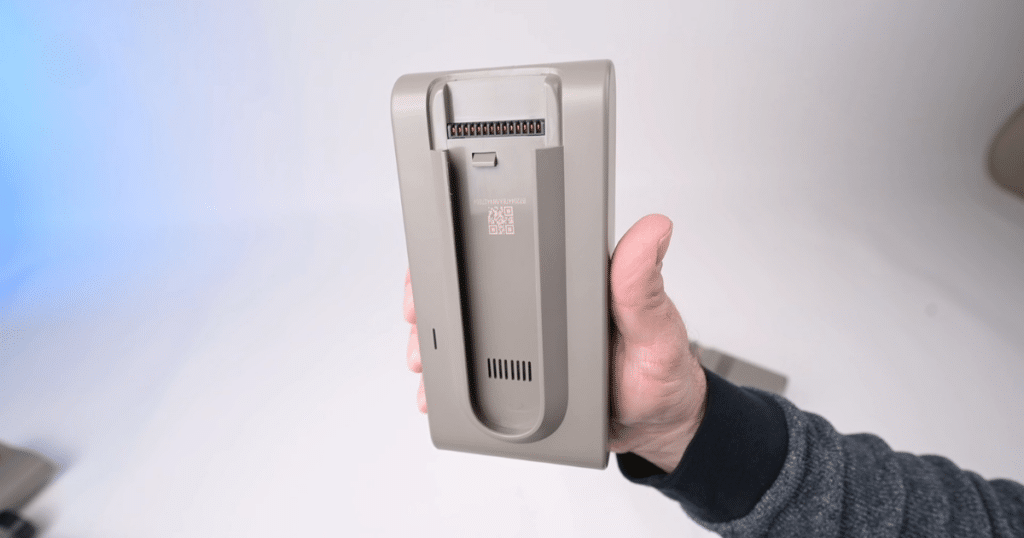
The Detachable Battery Score is a simple feature metric that evaluates whether the battery on a cordless vacuum can be easily removed and replaced by the user.
This feature became much more common after Dyson introduced its click-in battery system, allowing users to swap batteries without tools. Since then, many other manufacturers have adopted similar designs, although permanently installed batteries are still found on some cordless vacuums.
A detachable battery offers two significant advantages.
The first is extended runtime. Users can purchase an additional battery, keep it charged, and swap batteries when one is depleted. This effectively doubles the available cleaning time and is especially useful for larger homes or longer cleaning sessions.
The second advantage is long-term durability and serviceability. Like all rechargeable batteries, lithium-ion batteries gradually lose capacity over time. In many cordless vacuums, the battery is the component most likely to wear out before the rest of the machine. A removable battery allows the user to replace the battery rather than replacing the entire vacuum, potentially extending the useful life of the product by many years.
For these reasons, Vacuum Wars considers a detachable battery to be a valuable feature and includes it as part of the overall evaluation.
This metric simply records whether the battery is user-removable. It does not evaluate the availability, cost, or ease of purchasing replacement batteries. Some manufacturers make spare batteries readily available, while others may offer limited availability or discontinue replacement batteries over time. At present, Vacuum Wars does not track or score battery availability separately.
The Detachable Battery Score is therefore a straightforward feature assessment that recognizes the convenience, flexibility, and potential longevity benefits of a user-replaceable battery system.
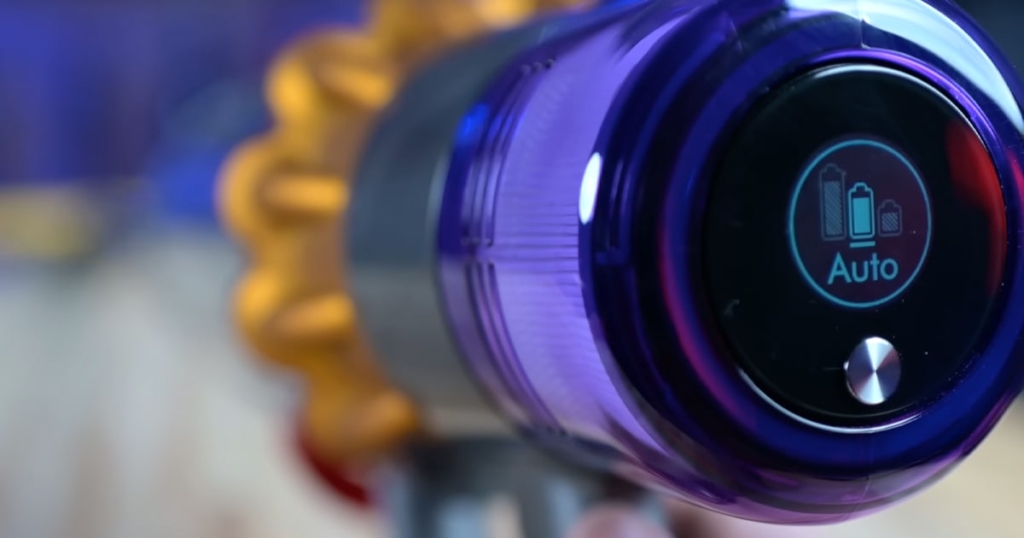
The Auto Suction Adjustment Score, often shortened to Auto Suction Score, evaluates whether a cordless vacuum can automatically adjust its cleaning power in response to changing floor conditions or debris levels. Vacuum Wars considers this one of the more valuable convenience features available on modern cordless vacuums and gives it significant weight in the overall scoring algorithm.
This feature first became widely recognized on Dyson cordless vacuums, although many manufacturers now offer similar technology under different names.
Auto suction systems use one or more sensors to determine when additional cleaning power is needed. Depending on the design, these sensors may detect:
- Floor type, allowing the vacuum to distinguish between hard floors and carpet.
- Dust or debris levels, enabling the vacuum to increase power when it encounters a particularly dirty area.
When the system detects conditions that require more cleaning performance, it automatically increases suction power. On some models, the vacuum also adjusts the brush roll speed in conjunction with the suction setting to further optimize cleaning performance.
The primary advantage of auto suction is that it balances cleaning performance with battery efficiency. High suction is often necessary for cleaning carpet or heavily soiled areas, but it is usually unnecessary on hard floors, where lower power settings often provide excellent cleaning while consuming much less battery power.
By automatically increasing power only when it is beneficial, the vacuum can maximize battery life without requiring the user to manually switch between power modes throughout a cleaning session. This results in a better balance of performance, convenience, and runtime than operating continuously on either the highest or lowest power setting.
For this reason, Vacuum Wars considers auto suction adjustment to be one of the more important convenience features available on cordless vacuums. It contributes meaningfully to the overall user experience by allowing the vacuum to intelligently deliver additional power when it is needed while conserving battery energy the rest of the time.
The Auto Suction Adjustment Score is a feature-based metric that records whether a cordless vacuum offers this capability and incorporates it into the overall Vacuum Wars scoring algorithm.
Filtration, Noise & Reliability
These scores cover several important aspects of long-term ownership that are not captured by cleaning performance alone. We evaluate filtration and system sealing, measure operating noise, and consider real-world reliability indicators to provide a broader picture of how a vacuum performs beyond the test floor.
The Filtration Score evaluates how effectively a cordless vacuum prevents fine particles from being released back into the air during operation. Vacuum Wars considers filtration to be one of the most important features of a cordless vacuum because it directly affects the quality of the air in your home while cleaning.
Effective filtration depends on two key factors:
- The quality of the filter itself, such as whether the vacuum uses a true HEPA filter or a lower-grade filter.
- Whether the vacuum is a sealed system, meaning all of the air drawn into the vacuum is forced through the filter before being exhausted. Even a high-quality HEPA filter is of limited value if air can leak around it instead of passing through it.
Years ago, high-quality filtration systems were found almost exclusively on premium cordless vacuums. Today, true HEPA sealed systems have become increasingly common, even on many mid-range and some budget models. Nevertheless, filtration quality still varies considerably, making it an important factor when comparing products.
At Vacuum Wars, we believe good filtration benefits everyone-not just allergy sufferers or health-conscious consumers. When a vacuum collects dust, pet dander, pollen, and other fine particles, poor filtration can allow those contaminants to be exhausted back into the room. While these particles are often too small to see, they remain in the air and can be inhaled after cleaning. For this reason, we have consistently recommended investing in vacuums with high-quality filtration systems whenever possible.
How We Test Filtration
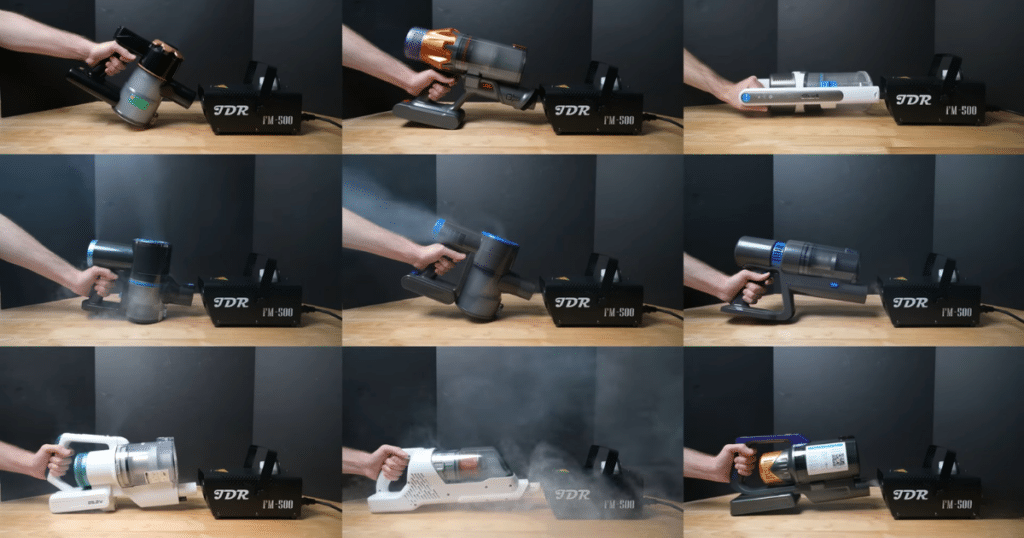
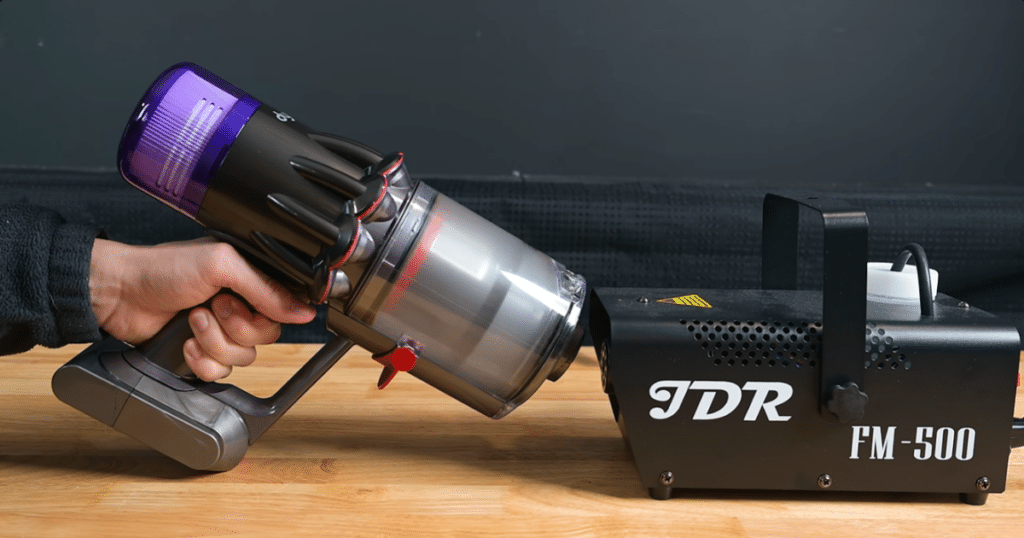
Vacuum Wars evaluates filtration using a fog test.
A fog machine introduces fine fog particles into the vacuum while the exhaust is observed against a black background. We then visually inspect the exhaust to determine whether any fog is escaping.
This single test evaluates two important characteristics simultaneously:
- Sealed System Performance: If fog escapes from cracks, seams, or other locations besides the intended exhaust path, the vacuum is not a fully sealed system.
- Filter Effectiveness: If the vacuum uses a true HEPA filter, the fog particles should be captured before reaching the exhaust. Lower-quality filtration systems typically allow visible fog to pass through.
Our testing has consistently shown that this method provides a reliable indication of both sealing quality and filter performance. The largest fog particles produced during the test are approximately five microns in diameter, which should be effectively captured by a properly functioning HEPA filtration system. When visible fog exits the vacuum, it is generally an indication that the filtration system is either leaking or using a filter that does not provide true HEPA-level performance.
Scoring
The Filtration Score is typically evaluated on a pass/fail basis, with vacuums that demonstrate a fully sealed HEPA filtration system receiving full credit. In cases where a vacuum performs well but exhibits minor leakage or only partially filters the fog, intermediate scores may be assigned. As a result, the scoring system includes several performance levels rather than a simple binary result.
Because filtration affects every cleaning session and every surface type, the Filtration Score is an important component of the overall Vacuum Wars evaluation and one of the features we most strongly encourage consumers to consider when purchasing a cordless vacuum.
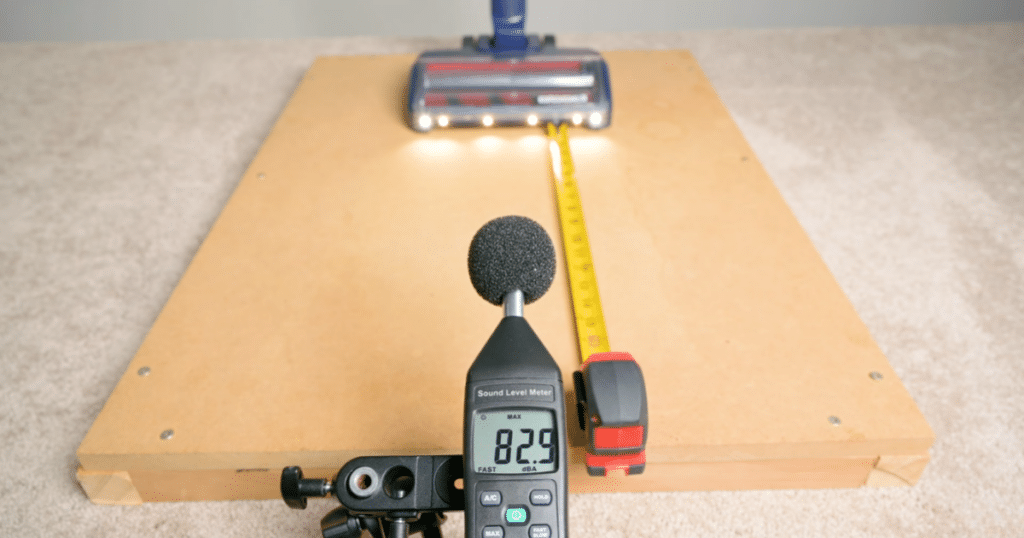
The Noise Score measures how loud a cordless vacuum is during operation. While noise does not directly affect cleaning performance, it plays an important role in the overall user experience and can be a meaningful factor for consumers who vacuum frequently or are sensitive to loud appliances.
Vacuum Wars measures noise using a sound level meter positioned at a fixed distance from the cordless vacuum. Every model is tested using its maximum power setting, allowing for direct comparisons under the highest-performance operating conditions. Testing at maximum power also reflects the loudest noise level a user is likely to experience during demanding cleaning tasks.
Noise is recorded in decibels (dB). Among the cordless vacuums we have tested, the average noise level is approximately 77 dB, although results vary considerably. Some of the quietest models operate near this average, while the loudest can reach the upper 80 dB range or even the low 90 dB range, creating a noticeable difference in perceived loudness.
Although Vacuum Wars continues to measure and report noise levels for every cordless vacuum, this metric carries less weight in our overall scoring algorithm than it once did. As cordless vacuum technology has matured, manufacturers have generally become more consistent in this area, resulting in smaller performance differences between competing models. Consequently, noise remains a useful point of comparison, but it is no longer one of the most significant factors in our overall evaluation.
The Noise Score is intended to help consumers compare the relative loudness of different cordless vacuums while recognizing that cleaning performance, ergonomics, and other core metrics typically have a greater impact on the overall ownership experience.
The One-Star Review Score is a metric derived from Amazon customer ratings. Amazon displays the percentage of reviewers who gave a product a one-star rating, and Vacuum Wars uses this value as an indicator of severe customer dissatisfaction.
Unlike the average star rating, the percentage of one-star reviews highlights how many customers had an extremely negative experience with a product. A high percentage of one-star reviews can indicate recurring problems such as reliability issues, poor durability, defective units, misleading marketing, or other significant shortcomings.
To ensure statistical reliability, Vacuum Wars only uses this metric for products that have accumulated at least 100 total Amazon reviews. Products with fewer than 100 reviews receive a default average score for this criterion, since a small number of reviews can produce misleading percentages.
Once a product exceeds the 100-review threshold, its percentage of one-star reviews is incorporated into the overall scoring algorithm. Products with higher percentages of one-star reviews receive a larger negative adjustment, while products with relatively few one-star reviews perform better in this category.
This metric helps identify products that generate unusually high levels of customer dissatisfaction and serves as an additional safeguard against recommending products with widespread quality or reliability concerns. Although it can be viewed as a measure of customer satisfaction, Vacuum Wars refers to this metric specifically as the One-Star Review Score.
Ergonomics & Everyday Usability
A cordless vacuum can perform well in testing and still be unpleasant to use. This section considers factors such as handle weight, dustbin capacity, flexible or pivoting designs, self-standing ability, auto-empty systems, and other features that influence comfort, convenience, storage, and day-to-day operation.
The Handle Weight Score measures the weight of the cordless vacuum’s handle assembly. Unlike many reviewers and manufacturers that report the total weight of the entire vacuum, Vacuum Wars focuses specifically on the portion of the vacuum that the user actually supports during normal operation.
To measure this metric, we remove the handle assembly and weigh it using a precision scale, recording the result in grams. Only the handle weight is used in our scoring algorithm.
We believe this provides a more meaningful representation of how heavy a cordless vacuum feels during everyday use. When vacuuming floors, the cleaner head rests on the floor, meaning the user does not have to support its full weight. Likewise, the wand contributes relatively little to the perceived effort of using the vacuum. Instead, the majority of the load carried by the user’s arm is concentrated in the handle, where the motor, battery, dustbin, and controls are typically located.
This distinction becomes even more important during above-floor cleaning. Whether cleaning furniture, stairs, ceilings, shelves, or using accessories such as dusting brushes and crevice tools, the user is primarily supporting the handle assembly. A heavier handle increases arm fatigue and can make the vacuum feel substantially less comfortable to use, even if its total weight is similar to competing models.
For this reason, Vacuum Wars considers handle weight to be a more useful ergonomic measurement than total vacuum weight. While many published specifications emphasize overall weight, our testing is designed to reflect the portion of the vacuum that has the greatest impact on user comfort.
Among the cordless vacuums we have tested, handle weights vary considerably. The average handle weighs approximately 1,500 grams, with the lightest models weighing around 1,200 grams and the heaviest approaching 2,500 grams. These differences can have a noticeable effect on how comfortable a vacuum feels during extended cleaning sessions.
The Handle Weight Score rewards vacuums that place less strain on the user’s arm while still delivering strong cleaning performance, making it an important component of our overall evaluation.
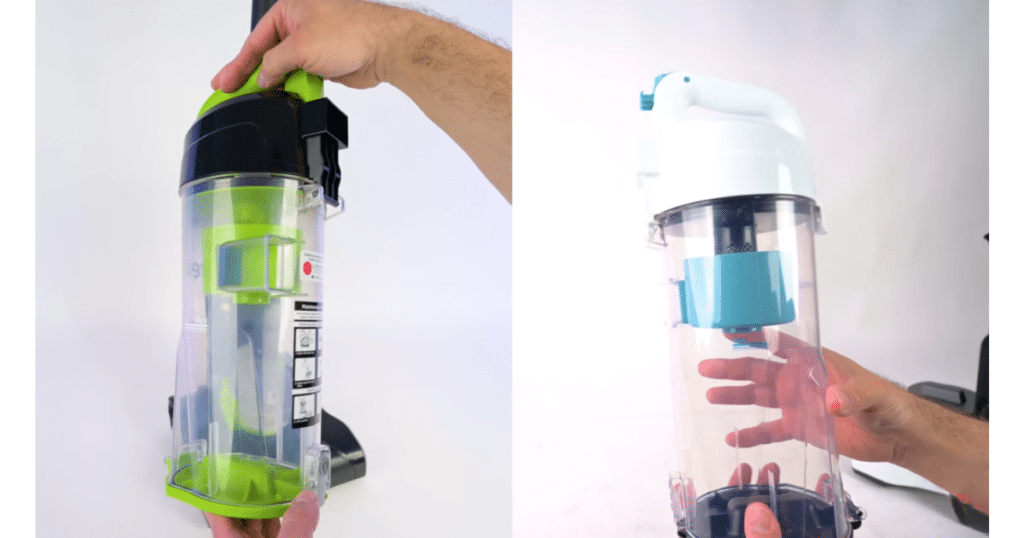
The Bin Size Score evaluates the capacity of a cordless vacuum’s dustbin. Although dustbin capacity does not directly affect cleaning performance, it has a meaningful impact on the overall user experience by determining how often the bin needs to be emptied during cleaning.
Cordless vacuums present a unique design challenge when it comes to dustbin size. Because the dustbin is integrated into the handheld portion of the vacuum, it cannot be made excessively large without increasing the weight and bulk of the handle. At the same time, a dustbin that is too small requires more frequent emptying, particularly when cleaning larger homes or collecting significant amounts of pet hair and debris.
Manufacturers must therefore balance two competing priorities:
- Keeping the vacuum lightweight and comfortable to use.
- Providing enough dustbin capacity to minimize interruptions during cleaning.
Unlike many of our performance metrics, the Bin Size Score is not independently measured by Vacuum Wars. Instead, we use the manufacturer’s published dustbin capacity specification as the basis for this score.
That published capacity is then incorporated into our scoring algorithm, with larger dustbins generally receiving higher scores than smaller ones.
The Bin Size Score is intended to represent convenience rather than cleaning ability. While it is not one of the most heavily weighted factors in our algorithm, it provides a useful comparison for consumers who regularly clean larger areas or prefer to empty the dustbin less frequently.
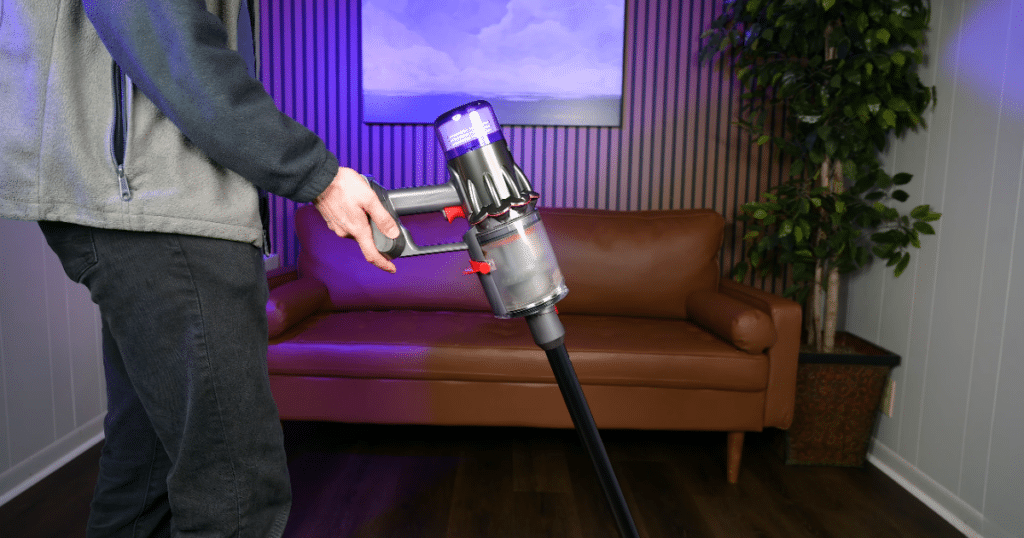
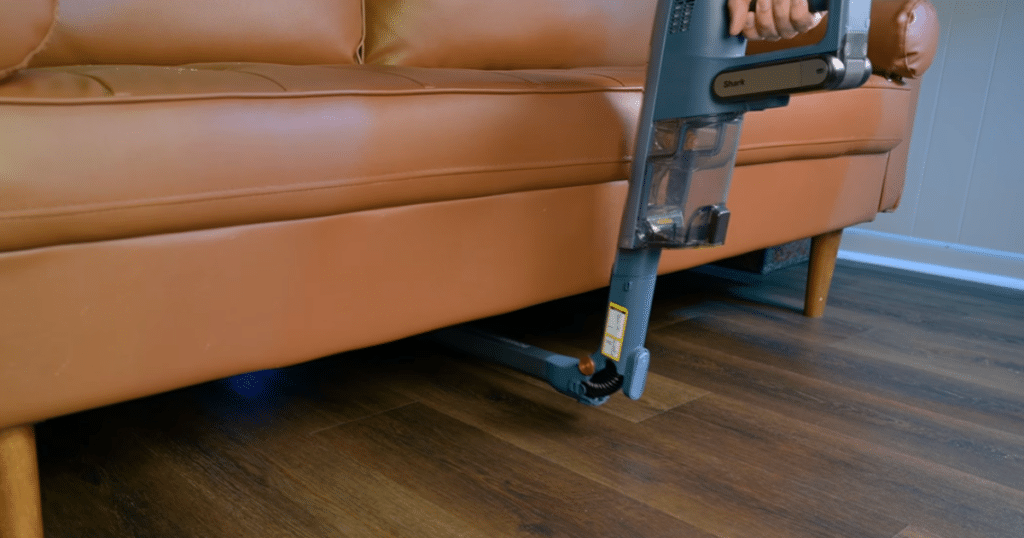
The Pivoting Wand Score is a feature metric that evaluates whether a cordless vacuum includes a pivoting or folding wand. This design allows the wand to bend at a hinge, typically through the use of a release button or locking mechanism located near the middle of the wand.
The primary benefit of a pivoting wand is improved access under furniture. By bending the wand instead of the user having to bend over, the vacuum can more easily reach beneath beds, sofas, tables, and other low-clearance furniture. This makes it possible to clean areas that would otherwise be difficult or uncomfortable to reach.
In addition to improving cleaning ergonomics, a pivoting wand can also make the vacuum easier to store. Most cordless vacuums do not stand upright on their own, and models with long, rigid wands can be awkward to lean against a wall or fit into closets and storage spaces. A folding wand reduces the overall length of the vacuum, allowing it to occupy less space and making it easier to store when not in use.
For these reasons, Vacuum Wars considers a pivoting wand to be a practical convenience feature that improves both usability and storage.
The Pivoting Wand Score is a straightforward feature metric that awards additional points to cordless vacuums equipped with a pivoting or folding wand as part of the overall Vacuum Wars scoring algorithm.
The Auto-Empty Score is a feature metric that evaluates whether a cordless vacuum includes an auto-empty charging dock. This is a relatively new feature that has begun appearing on premium cordless vacuums and combines charging, storage, and automatic dustbin emptying into a single system.
With an auto-empty system, the cordless vacuum is placed onto a dedicated charging dock after use. The dock then transfers the contents of the vacuum’s dustbin into a larger collection container. Depending on the manufacturer, this process may occur automatically when the vacuum is docked or may require the user to press a button to initiate the emptying cycle.
Auto-empty docks are available in both bagged and bagless designs. Bagged systems typically store debris in a disposable dust bag, while bagless systems collect debris in a reusable container that can be emptied periodically.
This feature offers several practical benefits:
- Greater convenience, since the user does not need to empty the vacuum’s dustbin after every cleaning session.
- Integrated charging and storage, providing a dedicated place to keep the vacuum when it is not in use.
- Improved hygiene, because the user has less direct contact with collected dust, dirt, and pet hair during the emptying process.
For households that vacuum frequently, an auto-empty dock can significantly reduce routine maintenance while helping to keep the cordless vacuum ready for the next cleaning session.
The primary drawback is cost. Auto-empty systems add complexity and are generally found on more expensive cordless vacuum models.
Even so, Vacuum Wars considers this a valuable premium feature and awards additional points to cordless vacuums equipped with an auto-empty charging dock as part of the overall scoring algorithm.
The Self-Standing Score is a feature metric that evaluates whether a cordless vacuum is capable of standing upright on its own without requiring a wall mount, charging dock, or external support.
Traditionally, most cordless vacuums have not been able to stand independently. When not in use, they typically must be laid on the floor, leaned against furniture, or stored in a wall-mounted charging bracket. This can be inconvenient during cleaning sessions when the user wants to pause briefly to move furniture, answer the door, or switch attachments.
In recent years, several manufacturers have developed designs that allow cordless vacuums to remain upright on their own. This has been achieved through a combination of improved weight distribution, locking cleaner heads, and other engineering solutions that provide greater stability.
A self-standing design offers several practical advantages:
- It allows the vacuum to be parked temporarily during cleaning without falling over.
- It reduces the need to lean the vacuum against walls or furniture.
- It can make storage more convenient in situations where a wall mount is not practical.
- It generally improves the overall ease of use during everyday cleaning.
Although this feature does not directly improve cleaning performance, it is a meaningful convenience feature that enhances the ownership experience.
The Self-Standing Score awards additional points to cordless vacuums that can reliably stand upright on their own, recognizing the added convenience and usability this feature provides.
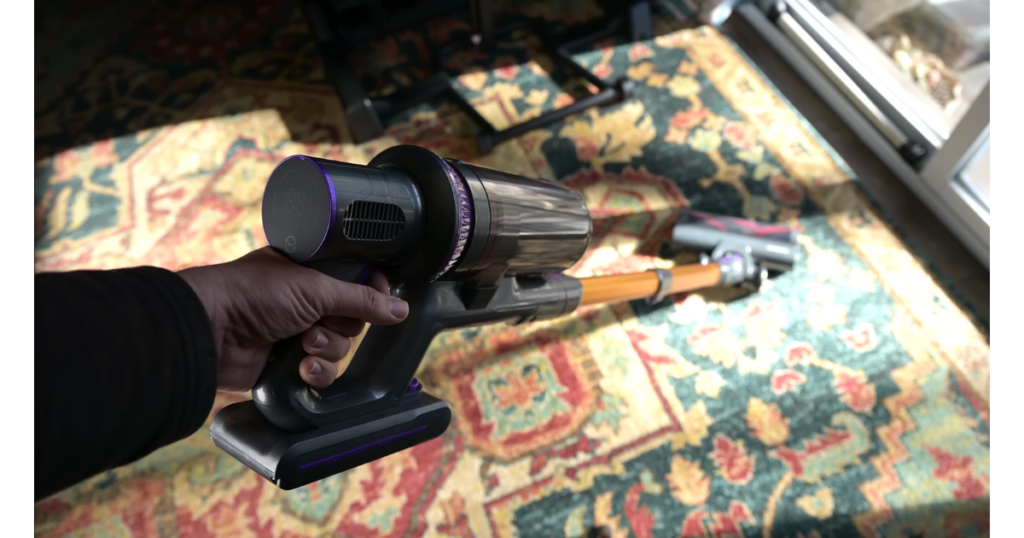
The Two-Axis Handle Score is a feature metric that evaluates whether a cordless vacuum offers two distinct grip positions on its handle. Specifically, the handle is designed so that it can be comfortably held from either the rear or the top, giving the user multiple ways to control the vacuum.
Most cordless vacuums provide only a single primary grip position. A two-axis handle offers greater flexibility by allowing the user to change hand positions during cleaning, which can improve comfort over longer cleaning sessions.
This feature is particularly beneficial because the handle contains many of the vacuum’s heaviest components, including the motor, battery, and dustbin. As a result, the user’s wrist and forearm support most of the vacuum’s weight. Being able to alternate between two grip positions can reduce fatigue by changing the angle of the wrist and the distribution of force on the hand and arm.
The advantage is especially noticeable on cordless vacuums with heavier handle assemblies, where even small ergonomic improvements can make the vacuum feel more comfortable to use over time.
While a two-axis handle does not directly improve cleaning performance, it is a thoughtful ergonomic feature that enhances the overall user experience.
The Two-Axis Handle Score awards additional points to cordless vacuums that provide two practical grip positions, recognizing the increased comfort and flexibility this design offers during both floor cleaning and above-floor cleaning tasks.
Floorhead, Tools & Smart Features
This section evaluates the additional hardware and technology that can make a cordless vacuum more versatile or easier to use. Scores include floorhead designs, soft and dual rollers, lighting, displays, battery indicators, sensors, specialty attachments, powered tools, hoses, floor-washing systems, and other features based on both their presence and their practical usefulness.
Floorhead features
The Soft Roller Score is a feature metric that evaluates whether a cordless vacuum includes a soft roller cleaner head for hard floor cleaning. Vacuum Wars considers this one of the most valuable features available on modern cordless vacuums and gives it significant weight in the overall scoring algorithm.
Soft rollers-sometimes referred to as fluffy rollers-are a relatively recent innovation that have dramatically improved hard floor cleaning performance. Unlike traditional brush rolls that rely primarily on stiff bristles, soft rollers use a fabric-covered rotating surface that excels at collecting both fine dust and larger debris.
Their performance advantages extend well beyond simply picking up dust.
One of the most noticeable benefits is their ability to collect pet hair. Soft rollers tend to grab pet hair almost immediately upon contact, making them exceptionally effective for homes with shedding pets.
They also perform remarkably well with large debris. Traditional cordless vacuum cleaner heads often push larger debris forward, a phenomenon commonly referred to as snowplowing. Soft roller designs greatly reduce this problem and can typically handle much larger debris before snowplowing becomes an issue.
Because of these advantages, soft rollers consistently perform extremely well in our practical hard-floor testing and have become one of the features we value most for hard-floor cleaning.
For the purposes of this score, a vacuum receives credit if it includes a soft roller cleaning solution in either of two forms:
- A dedicated soft roller cleaner head, supplied with the vacuum as a separate attachment. Many Dyson models, for example, include both a carpet-focused cleaner head and a separate soft roller head for hard floors.
- An integrated dual-roller cleaner head, in which a soft roller works alongside a traditional brush roll. Shark refers to this design as DuoClean, although similar dual-roller systems are offered by other manufacturers under different names.
Regardless of the implementation, the important consideration is that the vacuum provides the cleaning benefits associated with a soft roller.
The Soft Roller Score is therefore a feature-based metric that rewards cordless vacuums equipped with one of the most effective hard-floor cleaning technologies currently available. Because of its substantial impact on real-world cleaning performance, it is one of the more heavily weighted feature scores in the Vacuum Wars algorithm.
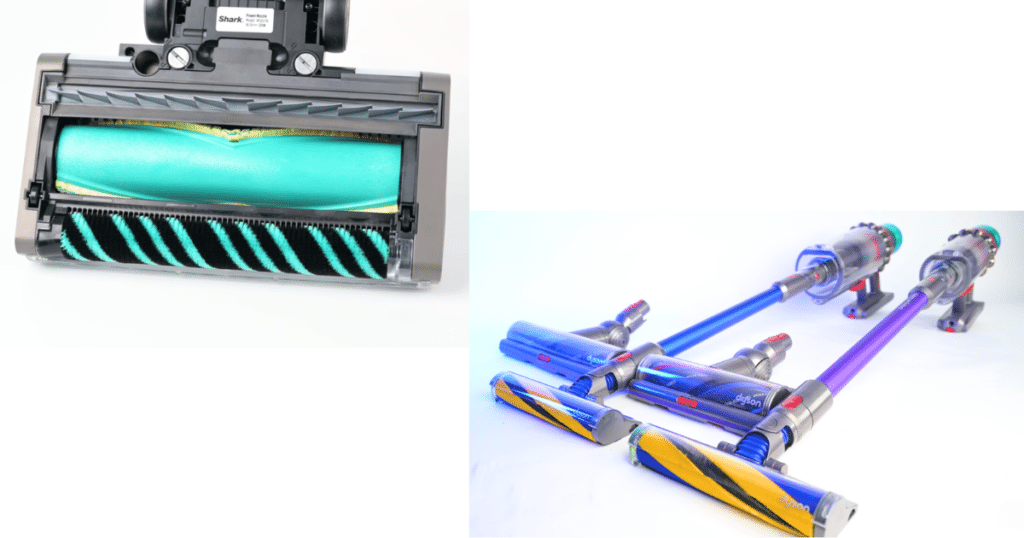
The Dual Roller Score is a feature metric that evaluates whether a cordless vacuum includes a two-roller cleaner head that combines a soft roller with a traditional brush roll in a single floor head.
Shark refers to this feature as DuoClean, which is the brand’s trademarked name for the technology. However, similar dual-roller designs are now offered by several manufacturers, including Bissell and others, under different names. For the purposes of our scoring, the name is less important than the design itself.
A typical dual-roller cleaner head places:
- A soft roller at the front of the cleaner head.
- A traditional bristle brush roll behind it.
This combination allows the vacuum to take advantage of the strengths of both roller types without requiring the user to change cleaner heads when moving between different floor surfaces.
The front soft roller delivers many of the benefits that have made soft rollers one of the most significant innovations in hard-floor cleaning. It excels at:
- Picking up fine dust.
- Collecting pet hair.
- Handling large debris with minimal snowplowing.
- Cleaning hard floors more thoroughly than traditional brush rolls alone.
Meanwhile, the rear traditional brush roll provides the agitation needed to clean carpet effectively by working debris out of the carpet fibers.
The result is a cleaner head that performs well across both hard floors and carpets, allowing users to transition between floor types without swapping attachments. This makes dual-roller systems particularly convenient in homes with multiple flooring surfaces.
Vacuum Wars considers this one of the most practical cleaner head designs currently available because it combines the advantages of soft roller technology with the carpet-cleaning ability of a traditional brush roll.
For that reason, the Dual Roller Score awards additional points to cordless vacuums equipped with a dual-roller cleaner head, recognizing the improved versatility and convenience that this design offers in everyday cleaning.
The LED Lights Score is a feature metric that evaluates whether a cordless vacuum is equipped with LED lights on its cleaner head. While this feature does not improve the vacuum’s cleaning performance directly, it can significantly improve the user’s ability to see dust and debris while vacuuming.
LED lights illuminate the area immediately in front of the cleaner head, making it much easier to spot:
- Fine dust
- Pet hair
- Small debris
- Dirt along edges and baseboards
- Debris underneath furniture and in other dimly lit areas
This additional visibility often allows users to clean more thoroughly because they can see material that would otherwise blend into the floor or remain hidden in shadows. The benefit is especially noticeable on hard floors, where fine dust and pet hair can be difficult to see under normal room lighting.
LED lights are particularly useful when vacuuming under furniture, in closets, along cabinets, or in other areas where overhead lighting is limited. Many users find that once they have used a cordless vacuum with well-designed floor-head lighting, it becomes a feature they are reluctant to give up.
For these reasons, Vacuum Wars considers LED lights to be a meaningful convenience feature and awards additional points to cordless vacuums that include them.
The LED Lights Score is a straightforward feature metric that records whether the standard cleaner head is equipped with integrated LED illumination and incorporates that feature into the overall Vacuum Wars scoring algorithm.
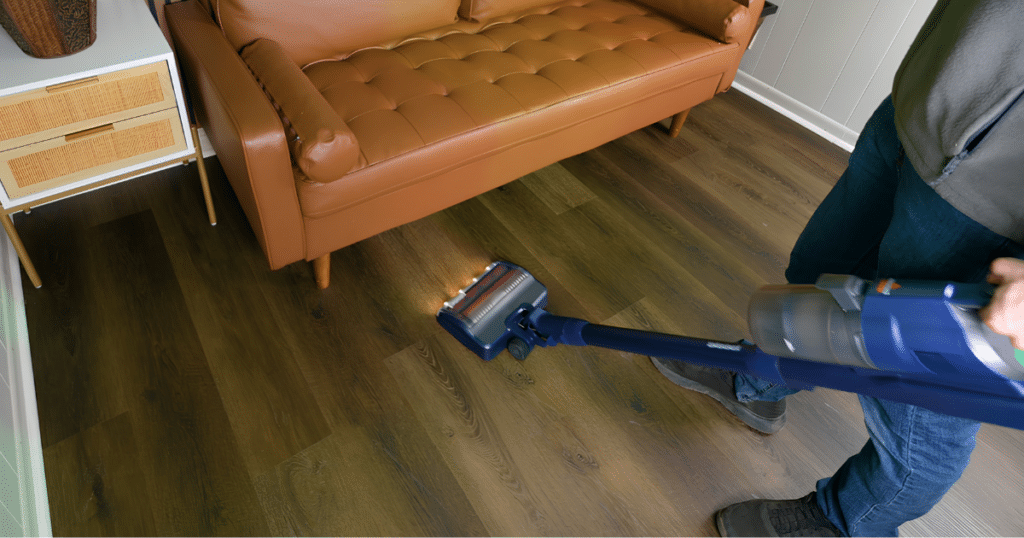
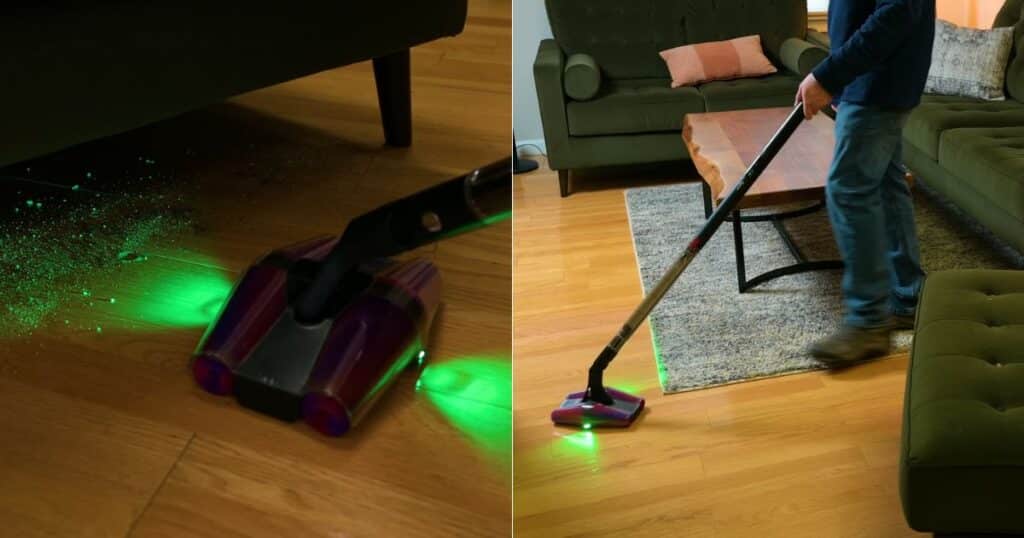
The Floor Laser Score is a feature metric that evaluates whether a cordless vacuum includes angled floor illumination, commonly referred to as a floor laser, to reveal fine dust and debris on hard floors.
Although these systems are often called lasers, they are typically not true lasers. Most manufacturers use a highly focused, bright LED positioned at a precise angle near the front of the cleaner head. At Vacuum Wars, we continue to use the term floor laser because it has become the commonly recognized name for this type of feature.
The effectiveness of the technology comes from the angle of the light rather than its brightness alone. By projecting light nearly parallel to the floor surface, tiny particles of dust, pet hair, and other debris cast small shadows that make them much more visible than they would be under normal overhead room lighting.
The difference can be dramatic. Debris that is virtually invisible under everyday lighting often becomes immediately apparent when illuminated by a floor laser. This is especially beneficial on hard floors, where fine dust and hair can blend into the surface and easily be overlooked.
Many users find that this feature changes the way they clean. It frequently reveals far more dust and debris than expected, allowing users to clean more thoroughly. In fact, one humorous side effect is that it can make people realize just how much dust is present on their floors, sometimes leading them to vacuum more often than they otherwise would.
Vacuum Wars considers floor laser technology to be one of the more impressive convenience innovations introduced in recent years. While it does not improve the vacuum’s cleaning ability directly, it significantly improves the user’s ability to see what needs to be cleaned, which often leads to better cleaning results in practice.
The Floor Laser Score awards additional points to cordless vacuums equipped with this feature as part of the overall Vacuum Wars scoring algorithm.
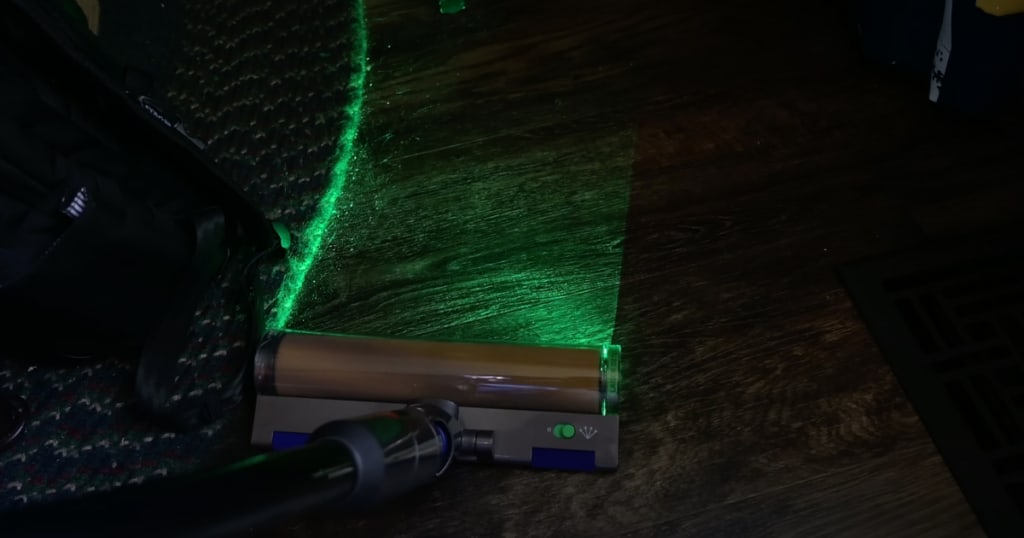
The Edge Sensing Score is a feature metric that evaluates whether a cordless vacuum includes an edge sensing system designed to improve cleaning performance along walls, baseboards, and other edges.
Edge sensing systems use sensors to detect when the cleaner head is operating next to a wall or other vertical surface. Once the vacuum recognizes that it is cleaning along an edge, it automatically changes its behavior to improve debris pickup in these areas.
The exact implementation varies by manufacturer. Some systems increase suction power on the side of the cleaner head nearest the wall, directing more airflow where debris commonly accumulates. Others employ different engineering solutions. For example, some Shark models use strategically directed bursts of airflow to move debris inward toward the cleaner head, making it easier for the vacuum to collect dirt that would otherwise remain along the edge.
Edge cleaning has traditionally been a challenge for vacuum cleaners because debris often becomes trapped against baseboards or in the narrow space where the floor meets the wall. By recognizing these situations automatically and adjusting the cleaner head’s operation, edge sensing systems can improve cleaning performance without requiring additional effort from the user.
For the purposes of this metric, Vacuum Wars records whether the cordless vacuum includes an automatic edge sensing feature that actively enhances edge-cleaning performance. The specific method used is less important than the presence of the capability itself.
The Edge Sensing Score awards additional points to vacuums equipped with this technology because it helps address one of the most common problem areas in everyday floor cleaning and contributes to a more thorough overall cleaning experience.
The Direction Detect Score is a feature metric that evaluates whether a cordless vacuum can detect the direction in which it is being moved during cleaning. Specifically, the system determines whether the vacuum is on the forward push or the backward pull and adjusts its operation accordingly.
This feature is currently most closely associated with Shark, which markets the technology under the name Direction Detect. Vacuum Wars has adopted that name for this metric, although similar technologies from other manufacturers would also qualify if they provide the same functionality.
By knowing the direction of travel, the vacuum can optimize certain aspects of its cleaning behavior. Depending on the manufacturer’s implementation, this may include adjusting suction, brush roll operation, airflow, or other cleaning functions differently during the forward and backward portions of each cleaning stroke.
The goal is to improve cleaning efficiency by tailoring the vacuum’s performance to the direction in which it is moving rather than treating both directions identically.
At present, this remains a relatively uncommon feature, with Shark being the primary manufacturer offering it. Because the technology is still new and its real-world benefits are somewhat limited compared to other premium features, Vacuum Wars currently assigns it a relatively modest weight in the overall scoring algorithm.
The Direction Detect Score is therefore a feature-based metric that recognizes the presence of this directional sensing technology while acknowledging that, at least for now, it is not among the most influential factors in our cordless vacuum evaluations.
Displays & feedback
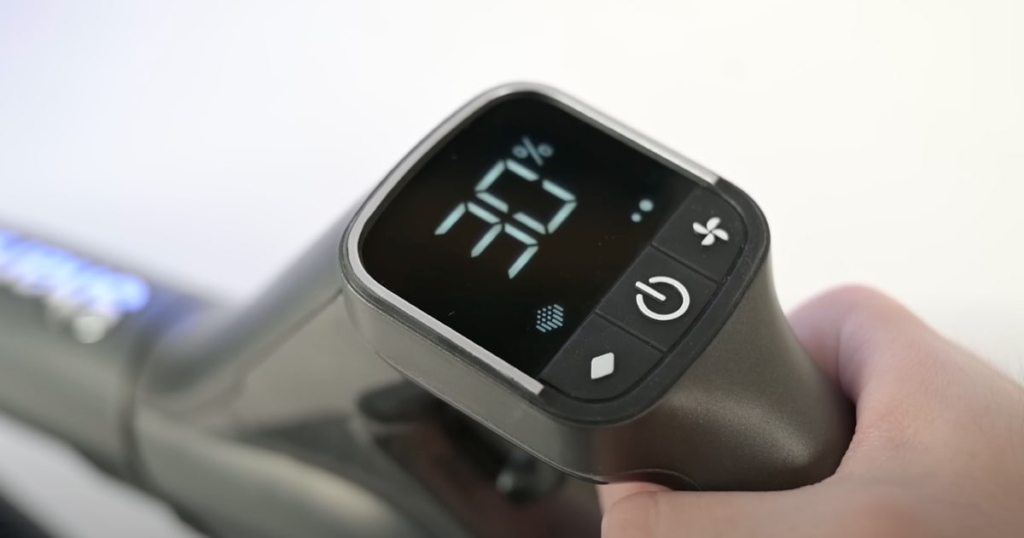
The LCD Screen Score is a feature metric that evaluates whether a cordless vacuum includes a full LCD display on the handle. Vacuum Wars considers an LCD screen to be a valuable convenience feature because it provides users with significantly more information than a traditional indicator light or simple LED display.
Many cordless vacuums include basic LED indicators that show battery status or the selected power mode. An LCD screen goes a step further by displaying detailed, real-time information that can improve the overall user experience.
Depending on the manufacturer, an LCD screen may display information such as:
- Remaining battery life or estimated runtime
- Current power mode
- Maintenance reminders
- Clog or airflow blockage alerts
- Filter cleaning reminders
- Error messages or diagnostic information
- Other system status information
Having this information readily available allows users to better understand how the vacuum is operating and can make maintenance and troubleshooting easier.
For the purposes of this metric, Vacuum Wars distinguishes between a full LCD screen and a basic LED display. Simple indicator lights or segmented LED readouts do not qualify for this feature. Only vacuums equipped with a true LCD display receive credit for this metric.
The LCD Screen Score is a feature-based assessment that awards additional points to cordless vacuums equipped with a full LCD display. While it does not directly improve cleaning performance, it enhances usability by providing the user with more detailed information about the vacuum’s operation and status.
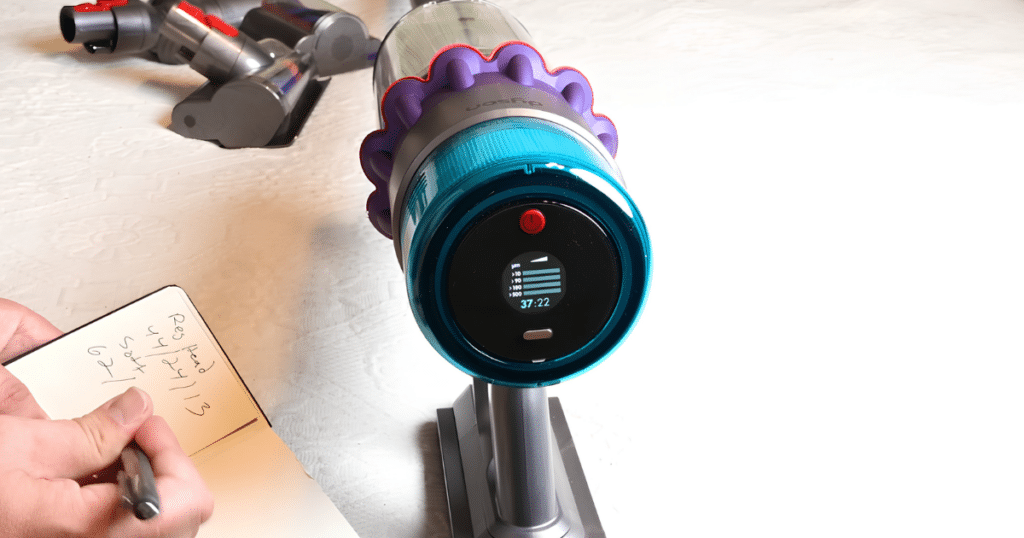
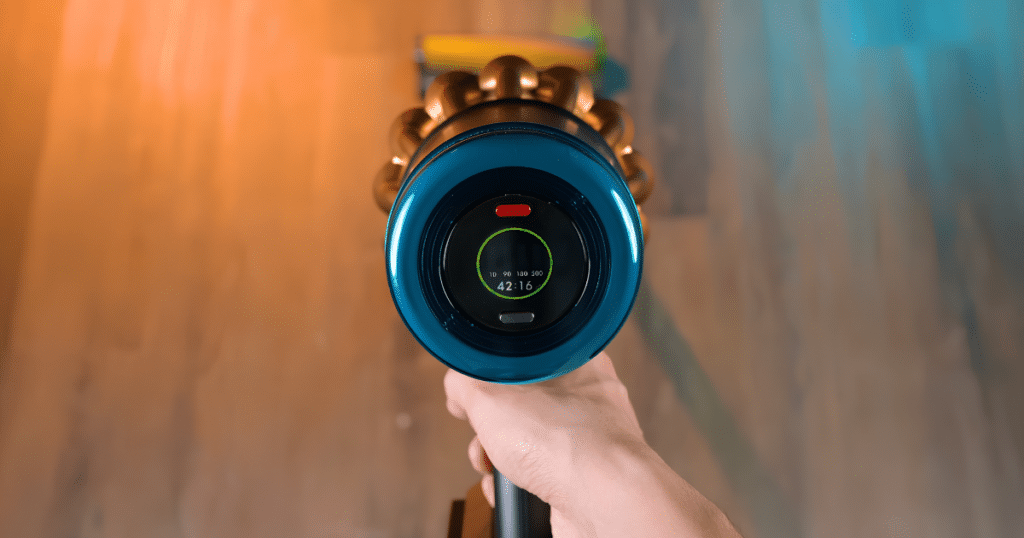
The Digital Battery Life Indicator Score is a feature metric that evaluates whether a cordless vacuum provides a precise, real-time estimate of its remaining runtime. This feature gives users a much more accurate understanding of how much cleaning time remains than a traditional battery indicator.
In most cases, the digital runtime indicator is displayed on the vacuum’s LCD screen, although the presence of an LCD screen alone does not necessarily mean the vacuum includes this feature.
A true digital battery life indicator estimates the remaining minutes of runtime based on the vacuum’s current operating conditions. Ideally, this estimate updates dynamically as those conditions change. For example, the displayed runtime may adjust when the user:
- Switches between power modes.
- Changes attachments.
- Uses a cleaner head with different power requirements.
- Operates the vacuum under varying cleaning conditions.
By continuously monitoring the vacuum’s operating state, the system can provide a much more accurate estimate of the remaining battery life than a simple battery gauge.
Dyson was one of the first manufacturers to implement this feature effectively and remains one of the industry leaders in providing highly accurate, minute-by-minute runtime estimates. However, many other manufacturers have begun offering similar functionality in recent years.
For the purposes of this metric, Vacuum Wars makes an important distinction between a digital battery life indicator and a basic battery level display. Traditional battery gauges that show only three or four bars-or a few LED lights representing approximate charge levels-do not qualify. This score is reserved for vacuums that provide a detailed, continuously updated estimate of the actual runtime remaining.
The Digital Battery Life Indicator Score rewards cordless vacuums that give users a more precise understanding of remaining battery life, helping them better plan and manage their cleaning sessions.
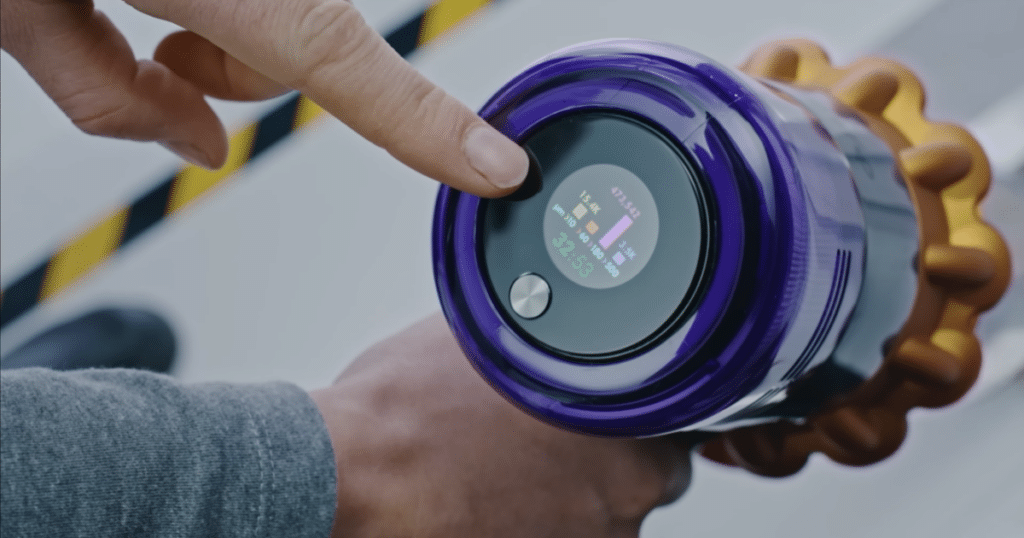
The Particle Collection Display Score is a feature metric that evaluates whether a cordless vacuum provides real-time visual feedback about the amount or size of debris being collected while cleaning.
This feature is currently found on relatively few cordless vacuums. Dyson popularized it by combining a built-in dust sensor with the vacuum’s LCD screen to display the sizes and quantities of particles being collected in real time. As the vacuum operates, the display updates continuously, giving the user a visual representation of what the vacuum is removing from the floor.
This information can be surprisingly useful during cleaning. For example, a section of carpet may appear clean to the eye but still contain a significant amount of embedded fine dust. The particle collection display can reveal this by showing an increase in detected particles, helping the user identify areas that may benefit from additional passes.
Some manufacturers have implemented simpler versions of this concept. Early Tineco models, for example, used a dust sensor to indicate how dirty the floor was with a color-changing indicator, such as a red ring or similar visual cue, rather than displaying detailed particle size information. While these systems provide less detailed information than Dyson’s implementation, they serve a similar purpose by giving the user real-time feedback about cleaning conditions.
For the purposes of this metric, Vacuum Wars recognizes cordless vacuums that provide meaningful real-time particle detection and visual feedback to the user, whether through a detailed particle display or another effective visual indication of detected dirt.
The Particle Collection Display Score rewards vacuums that incorporate this technology because it gives users greater insight into the cleaning process and helps identify areas that may require additional attention, even when dirt is not readily visible.
Attachments
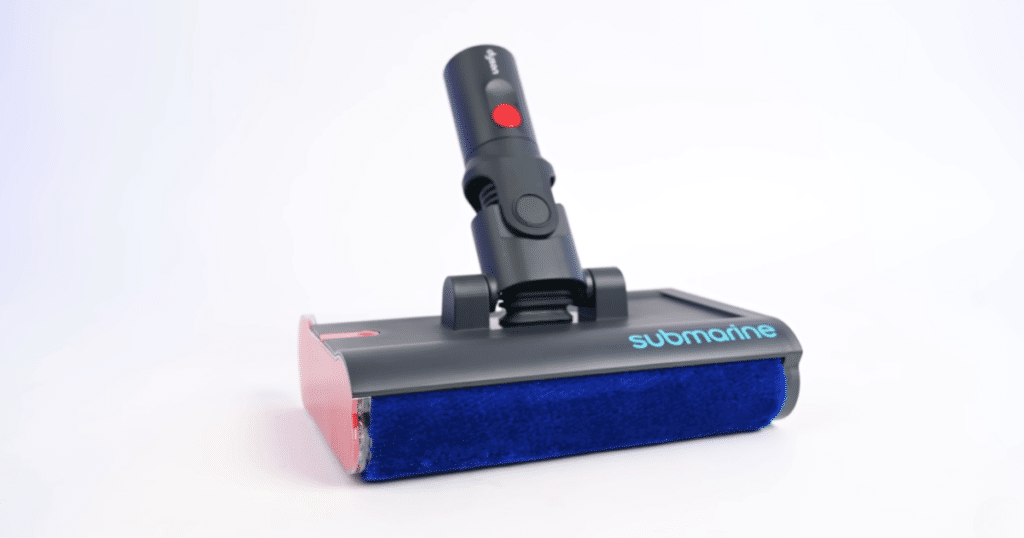
The Floor Washing Attachment Score is a feature metric that evaluates whether a cordless vacuum includes a floor washing or mopping attachment as part of the standard package.
Unlike a traditional vacuum cleaner head, a floor washing attachment is designed to clean hard floors using water or a cleaning solution while the vacuum is in use. Although implementations vary between manufacturers, the goal is to allow the user to vacuum and mop in a single cleaning session or to convert the cordless vacuum into a dedicated hard-floor washing tool.
At present, this remains a relatively uncommon feature. One of the best-known examples is the Dyson Submarine, which includes a dedicated wet roller attachment for washing hard floors. Other manufacturers have also introduced their own versions of floor washing attachments, although they are still found on only a small percentage of cordless vacuums.
Because these systems are still relatively rare, Vacuum Wars treats this as a premium convenience feature. For consumers with large areas of hard flooring, a floor washing attachment can eliminate the need for a separate mop and simplify routine floor maintenance.
For the purposes of this metric, a vacuum receives credit only if the floor washing attachment is included with the product as part of the standard package. Vacuums that require the attachment to be purchased separately do not receive this feature score.
The Floor Washing Attachment Score awards a meaningful number of points to cordless vacuums equipped with this capability, recognizing the added versatility and convenience of combining vacuuming with hard-floor washing in a single system.
The Motorized Tool Score is a feature metric that evaluates whether a cordless vacuum includes a motorized upholstery tool as part of the standard package. This accessory is designed to improve cleaning performance on upholstered furniture, mattresses, stairs, vehicle interiors, pet beds, and other above-floor fabric surfaces.
Not all upholstery tools are created equal. In general, there are three types of upholstery attachments:
Passive tools – These are simple plastic nozzles or brushes with no moving parts. They rely entirely on the vacuum’s suction to remove debris.
Turbine-driven tools – These use the airflow generated by the vacuum to spin a brush roll through a small internal turbine. While they provide better agitation than passive tools, their performance depends on available airflow and is typically less consistent than a powered tool.
Motorized tools – These contain their own electric motor, which is powered directly by the cordless vacuum through electrical contacts built into the wand or attachment connection. The motor actively spins the brush roll, providing strong and consistent agitation regardless of airflow.
The Motorized Tool Score is based on the third category.
Motorized upholstery tools generally provide superior cleaning performance because the powered brush roll is better able to loosen embedded dirt, pet hair, and debris from fabric surfaces. They are particularly effective in homes with pets, where hair often becomes woven into upholstery and carpeting on stairs.
For the purposes of this metric, a vacuum receives credit only if a motorized upholstery tool is included in the standard package. Vacuums that include only passive or turbine-driven upholstery tools do not receive this score.
Because a motorized upholstery tool significantly improves above-floor cleaning performance and versatility, Vacuum Wars awards additional points to cordless vacuums equipped with this feature as part of the overall scoring algorithm.
The Hose Attachment Score is a feature metric that evaluates whether a cordless vacuum includes a flexible extension hose as part of the standard package. Although this is a relatively uncommon accessory, Vacuum Wars considers it one of the most useful features for above-floor cleaning and awards it a significant number of points in the overall scoring algorithm.
A hose attachment connects directly to the vacuum’s handle or main body, with cleaning tools such as an upholstery tool, crevice tool, or dusting brush attached to the other end of the hose. This allows the user to separate the weight of the vacuum from the cleaning tool.
The primary benefit is improved ergonomics. Instead of holding the entire handheld portion of the vacuum while cleaning furniture, shelves, blinds, stairs, or vehicle interiors, the user can keep the vacuum itself lower by their side or resting on a nearby surface while using only the lightweight cleaning tool connected to the hose. This greatly reduces arm fatigue, especially during extended above-floor cleaning.
The hose also increases flexibility and reach, making it easier to clean awkward or confined spaces without constantly repositioning the entire vacuum.
Because cordless vacuums concentrate much of their weight in the handle assembly, a hose attachment can make a noticeable difference in comfort during above-floor cleaning tasks. While relatively few manufacturers include this accessory, those that do offer a more versatile and user-friendly cleaning experience.
For the purposes of this metric, a vacuum receives credit only if a flexible hose attachment is included with the product as part of the standard package.
The Hose Attachment Score rewards cordless vacuums equipped with this feature because it substantially improves the convenience, comfort, and versatility of above-floor cleaning. Although it is a rare feature, it is one of our favorites for enhancing the overall user experience.
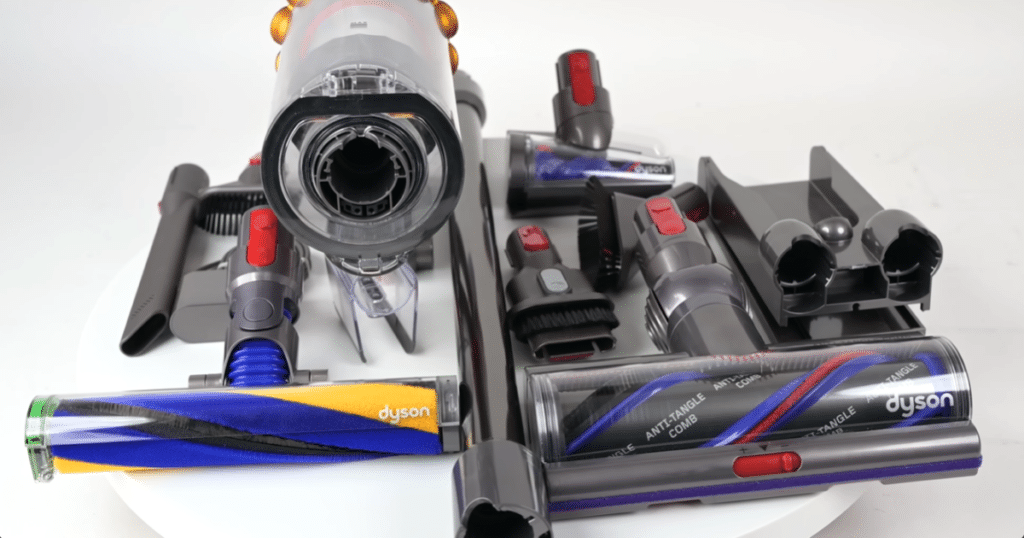
The Attachment Count Score is a feature metric that evaluates how many accessories are included in the box with a cordless vacuum. While the presence of individual premium attachments is captured by other feature scores, this metric measures the overall variety of tools included with the vacuum.
Common attachments may include:
- Crevice tools
- Dusting brushes
- Upholstery tools
- Motorized mini brush rolls
- Combination tools
- Extension hoses
- Specialty cleaning attachments
The philosophy behind this metric is straightforward: a cordless vacuum that includes more accessories is generally capable of handling a wider variety of cleaning tasks without requiring the user to purchase additional tools.
For the purposes of this score, Vacuum Wars simply counts the number of attachments included as part of the standard package. Vacuums that include a larger assortment of accessories receive higher scores than those with fewer included tools.
This metric does not evaluate the quality or effectiveness of the individual attachments. Those characteristics are measured separately where appropriate-for example, through dedicated feature scores for motorized upholstery tools or hose attachments.
The Attachment Count Score is intended to reflect the overall versatility and value provided by the standard accessory package. While it is not one of the most heavily weighted metrics in the Vacuum Wars algorithm, it rewards manufacturers that include a broader selection of tools, allowing users to tackle a wider range of cleaning tasks right out of the box.
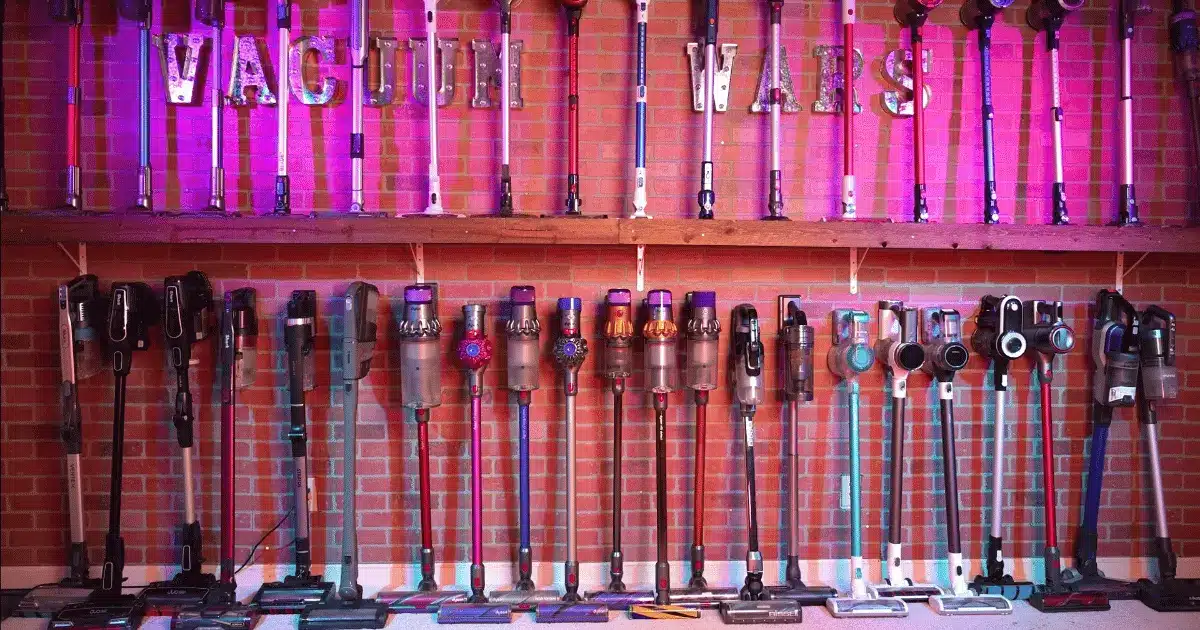
Vacuum Wars maintains always-updated rankings of the best cordless vacuums. Because we purchase every unit ourselves, each recommendation is built on hands-on testing data. Our database now includes more than 110 models, giving us a strong benchmark for evaluating suction power, cleaning performance on carpets and hard floors, battery life, maneuverability, and useful features such as anti-tangle brush rolls, smart sensors, and advanced filtration.