Home › Robot Vacuums › Buying Guide
Independently tested. Never sponsored
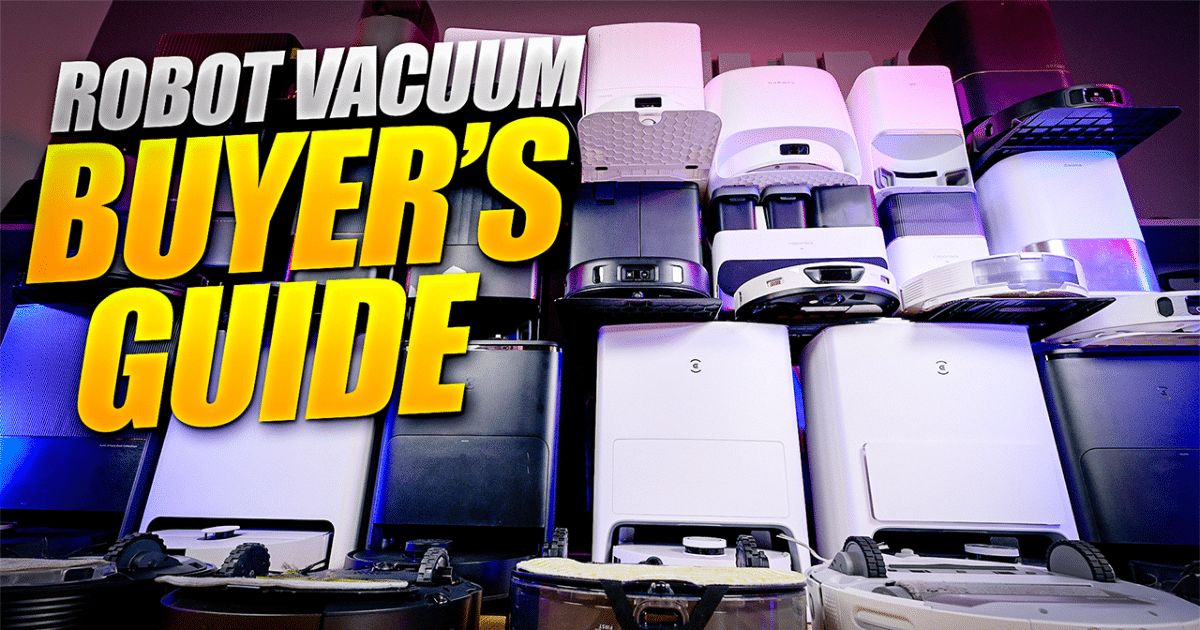
Robot Vacuum Buying Guide: How to Choose the Right One
A first-time buyer’s guide to vacuuming, mopping, docks, obstacle avoidance, mobility, and the features that matter in a real home.
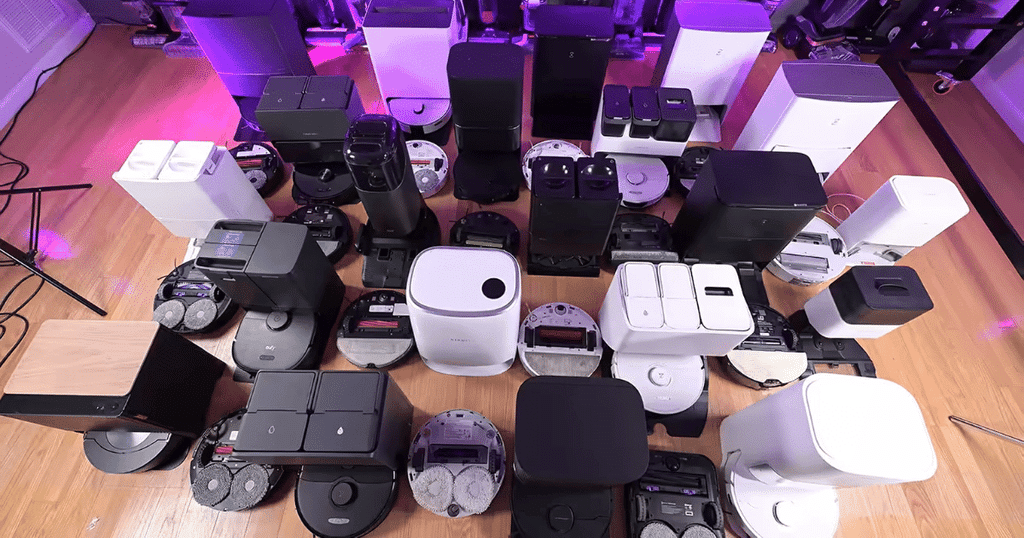
Over the years, we have independently tested more than 200 robot vacuums. We share those findings in our in-depth reviews, our regularly updated Top 20 list, and our robot vacuum comparison tool, but this guide starts with the basics: what each feature actually does for you.
Robot vacuums have become more advanced than ever, and all of the technical and marketing language can make the buying process feel pretty overwhelming. Since most robot vacuums are not exactly cheap, the decision can feel high stakes.
The good news is that you do not have to figure it out on your own. By the end of this robot vacuum buying guide, you will know what to look for, which features are worth paying attention to, and how to choose a robot vacuum that fits your home rather than somebody else’s.
Start here
How to Choose a Robot Vacuum: The Short Version
The most important rule: Choose for the conditions in your home. The most expensive robot is not automatically the best match, and a long feature list is not useful if it does not solve the problems you actually have.
Start with your homeSix buying priorities
01For pet hair and carpet: Prioritize a brush with bristles, an effective anti-tangle design, a reasonably sized onboard dustbin or an auto-empty dock, and strong carpet deep-clean results.
02For mostly hard floors: Basic debris pickup is already strong on many models, so mopping performance, edge coverage, water management, and dock automation may matter more.
03For cluttered homes: Look beyond navigation and pay close attention to dedicated obstacle avoidance. Cameras combined with 3D sensors have produced the strongest averages in our tests.
04For rugs and mixed flooring: Mop lifting or automatic mop removal can let the robot vacuum carpet and mop hard floors in the same run.
05For the least maintenance: A full-service dock can empty the dustbin, wash and dry the mop, and refill the robot’s onboard water tank.
06For low furniture or tall thresholds: Measure first. Robot height and single-tier threshold performance can determine whether the robot reaches an area at all.
Before comparing models, take a quick inventory of your home: how much carpet you have, whether pet or long human hair is a daily issue, how often the floor is cluttered, which rugs need protection from wet mop pads, the height under important furniture, and any thresholds that could block the robot. That short list will make the rest of the shopping process much easier.
Buying guide
What to Look for in a Robot Vacuum
Budget and value
It is true that robot vacuums generally get better as you move up in price. But that does not mean you need to spend $1,600 to get a reliable floor cleaner. Mid-range robots are often an excellent value because they may miss only the latest cutting-edge innovations. Budget models can also be a good value, but the trade-offs become more noticeable, especially at the ultra-budget level.
Ultra Budget: Under $300
Expect basic cleaning with the most significant compromises in navigation, mopping, obstacle avoidance, or automation.
Budget: $300–$600
This range offers reliable basic floor cleaning. Some models also include smart navigation, a simple mop, or an auto-empty dock.
Low-Mid: $600–$1,000
Often the value sweet spot, this range brings better sensors, more capable mopping, and increasingly automated docks.
High-Mid: $1,000–$1,300
Expect more complete docks, stronger obstacle avoidance hardware, and advanced mopping or edge-cleaning features.
Premium: $1,300–$1,600
This range includes flagship-level cleaning systems, advanced mobility features, and the newest dock and sensor technology.
Ultra Premium: Over $1,600
These models typically offer the newest or most specialized features. The extra cost often brings diminishing returns for homes that do not need those capabilities.
Price is a useful shortcut, but it is not a performance score. A less expensive robot with the right brush or mop design can be a better fit than a flagship model whose extra features do not matter in your home.

Wi-Fi and app compatibility
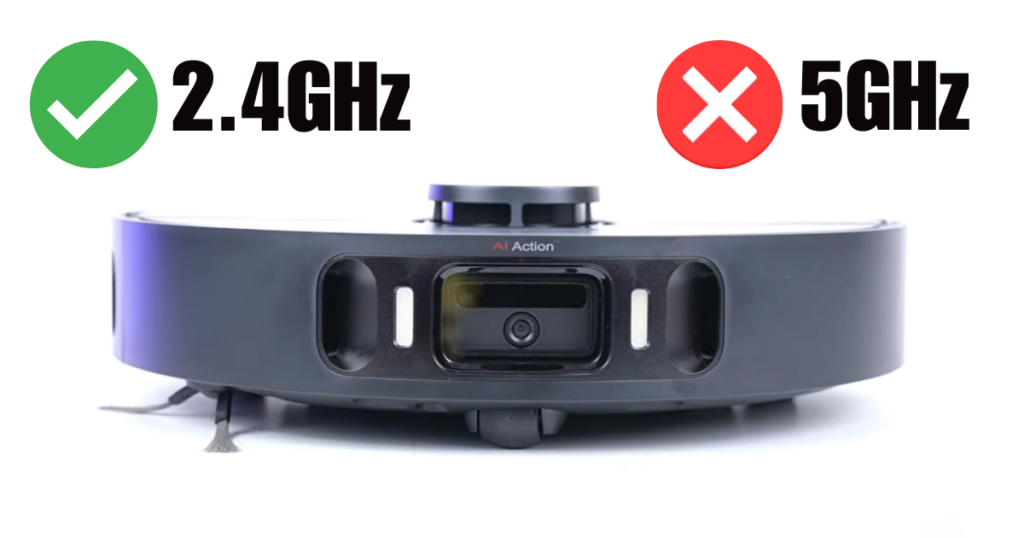
Almost every modern robot vacuum is controlled through a phone app. Most still require a 2.4 GHz Wi-Fi network for setup, and relatively few support a 5 GHz connection. (This is Wi-Fi frequency, not 5G cellular service.) Check the model’s network requirements before buying, especially if your router separates its 2.4 GHz and 5 GHz networks.
The app is where you will usually create and edit maps, select rooms or zones, schedule cleaning, set no-go areas, and adjust cleaning preferences. If you do not want to use an app, verify what the robot can do from its physical buttons before you buy; some models are much more limited without the app.
Vacuuming, pet hair, and brush design
Vacuuming is the robot’s most basic job, and the good news is that many models are pretty powerful these days. Most will do a good job sweeping ordinary surface debris from hard floors and carpets, so if that is all you need, it is fairly hard to go wrong.
The bigger differences appear in specialized jobs, especially pet hair on carpet, long-hair tangles, embedded grit, and the amount of debris the robot can hold before it needs to be emptied.
Robot Vacuums for Pet Hair and Carpet
Pet hair on carpet is more challenging than ordinary surface debris, and not every robot is equally good at picking it up. Brush design can make a big difference. In our testing, brushes that include bristles tend to agitate carpet fibers better than all-rubber brushes, which can improve pet-hair pickup.
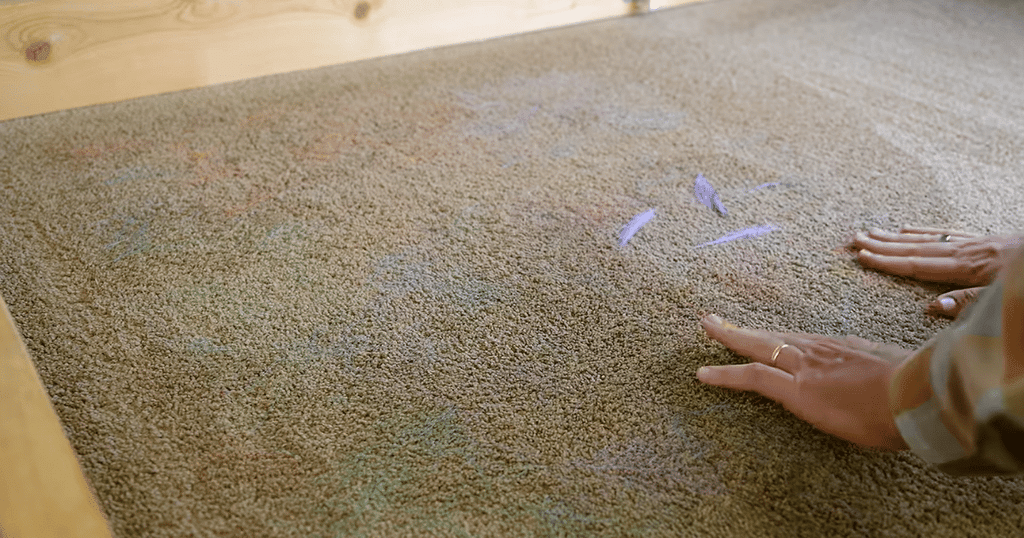
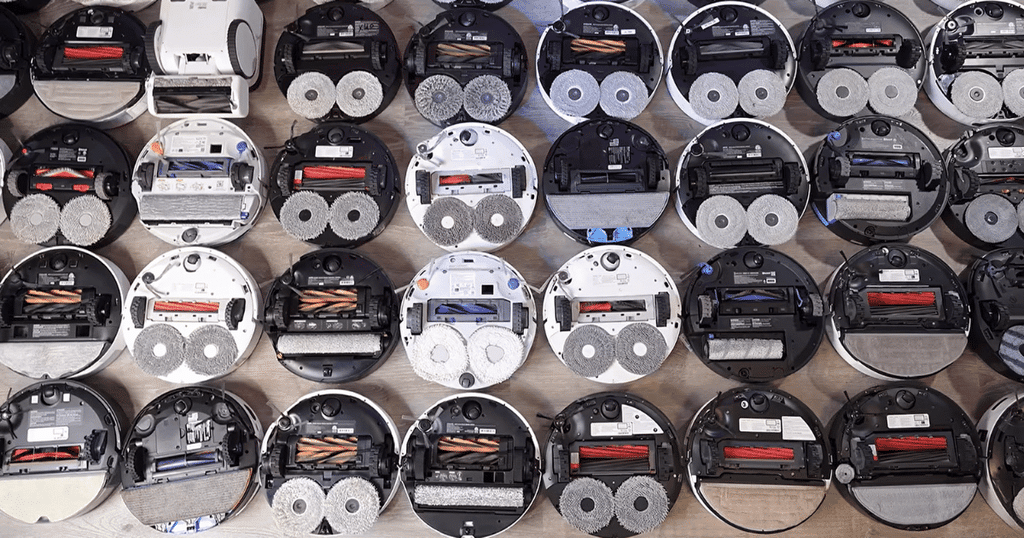
You will also want an anti-tangle design that keeps those bristles from getting wrapped in long hair. We consistently see strong hair-tangle results from dual-brush systems with a gap between the brushes and from single brushes that taper toward one end, allowing wrapped hair to migrate off the roller.
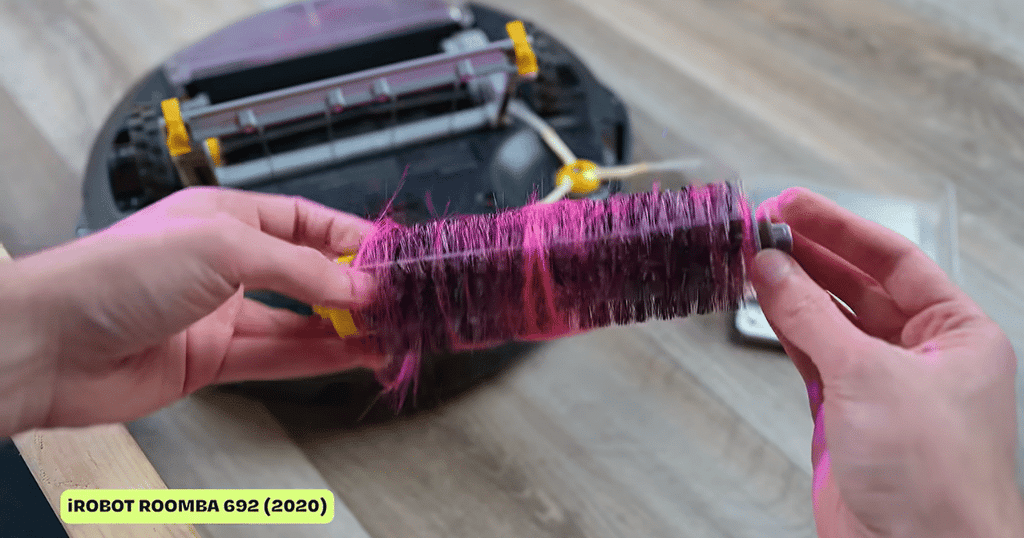
Anti-Tangle Brush Systems to Look For
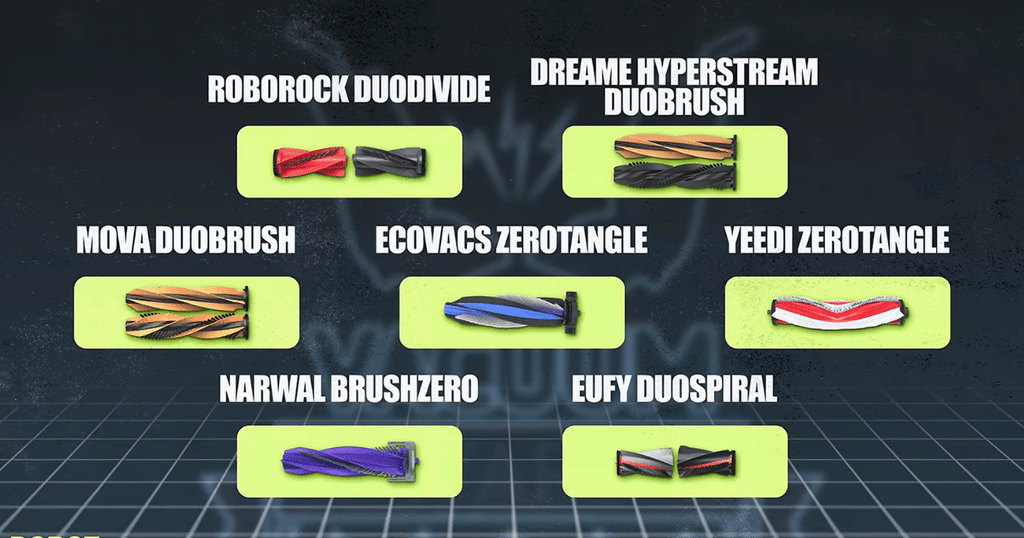
The following branded brush systems have built a good track record in our pet-hair or long-hair testing. Not every model from a brand uses the same brush, so confirm the exact system on the robot you are considering.
Roborock DuoDivide
Dreame HyperStream DuoBrush
MOVA DuoBrush
ECOVACS ZeroTangle
Yeedi ZeroTangle
Narwal BrushZero
Eufy DuoSpiral
Some brands now include their more advanced anti-tangle brushes on entry-level models, so this is one area where you may not have to buy a flagship to get the design you want.
Dustbins and carpet deep cleaning
Dustbin Size and Auto-Emptying
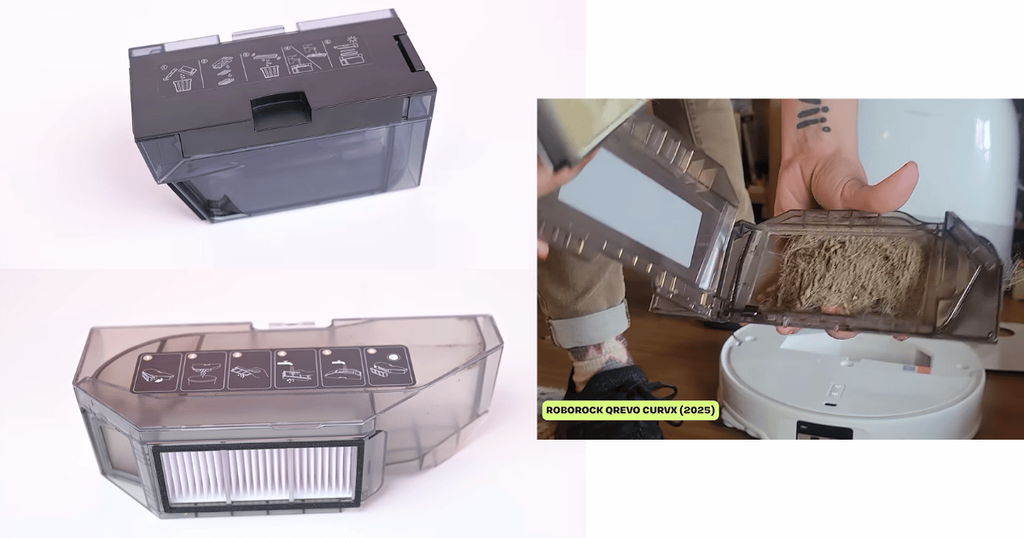
A small onboard dustbin can become an issue if your home has a lot of pet hair or other bulky debris. Once the bin gets too full, the robot may start leaving debris behind or lose some effective airflow. For a home with pets, we generally consider an onboard dustbin under 300 mL to be on the small side.
You can make up for a smaller bin by running the robot more frequently and emptying it regularly. An auto-empty dock is an even easier workaround because the robot can clear its bin between cleaning runs, although very large clumps of hair can still require occasional hands-on attention.
Carpet Deep Cleaning
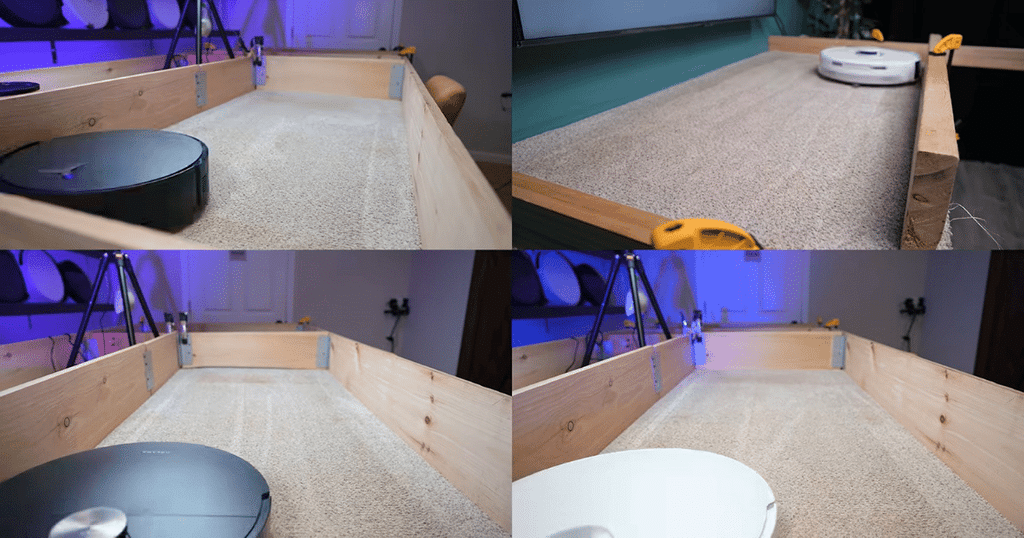
If you have a lot of carpet, look beyond surface pickup and pay attention to carpet deep-clean results. In our studio evaluation, we embed sand and grit into medium-pile carpet and measure how much the robot removes.
Robot vacuums used to score poorly in this test and were nowhere close to matching the cleaning power of an upright vacuum. The average has moved much closer to upright performance, but deep cleaning is still not the strongest feature for many robots. A robot can keep carpet looking clean day to day without fully replacing periodic deep cleaning with a strong upright or canister vacuum.
Brand families with a strong overall vacuuming record in our database include Dreame’s L and X series, ECOVACS’ T and X series, Roborock’s Qrevo series, and several Eufy models. Series names are a helpful starting point, but the brush, airflow, floorhead, and software can still change from one model to another.

Mopping systems and carpet protection
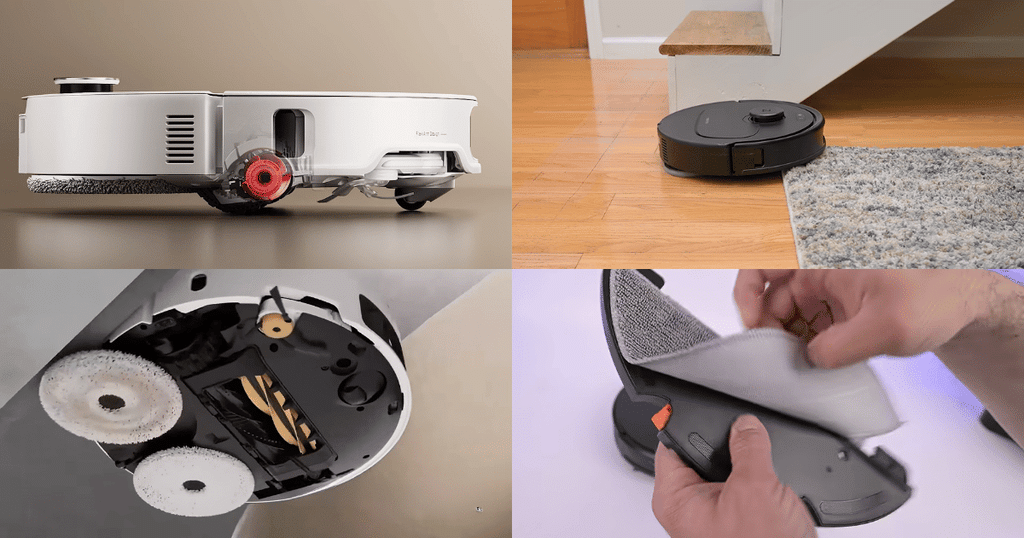
There are three main mop designs in modern robot vacuum-and-mop combos: a flat pad, dual spinning pads, and a roller or track-style mop. The design tells you how the system works, but it does not guarantee the final result. We have seen a wide range of dried-stain performance from every mop type, and we also measure the water left behind because excess residue can lead to streaking.
Flat Pad: A flat pad wipes the floor as the robot moves, with some versions adding vibration for extra scrubbing. This design is generally best suited to light maintenance cleaning and lower prices. Flat pads usually struggle more with dried stains and often require manual refilling, washing, and drying.
Dual Spinning Pads: Two rotating pads scrub the floor, with some models also applying downward pressure. This design is a strong all-around choice for routine mopping and stain removal. However, the pads continue carrying dirty water until they are washed, and cleaning performance varies with pressure, water flow, and software.
Roller or Track Mop: Fresh water feeds the moving roller or track while a squeegee collects dirty water into an onboard tank. This design is particularly useful for wet spills and homes where dirty-water recovery is a priority. The added complexity does not automatically guarantee better dried-stain removal, so the individual model’s test results still matter.
Mop Features That Reduce Hands-On Work
Mop lifting: Lets the robot mop hard floors and vacuum carpet in one run. Without it, you may need separate jobs and may have to attach or remove the mop manually.
Automatic mop removal: Some docks can remove and reattach mop pads so the robot can keep wet pads away from carpet entirely.
Extending mop pads: An edge-reaching pad can clean closer to walls, furniture, and the toe kicks beneath kitchen or bathroom cabinets.
Adjustable water flow: Useful for matching water output to the floor type, although the highest setting is not necessarily the cleanest or least streaky.
Dock washing and drying: Reduces the need to wash pads after every run and helps prevent a damp pad from sitting in the dock.
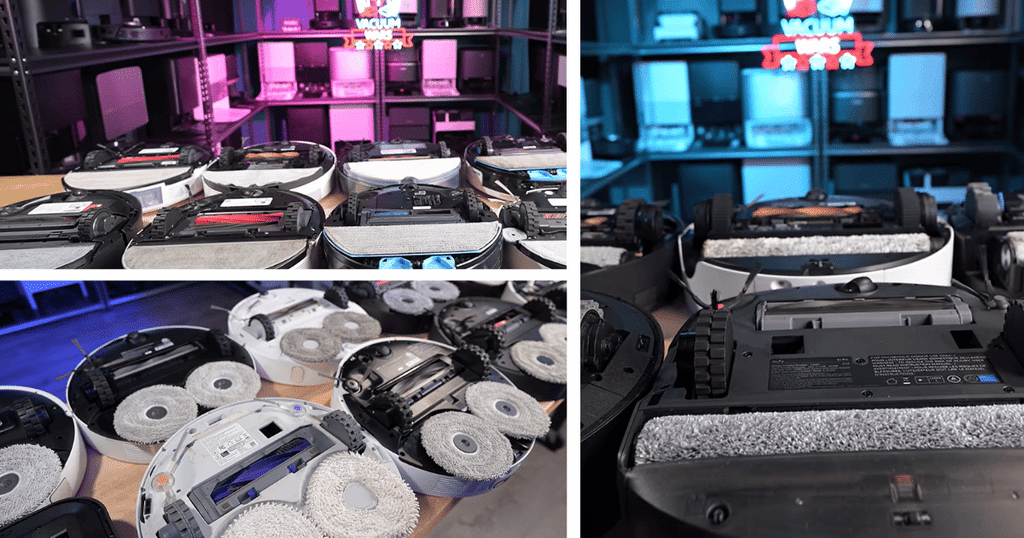
ECOVACS T-series robots consistently hold some of the highest mopping positions in our database. Current high scorers also include models from Roborock, Dreame, MOVA, Narwal, and Eufy, which is why we recommend checking the individual review rather than choosing from the brand name alone.
See also: How Vacuum Wars Tests Robot Vacuum Mops
Dock automation and maintenance
Dock automation has one of the biggest effects on both price and day-to-day maintenance. It also changes what people mean when they call a robot vacuum hands-free.
Charging Dock Only: The simplest station recharges the robot. You empty the onboard dustbin, refill any onboard water tank, and wash or dry the mop yourself. This can be perfectly reasonable if you do not mind a little routine maintenance or have limited space for a large dock.
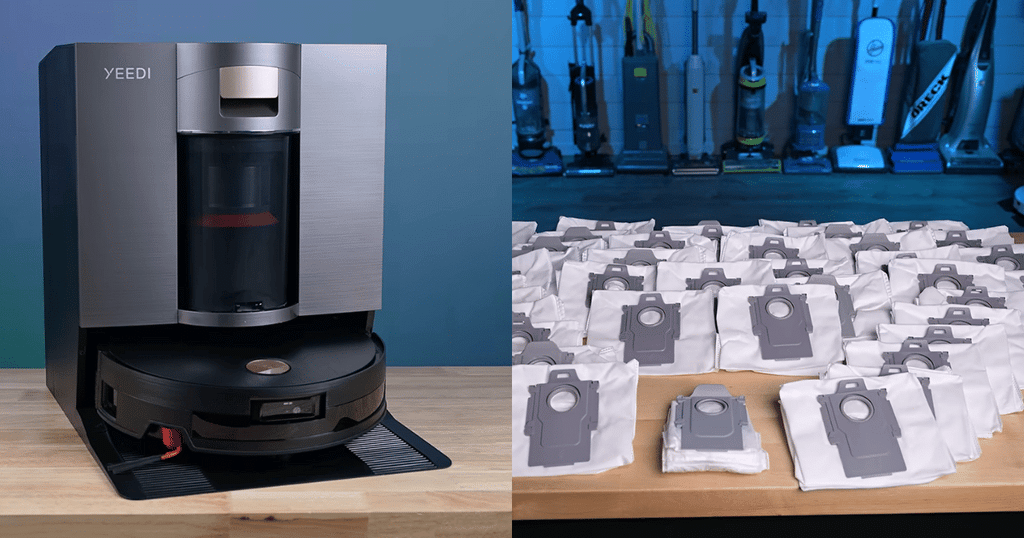
Auto-Empty Dock: An auto-empty dock removes debris from the robot’s onboard dustbin. Many collect it in a disposable bag; others use a bagless bin. Bags contain dust neatly but create an ongoing replacement cost. Bagless bins avoid that cost but can expose you to more dust when you empty them.
Bagless robot docks are less common. Shark’s robot docks are bagless, and Yeedi and ECOVACS have bagless options that performed well for us.
Full-Service Mop Dock
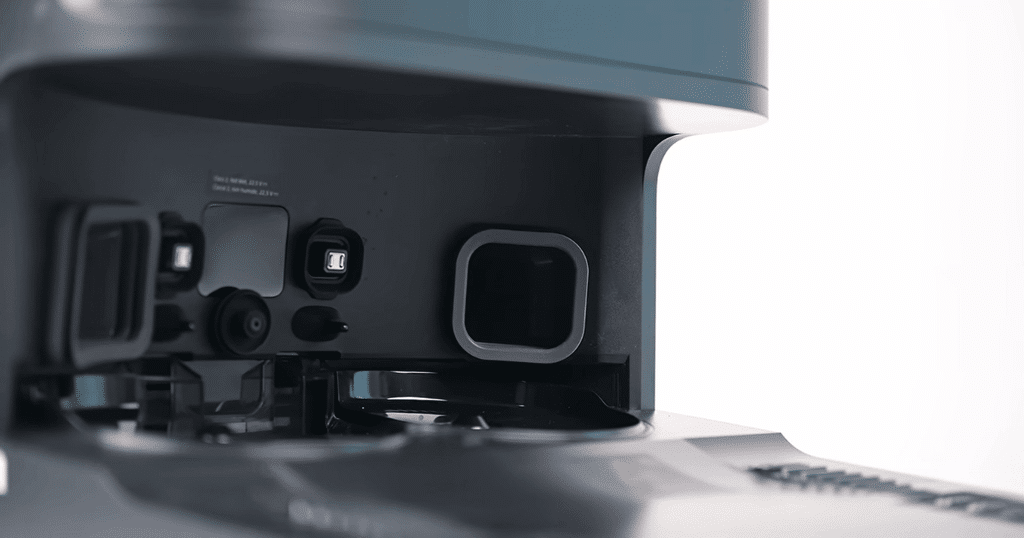
The next level adds mop washing and drying, plus automatic refilling of the robot’s onboard water tank. These features can drastically reduce daily maintenance, but they also increase the purchase price, dock size, and the number of tanks or trays that still need periodic cleaning.
Navigation and mapping
Navigation and obstacle avoidance sound similar, but they solve different problems. Navigation is the robot’s ability to move around your home in an organized, efficient pattern. Obstacle avoidance is its ability to recognize smaller objects that it should not hit or run over.
Smart Navigation
Navigation is commonly handled by LiDAR or visual simultaneous localization and mapping (VSLAM). Even many inexpensive robots now map the home and clean in orderly rows rather than relying on a basic bump-and-turn pattern.
Smart navigation affects cleaning time, coverage, and battery efficiency. Fortunately, robots with modern mapping usually navigate well at almost every price point. Recharge-and-resume also allows most models to pause, recharge, and continue from where they stopped, so battery capacity alone is not the deciding factor it once was.
Obstacle avoidance
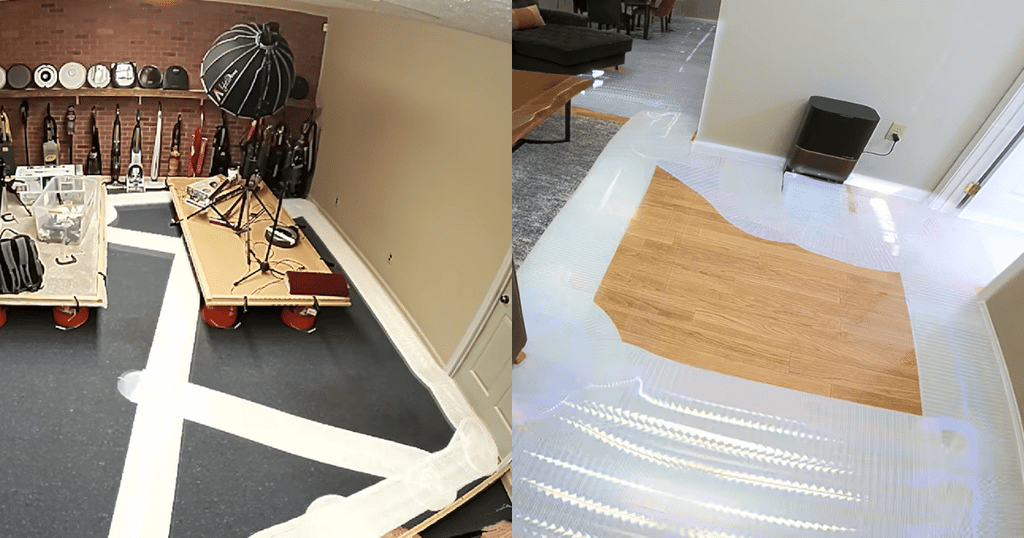
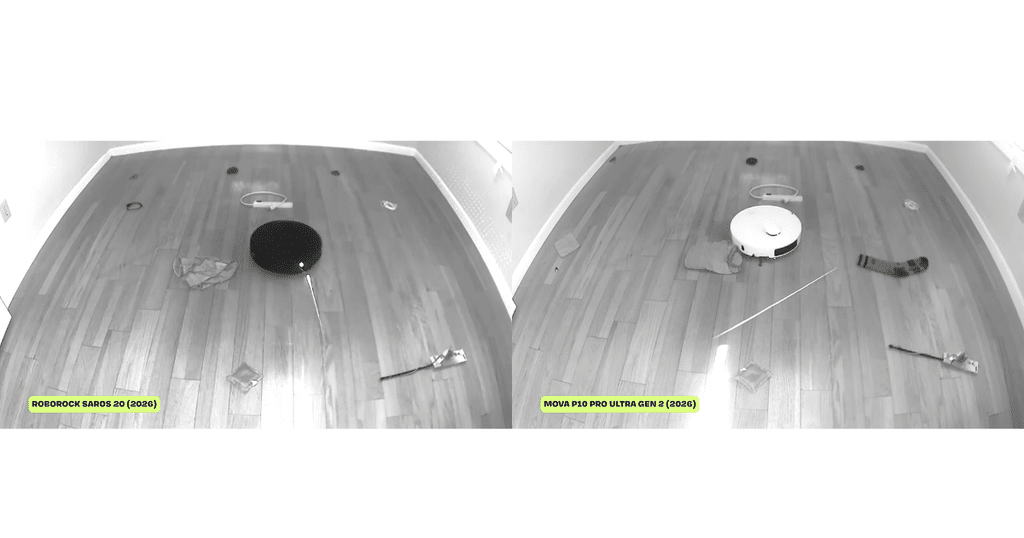
Obstacle avoidance is a different story, with much larger performance differences. A navigation sensor can detect walls and furniture while still missing a cable, sock, toy, shoe, or pet waste sitting below the sensor’s scanning plane. Those items are essentially invisible unless the robot has hardware designed to see them.
The only foolproof solution is still to pick up the floor before every cleaning run. But if you want a robot that can handle everyday clutter, the sensor package matters. In our 24-object obstacle-avoidance evaluation, the averages improve sharply as more capable hardware is added.
Single-Line Laser or LDS: Robot vacuums in this hardware category avoided an average of 3.6 out of 24 objects in our obstacle-avoidance evaluation.
3D Structured Light Only: Models using 3D structured light without additional obstacle-avoidance sensors avoided an average of 7.1 out of 24 objects.
3D Light Plus Another Sensor: Combining 3D light with another sensor improved the average to 17.0 out of 24 objects avoided.
Sensor System Plus One Camera: Robot vacuums combining their sensor system with one camera avoided an average of 18.5 out of 24 objects.
Sensor System Plus Two Cameras: Systems with two cameras had the highest average among these hardware categories, avoiding 20.1 out of 24 objects.
These are category averages from our 24-object studio evaluation. Hardware is a useful starting point, but software and model-specific tuning also affect performance.
Vacuum Wars averages from a 24-object studio evaluation; higher is better. Hardware categories describe the sensor package, but software and model-specific tuning still affect the result.
Some people prefer not to have a camera on their robot, and that is completely understandable. Our averages show that camera-free systems are generally less effective, so the choice is a trade-off between privacy preferences and the strongest possible object recognition. If pet waste, cables, or children’s toys are a major concern, check the exact model’s test results rather than relying on a generic claim such as AI obstacle avoidance.
Furniture clearance and thresholds
Mobility determines whether the robot can get to the floor it is supposed to clean. The two details that matter most are height and threshold climbing.
Robot Vacuum Height for Cleaning Under Furniture
A standard robot vacuum is roughly 4 inches, or 102 mm, tall. The shortest models we have seen are about 3.14 inches, or 80 mm. A low-profile robot can reach debris under beds, sofas, and cabinets that is otherwise difficult to clean.
Measure the clearance under the specific furniture you care about, and compare it with the manufacturer’s stated robot height. A model that is only slightly shorter than the opening may still struggle if the floor is uneven, the furniture sags, or a raised sensor tower needs extra room.

Robot Vacuum Threshold Climbing
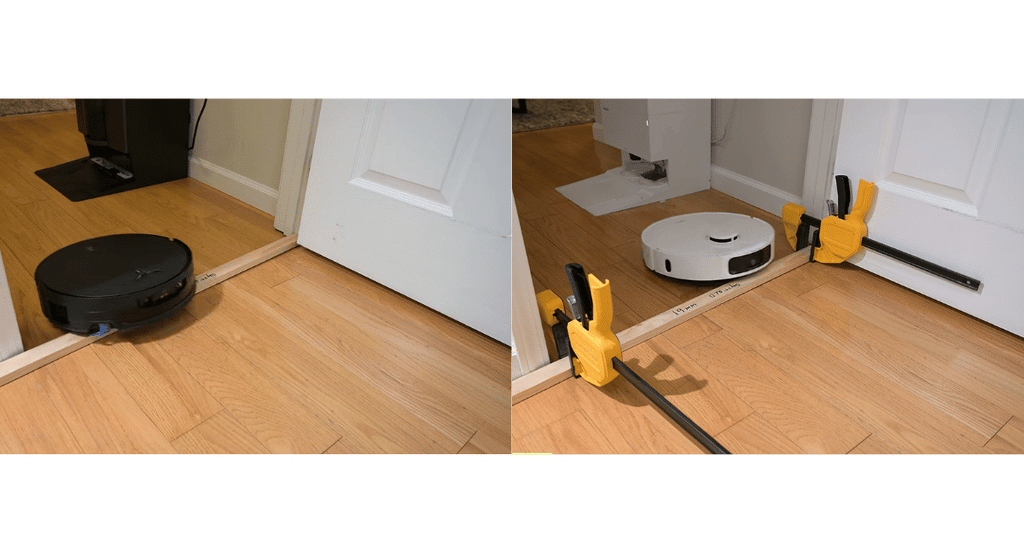
Around 20 mm, or 0.79 inches, is the traditional threshold limit unless a model specifically claims more. Taller or double-tiered transitions, sliding-door tracks, and U-shaped chair legs can keep a robot from reaching part of the floor.
Modern robots, especially some models from Dreame and Roborock, have been tackling this problem with active lifting or climbing systems. Pay close attention to how the claim is defined. The largest advertised number often applies to a tiered threshold, while most shoppers want to know what the robot can cross in one step. In our reviews, we focus on single-tier performance when a model claims to go beyond the standard limit.
Features for your type of home
Best Robot Vacuum Features for Pet Hair and Carpet
A bristled main brush for stronger carpet agitation.
A proven anti-tangle design for long hair.
An onboard dustbin of about 300 mL or more, or an auto-empty dock.
Strong carpet deep-clean and pet-hair results from the exact model.
Reliable obstacle avoidance if pet waste is a realistic risk.
Best Robot Vacuum Features for Mostly Hard Floors
A dual-spinning or roller mop if stain removal matters.
Edge-reaching mop hardware for cleaning along walls and cabinet toe kicks.
Water control that cleans without leaving excessive residue or streaks.
A dock that washes and dries the mop if you plan to mop frequently.
Best Robot Vacuum Features for Rugs and Mixed Flooring
Mop lifting or automatic mop removal so wet pads do not drag across carpet.
Reliable carpet detection and room-specific cleaning controls.
Enough mop-lift height for the thickness of your rugs; very plush rugs may still need a no-mop zone.
Best Robot Vacuum Features for Cluttered Homes
Dedicated obstacle avoidance with 3D sensing and, if acceptable to you, one or two cameras.
Proven performance with cords, socks, shoes, and toys, not just a broad AI label.
No-go zones and room controls for areas that remain difficult for the robot.
Best Robot Vacuum Features for Low Furniture or Tall Thresholds
A measured robot height that comfortably clears important furniture.
A single-tier threshold result that matches the actual transitions in your home.
Extra attention to chair bases, sliding-door tracks, and uneven floor transitions.
Specifications worth a closer look
Maximum suction claims: Pascal ratings are not always comparable across brands and do not tell you how well the brush and floorhead deliver that suction to carpet or hard floors.
Maximum runtime: Recharge-and-resume means a robot can finish many large jobs even if it cannot do them on one charge. Navigation efficiency can matter just as much.
AI obstacle avoidance: The label does not tell you which sensors are present or how well the system works. Look for hardware details and model-specific results.
Maximum threshold height: Confirm whether the number describes a single vertical step or a two-stage, tiered transition.
The longest feature list: More automation and hardware can be helpful, but only if those features match your floors and habits.
Find the Right Robot Vacuum for Your Home
The goal of this guide is to help you cut through confusing specs, marketing terms, and endless options so you can choose the right robot vacuum for your home. The best model for you depends on your floors, your lifestyle, and the features that will make the biggest difference day to day.
Start with the jobs that are genuinely difficult in your home: pet hair on carpet, dried stains, cords and toys, low furniture, tall thresholds, or the maintenance you do not want to perform. Once those priorities are clear, the list of suitable models becomes much shorter.
For current recommendations, see our Top 20 Best Robot Vacuums, explore the Robot Vacuum Comparison Tool, or browse our latest robot vacuum reviews and news. You can compare features, scores, and side-by-side results for the models we have tested.
Why trust us
Independently purchased. Tested in our studio.
As always, our reviews are never bought and Vacuum Wars is not sponsored. We purchase every product we test, and every robot goes through our full protocol of independent studio evaluations.
We release product scores as soon as testing finishes, independently of when the related article or video is published.
Independent testingNever sponsoredPractical buying adviceResults kept current
Top 20 Robot Vacuums
Explore Vacuum Wars’ always up-to-date rankings of the best robot vacuums, based on independent, hands-on testing. We purchase every unit ourselves and have evaluated more than 150 models, giving us a deep benchmark for cleaning performance, navigation, battery life, and advanced features like obstacle avoidance and mopping.
Want to help your robot vacuum clean better?
Keeping it in top condition only takes a few minutes each week. Our complete Robot Vacuum Maintenance Guide covers everything from emptying bins and cleaning filters to caring for mop pads and multi-functional docks—so your robot keeps running at peak performance for years to come. Read the full guide →
FAQ
Robot Vacuum Buying Guide FAQs
How much should I spend on a robot vacuum?
Many shoppers will find the strongest value in the $600-$1,000 low-mid range, where capable navigation, better mopping, obstacle avoidance, and dock automation increasingly overlap. A budget model can be enough for straightforward floor pickup, while premium prices make more sense when you need the newest mobility, mopping, or sensor features.
Do robot vacuums work well on carpet?
Most modern robot vacuums are good at picking up surface debris from carpet. Embedded grit and pet hair are more demanding, so check carpet deep-clean and pet-hair results. Even a strong robot is best viewed as a frequent maintenance cleaner rather than an automatic replacement for every deep-cleaning job.
Which robot vacuum mop type is best?
Dual spinning pads are a strong all-around choice, while roller or track mops have an advantage with wet spills because they recover dirty water. Flat pads are better suited to light wiping. The exact model still matters because stain removal and leftover water vary widely within every design.
Is a self-emptying robot vacuum worth it?
It is especially useful in homes with pets, frequent cleaning schedules, or small onboard dustbins. If you do not mind emptying the robot after a run, a charging-only dock costs less and takes up less space.
Do robot vacuums need 2.4 GHz Wi-Fi?
Most robot vacuums still require a 2.4 GHz Wi-Fi network for setup, although some support 5 GHz Wi-Fi as well. Check the exact model and router configuration before buying.
Are robot vacuums with cameras better at avoiding objects?
On average, yes. In our obstacle-avoidance testing, sensor systems with one or two cameras outperform camera-free categories. A camera is not a guarantee, however, and some buyers reasonably prefer a camera-free model for privacy reasons.
Can a robot vacuum avoid pet waste?
No system is completely foolproof. A dedicated obstacle-avoidance system with strong model-specific results reduces the risk, but picking up the floor and checking for pet accidents remains the safest approach.
Can a robot vacuum cross a 20 mm threshold?
Many models claim a limit around 20 mm, but shape and surface matter. A rounded or tiered transition may be easier than a single vertical step, so compare the robot’s single-tier performance with the threshold in your home.
Browse by category
Find the right robot for your home
Every list below is drawn from the same test data as this ranking.
By need
Mop CombosRobots that vacuum and mop in one pass, ranked by our 14 stain test.
Without MoppingVacuum only robots that give up nothing on carpet performance.
Obstacle AvoidanceThe robots that cleared the most of our 24 object course.
Pet HairTop pickup scores paired with genuine anti tangle brush rolls.
Hardwood Floors · soonComing as we finish the hard floor and water penalty round.
Large Homes · soonComing as we finish battery and coverage efficiency testing.
By price