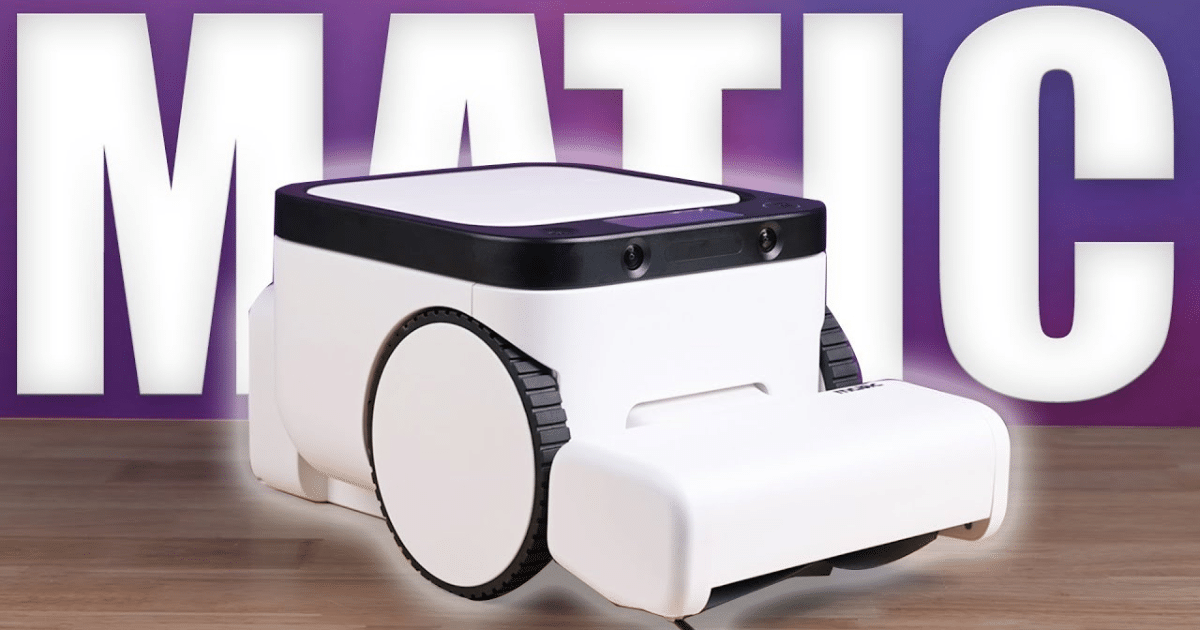
The Matic robot vacuum comes from a relatively young independent robotics company that has taken a fresh approach to what a robot vacuum and mop can be. Rather than iterating on existing designs, Matic has essentially built a robot vacuum from scratch. The result is a product with genuinely innovative and useful ideas. In several ways, the Matic outperforms many competitors, though its uniqueness also introduces drawbacks worth considering. We purchased a Matic and after several weeks of hands-on testing, this review examines the Matic’s strengths and weaknesses and evaluates its overall performance.
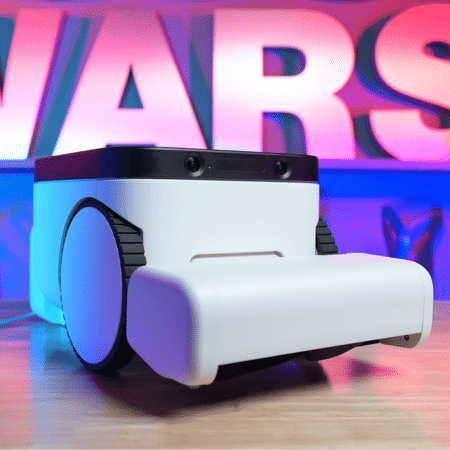
The Matic Robot Vacuum is a bold re-imagining of what a robot vacuum–mop combo can be, built from the ground up with a vision-first navigation system that uses five RGB-IR cameras to create photorealistic 3D maps stored entirely on-device for privacy. Its huge independent wheels give it a smooth, quiet glide around the house at about 55 dB, and its raw cleaning performance is standout: the extended brush roll housing, single motorized side brush, and roller-style mop deliver top-tier results, including the highest suction score we’ve ever recorded—about eight times the average—excellent deep-cleaning, perfect flattened pet-hair pickup, and above-average mopping efficiency while using just 0.8 g of water. It avoids carpets while mopping, resists hair tangles exceptionally well, and its internal 1,000 ml disposable bag gives it huge capacity. But its uniqueness comes with downsides: no multifunction dock, a very tall 7.8-inch body that can’t fit under furniture, moisture-and-debris mixing in the internal bag that leads to odor and frequent bag changes, slow and inefficient navigation (about 0.52 m²/min), and only average battery efficiency. Great cleaning, but with notable trade-offs. See additional info
Price as of March 20, 2026
Mopping: Lifts Mop Roller on Carpets | Washes Mop Roller | Recognizes and Avoids Carpets During Mopping
Hardware: Anti-Tangle Brush Roll
Mapping / Navigation: Multi Level Maps | Virtual Barriers and No Go Zones
| Scores | Matic Robot Vacuum | Average Robot Vacuum Tested |
|---|---|---|
| Vacuum Wars Overall | 3.03 | 2.58 |
| Features | 3.15 | 3.28 |
| Mopping Performance | 3.01 | 2.39 |
| Obstacle Avoidance | 2.92 | 3.39 |
| Pet | 3.54 | 3.42 |
| Navigation | 2.39 | 3.21 |
| Battery | 1.46 | 2.56 |
| Performance | 4.67 | 3.56 |
| Official Battery Life: 150 Minutes | Navigation Type: 5 RGB-IR Cameras |
| Official Suction Power: 3200 Pa | Dust Bin Size: 1000ml |
| Obstacle Avoidance Type: 5 RGB-IR Cameras | Objects Recognized: unknown |
| Multi Level Maps: Yes | Virtual Barriers: Yes |
| Detergent Capacity: N/A | Disposable Bag: 1L |
Camera-Based Navigation: How the Matic Maps Your Home
One of the most distinctive aspects of the Matic is its vision-first, camera-based navigation system, which replaces LiDAR. The robot uses five RGB infrared cameras to understand its surroundings, processing that data along with simultaneous localization and mapping. This creates photorealistic 3D maps of a home in real time. All mapping information is stored onboard the device for added security, as nothing is uploaded to the cloud. Watching the robot construct its map is genuinely impressive.

Movement and Noise Levels
A feature most people will notice immediately is how the Matic moves through a home. Its two large independently driven wheels allow it to glide smoothly, giving it a smart, deliberate, and unusually graceful movement pattern. Matic reports that the robot operates at around 55 dB, noticeably quieter than many competitors. While its navigation style is visually striking, it also becomes one of its biggest weaknesses in some ways, which we cover later in this review.
Cleaning Performance – Suction, Airflow, and Carpet Deep Cleaning
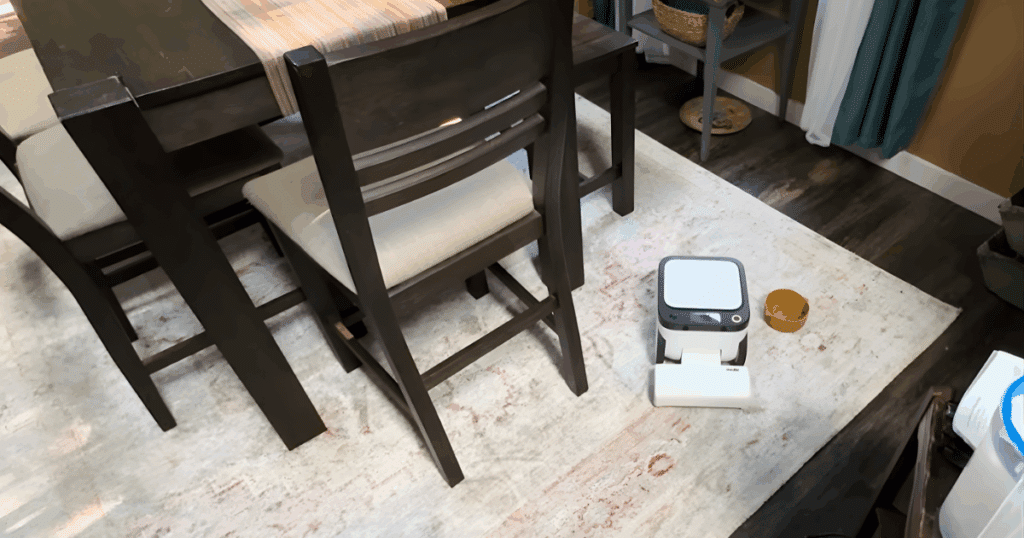
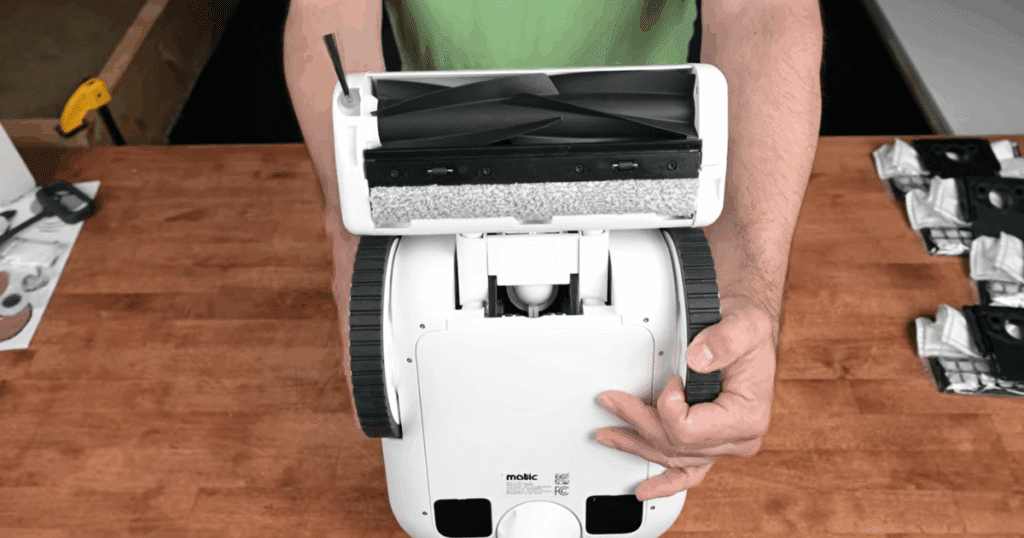
One of the biggest pros for us was the Matic’s raw performance and cleaning ability. It uses a brushroll housing that extends from its body, featuring a single main brushroll, a roller-style mop pad, and a motorized side brush.
Its basic vacuuming performance on hard floors and carpets is comparable to most other robot vacuums. However, it stands out in power. In suction tests, the Matic produced 8.11 kPa on max power, which is the highest score Vacuum Wars has ever recorded out of nearly 200 robot vacuums tested. For context, the average robot vacuum measures around 0.86 kPa, making the Matic’s suction performance exceptionally strong.
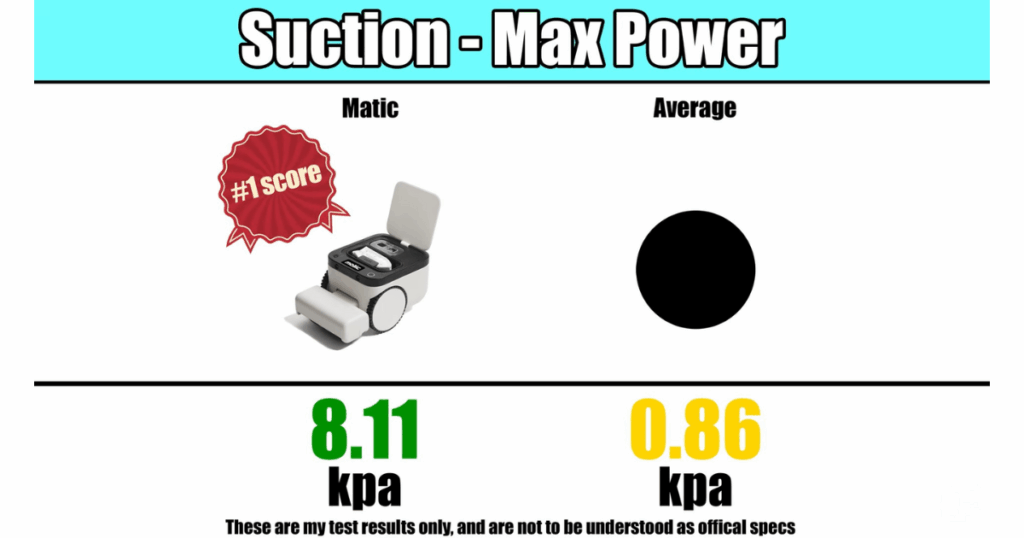
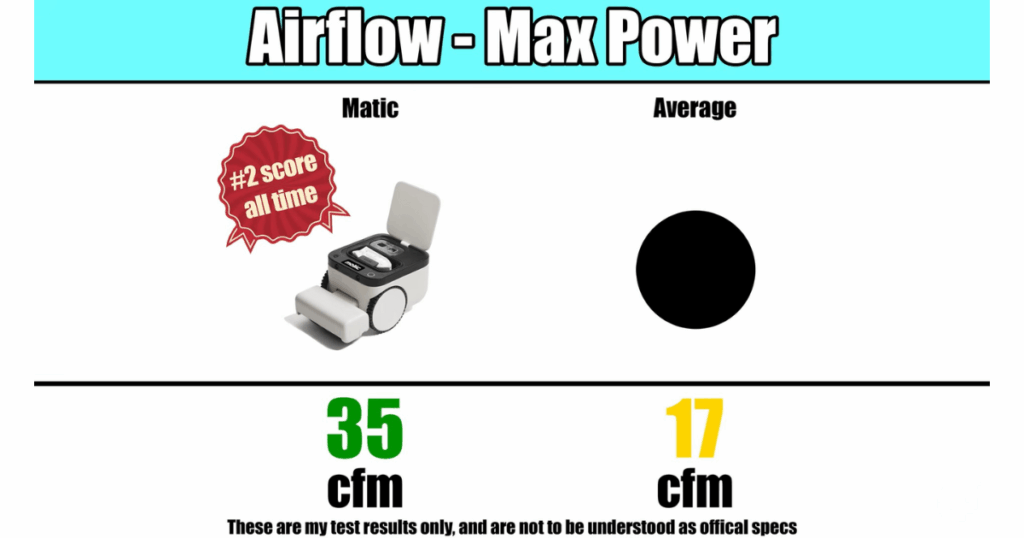
Its suction on max power was roughly eight times higher than average, and its airflow measured 35 CFM—a number that would have been the highest ever if not for the original Electrolux Trilobite.
Real-World Debris Removal Results
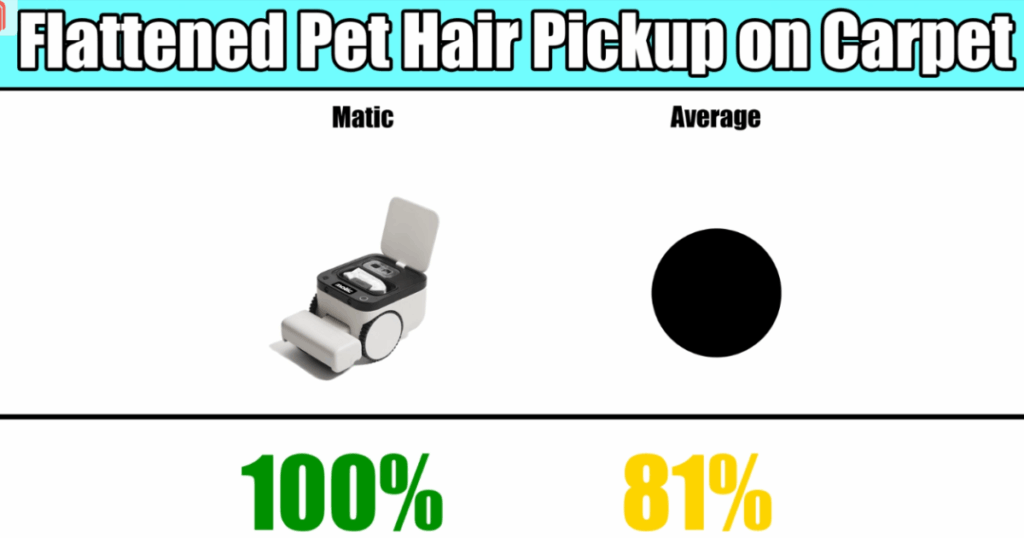
This power translated extremely well into real-world results. The Matic showed well-above-average carpet deep-cleaning performance and achieved a perfect 100% score on the 2½-inch flattened pet hair pickup test, compared to the 81% average among other robot vacuums. That level of performance indicates that its main brush is particularly effective at pulling debris and embedded pet hair from carpet fibers.
Mopping Performance and Carpet Avoidance
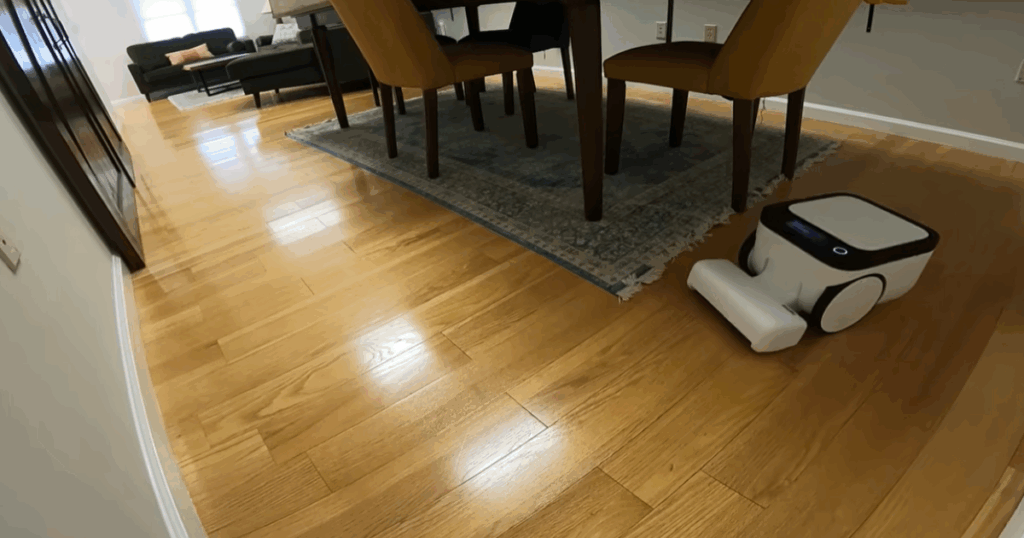
The mop roller functions similarly to other roller-style mop pads by wetting the roller and squeezing out dirty water as it cleans. Instead of storing that waste in an onboard tank, the Matic deposits it into a specialized dust bag.
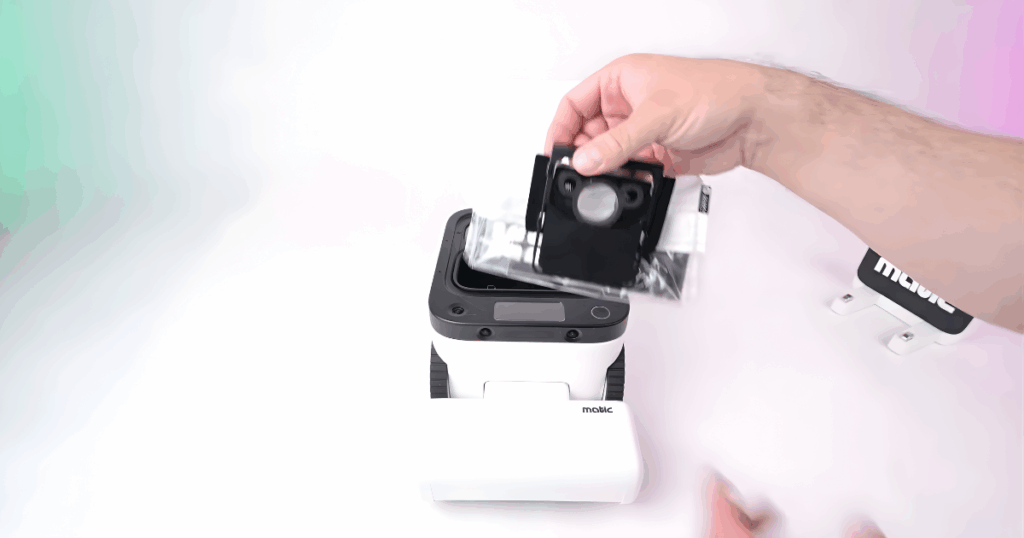
It also uses its camera system to recognize and avoid carpets during mopping, allowing it to vacuum and mop mixed flooring in a single run without wetting carpets—an important capability.
Dried-On Stain Removal Testing
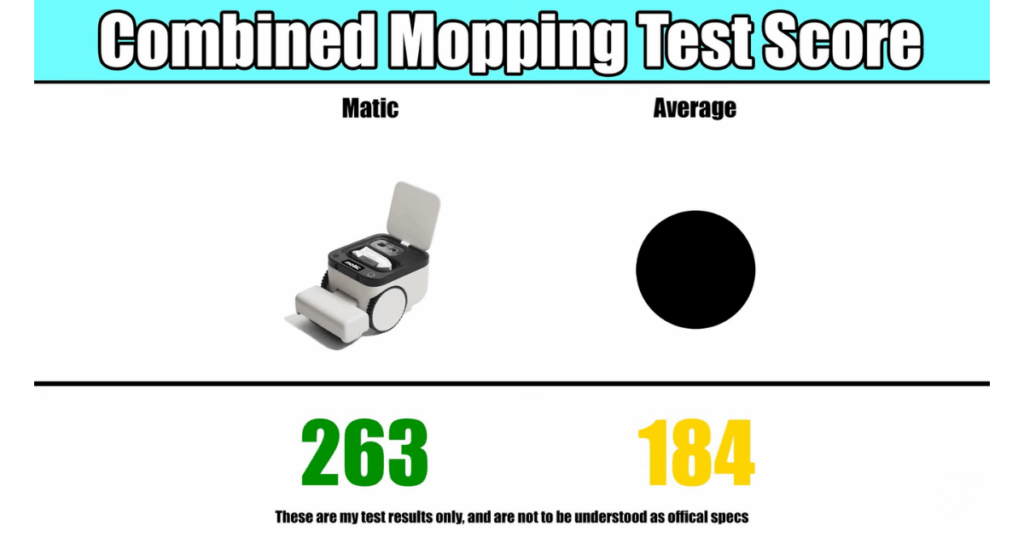
During dried-on stain testing, the Matic scored well above average at 147 points, and it reached that score while dispensing a below-average amount of water—only 0.8 g—resulting in a combined performance score of 263 points. Overall, its mopping ability was stronger than that of most robot vacuums.
See also: How Vacuum Wars Tests Robot Vacuum Mops
Obstacle Avoidance and Hair-Tangle Resistance
Obstacle avoidance is another area where the Matic offers intriguing potential. With five cameras—three more than most robot vacuums—and a taller profile that gives it a higher vantage point, it has a uniquely detailed view of its surroundings. Matic claims this helps it detect objects such as cords, furniture legs, and small obstacles more accurately. In standardized avoidance testing, it avoided 14 of 24 objects, slightly below the average of 17.
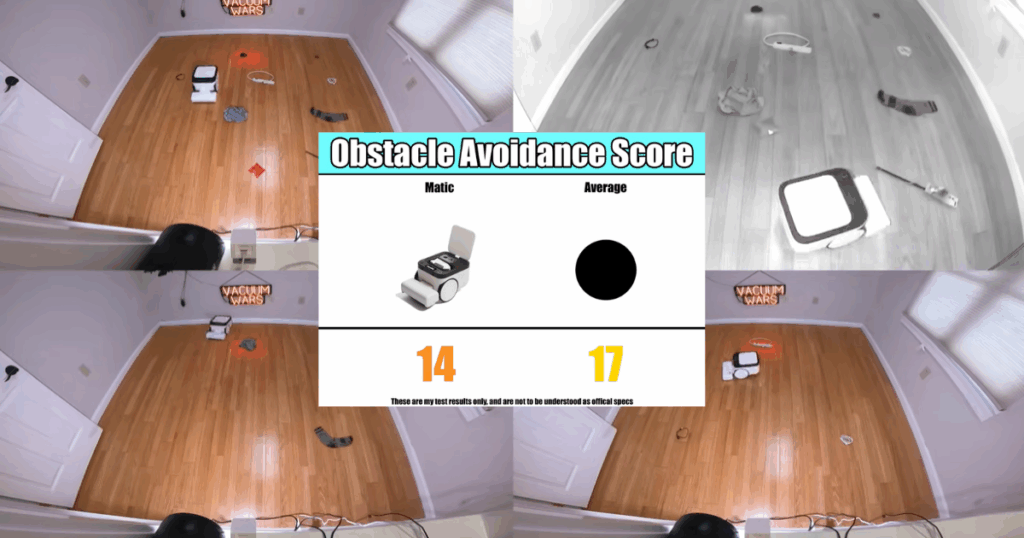
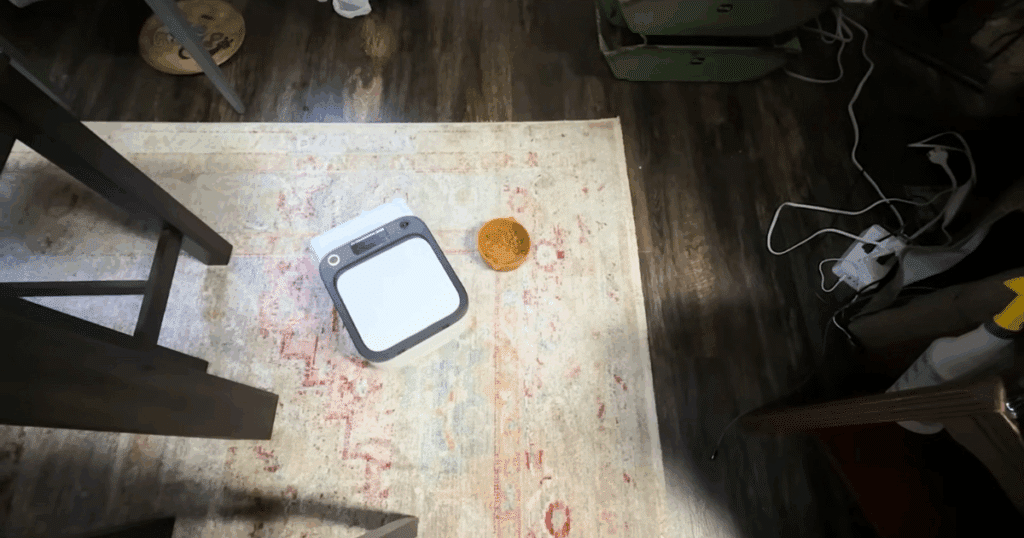
However, during real-world use, obstacle avoidance felt noticeably better than the test score suggests. The robot moved more carefully and deliberately, and it rarely ran over cords.
Dustbin Capacity and Hair Management
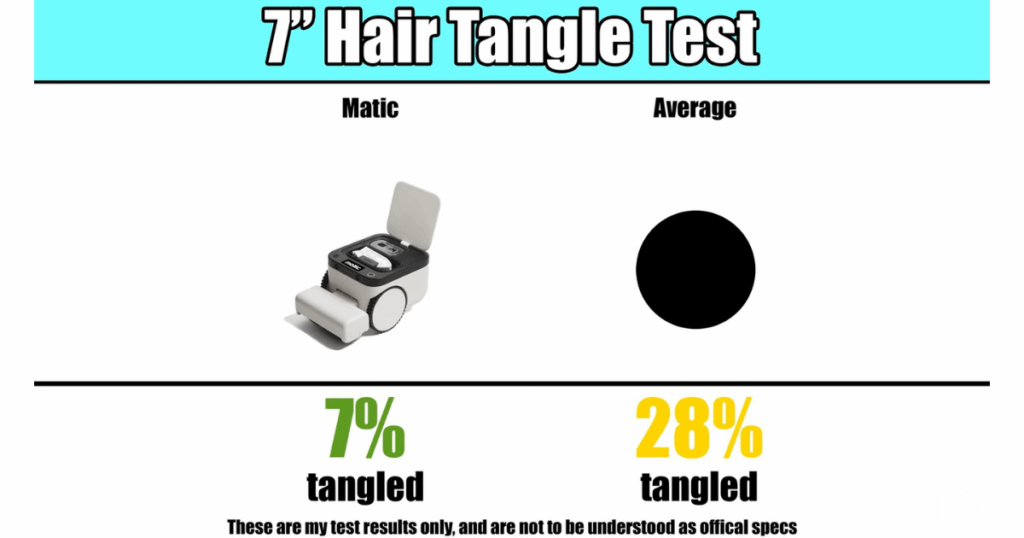
The Matic also performed well in hair-tangle resistance. In the 7-inch hair test, only about 7% of hair wrapped around its brush, compared to an average of 28%.
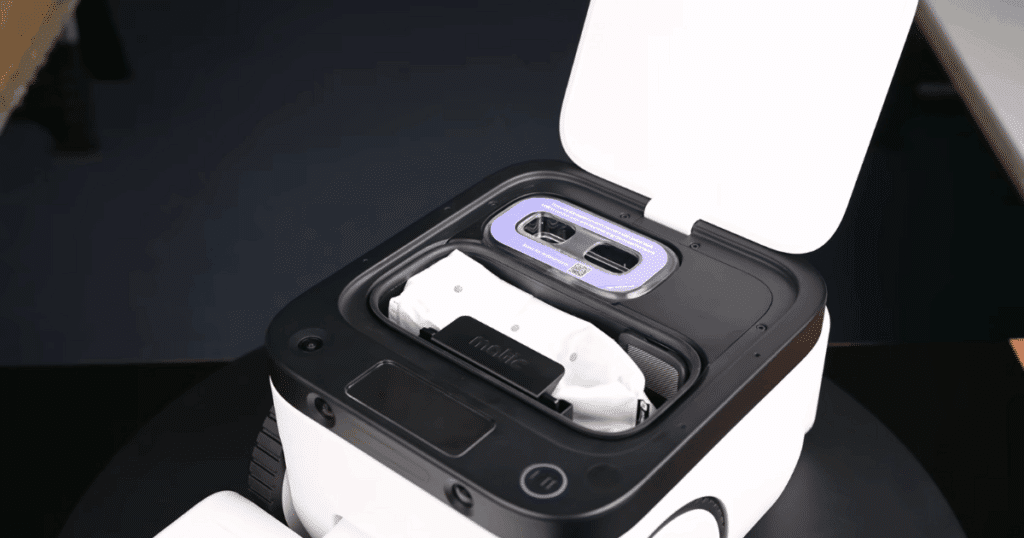
And because it uses a disposable bag for its internal bin, it technically offers the largest onboard dustbin capacity Vacuum Wars has tested—1,000 ml versus an average of about 400 ml.
Major Drawbacks: Dock Limitations and Height Restrictions
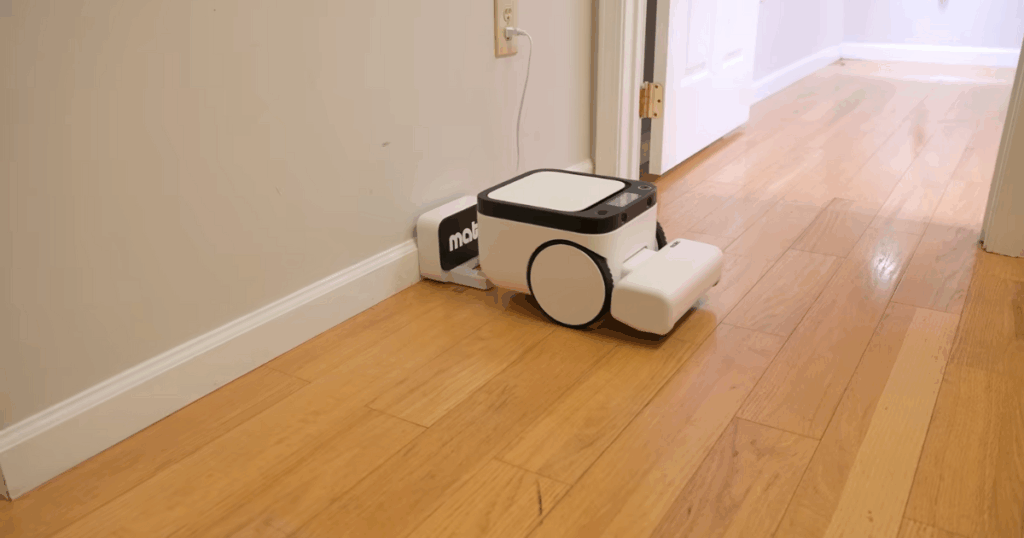
These strengths, however, lead into notable drawbacks. The first and most significant is the lack of a multifunctional dock. Nearly all premium robot vacuums now include a base station that empties the internal dustbin, washes and dries mop pads, manages water tanks, and reduces required maintenance. This has become an expected convenience feature in the high-end robot vacuum market, and the Matic simply does not offer it.
Tall Profile and Under-Furniture Limitations
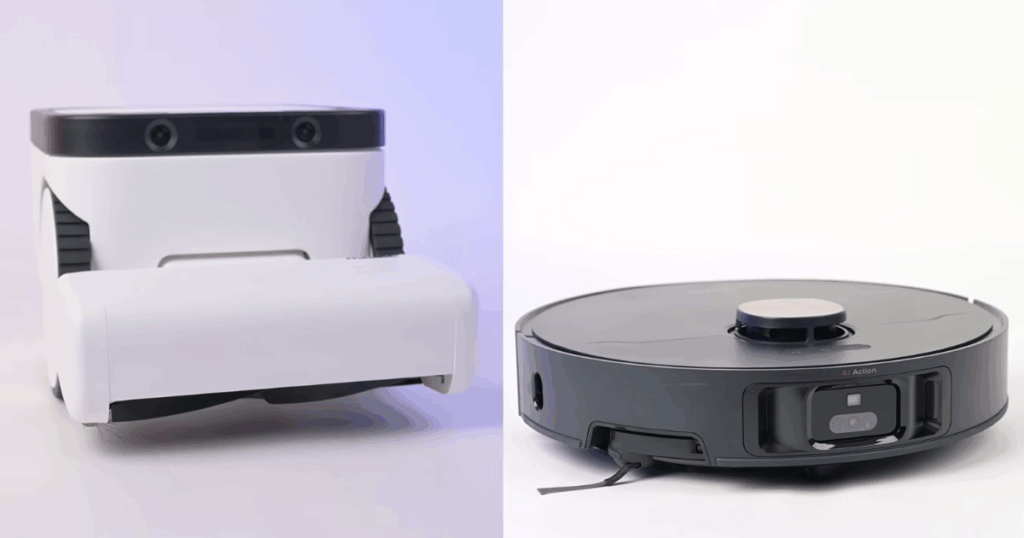
Instead, the Matic incorporates elements typically housed in the dock—including the disposable dust bag and clean mop water tank—directly into the robot’s body. This design choice is the reason for its unusually tall profile. At 7.8 inches, it is the tallest robot vacuum Vacuum Wars has tested, compared to an average height of 3.7 inches.
That height limits the Matic’s ability to clean under furniture, which is one of the key advantages of owning a robot vacuum at all. In many homes, the Matic simply cannot reach under most beds or couches.
Moisture and Odor Issues with the Dust Bag
Another downside stems from the lack of an auto-empty dock. The roller-style mop pad squeezes out dirty water as it cleans, and that moisture collects in the same bag that stores dirt and debris. The specialized bag includes a plastic bottom to prevent leaks—unlike standard HEPA vacuum bags—but the mixture of moisture and debris can create odor issues. After about a week of typical use in our home, the smell became noticeable.
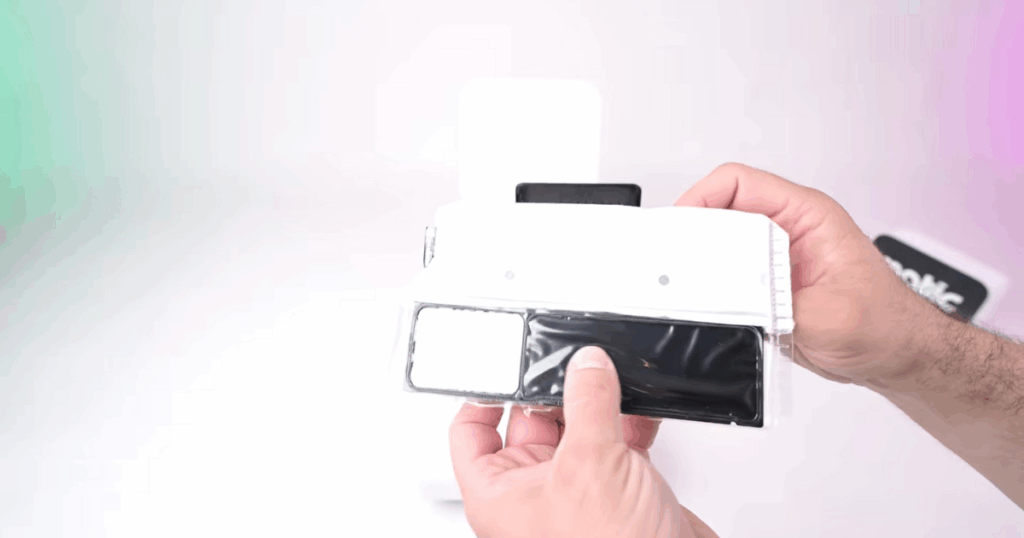
Odor-Control Measures and Required Maintenance
Matic has tried to address this with several clever solutions. The bag contains a gelling salt that solidifies liquid waste, as well as antibacterial agents and a light scent. The robot also applies low-power suction after each run to help dry out moisture and reduce mold development.
These measures help, but not enough to eliminate the problem entirely. Owners will need to replace the bag more frequently than with other robot vacuum and mop systems.
Navigation Performance: Slow Cleaning and Efficiency Concerns
The biggest concern, though, is the navigation system. While the camera-based approach looks impressive, we found it to be quite inefficient. In navigation efficiency testing, the Matic covered only 0.52 square meters per minute, which is significantly below average.
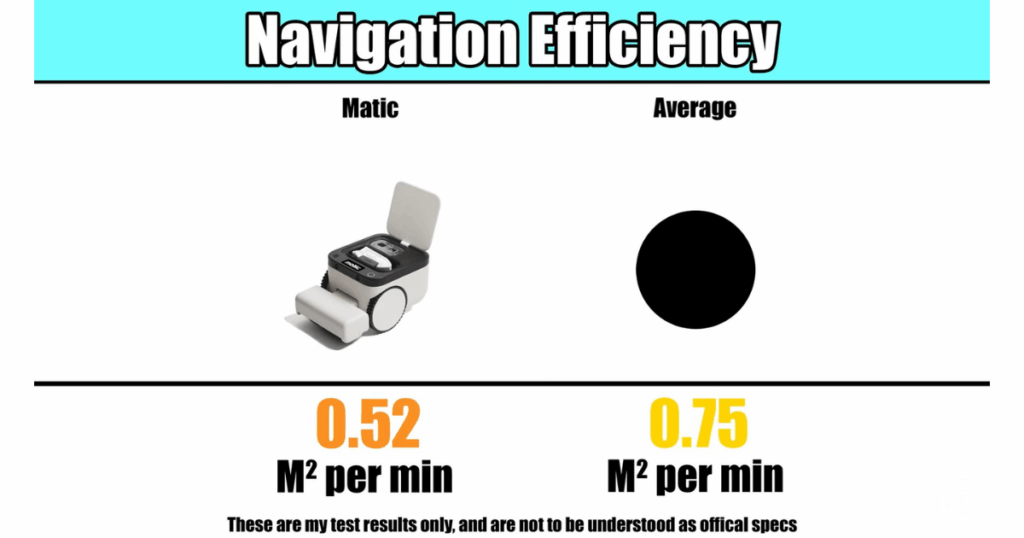
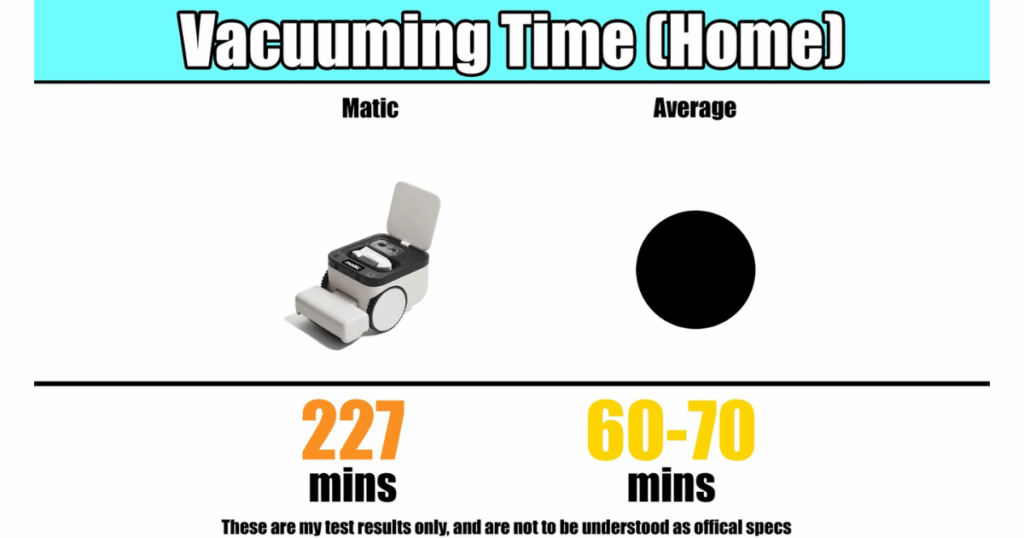
At home, this translated into remarkably long cleaning times. A floor plan that typically took other robot vacuums about an hour took the Matic 227 minutes to complete. Even partial cleanings routinely ran two hours.
While it is possible that the navigation improves over time, testing across two different homes showed consistently slow performance.
Battery Life and Coverage Limitations
Battery life also failed to impress. Although the published runtime is typical for its price point and its battery efficiency results were average, its slow navigation severely limits the square footage it can clean on a single charge. Its estimated coverage is about 755 square feet per charge, a number that still does not fully convey how slow the cleaning experience feels.
There is potential for improvement through software updates, and the navigation system is clearly sophisticated. It would not be surprising if, over time, this becomes one of Matic’s biggest strengths. In its current form, however, the navigation remains a significant drawback.
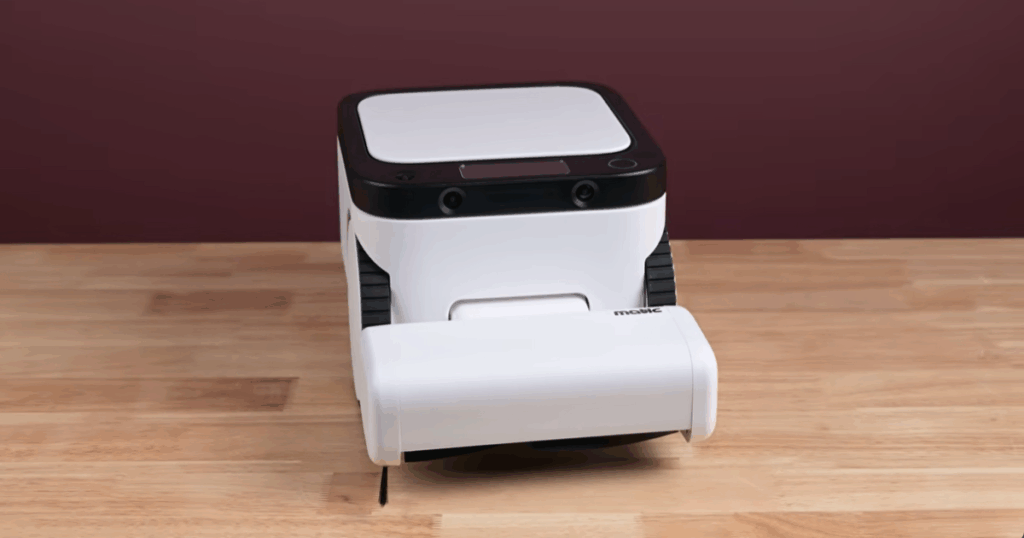
Final Verdict: Should You Buy the Matic Robot Vacuum?
The Matic robot vacuum is compelling in many ways. We like that an independent company has put out a product like this, and we are excited for them. It delivers exceptional raw cleaning performance and offers a refreshing alternative to the traditional designs dominating the robot vacuum market. For users who prioritize cleaning ability above all else, the Matic may still be a satisfying purchase.
But the trade-offs—extra maintenance, the lack of a multifunctional dock, limited under-furniture cleaning ability, moisture-related bag changes, and extremely inefficient navigation—must be weighed carefully.
After compiling all testing data, the Matic did not qualify for the Vacuum Wars Top 20 Robot Vacuums list. Even so, the innovation behind this product is promising, and there is reason to be optimistic about future models from this company.
Top Robot Vacuums
Vacuum Wars Best Robot Vacuums – Vacuum Wars’ always up-to-date rankings of the best robot vacuums.
Compare any brand of robot vacuum head-to-head in the Vacuum Wars Robot Vacuum Comparison Tool.
Matic Robot Vacuum