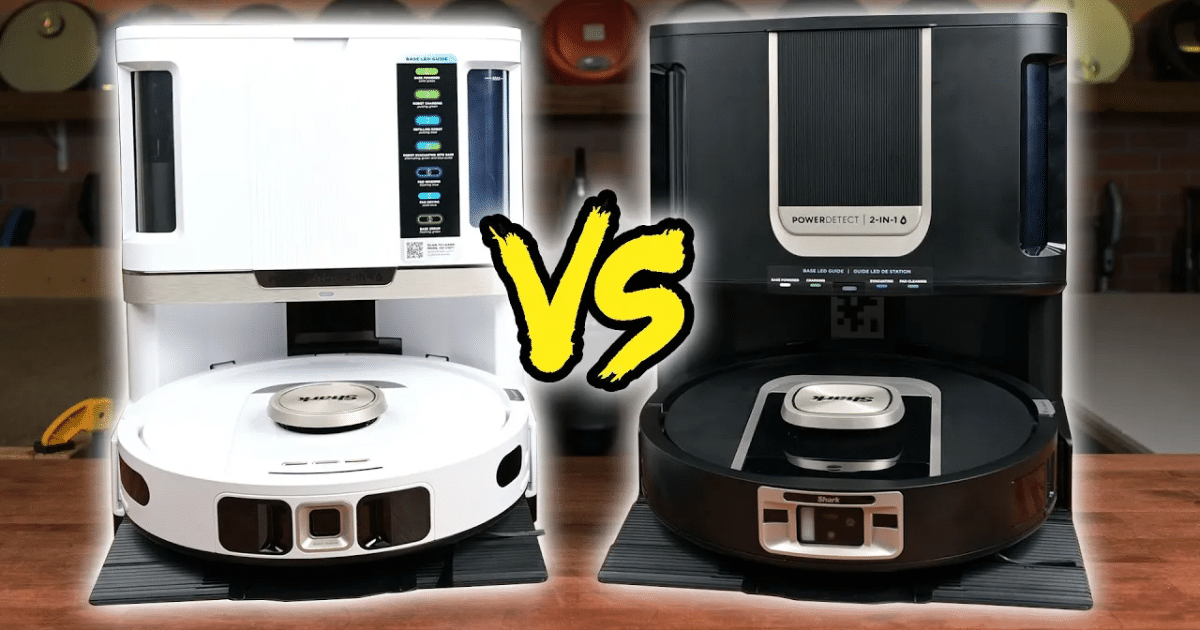
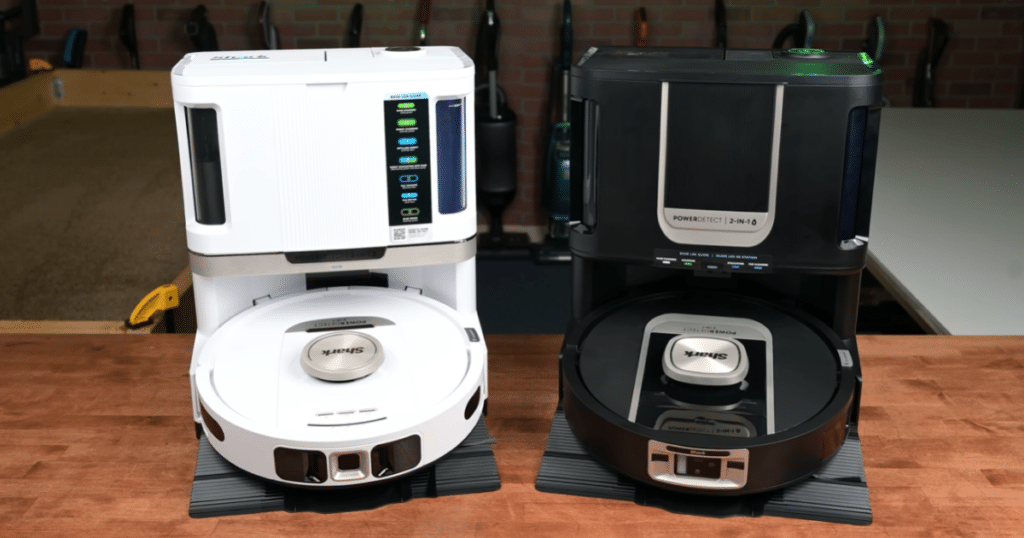
Today’s focus is on two brand-new robot vacuums: the Shark PowerDetect ThermaCharged NeverTouch Pro (new flagship model) and the Shark PowerDetect NeverTouch Pro (their second most expensive option). We purchased both robot vacuums to compare them directly, analyzing their differences and conducting our full suite of evaluations to determine which performs better. In this review, we’ll cover the pros and cons of each model and reveal whether these robots earned a spot on the Vacuum Wars Top 20 Robot Vacuums list.
Shark PowerDetect NeverTouch Pro
Vacuum Wars Stars 3.36
The Shark PowerDetect NeverTouch Pro is engineered for up to 30 days of hands-free maintenance via a 60-day-capacity HEPA self-emptying bin and a 30-day water-tank auto-refill system. It features “5 Intelligent Cleaning Technologies” including DirtDetect (boosts suction on high-debris areas), StainDetect (multiple mop passes on stains), EdgeDetect (blasts air at edges and extends the mop pad up to one inch), and lifts itself across thresholds and keeps the mop pad off carpets for full-home coverage. Built for pet-friendly homes, the base captures and traps 99.97% of allergens down to 0.3 microns and uses Odor Neutralizer technology alongside antimicrobial mopping pads to resist bacteria and mold. Obstacle avoidance is handled by an advanced 3D sensor and 360° LiDAR system, and via app control you can schedule cleanings, define no-go zones, create maps and target specific spots. See additional info
Shark PowerDetect ThermaCharged NeverTouch Pro
Vacuum Wars Stars 3.26
$1,199.99 $599.99
Shark PowerDetect ThermaCharged NeverTouch Pro
Vacuum Wars Stars 3.26
The Shark PowerDetect ThermaCharged NeverTouch Pro (model RV2920XE) combines vacuuming and mopping with a self-emptying and self-refilling base. Its NeverTouch Pro base washes the mop with 185 °F water and dries with 175 °F air, holds up to 60 days of debris, and auto-refills the water tank for up to 30 days. It features six PowerDetect technologies including Dirt Detect for hidden dirt, Edge Detect for edge-to-edge cleaning, Floor Detect for surface type awareness, and NeverStuck Charged which lifts the mop and navigates obstacles. The unit offers up to 3 hours of runtime on a single charge, supports app control and voice assistants, and includes a washable pre-motor filter. See additional info
Price and Positioning
The list price for the Shark PowerDetect ThermaCharged is around $1,200, while the regular PowerDetect NeverTouch Pro lists for about $1,000. However, in practice, these robot vacuums typically sell for much less. For example, during Black Friday, the ThermaCharged sold for about $700, compared to around $600 for the standard PowerDetect.
How Vacuum Wars Tests Robot Vacuums: Step into the world of Vacuum Wars, where real-world tests, straight-forward reviews, and no sponsored products redefine robot vacuum evaluations.
Core Features and Similarities
Functionally, both the Shark PowerDetect ThermaCharged and PowerDetect NeverTouch Pro robot vacuums are very similar. They are LiDAR-based robot vacuums with mopping capability and use bagless auto-empty bins, meaning you don’t have to buy disposable dust bags. That’s something still extremely rare in the robot vacuum market.
They also both:
- Wash their mop pads automatically
- Use obstacle avoidance sensors
- Share very similar vacuuming hardware
On paper, though, there are several differences worth noting.
Key Differences Between Shark PowerDetect ThermaCharged and PowerDetect NeverTouch Pro
The most prominent difference is right in the name: ThermaCharged. The flagship model is the only one that uses hot water to wash its mop pads rather than ambient-temperature water, which is intended to improve pad cleaning.
Another notable distinction is mop pad drying, where the base blows warm air over the mop pads after a cleaning run. Only the ThermaCharged model includes this feature, and it’s a genuinely useful one for mop pad maintenance. It’s really unfortunate that it’s not included on the cheaper model.
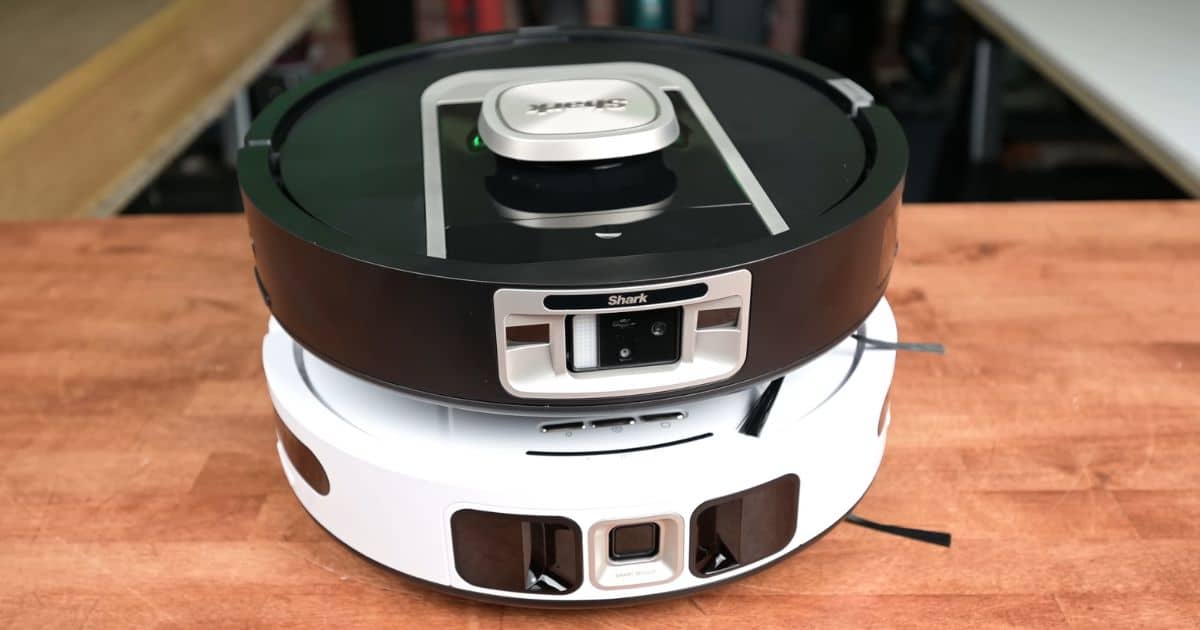
Both robot vacuums have front-mounted obstacle avoidance sensors, but the ThermaCharged includes an LED light and uses a slightly different sensor configuration. Based on our evaluations (which we’ll discuss soon), this setup appears more advanced overall.
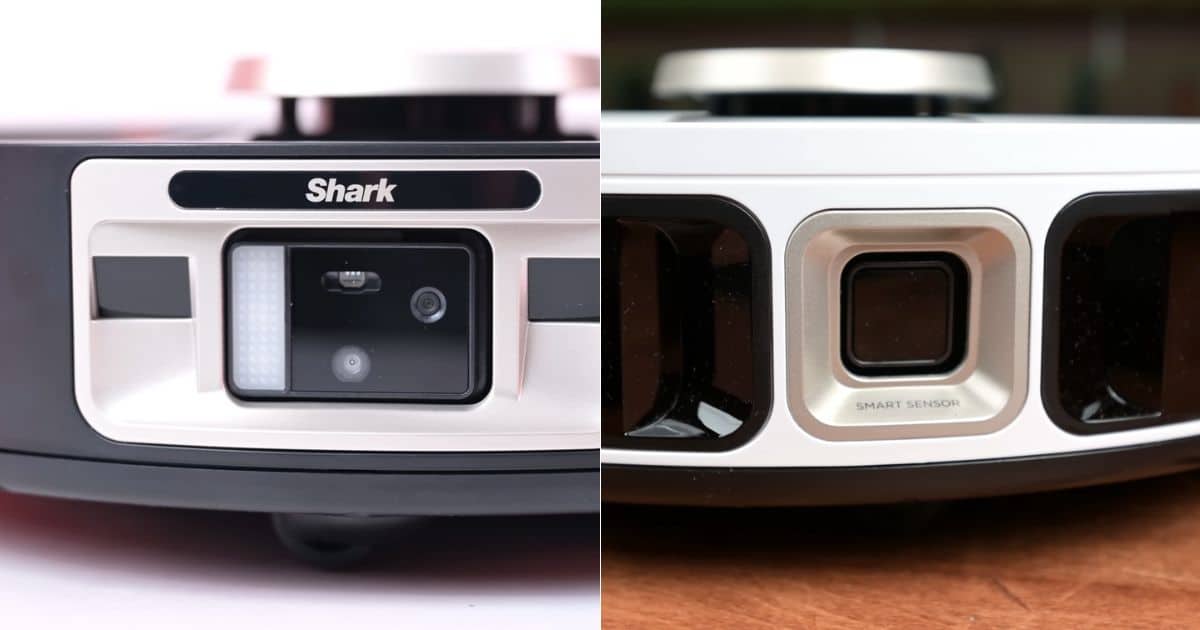
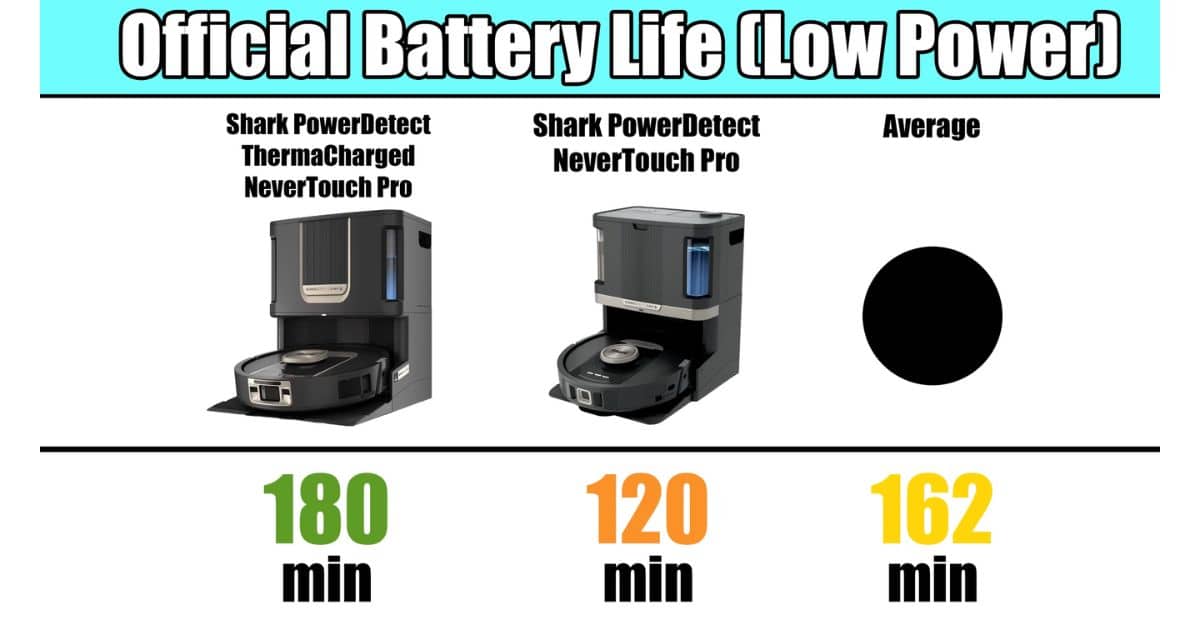
There are also a few smaller spec differences. The Shark PowerDetect ThermaCharged has a dust bin that’s about one-third larger (378 ml vs 273 ml) and slightly higher official battery life, though the difference is minimal.
Vacuuming Performance on Hard Floors and Carpets
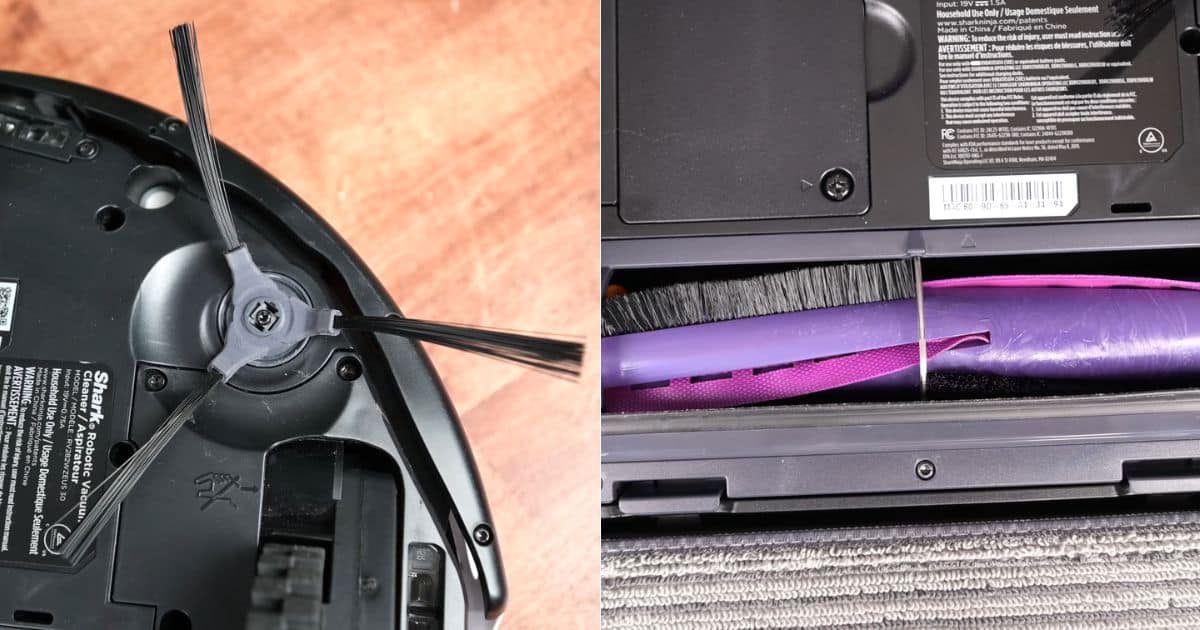
Both robot vacuums performed exceptionally well at their core job of sweeping and vacuuming hard floors and carpets. They were amazing at picking up debris of various sizes and particularly impressive on hard floors, using the same single side brush and single main brush design.
Deep Carpet Cleaning and Hair Pickup Results
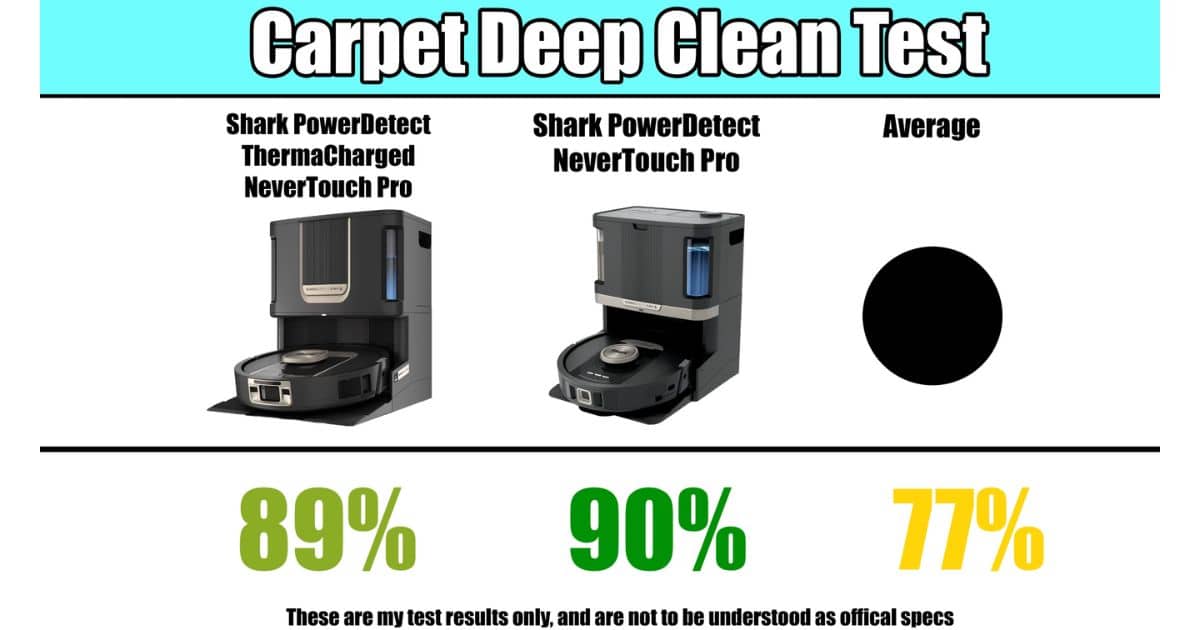
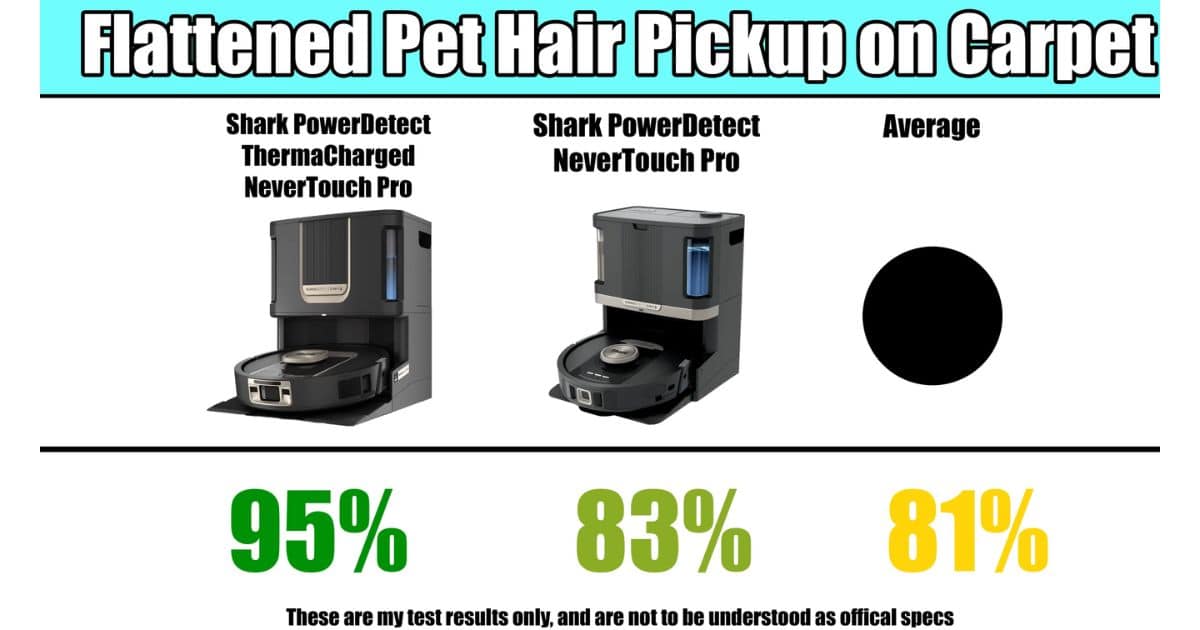
The great performance of the Shark PowerDetect ThermaCharged and PowerDetect NeverTouch Pro wasn’t limited to surface cleaning. Both robots earned very high carpet deep cleaning scores, achieving around 90%. That puts them on par with the best robot vacuums we’ve evaluated in this category.
They also performed above average in our 2.5-inch flattened pet hair evaluation, which measures how effectively a robot can remove hair embedded in carpet fibers.
Best Robot Vacuums – Vacuum Wars’ always up-to-date rankings of the best robot vacuums. Whether you call it a robot vacuum, a robotic hoover, or an automatic vacuum cleaner, our top picks will help you find the perfect cleaning companion for your home!
Suction Power and Airflow
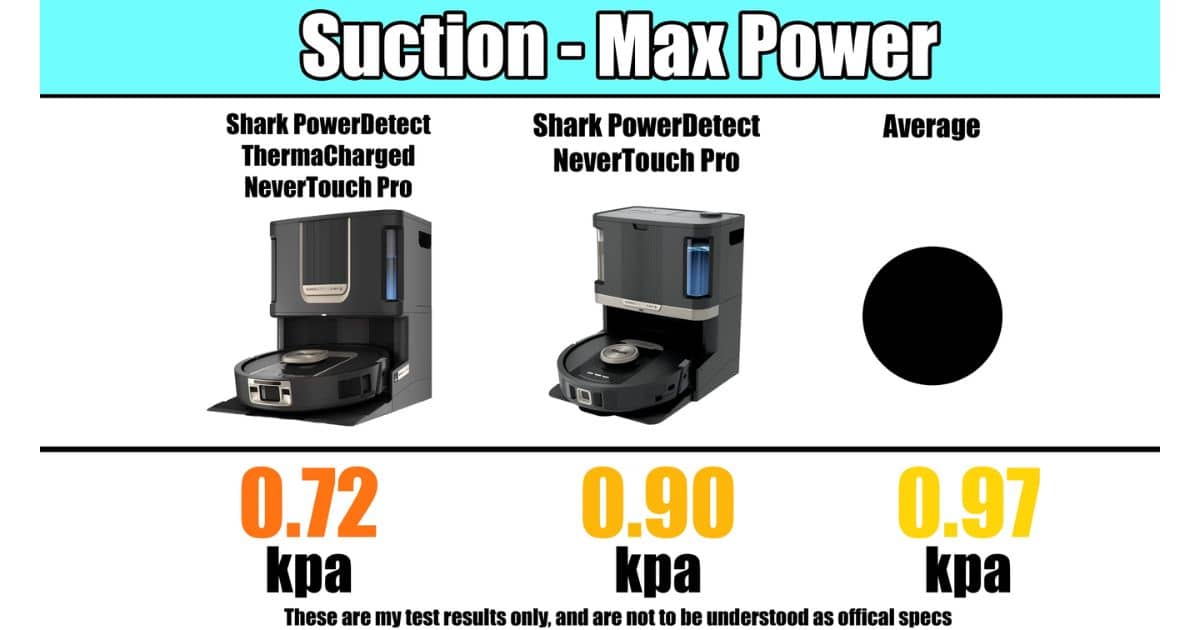
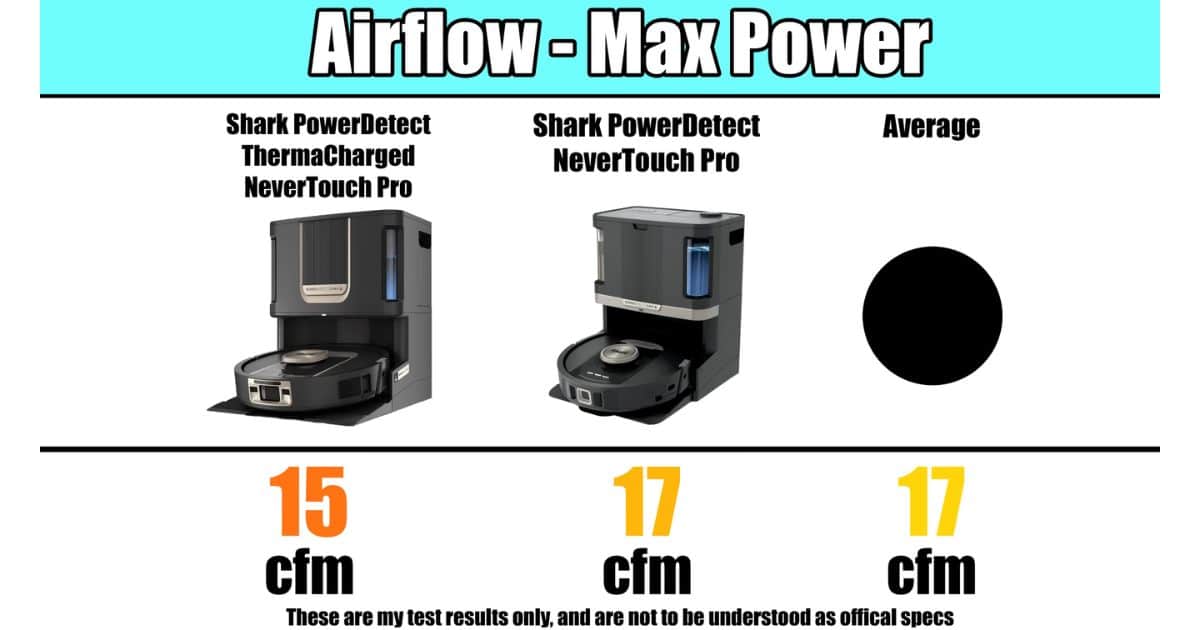
In terms of raw power, both the Shark PowerDetect ThermaCharged and PowerDetect NeverTouch Pro robot vacuums were average for suction and airflow. There was nothing especially notable here. However, the cheaper PowerDetect NeverTouch Pro had a slight edge.
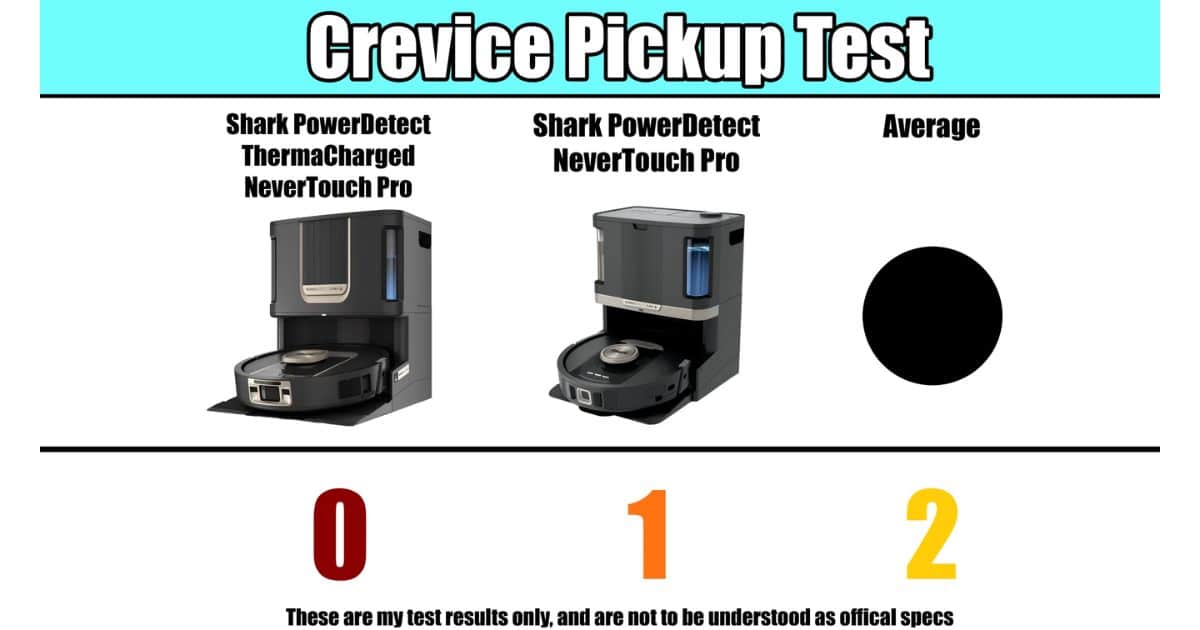
The standard NeverTouch Pro also had an edge in our crevice pickup evaluation, where it outperformed the ThermaCharged model by a small margin.
Mopping System Features
Both models feature advanced mopping systems with a long list of thoughtful design elements. For one, they use electronically fed microfiber mop pads that move side-to-side to scrub stains, and the pads extend outward to improve edge coverage. The pads also lift automatically when vacuuming carpets, and lift higher than average.
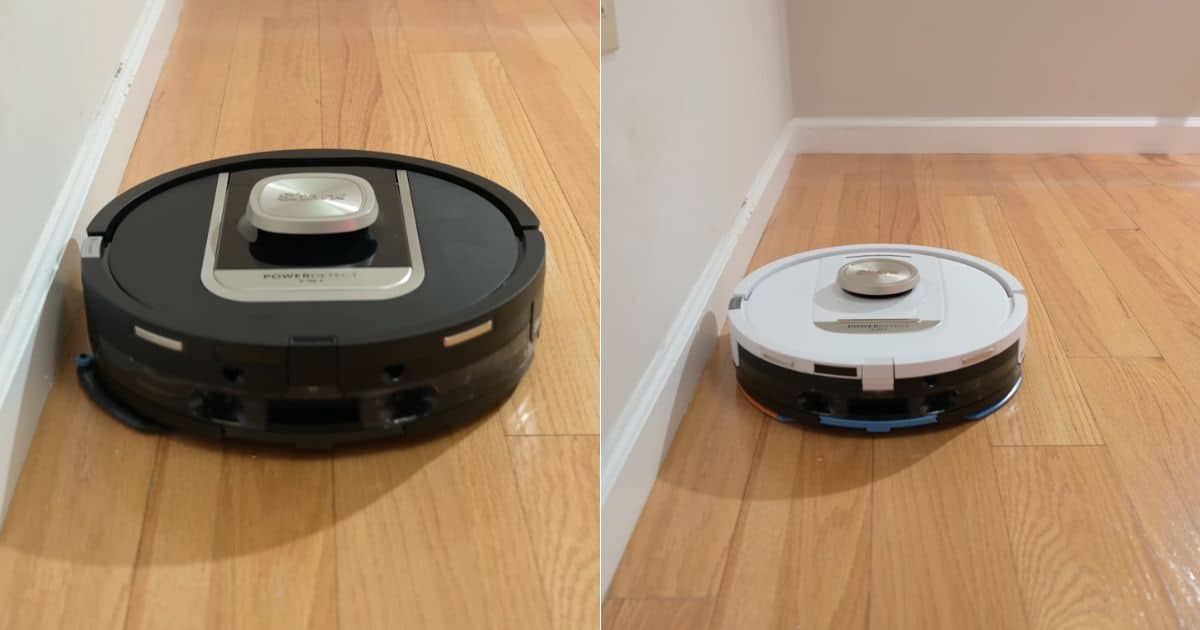
Additionally, you can leave the mop pads at the base when vacuuming carpets. This further reduces the risk of moisture transfer during mixed cleaning runs.
Mopping Performance and Water Output
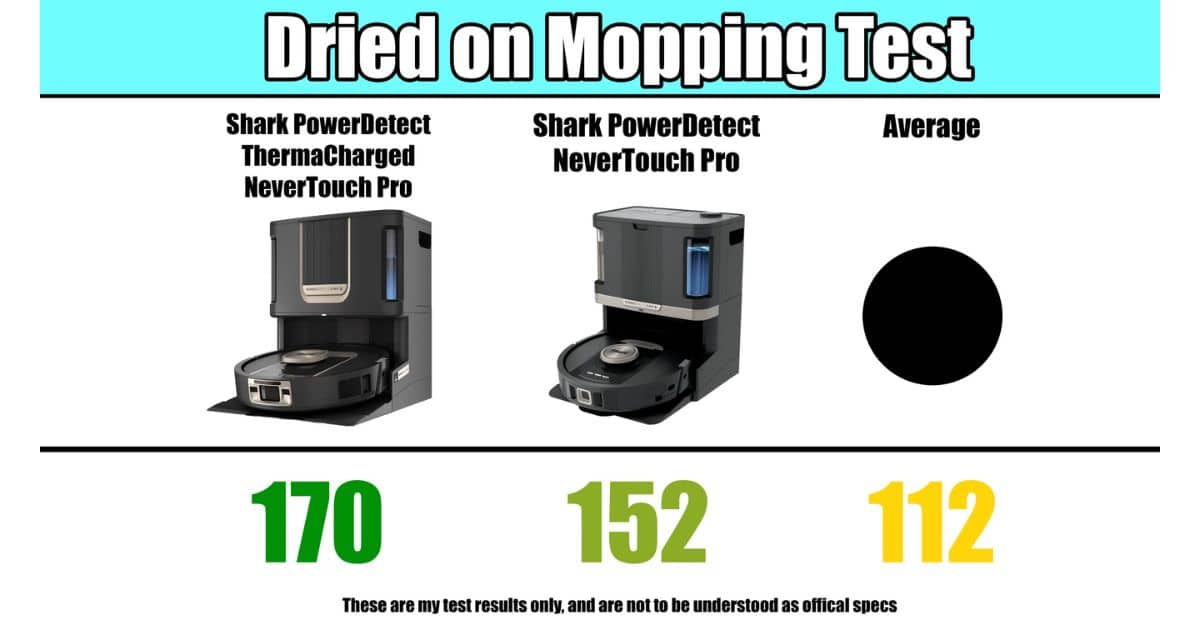
As for pure mopping performance, both robots scored above average in our mop stain evaluation.
But this is also where they differed significantly. For reasons that aren’t entirely clear, the Shark PowerDetect ThermaCharged uses roughly twice as much water as the standard PowerDetect. Slightly above-average water output isn’t necessarily a problem, as long as it stays within reasonable limits. The regular PowerDetect falls into that acceptable range.
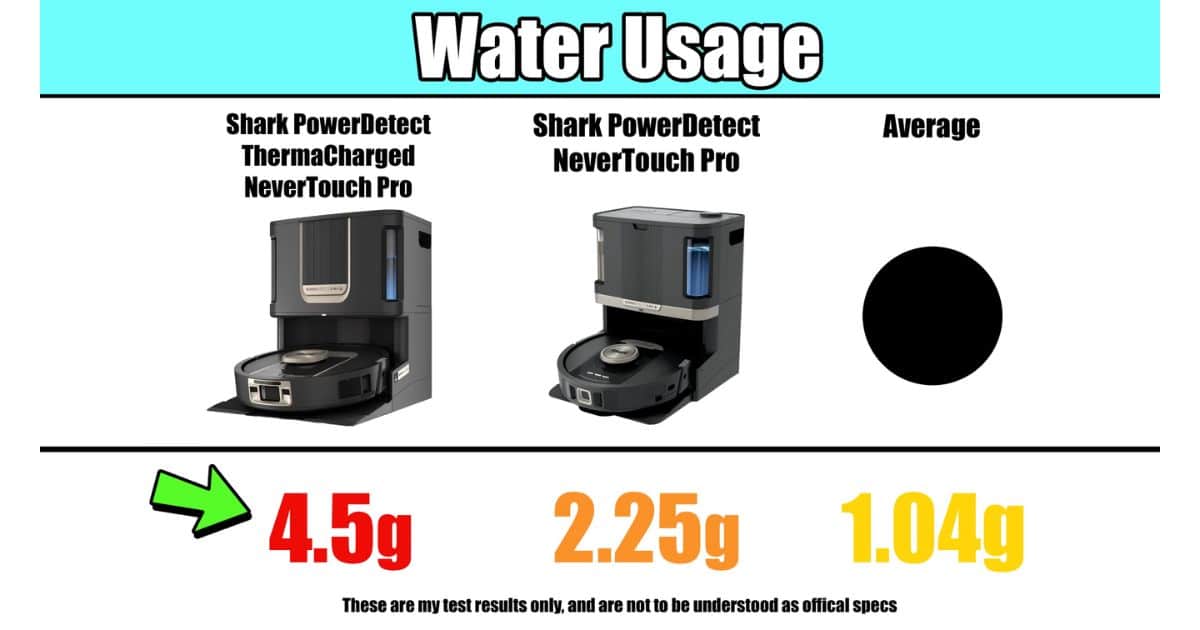
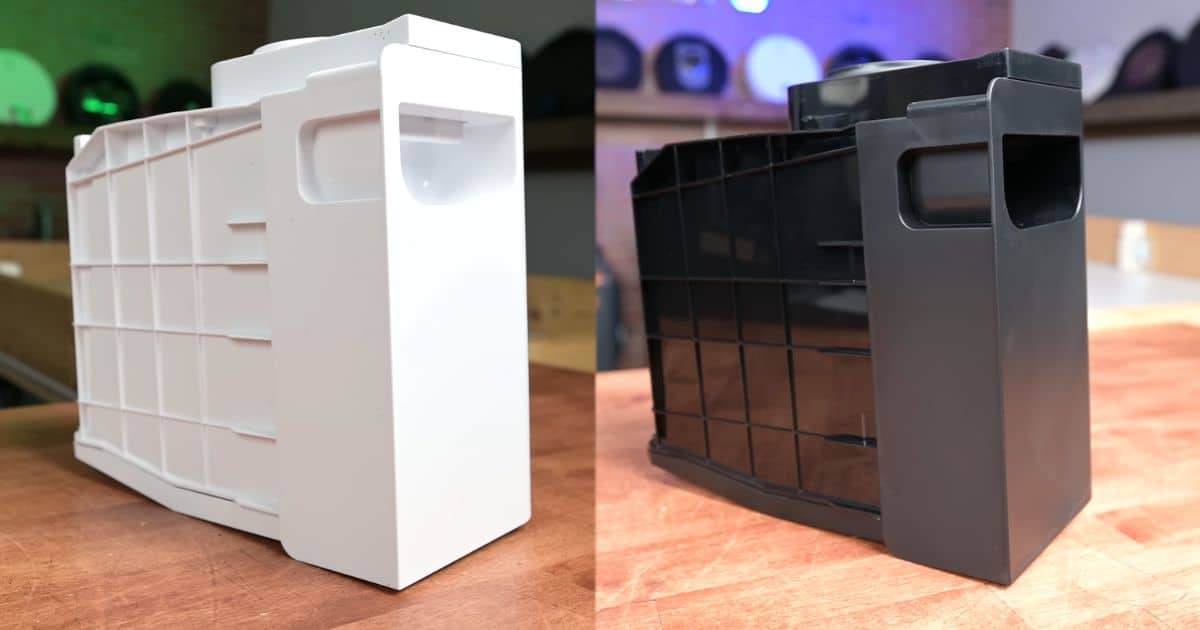
As you can see, the ThermaCharged leaves nearly 5 grams of water per 4×4 evaluation area. That’s the second-highest water output we’ve ever measured. And at that level, water usage becomes problematic, making the robot vacuum more prone to streaking. Compounding the issue, there’s no way to adjust water levels in the app.
This makes the cheaper PowerDetect NeverTouch Pro actually the better mop overall under our scoring system, despite lacking the hot water washing feature of the ThermaCharged.
Obstacle Avoidance Performance
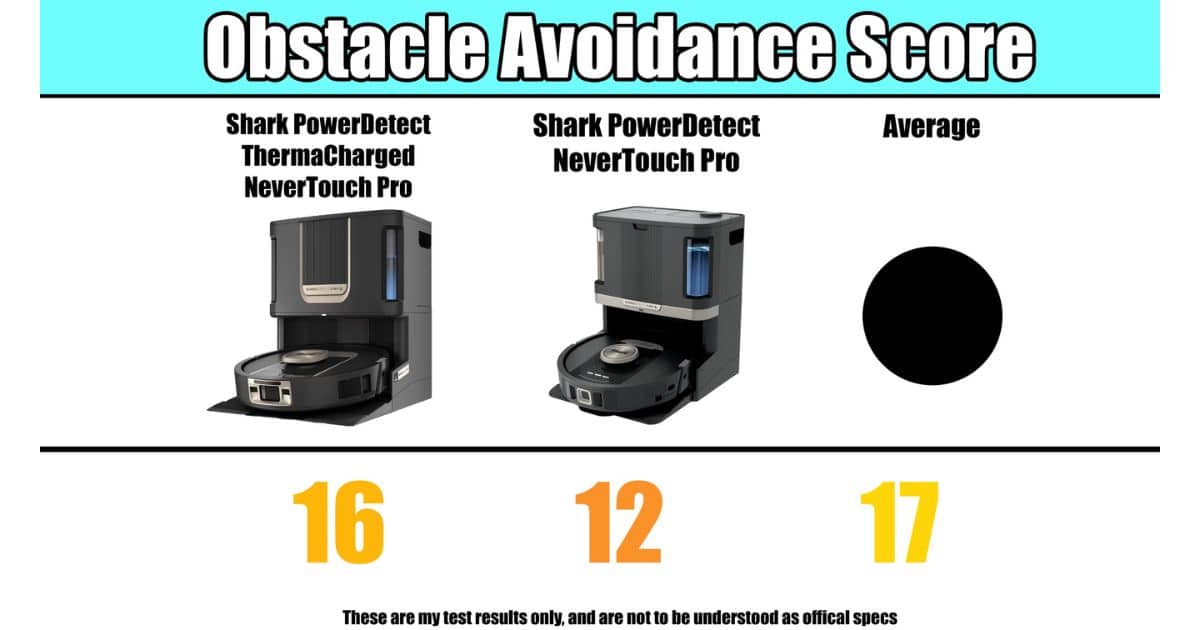
The Shark PowerDetect NeverTouch Pro and PowerDetect ThermaCharged robot vacuums rely on 3D structured light sensors for obstacle avoidance. As mentioned earlier, the ThermaCharged adds an LED light to improve visibility in darker areas, such as under furniture.
And in our evaluations, the ThermaCharged performed noticeably better than the standard PowerDetect. That said, both models still scored below average overall in obstacle avoidance compared to the broader robot vacuum market.
Bagless Auto-Empty System
One standout feature worth emphasizing again is the bagless auto-empty bin, as it’s extremely rare for robot vacuums. Plus, Shark appears to have implemented it without causing excessive moisture buildup in the debris bin—likely because the robots vacuum first and mop second.
Battery Life and Navigation Efficiency
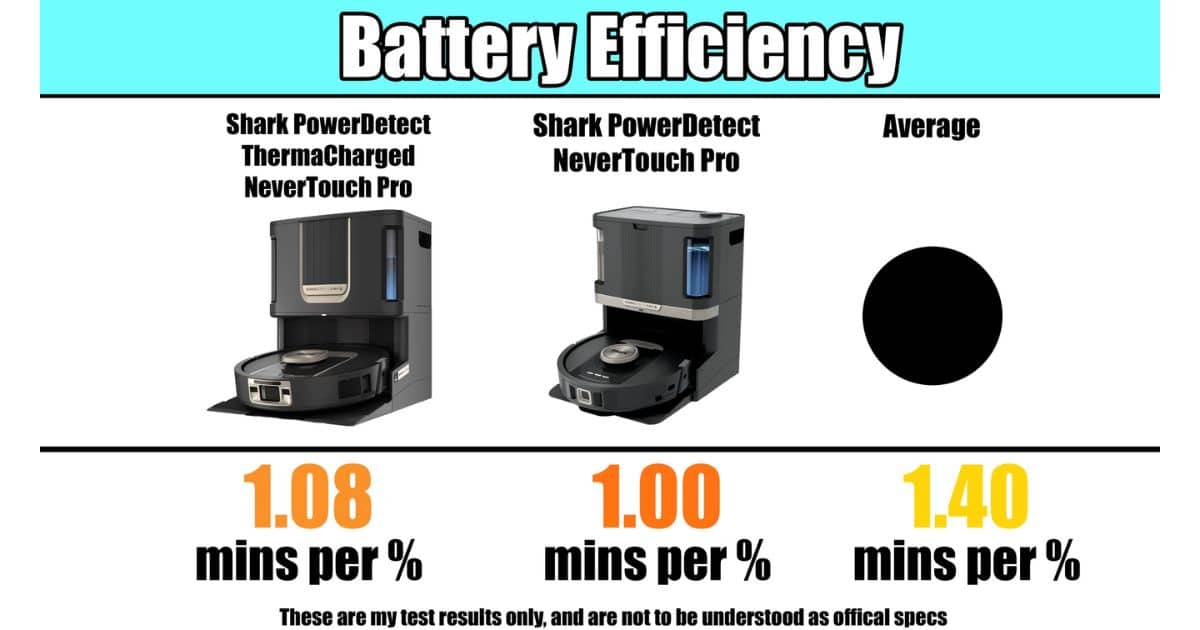
ThermaCharged advertises a larger battery, but our battery efficiency evaluation showed both robots performed nearly identically, with results slightly below average.
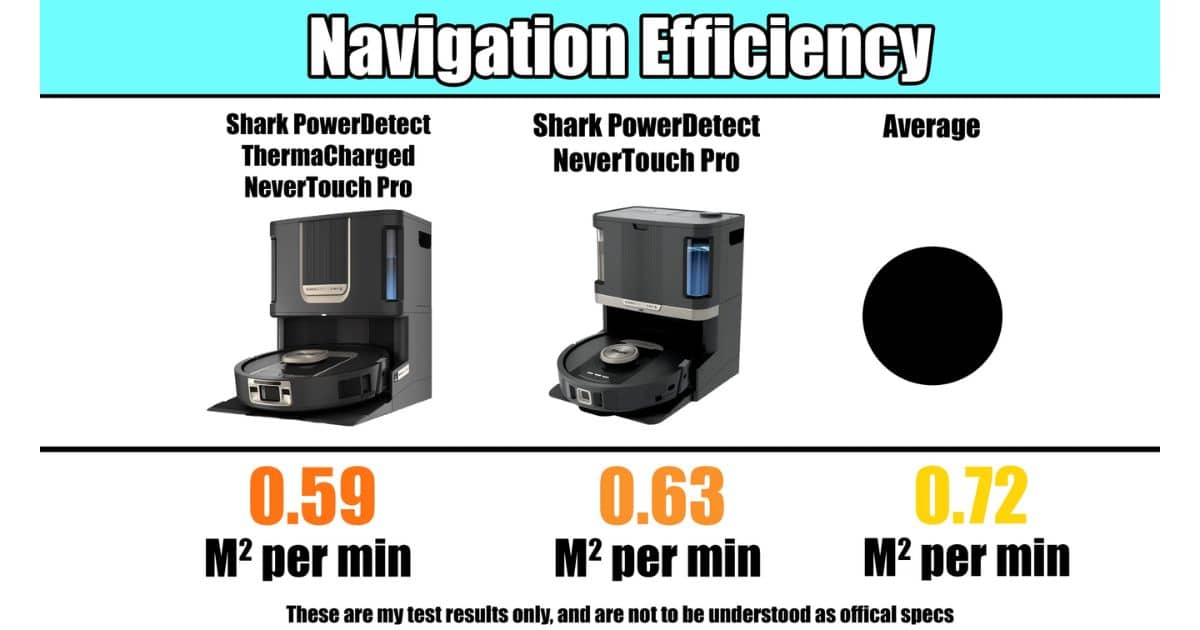
The same was true for navigation efficiency. We evaluate robot vacuums on a fixed floor plan across multiple runs, and both models were a bit slower than average. That noted, Shark’s navigation appears to have improved overall, with fewer stuck robots, more consistent runs, and greater reliability compared to earlier generations.
Cons of the Shark PowerDetect NeverTouch Pro and PowerDetect ThermaCharged
Shark Robot Vacuum App
Arguably, the most frustrating aspect of Shark robot vacuums is that they continue to have the weakest app in the industry.
The app has changed very little since Shark released its first smart robot vacuum around 2019, and even then, it lagged behind competitors. User control is extremely limited. You can start and stop the robot, set schedules, and place virtual barriers, but that’s about it.
There are no controls for:
- Power levels
- Mop water output
- Obstacle avoidance behavior
- Bin or cleaning preferences
It also lacks features that are now standard, including multi-level mapping and live map updates. You can’t see where the robot is cleaning in real time; there are no visible cleaning paths, and even the cleaning history shows only vague colored areas rather than precise routes. As a result, it’s difficult to know whether room areas were properly cleaned or missed entirely.
That said, the app is slightly less buggy than it used to be. For users who aren’t accustomed to advanced app controls, its simplicity may be a good thing.
Threshold Climbing and Hair Tangle Performance
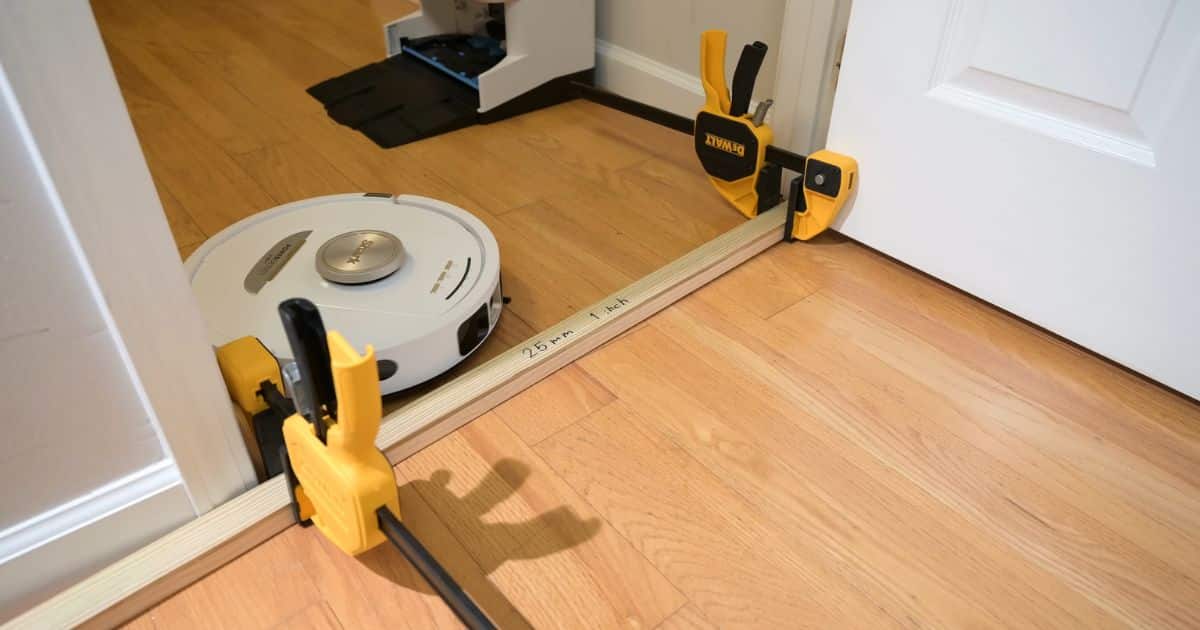
Our remaining critiques are relatively minor. Shark advertises a threshold crossing of up to 38 mm, but in practice, the robots failed to recognize even our lowest 25 mm threshold as something worth attempting. There’s also no way to designate thresholds in the app.
As for hair removal, Shark’s anti-hair wrap technology works exceptionally well on their upright and cordless vacuums, but their robot vacuums still lag behind. Both models performed slightly above average for hair tangles, showing improvement but not excellence.
Final Verdict: Which Shark PowerDetect Is Better?
Between the two models, the better choice is the Shark PowerDetect NeverTouch Pro. The deciding factor is that the ThermaCharged NeverTouch Pro uses excessively high water output, which hurts its mopping score and increases the risk of streaking.
And while the ThermaCharged offers better obstacle avoidance and mop pad drying, the standard PowerDetect NeverTouch Pro performs slightly better in core cleaning tasks. That includes being a bit better at debris pickup, deep carpet cleaning, and overall mopping effectiveness. The standard PowerDetect’s battery life and navigation are also solid, and considering it’s more affordable, it offers the best value overall.
Even so, neither robot made the Vacuum Wars Top 20 Robot Vacuums list, which is updated weekly as we evaluate new products and rankings change.
Frequently Asked Questions
What is the main difference between the Shark PowerDetect ThermaCharged and PowerDetect NeverTouch Pro?
The main difference is that the ThermaCharged model uses hot water to wash its mop pads and includes mop pad drying. The standard PowerDetect uses ambient-temperature water and does not dry the pads. The ThermaCharged also features a slightly different obstacle avoidance sensor setup with an added LED light.
Do both Shark PowerDetect robot vacuums have bagless auto-empty bins?
Yes. Both the Shark PowerDetect ThermaCharged and the PowerDetect NeverTouch Pro use bagless auto-empty bins, eliminating the need to purchase disposable dust bags.
How does mopping performance compare between the two Shark PowerDetect models?
Both robot vacuums scored above average in mopping evaluations, but the ThermaCharged model released significantly more water during assessments. Because water levels cannot be adjusted in the app, this resulted in a lower mopping score compared to the standard PowerDetect, which applied water more conservatively.
How effective is obstacle avoidance on Shark PowerDetect robot vacuums?
Both models use 3D structured light sensors for obstacle avoidance. The ThermaCharged performed better in evaluations, likely due to its LED-assisted sensor system. But both robots ranked below average overall compared to other robot vacuums evaluated by Vacuum Wars.
Did either Shark PowerDetect robot vacuum make the Vacuum Wars Top 20 list?
No. After evaluation and scoring, neither the Shark PowerDetect ThermaCharged nor the PowerDetect NeverTouch Pro earned a spot on the Vacuum Wars Top 20 Robot Vacuums list, which is updated weekly.
Compare
Shark PowerDetect NeverTouch Pro