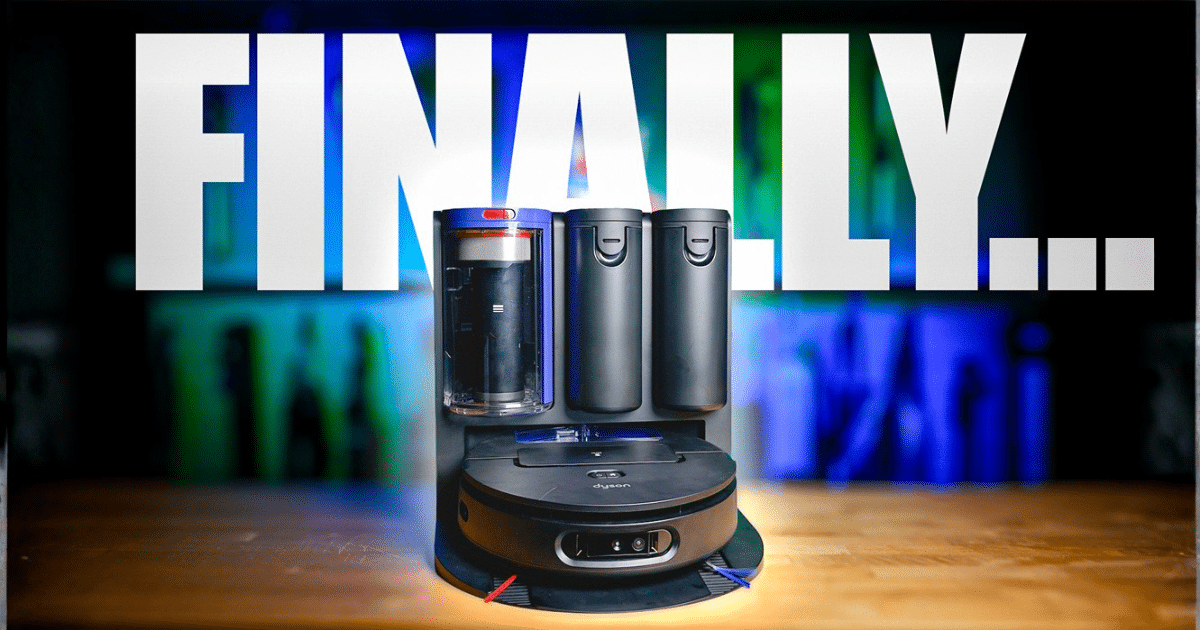
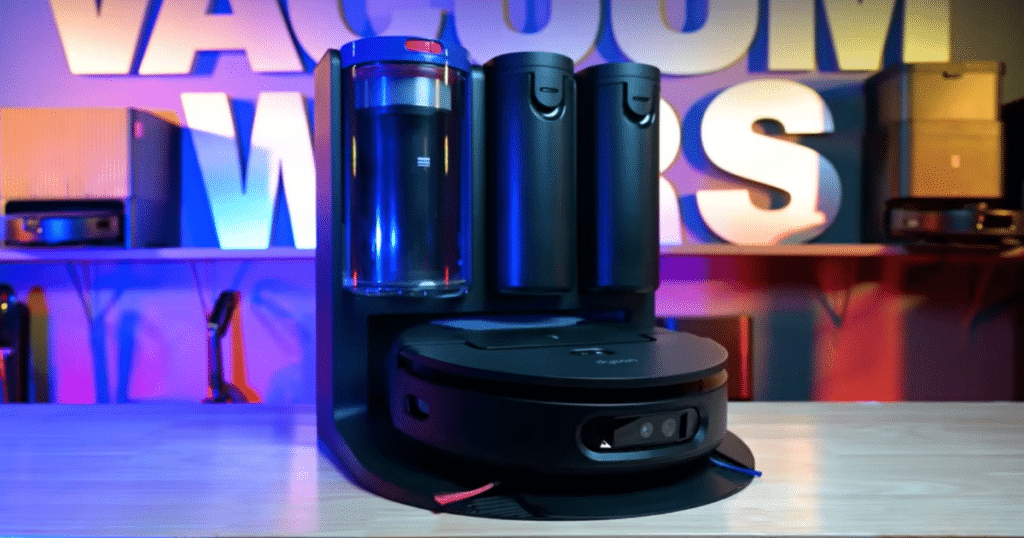
Dyson has introduced a number of features on the Dyson Spot+Scrub AI robot vacuum that they have never had on a robot before, including a mop system, a bagless auto-empty dock, and AI-powered obstacle avoidance. That’s a significant leap considering their 2024 model, the 360 Vis Nav, was a vacuum-only robot using VSLAM navigation without any dock automation.
At a list price of $1,200, the Spot+Scrub AI enters the premium category, where expectations are high, so we were very interested to see how Dyson’s new model would perform with so much first-time technology, and whether it could address some of the issues we saw in previous versions. We bought one and put it through a wide range of tests over several weeks to evaluate its performance and determine whether it earns a place among the best robot vacuums.
Dyson Spot+Scrub Ai
Vacuum Wars Stars 3.49
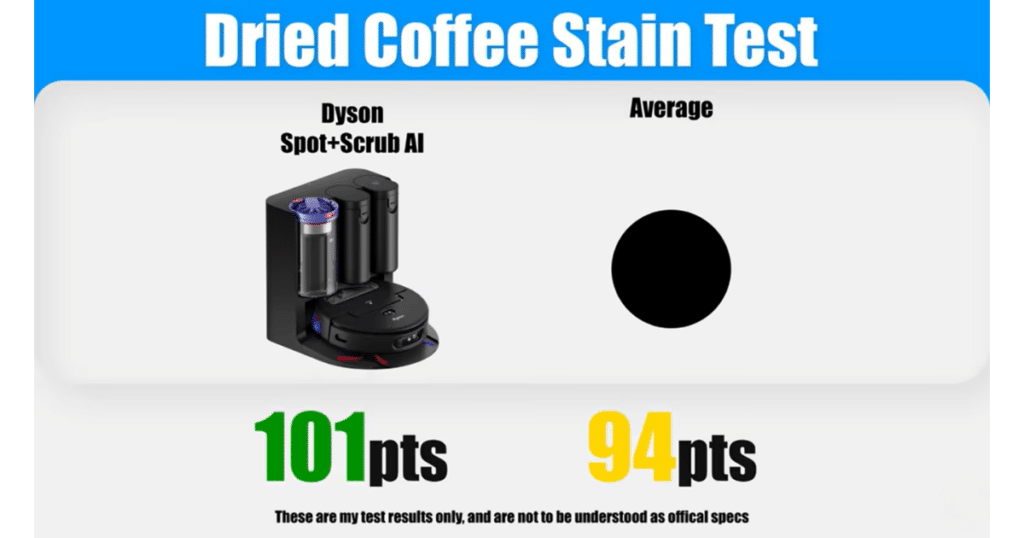
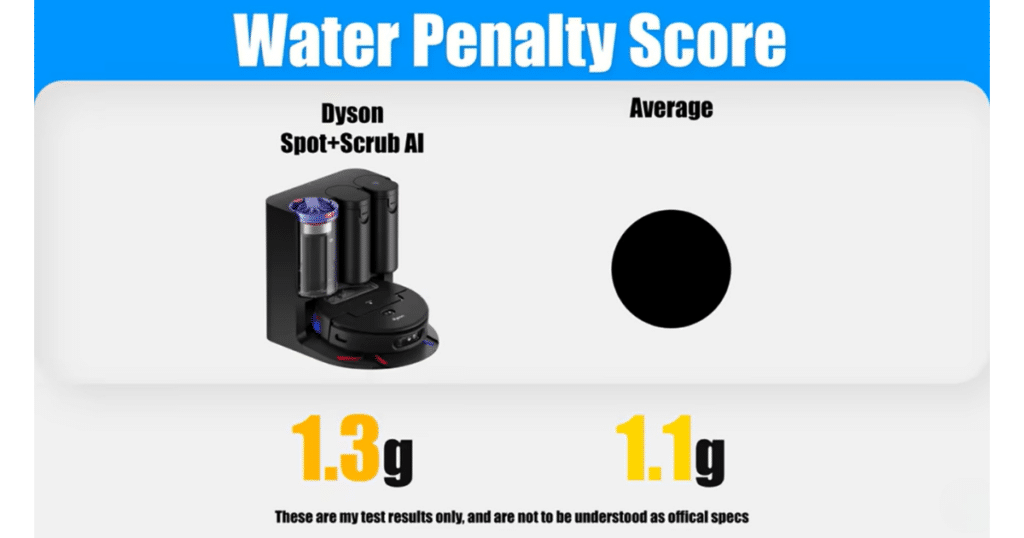
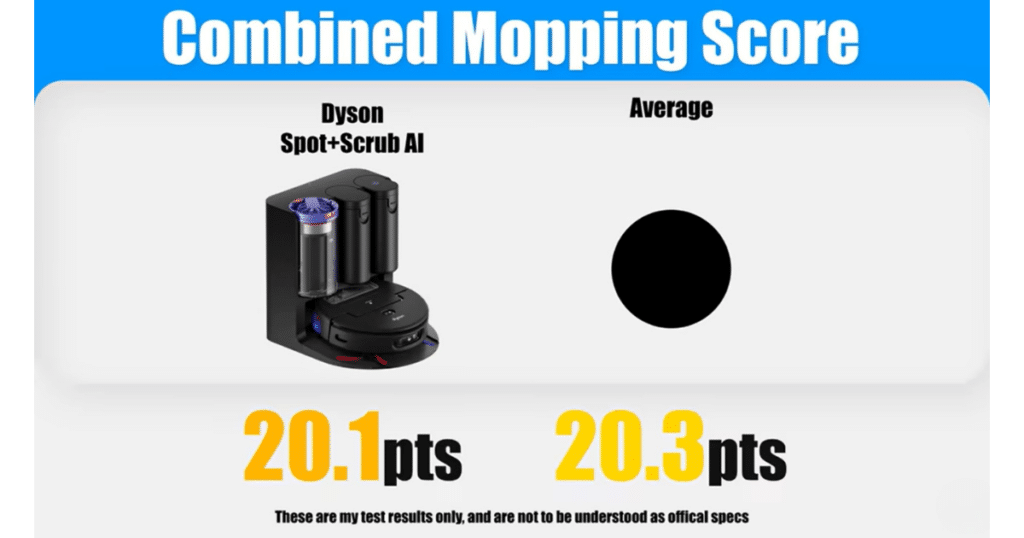
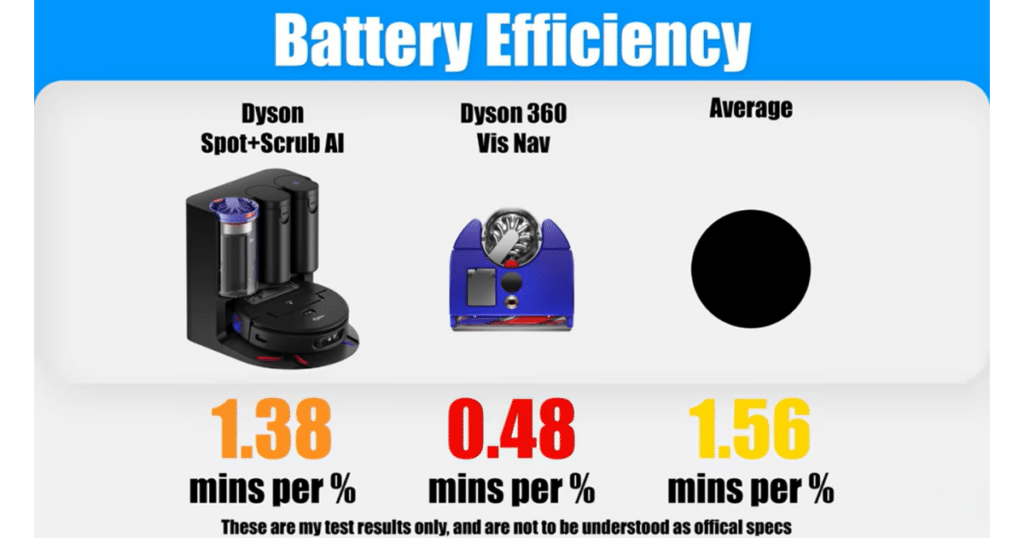
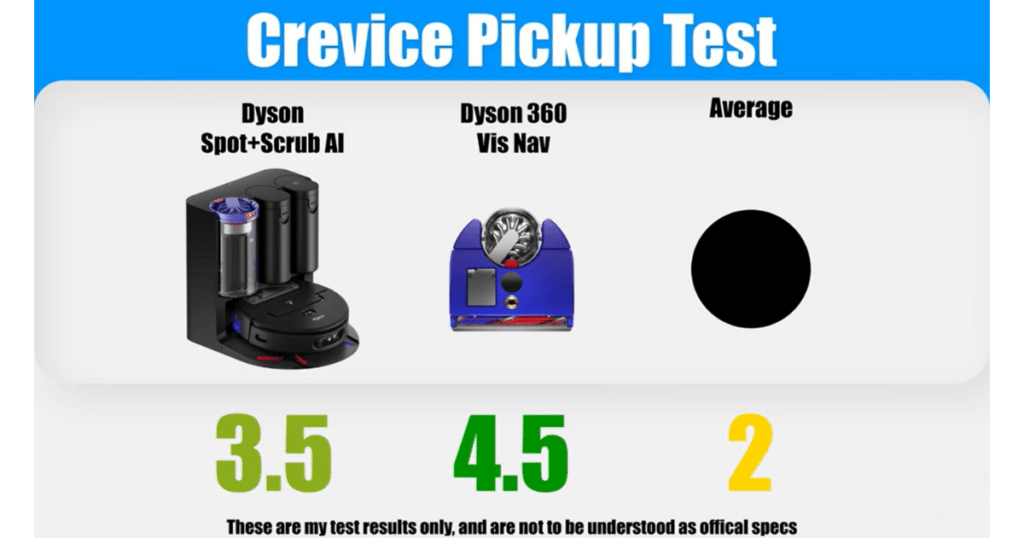
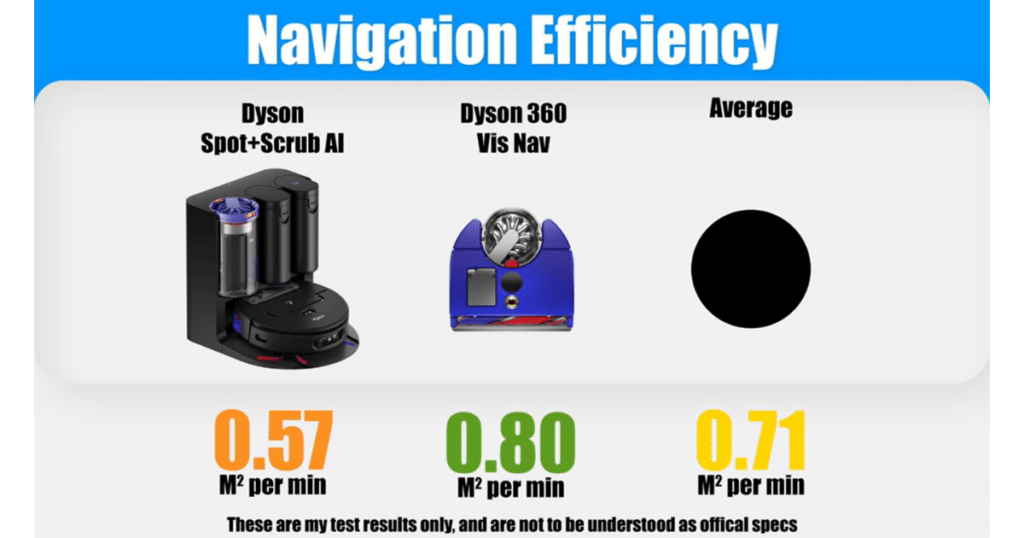
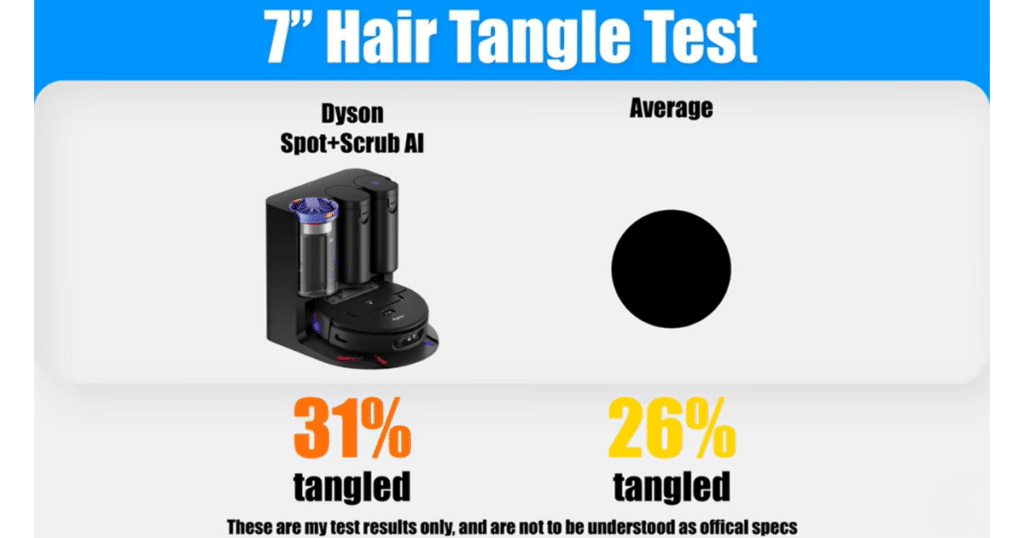
The Dyson Spot+Scrub Ai is a premium robot vacuum-mop combo that introduces several firsts for Dyson, including a bagless auto-empty dock, AI obstacle avoidance, and a roller mop system, and overall it performs well with some tradeoffs. Its standout feature is the cyclonic bagless dock, which effectively separated heavy pet hair after nearly two weeks without cleaning and stayed completely dry, while the AI system avoided 20 of 24 objects versus a 15 average, making it top-tier for a first attempt. The roller mop scored 101 on coffee stain removal (above the 94 average) with a combined mopping score of 20.1, though it left 1.3g of water (slightly above average). Battery efficiency improved significantly to 1.38 minutes per percent, covering about 846 sq ft per charge, still below the 1,170 average. Vacuuming was solid but slightly weaker than its predecessor, with 76% carpet deep clean pickup (vs. 78 average) and 81% pet hair pickup (vs. 82 average), though crevice performance was excellent at 3.5 vs. 2.0. Downsides include slow navigation (0.57 vs. 0.71 average), poor anti-tangle (31% hair wrap), limited 20mm obstacle climbing, a basic app, and a large 4.3-inch height that can hinder maneuverability. See additional info
Price and Positioning in the Premium Category
Starting with the basics, the Dyson Spot+Scrub AI is a premium robot vacuum and mop combo that comes in at a list price of $1,200. For shoppers in this range, it’s worth keeping in mind that this model is competing directly with some of the most fully featured robot vacuums currently available. We will compare this model to our average scores, but there are a couple of places where it scored very differently from the 360 Vis Nav (see our full review), so we will point those out when they come up.
At this price point, expectations are high. Buyers are not just looking for solid performance, but for meaningful innovation and category-leading results, which makes Dyson’s approach here especially interesting.
Bagless Auto-Empty Dock Performance
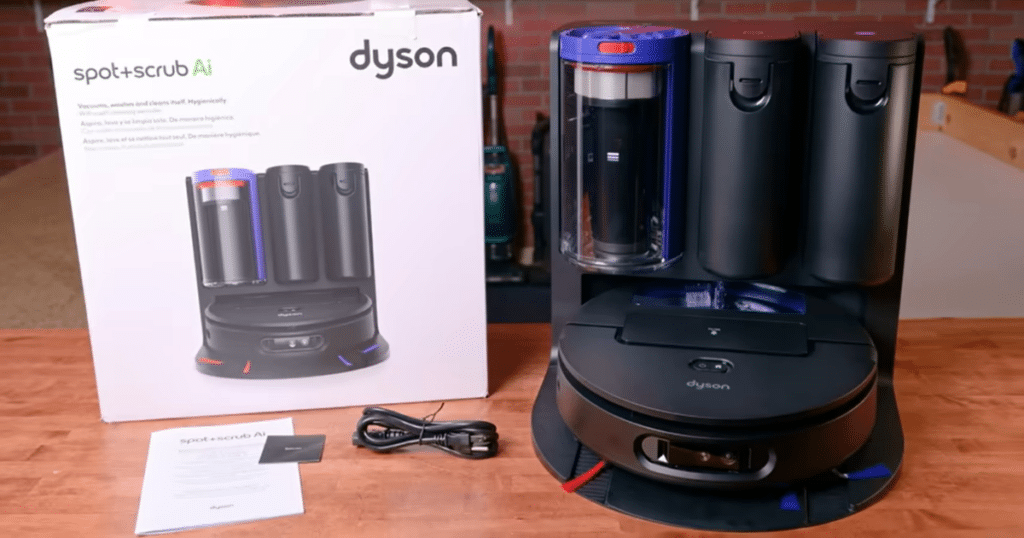
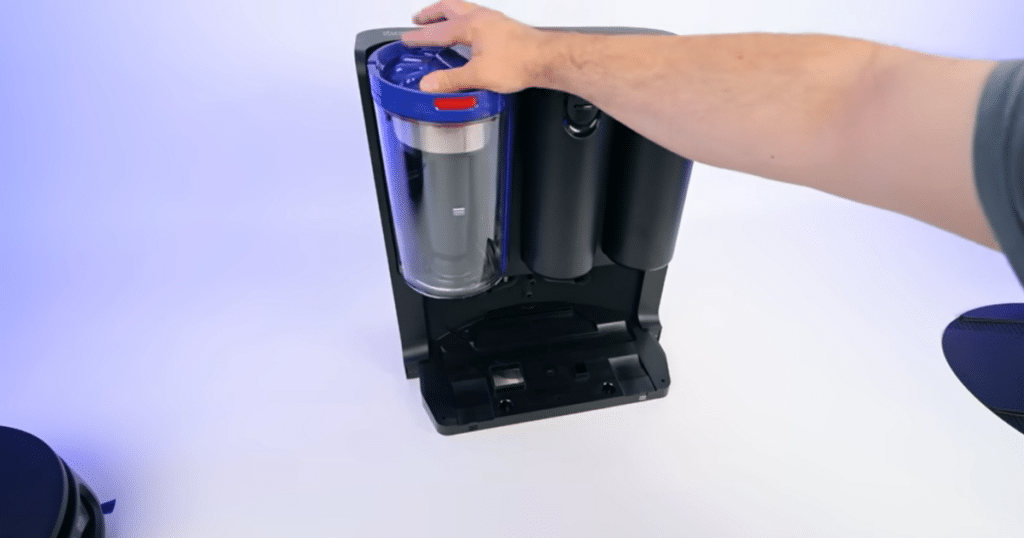
Starting with the pros, one of the biggest pros was Dyson’s first-ever auto-empty, bagless base station.
As expected, Dyson brings a lot of credibility to this category. They pioneered the cyclonic bagless bin system, and they’ve consistently produced some of the highest suction on the market.
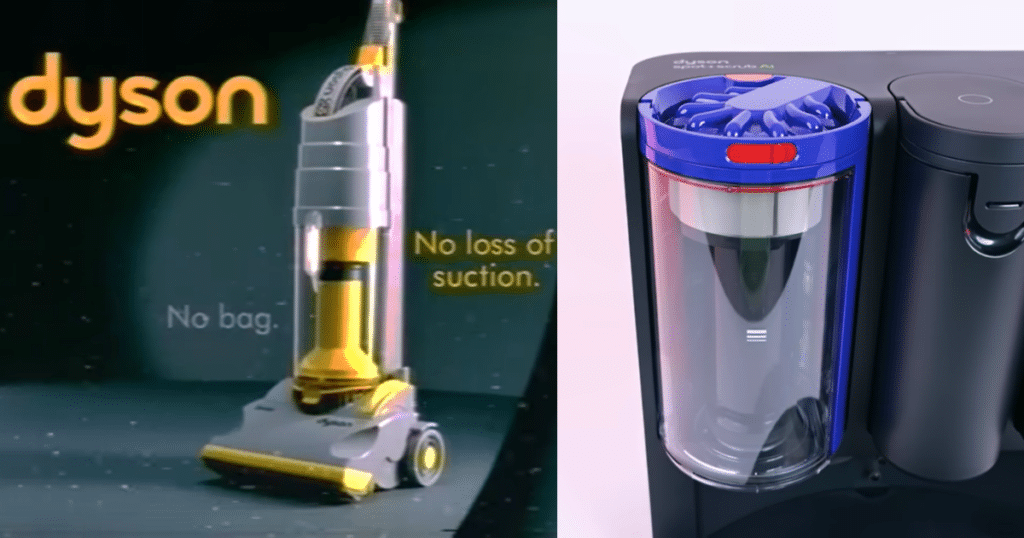
While we don’t directly measure suction in robot vacuum bins, it’s reasonable to assume that Dyson’s system is operating at a very high level.
Bagless Bin in the Real World
In real-world use, the bin’s performance was surprisingly strong. After going nearly two weeks without vacuuming—which is a long time in a home with two cats—the bin was able to fully pull out and separate the accumulated pet hair. That’s something robot vacuums don’t always handle well, especially with bagless systems.
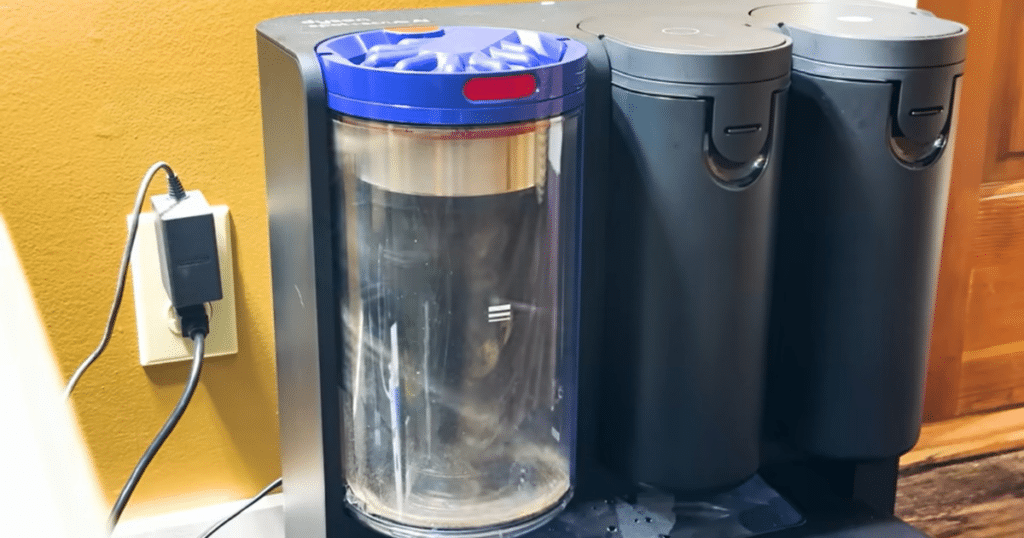
Another standout was how dry the bin was. Earlier bagless bin designs we’ve tested can struggle with moisture or damp debris buildup, which can cause clumping and low efficiency. Dyson seems to have avoided that issue entirely, which suggests they’ve made meaningful improvements in how the system manages airflow and separation.
Advances in this area could point to a bigger industry shift away from costly consumables like disposable bags. For users specifically looking to avoid ongoing bag costs or dealing with frequent pet hair, this is one of the more compelling advantages of the system.
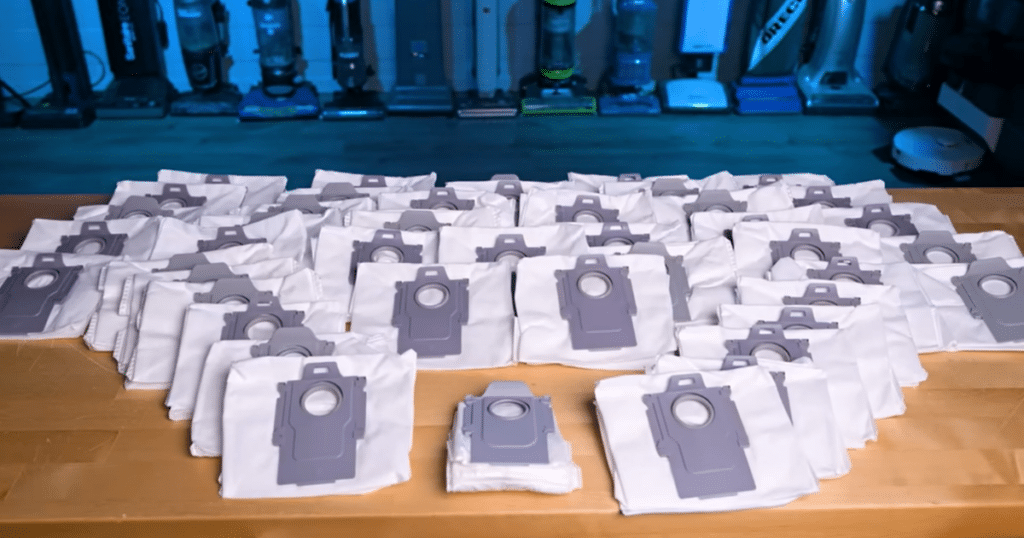
The dock handles some mop maintenance features as well. It refills the robot’s water tank and empties the dirty tank, washes the mop at 140°F (60°C) and dries it at 113°F (45°C).
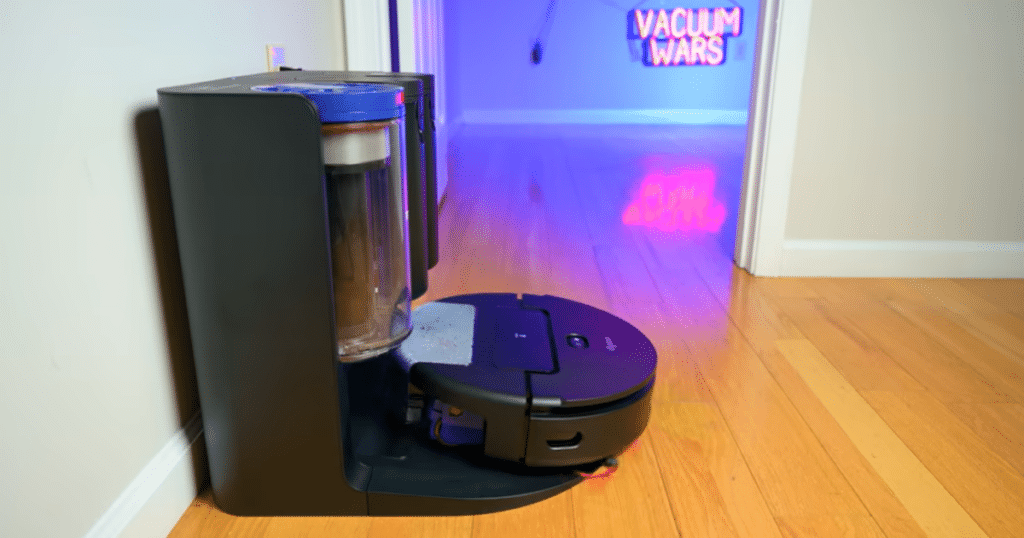
Bagless Dock Robot Vacuums are Growing in Popularity
If you’re interested in robot vacuums with bagless auto-empty docks, you’re not alone. There is a growing number of options to compare and we are seeing the technology improve as well.
See our reviews of recent bagless options: Dyson Spot+Scrub AI, Shark PowerDetect UV Reveal, Yeedi S20 Infinity, Ecovacs X11 OmniCyclone
AI Obstacle Avoidance Performance
The next pro is the Obstacle Avoidance, which was another surprise considering Dyson has not had this on a robot before, either.
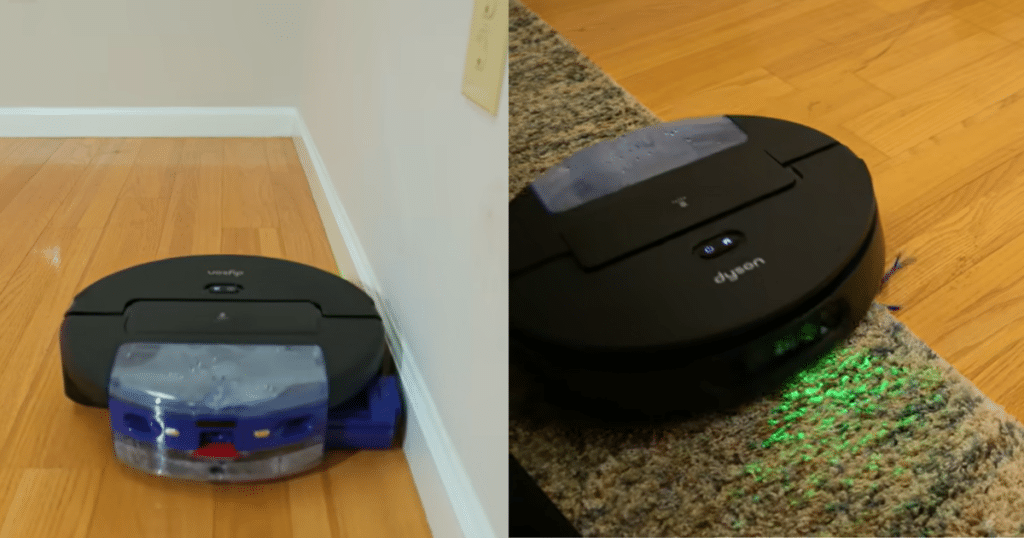
The feature that gives this model its name, Spot and Scrub AI, uses an AI-powered camera and a green-spectrum LED light to sense the environment and identify obstacles as well as messes. Dyson specifically states that this AI processing happens locally, without sending images to a cloud server.
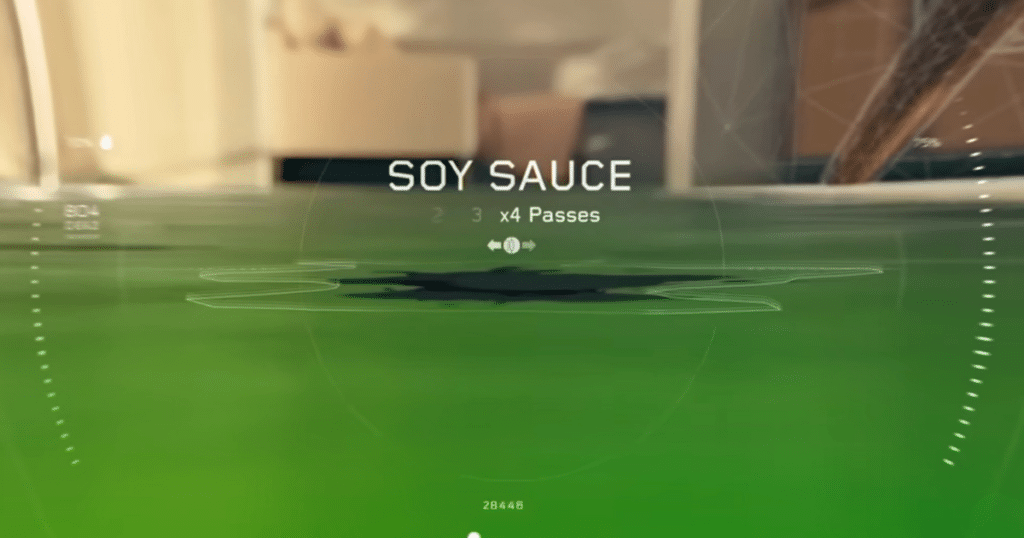
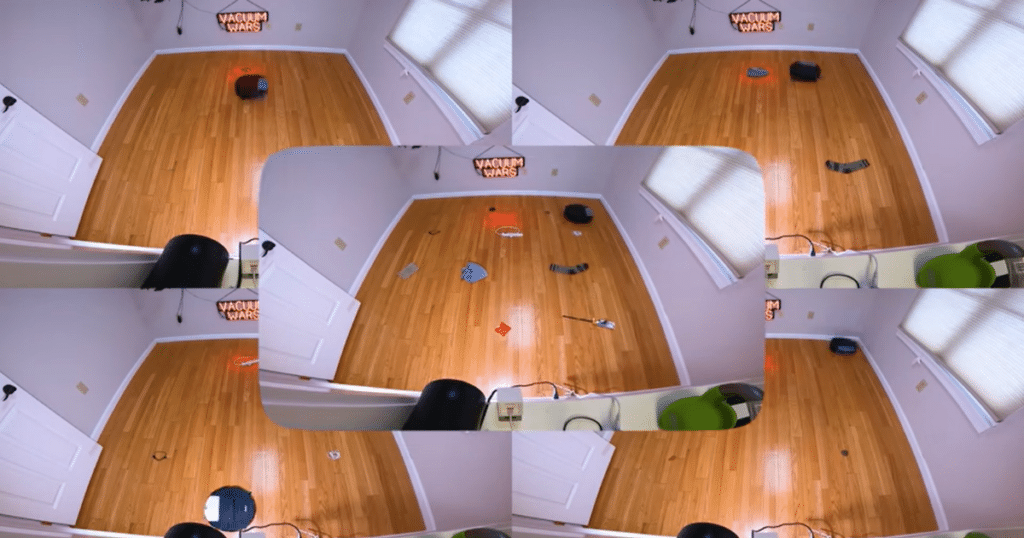
And this system did an awesome job in our standard obstacle tests and our torture test, avoiding a total of 20 out of 24 possible objects, well above the category average of 15.
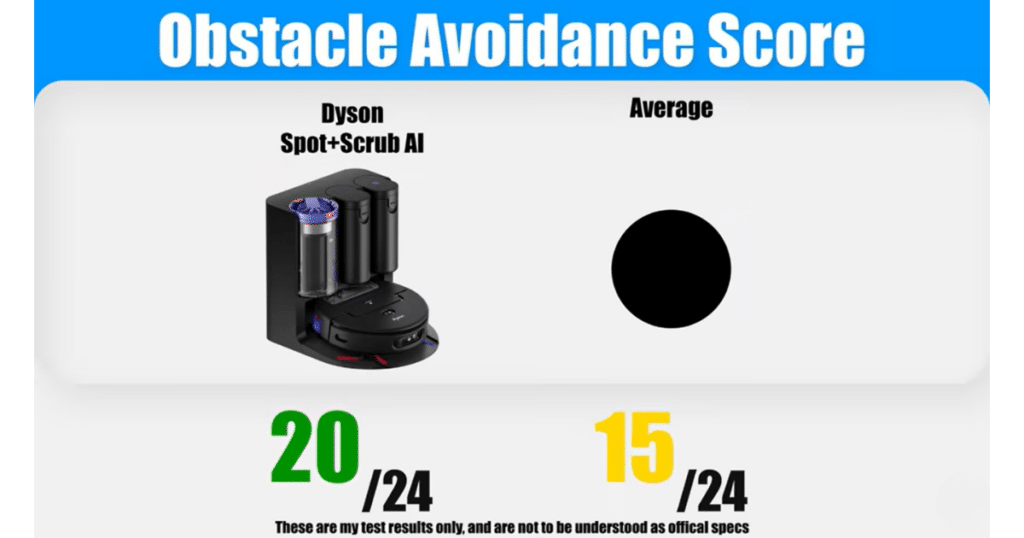
This kind of performance would be impressive on a mature obstacle avoidance system, so for a new system to score this high is really remarkable. This level of obstacle avoidance is typically associated with top-tier models, which helps reinforce its value in day-to-day use.
Mopping System and Cleaning Results
The next pro was the mop.
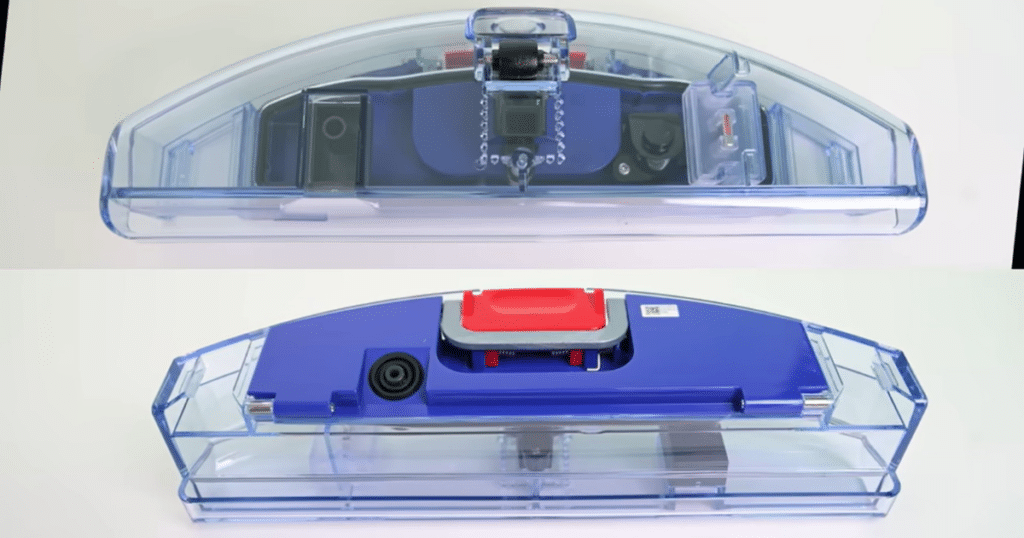
The mop is a roller style, which is good for processing wet spills in particular, and they don’t leave as much used water on the floor as dual spinning or flat pads. The robot sprays the roller with fresh water from the clean water tank and collects used water in a dirty tank.
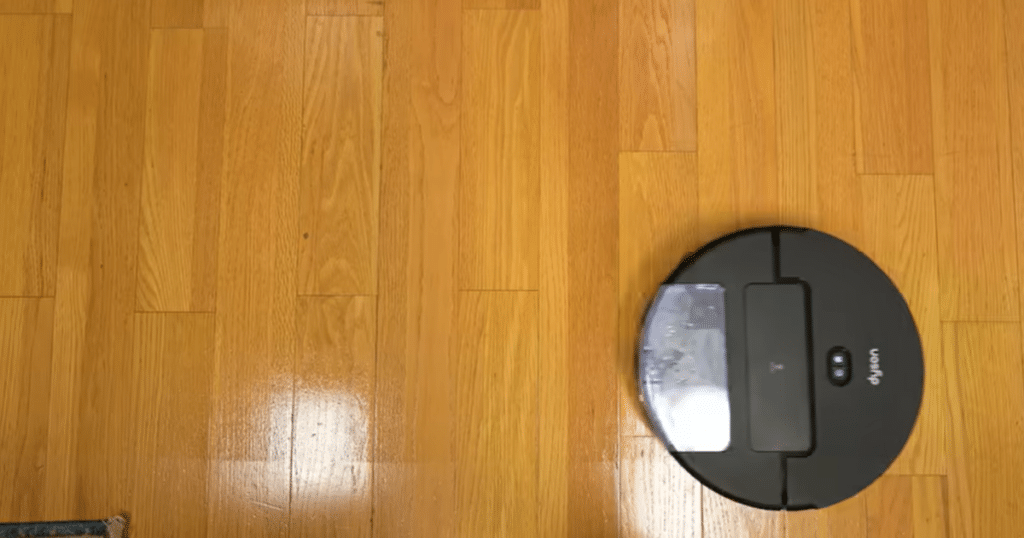
Interestingly, both of these tanks are accessible, which is a feature we really like. Some roller mops build these tanks internally, so that the user is unable to open them, which is a weakness if something goes wrong.
The mop lifts about 10 millimeters above carpets so it can clean both hard floors and carpets in a single run, and the mop extends to the side for coverage along walls.
Spot + Scrub AI Mopping Test Results
In our coffee stain test, it scored 101, above the average of 94, while leaving behind 1.3 grams of water, slightly above the 1.1g average.
This resulted in a combined mopping score of 20.1, essentially in line with the category average.
We have seen some extreme results in robot mops lately, swinging high in some tests but low in others, so we liked to see a mop that was capable in the metrics that we care about. For most users, this kind of balanced performance is likely to be more useful than systems that excel in one area but fall short in others.
And while we didn’t test this, Dyson says the robot is programmed to return to stubborn stains up to 15 times until the mess has been removed.
Battery Life Improvements Over Previous Models
The battery life is a pro, and this is an area where it really stands apart from its predecessor.
The battery life on the Vis Nav was terrible, and it was a huge complaint for us.
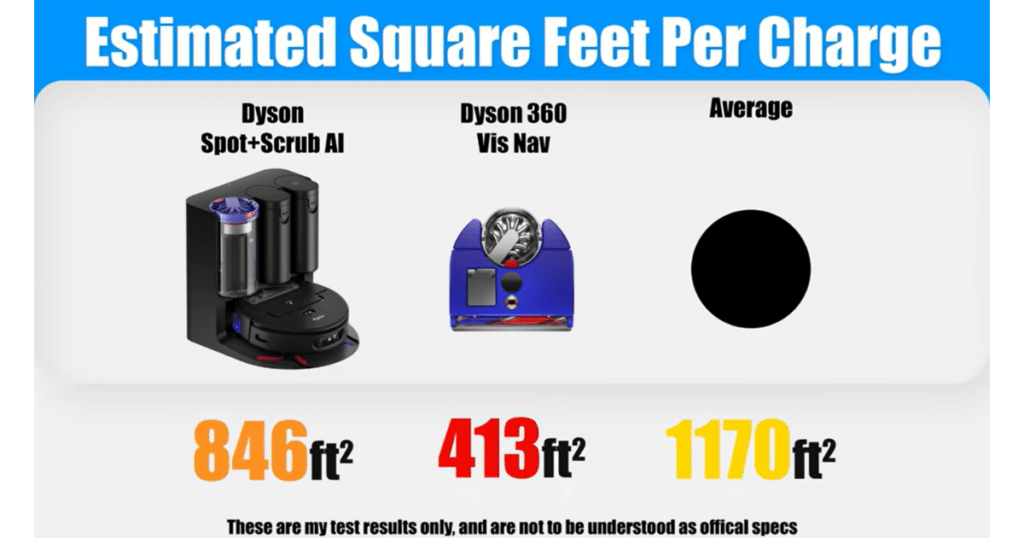
The Spot and Scrub has made significant improvements, with a battery efficiency that’s much closer to average. Its battery efficiency measured 1.38 minutes per 1%, compared to a 1.56 average, resulting in an estimated 846 square feet per charge, which is still below the 1,170 average—but a major improvement over the previous model.
Improved Estimated Square Feet Per Charge
This made the total estimated square feet per charge—846 sq ft—more than double the Vis Nav’s dismal 413 sq ft. While this is still below the 1170 sq ft average when compared to other robots in our dataset, it’s such a big improvement that we think it qualifies as a pro. In practical terms, this means battery life is no longer a limiting factor for most homes, even if it doesn’t lead the category.
Vacuuming Performance and Cleaning Tests
The Spot and Scrub’s vacuuming was another pro, but it’s worth mentioning that this is one area where it dropped in performance from the Vis Nav. We have noticed in the past that vacuuming scores can dip when robots add a mop. This is possibly because the extra hardware limits the brush’s contact with the floor, but whatever the reason, it’s a trend that seems pretty consistent.
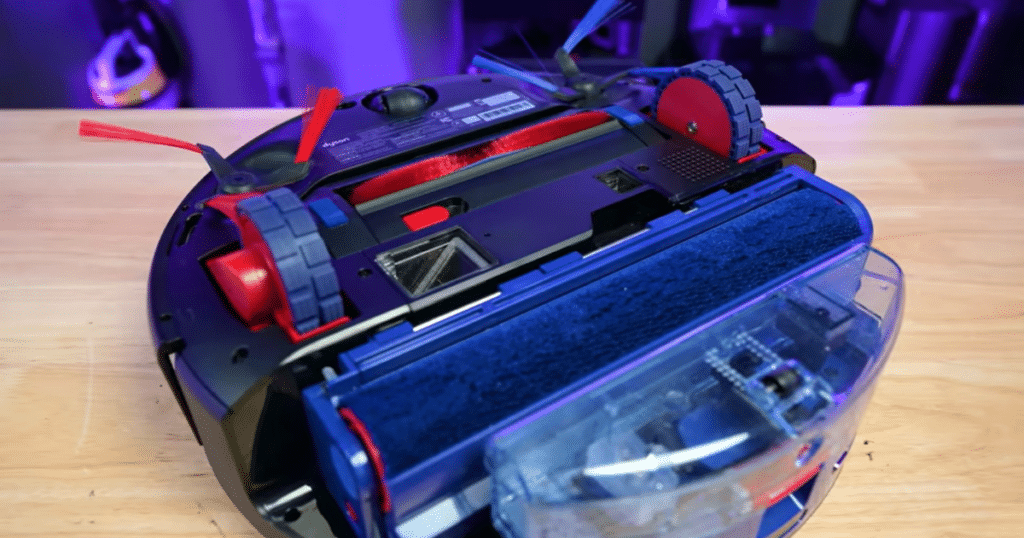
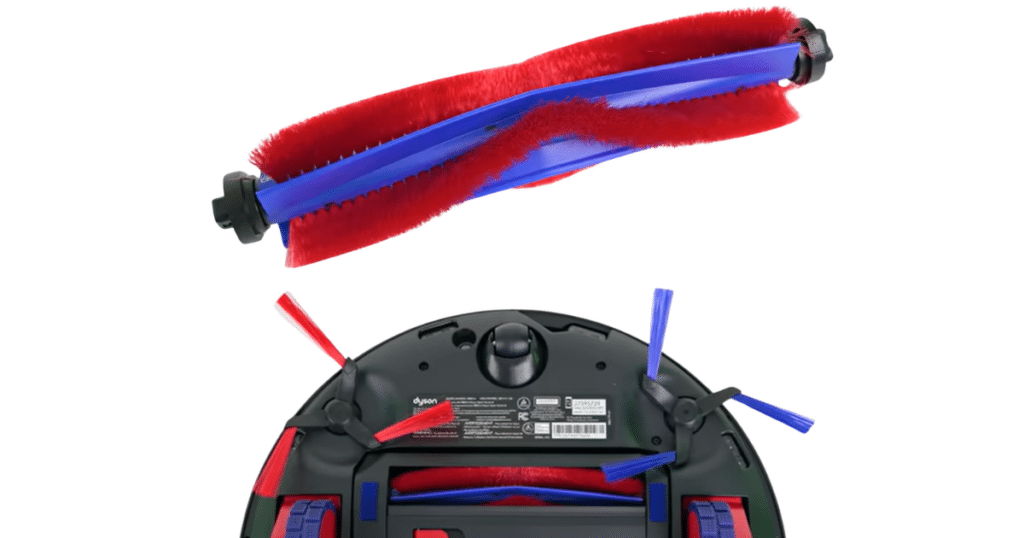
The brush system changed on the new model, going from a hefty roller bar to a more standard bristle design and two fixed side brushes, and the robot automatically boosts its suction over carpets.
How Vacuum Wars Tests Robot Vacuums: Step into the world of Vacuum Wars, where real-world tests, straight-forward reviews, and no sponsored products redefine robot vacuum evaluations.
Vacuuming Performance Test Results
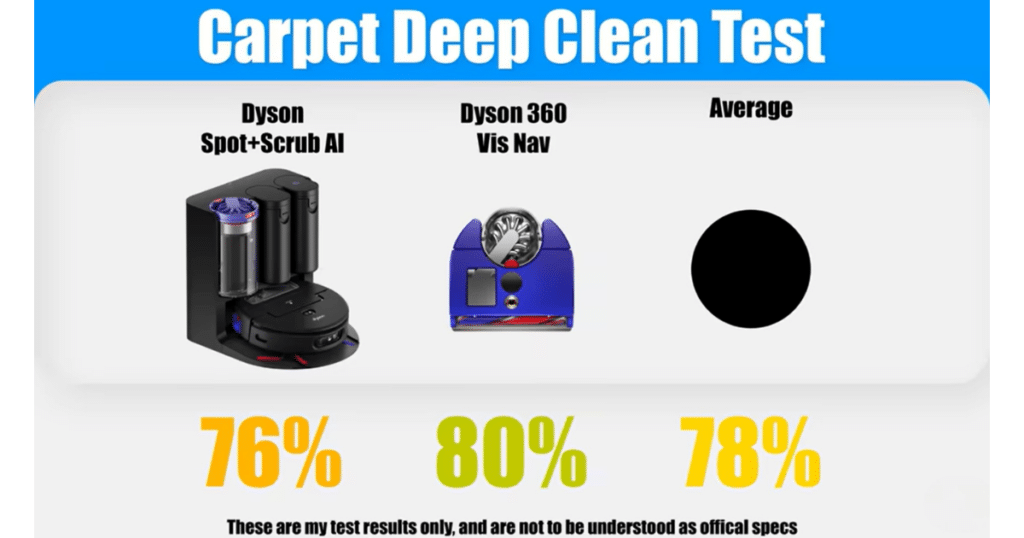
In our carpet deep clean test, where we embed sand into medium pile carpet and measure how much the vacuum can remove, it removed 76% of embedded debris, slightly below the 78% average.
The pet hair pickup test had a similar result. For this test, we press 2.5 inch hair onto carpet and measure how much the robot can pick up. The Spot and Scrub again came in about average, picking up 81% of flattened pet hair, essentially in line with the 82% average.
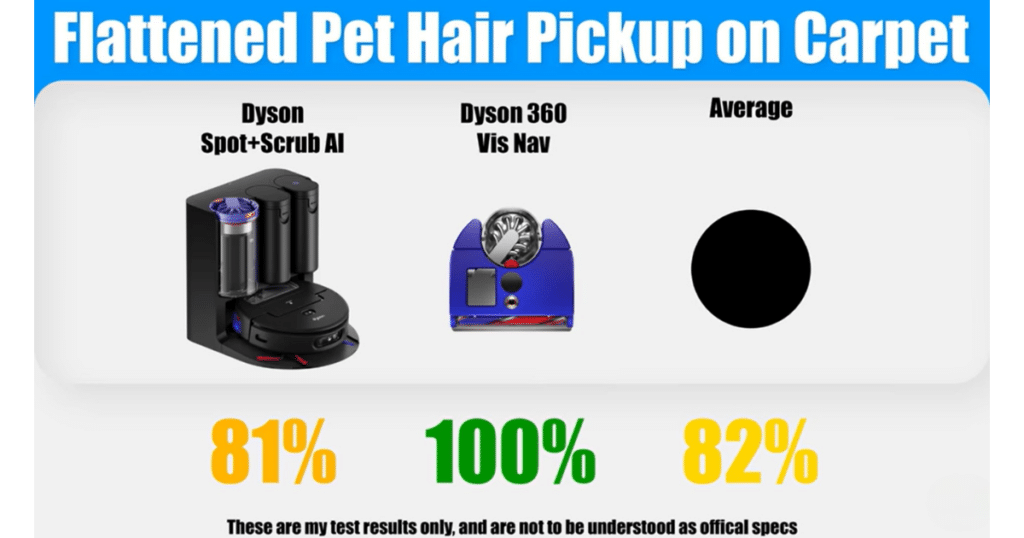
Its crevice test was really good, with a much higher than average score of 3.5 compared to the 2.0 average, which makes for effective cleaning on floors with deep grouts or grooves.
Navigation, Size, and Other Drawbacks
Navigation Efficiency Score
One issue we found was that it’s a little slow. The navigation system has changed from VSLAM on the Vis Nav to a direct Time of Flight embedded LiDAR, but its efficiency measured 0.57 square meters per minute, below the 0.71 average. Over time, this slower navigation can translate to longer cleaning cycles compared to some competing models.
Main Brush Hair Tangle Test
Another con was in the anti-tangle test, where 31% of 7-inch hair wrapped around the brush, worse than the 26% average.
It also can climb a 20 millimeter threshold, which is good, but its not a noteworthy height.
App Features and Customizations
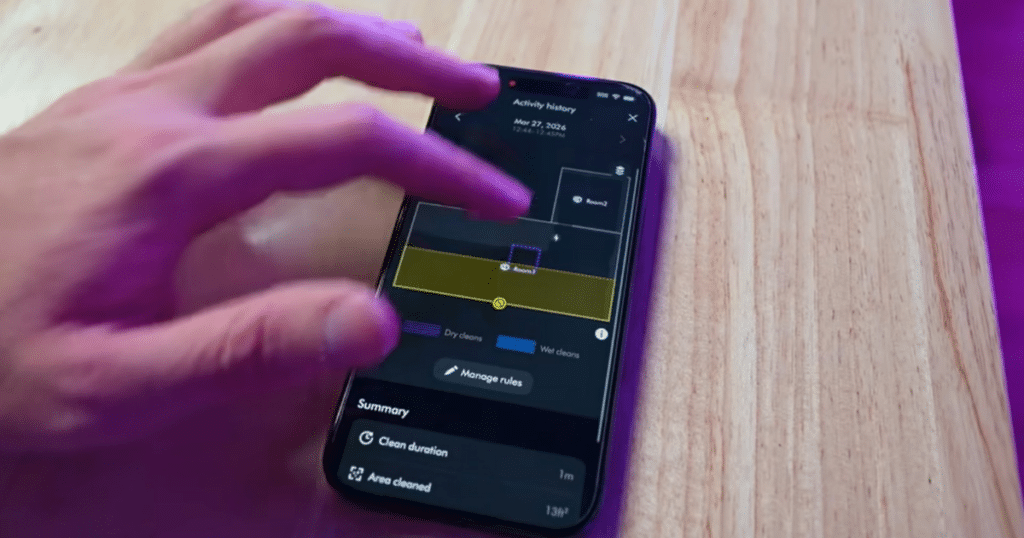
The app hasn’t been one of our favorites. While it includes essentials like real-time mapping, no-go zones, and schedules, it lacks the more advanced customization features seen in other brands. This is one area where competing models may offer a more refined user experience.
Dyson Spot + Scrub Width and Height
Lastly, it’s just really big. At 4.3 inches tall compared to the 3.8-inch average, it struggled under furniture and in tighter spaces during testing. For homes with lower furniture or more confined layouts, this is something that could affect day-to-day usability.
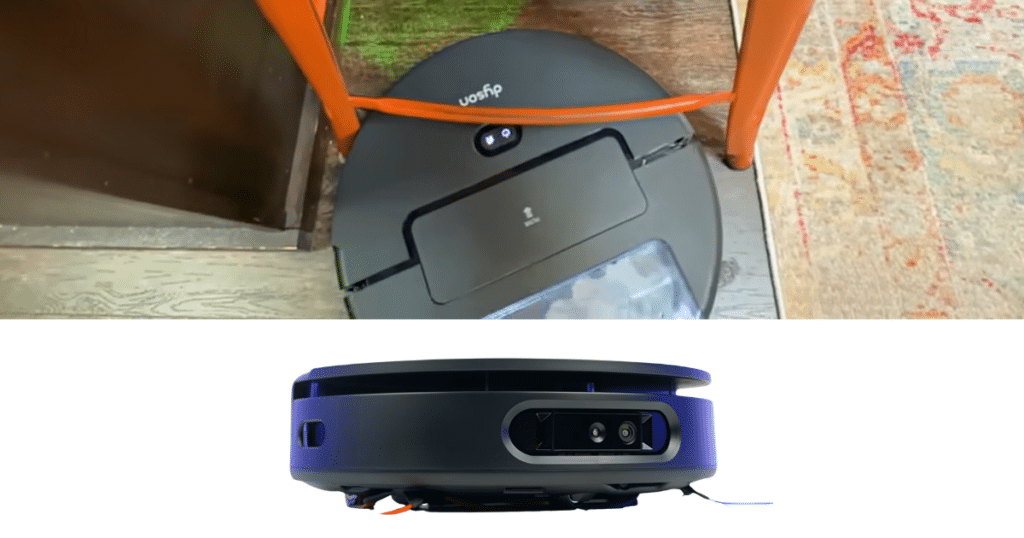
These tradeoffs likely come from the additional hardware required to support its new features, which generally performed well but require more physical space.
Final Verdict: Dyson’s First Truly Recommendable Robot Vacuum
Things on the Dyson Spot + Scrub AI We Really Liked
Dyson is doing three major things for the first time on this robot, and they actually did them well right out of the gate.
The most impressive part, and what we think the rest of the industry should be paying attention to, is the cyclonic bagless bin system. The ongoing issue with hair clogging inside robot vacuums has long been a weak point in the category, and Dyson appears to be making real progress toward solving it.
Obstacle avoidance is another standout. Delivering top-tier performance in a first-generation system is notable, and it’s likely to be one of the most impactful features in everyday use. They also addressed one of their biggest past weaknesses with a meaningful improvement in battery life, making this the first Dyson robot where that issue is no longer a dealbreaker.
Value Proposition in the Premium Robot Space
At the same time, the overall performance is still somewhat mixed when viewed against its premium price. Vacuuming results are generally average, navigation is slower than competitors, and its larger size introduces some usability limitations.
When you put it all together, this is the first Dyson robot vacuum that we can genuinely recommend. However, it did not make the Vacuum Wars Top 20 list.
For users who are particularly interested in Dyson’s bagless technology, strong obstacle avoidance, or improved battery life, it can be a compelling option and one that shows Dyson is moving in the right direction. If its specific strengths align with your priorities, it’s worth checking current pricing and availability.
For others—especially those focused on getting the absolute best performance for the price—it may be worth comparing this model with other top-ranked robot vacuums before making a final decision.
Top 20 Robot Vacuums
Explore Vacuum Wars’ always up-to-date rankings of the best robot vacuums, based on independent, hands-on testing. We purchase every unit ourselves and have evaluated more than 150 models, giving us a deep benchmark for cleaning performance, navigation, battery life, and advanced features like obstacle avoidance and mopping.
Compare Premium Robot Vacuums Referenced in This Review
See how these high-end robot vacuums stack up against each other. Select a model to view the full comparison. You can also compare additional models using our robot vacuum comparison tool.
Dyson Spot+Scrub AI