
Update (Feb. 12, 2026): Today’s news confirms that Picea is discontinuing the 3i robot vacuum line to focus on the iRobot Roomba brand following its acquisition of iRobot. Read more: iRobot Acquisition News: New Owner Discontinues 3i Robot Vacuum Brand.
Shenzhen Picea Robotics Co., Ltd. is a China-based robotics company that has evolved from a behind-the-scenes manufacturing partner into a central player in the global robot vacuum industry. Best known for its role as a large-scale contract manufacturer of robotic vacuums for major brands, Picea drew widespread attention when it agreed to acquire iRobot, the U.S. maker of Roomba vacuums, through a court-supervised Chapter 11 bankruptcy restructuring.
The move places Picea at the intersection of manufacturing, product development, and brand ownership at a time when competition in the robot vacuum market has intensified worldwide.
Company Background and Manufacturing Role
Picea Robotics operates research, development, and manufacturing facilities primarily in China and Vietnam and has established itself as a significant original design manufacturer (ODM) within the consumer robotics sector. The company designs and produces robot vacuums that are sold under other brands’ names, allowing those companies to scale production without maintaining their own factories.
Although Picea maintains a relatively low public profile compared with consumer-facing brands, the scale of its manufacturing operations reflects a significant role within the global robot vacuum supply chain.
Best Robot Vacuums – Vacuum Wars’ always up-to-date rankings of the best robot vacuums. Whether you call it a robot vacuum, a robotic hoover, or an automatic vacuum cleaner, our top picks will help you find the perfect cleaning companion for your home!
Picea’s Relationship With iRobot
Picea’s most prominent manufacturing relationship has been with iRobot, the Massachusetts-based company that popularized the Roomba robot vacuum beginning in the early 2000s. As iRobot shifted more of its production overseas in recent years, Picea became its primary large-scale manufacturing partner, producing a substantial portion of iRobot’s consumer devices. Beyond manufacturing, Picea also emerged as a secured creditor to iRobot.
iRobot Bankruptcy and Acquisition
In December 2025, iRobot filed for Chapter 11 bankruptcy protection in the United States as part of a strategic restructuring effort. The company cited factors including increased competition from lower-cost rivals, pricing pressure, and the termination of its previously proposed acquisition by Amazon following regulatory challenges.
Under a restructuring support agreement, Shenzhen Picea Robotics Co., Ltd., along with its partner Santrum Hong Kong Co., Ltd., agreed to acquire iRobot through the court-supervised process. The transaction involves Picea converting its secured debt and manufacturing-related obligations into equity, resulting in Picea becoming the sole owner of iRobot upon the company’s exit from Chapter 11.
iRobot has stated that the restructuring is designed to allow normal business operations—including product development, manufacturing, and customer support—to continue throughout the process.
Picea’s Consumer Brand: 3i
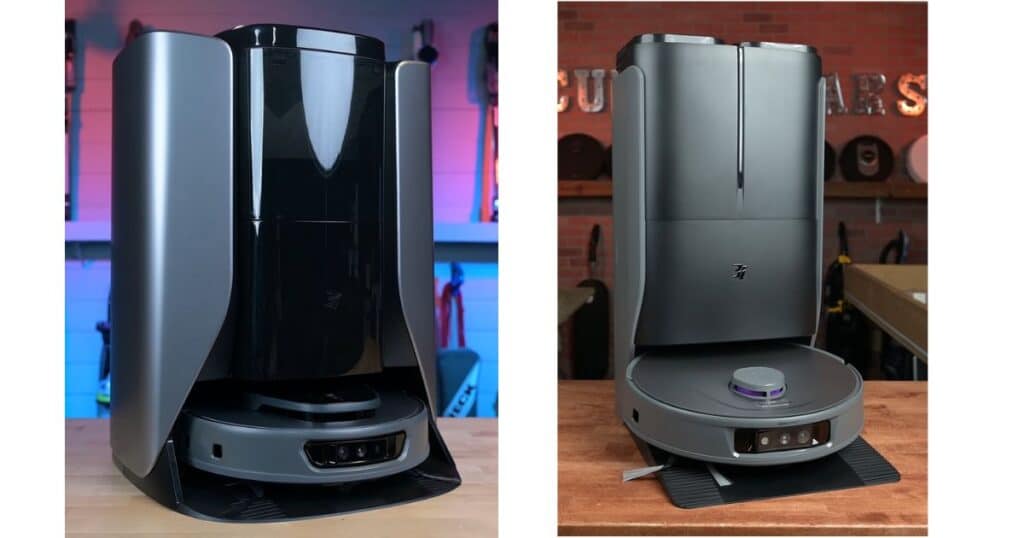
In addition to its contract manufacturing work, Picea operates its own consumer-facing robot vacuum brand, 3i, which is also associated with the name 3irobotix in some markets. The 3i lineup includes models positioned in the competitive mid- to upper-tier of the robot vacuum category and reflects Picea’s in-house engineering and product development capabilities, as outlined in official 3i brand materials.
Vacuum Wars has independently reviewed multiple 3i models, including the 3i P10 Ultra and 3i S10 Ultra Robot Vacuums, as part of its standard hands-on evaluation process. 3i has also appeared at major international electronics trade shows, including CES and IFA, and it continues to expand its product portfolio in select global markets.
The growth of the 3i brand highlights Picea’s broader strategy of developing proprietary products and intellectual property alongside its role as a contract manufacturer, positioning the company as both a behind-the-scenes supplier and a consumer-facing robotics brand.
Strategic Position in the Global Robotics Market
Picea’s evolution mirrors broader shifts within the smart home robotics industry. Manufacturing scale and cost-efficient production have become increasingly important as competition intensifies. Chinese manufacturers have expanded their influence by producing products for established Western brands while also launching devices under their own labels, reflecting a broader shift toward vertically integrated development in the smart home robotics industry.
By acquiring iRobot, Picea gains control of a globally recognized brand along with access to iRobot’s patents, software ecosystem, distribution channels, and installed user base. Combined with Picea’s manufacturing capabilities, this positions the company to play a significant role in shaping the next phase of robot vacuum development.
What This Means for the Future
Picea’s acquisition of iRobot may have long-term implications for the robot vacuum market:
- Product continuity: iRobot has stated that customer support and product operations will continue during and after restructuring.
- Innovation direction: Integrating iRobot’s design legacy and software platform with Picea’s manufacturing and engineering capabilities could influence future product development.
- Industry dynamics: The transaction underscores the growing role of Chinese manufacturers in this product category.
While the full impact of the ownership change will become clearer over time, Picea’s rise—from contract manufacturer to owner of one of the most recognizable names in consumer robotics—marks a significant shift in the global robot vacuum landscape.
Looking for More iRobot Coverage?
Vacuum Wars has published extensive coverage of iRobot over the years, including product reviews, comparisons, and company news. Readers can find all of our iRobot-related articles and hands-on reviews in one place here: View all iRobot news and reviews on Vacuum Wars
iRobot Roomba Robot Vacuum Buyers Guide 2026
iRobot has rolled out a revamped Roomba lineup for 2025, introducing key changes to its long-running series. From the entry-level 105 series to the top-of-the-line 705 series, these new models showcase a range of noteworthy updates that could signal a pivotal shift for the company. This guide delves into their major enhancements and offers insights into how they’ll perform in everyday life. See the Guide