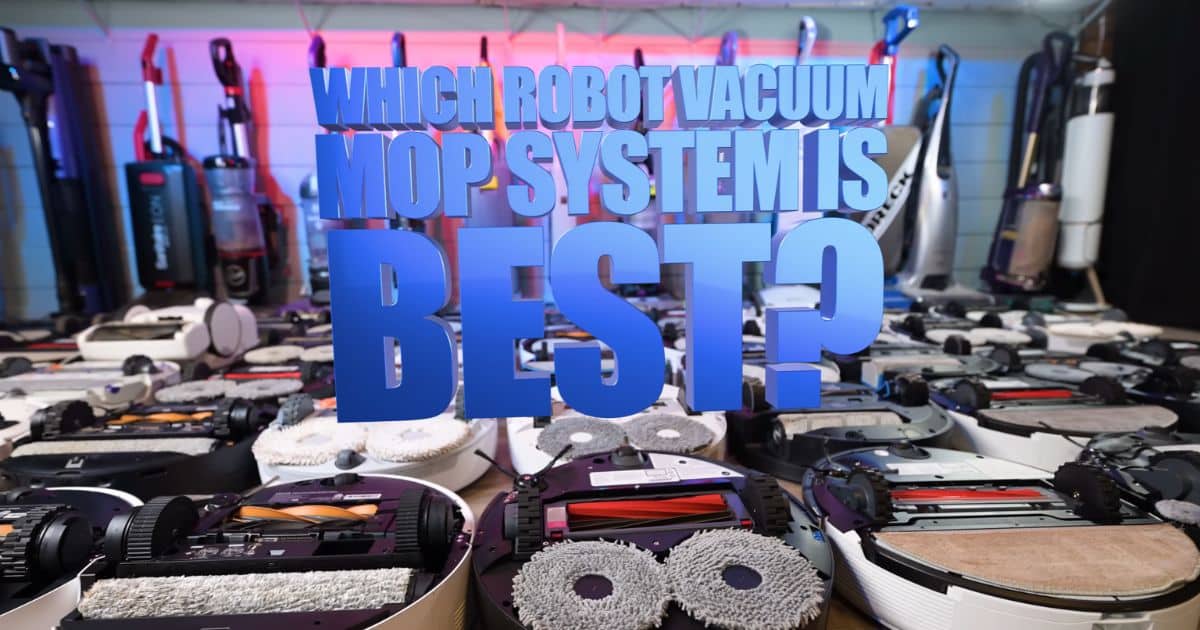
There are three main styles of robot vacuum mopping systems in use today: the single flat pad, the dual spinning mop pad, and the newer single roller. Each has its pros and cons, and in this special review, we determine the best robot vacuum mop. We discuss each mop type, why you might prefer one over another, and what our real-world evaluation data shows about their performance. If you’re looking for specific recommendations, see our Vacuum Wars Top 20 Robot Vacuum List.
The Best Robot Vacuum Mop: Key Differences in Design and Performance
It helps to start with the mop system itself when choosing the best robot vacuum mop combo. Flat pads, dual spinning pads, and roller mops all clean differently—and those differences affect everything from stain removal to how much maintenance you’ll deal with.
Single Flat Pad Mop Systems
Single flat pads are the most affordable and widely available robot vacuum mopping systems on the market. In their simplest form, they consist of a microfiber pad attached to a plastic plate on the bottom of a robot vacuum.

But flat pads don’t necessarily mean you’re missing out on modern features. For example, the Roborock S8 series and the Shark NeverTouch series use a flat pad style but still include key features—such as automatic mop lift when carpet is detected to prevent the pad from getting wet.
One of the main benefits of the single flat pad design is its simplicity. These systems tend to have lower mechanical complexity on the robot itself, meaning fewer moving parts that could fail.
The biggest downside of these pads is that they tend to become saturated very quickly. Because of this, flat pad systems are generally better for light maintenance mopping and dried-on stains. They can’t handle much liquid without spreading it around the floor.

As single mop pads get dirtier during a cleaning run, they are also more likely to smear dirt rather than remove it. That is, unless the robot frequently returns to its dock to wash the pad mid-run, which some models do.
If you choose a flat pad robot vacuum with a multifunctional dock that washes the mop pad, the dock itself is often more complex than those used by other systems. The dock typically requires mechanical components to scrub the pad back and forth since it doesn’t move on its own. That added complexity can make the base more involved to maintain over time.
Dual Spinning Mop Pad Systems
These mop pad systems tend to offer the widest range of features overall.
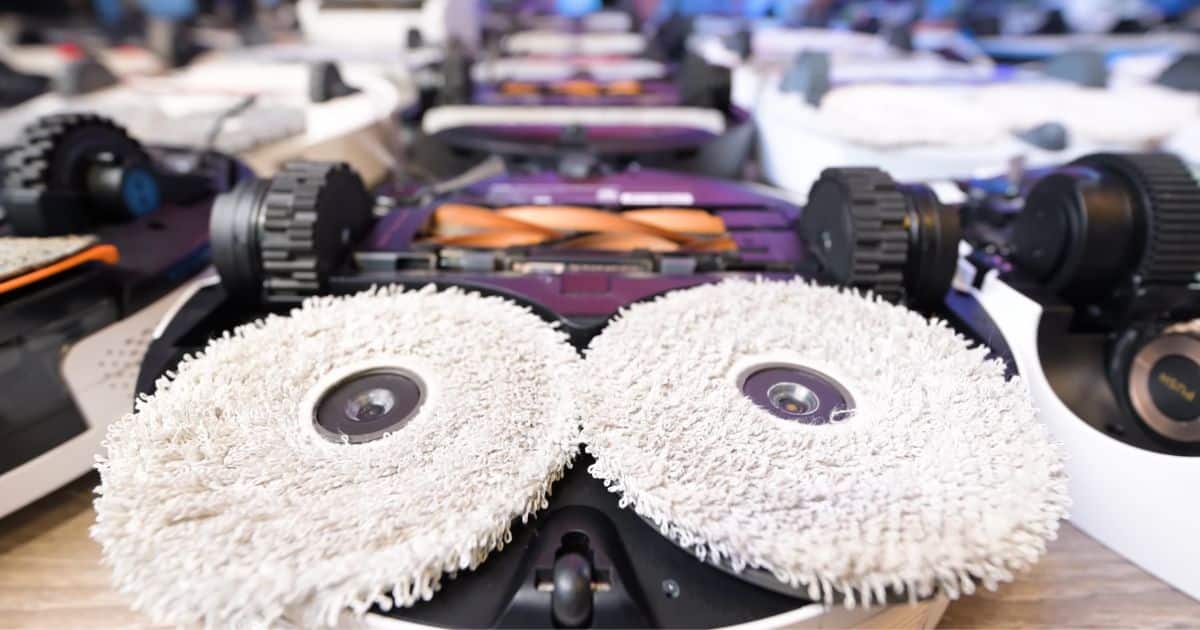
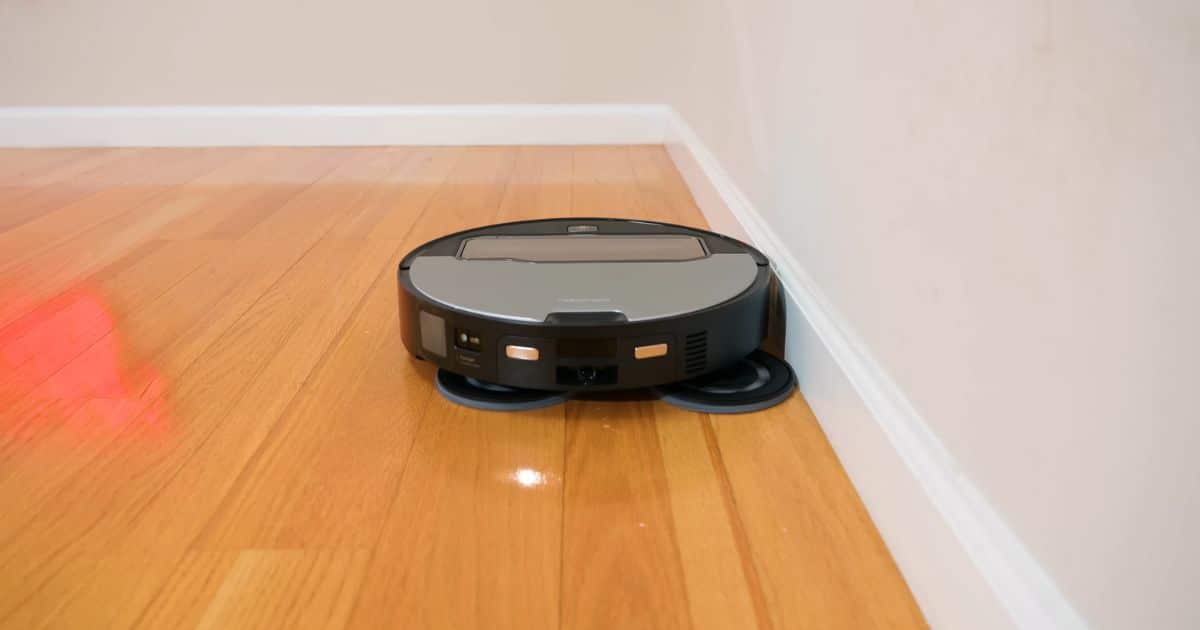
They typically include electronic water control from a clean water tank, automatic mop pad lifting, and, in some cases, the ability to swing one pad outward to scrub closer to edges and baseboards.
Because the pads rotate continuously at high RPMs, dual spinning systems generally provide stronger scrubbing action on dried stains compared to flat pad designs.
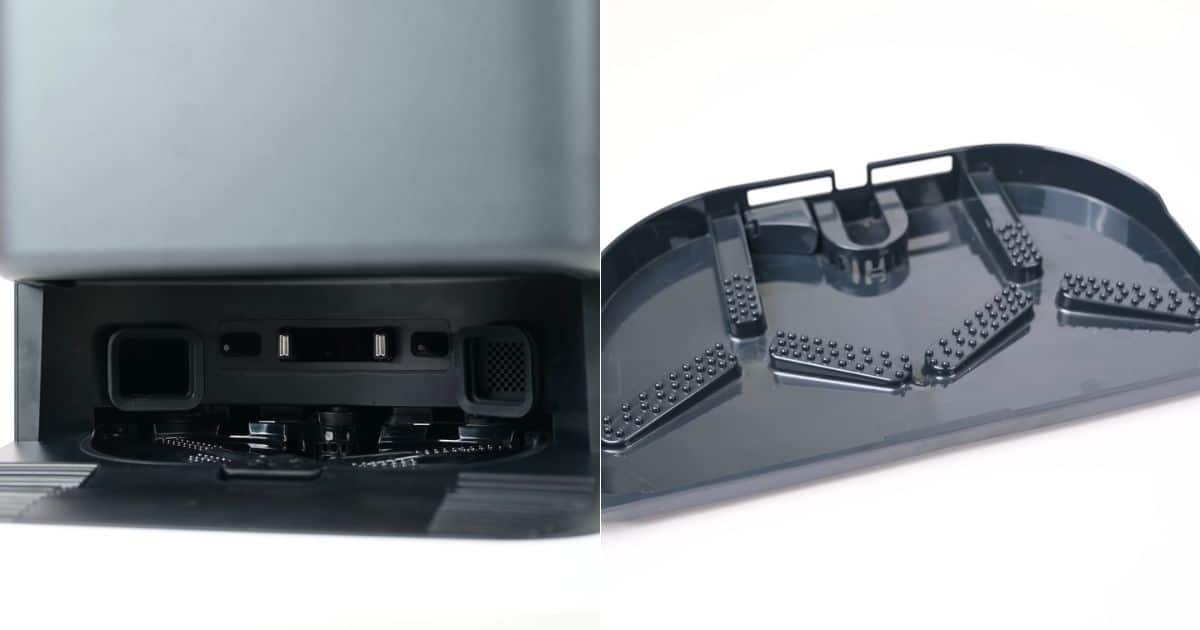
Their dock design is also a plus. Since the mop pads themselves spin, the dock doesn’t need as many moving parts. Most use a textured tray or ridged washboard surface. When the robot docks, it simply spins the pads in place while water sprays onto them, effectively cleaning the pads without requiring complex dock mechanisms.
But there are some drawbacks similar to those of flat pad systems. Like single pads, dual spinning mop pads don’t physically separate dirty water from clean water. If you send one of these robots to clean a large wet spill, the pads will absorb the liquid and then spread it around once they become saturated. As a result, dual spinning pad systems are best suited for dried stains rather than wet messes.
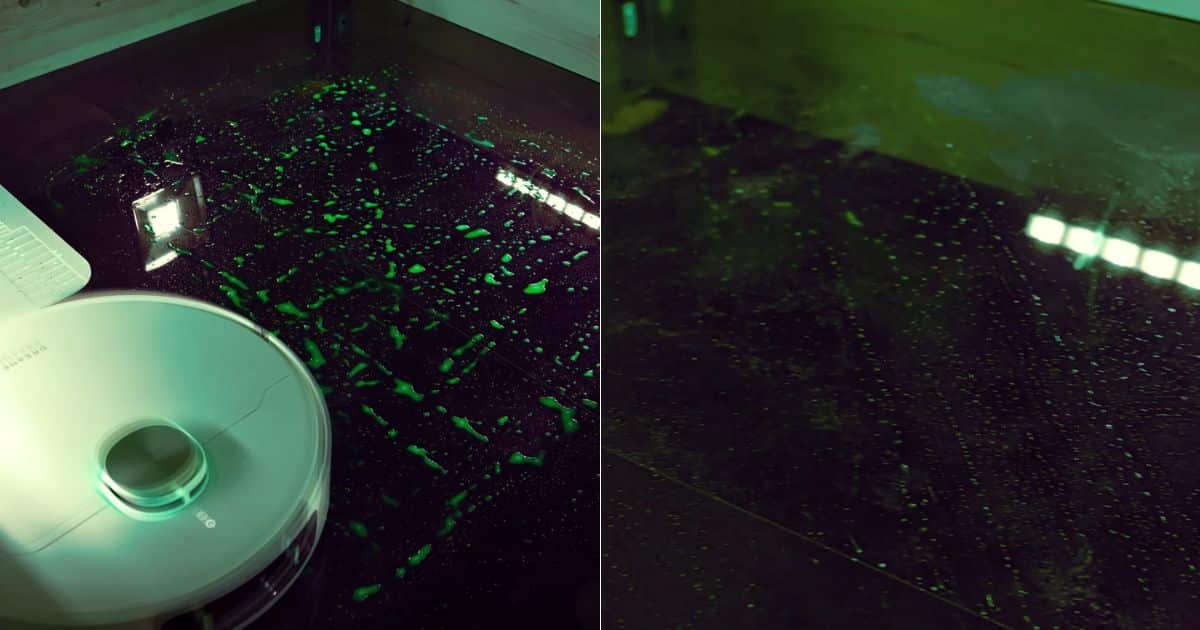
Given that pads become dirty during a cleaning cycle, consider getting a robot vacuum with an automatic mid-run pad-washing feature. And when such systems return to the dock, the spinning action tends to clean the pads effectively.
While dual spinning pads introduce more mechanical complexity than flat pads, that added complexity is mostly limited to the robot itself and is still less than what’s required for roller-style systems.
Single Roller Mop Systems
Single roller robot vacuum mop systems operate differently from pad-based designs and offer unique advantages. Most notably, they are the only systems that can realistically handle a moderate amount of liquid on the floor.

These systems spray fresh water from a clean water tank directly onto the roller. As the roller scrubs the floor, an internal squeegee or scraper squeezes dirty water out of the roller and sends it into an onboard dirty water tank. This means the robot is actively extracting dirty water from the floor rather than redistributing it.
Another major advantage of roller systems is that they keep the mop surface fresher throughout the cleaning run. Because clean water is continuously applied and dirty water is continuously removed, you don’t see the same gradual buildup of grime that happens with flat or spinning pads. This is arguably the roller system’s biggest strength.
Modern roller-style robot vacuums typically include the same carpet avoidance features as other mop designs. They can lift the roller when carpet is detected to prevent contact, and some models use protective shields. Certain robots can also extend the roller slightly to improve edge cleaning.
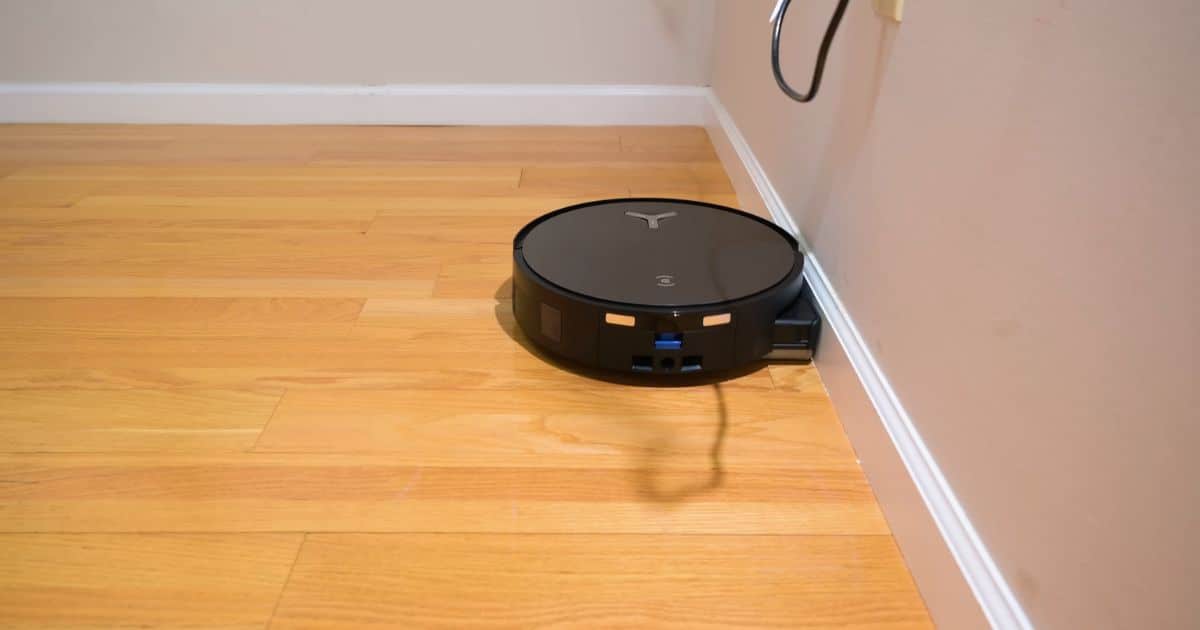
The downsides of roller systems mostly stem from complexity and cost. These robots require dirty water tanks, multiple spray nozzles, and mechanisms to transfer dirty water into the dock. They also tend to use more water overall, meaning you’ll need to refill clean water and empty dirty water tanks more frequently.
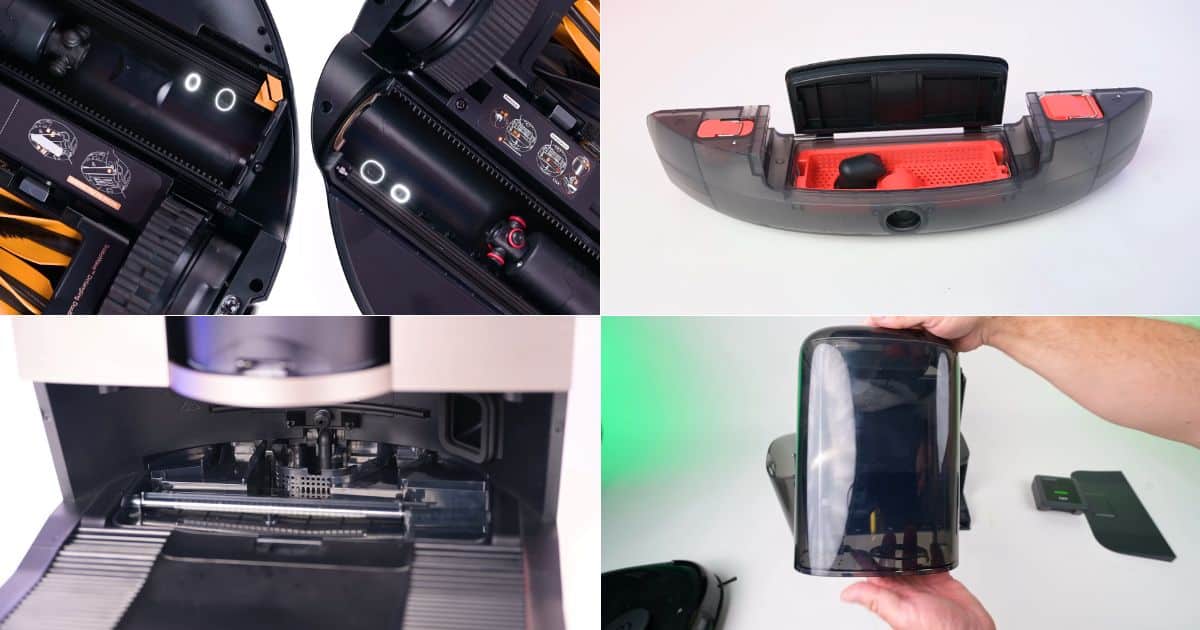
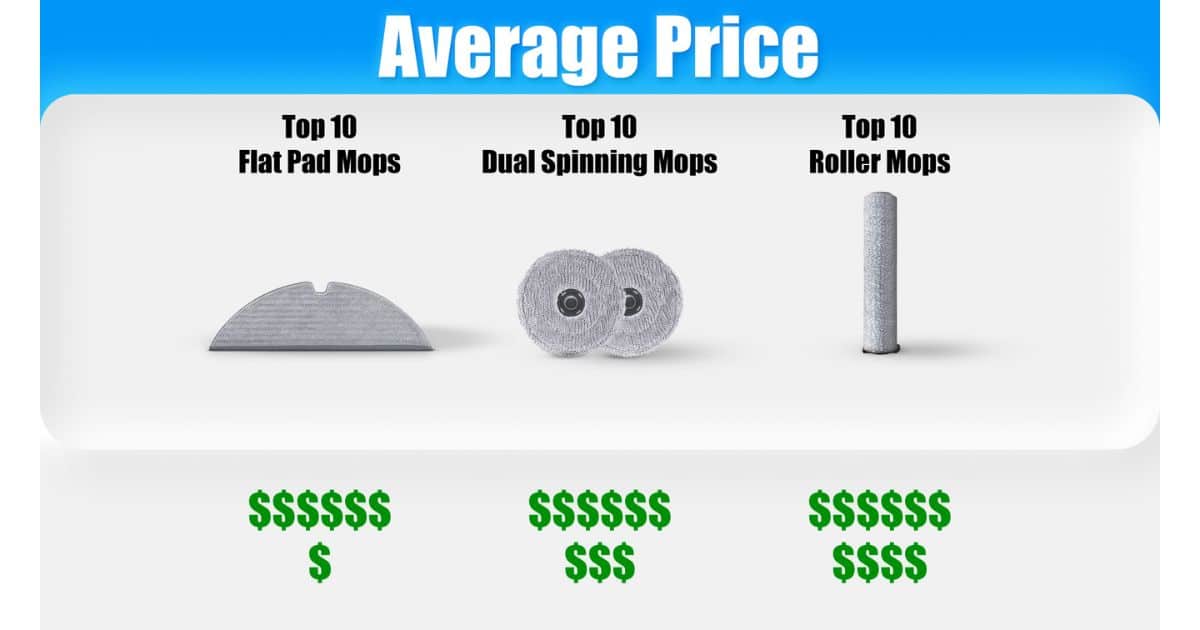
Additionally, roller-style robots are usually more expensive due to the added plumbing and engineering involved.
So What’s the Best Robot Vacuum Mop?
All in all, roller mop systems appear to offer the most advantages on paper. They can handle liquid spills and keep the mop surface fresher, but those benefits come with trade-offs in size, complexity, and price.
That leads to the core question we want to answer: are any of these systems actually better at their primary job of removing tough stains?
After evaluating well over 150 robot vacuum mops, we haven’t seen a clear, consistent winner based purely on mop system type. Our original stain evaluation used two dried stains (grape juice and coffee) left to dry for 24 hours. We’ve since updated that evaluation to use only coffee, which has proven more consistent and repeatable across different conditions.
For this comparison to determine the best robot vacuum mop, we hand-selected pairs of robots in which we could control variables as much as possible (e.g., water usage). We also focused on relatively recent models from the same brand to ensure differences could reasonably be attributed to the mop system rather than unrelated factors.
For example, we compared Dreame’s Aqua 10 Roller to the Dreame L40S Ultra AE, which uses dual spinning mop pads with similar water usage. In our updated stain evaluation, they scored essentially the same. This matched what we observed in earlier versions of the assessment.
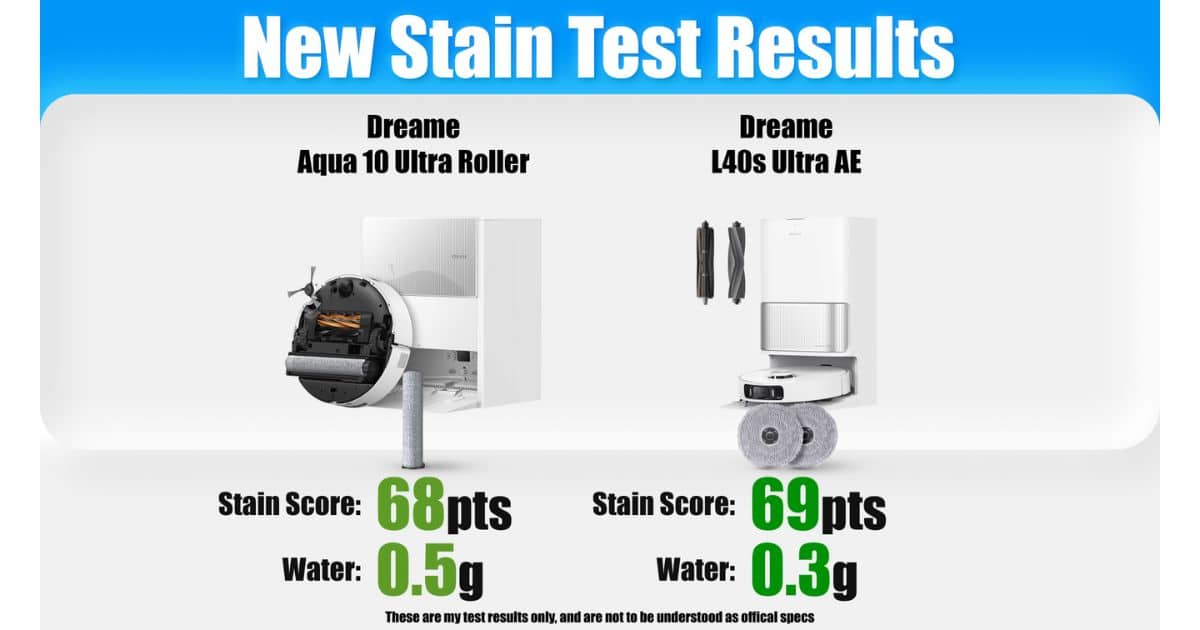
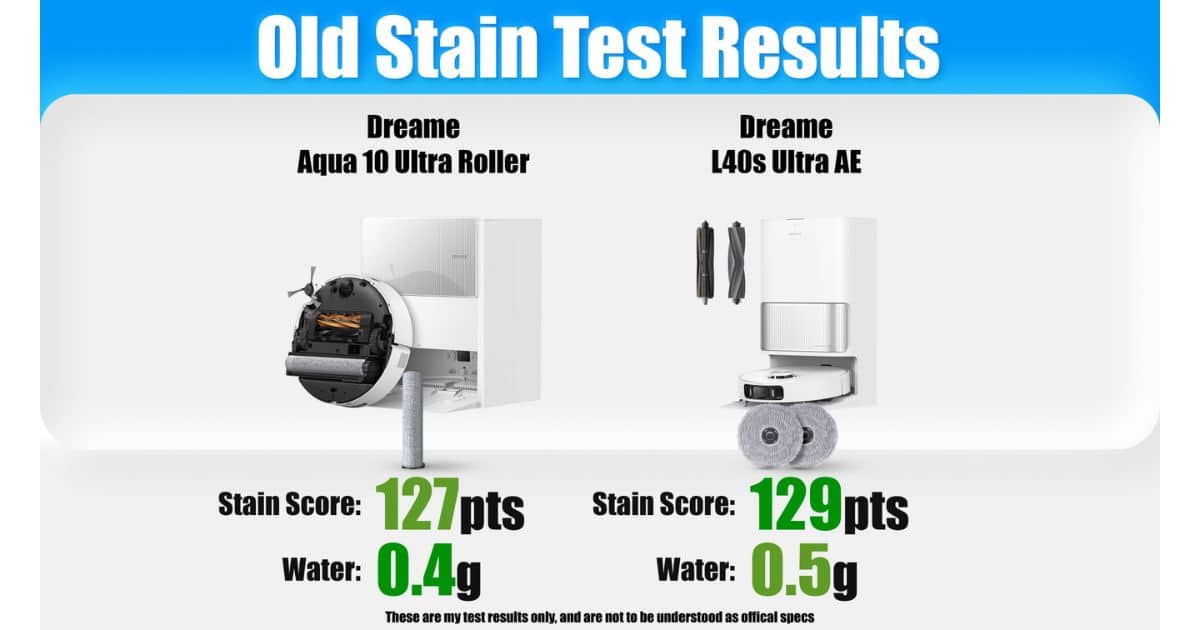
These results, along with the others you’ll see, were similar to what we observed with the previous stain evaluation. There was no significant difference in mop-stain removal performance based on the mop system used.
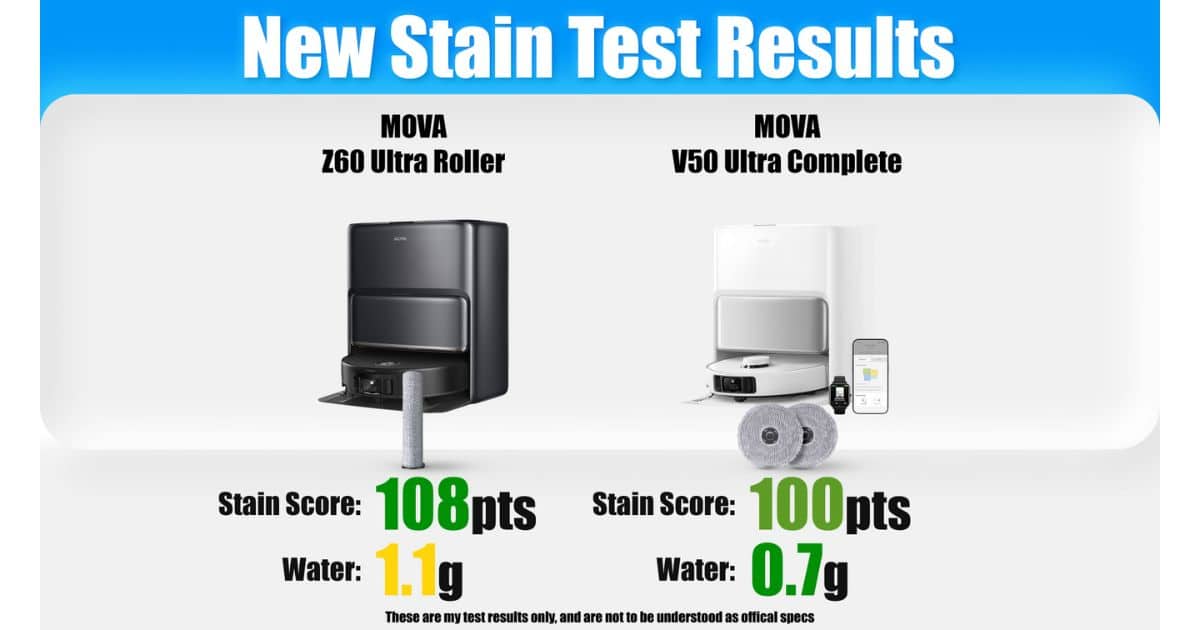
In another comparison, the MOVA Z60 Roller scored slightly higher than the MOVA V50 Ultra Complete, which uses dual spinning pads, but in practical terms, their stain removal performance was nearly identical.
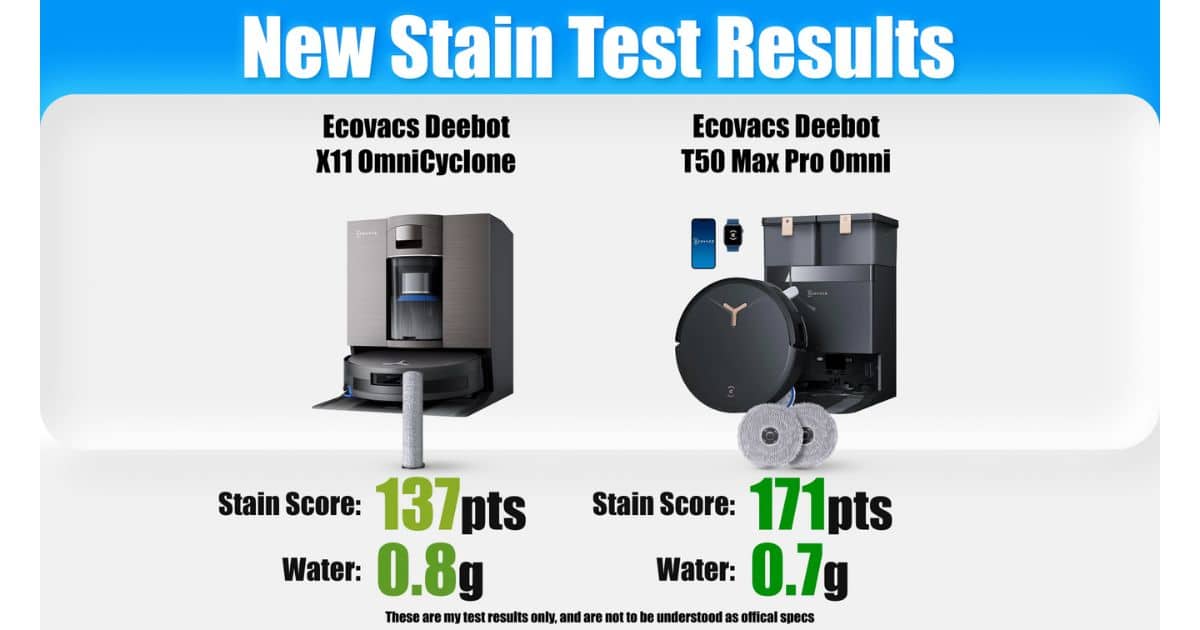
We also compared the Ecovacs T50 Max Pro Omni (dual spinning pads) with Ecovacs’ roller-based flagship, the X11 OmniCyclone. In that matchup, the dual spinning pad system performed significantly better at stain removal than the roller.
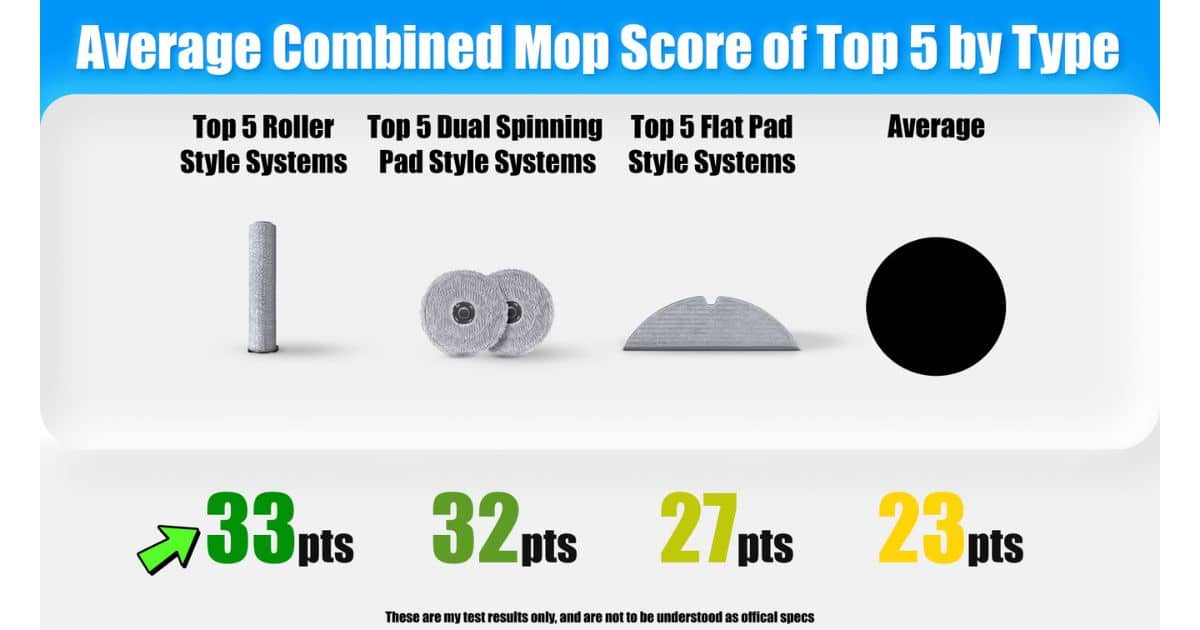
To identify the best robot vacuum mop, we examined the top five scores for each system type in our older stain evaluation dataset, since it has more data. Roller mops and spinning pad systems are nearly tied, averaging 33 points and 32 points. Flat pad systems lag behind with an average score of 27.
Final Thoughts: Choosing the Best Robot Vacuum Mop
The takeaway is that the best stain removal results usually come from well-designed robots overall, regardless of whether they use spinning mop pads or rollers. We also don’t see downward pressure as a decisive factor. Some robots that claim high pressure perform average in our evaluations, while others with modest claims perform exceptionally well.
If you’re shopping and trying to decide which is the best robot vacuum mop style, here’s how you can think about it.
- Roller Systems: Offers meaningful advantages. They keep the mop surface fresher and can handle moderate liquid messes, but they come with a higher cost and complexity.
- Dual Spinning Pad Systems: These are the best middle ground for most households. They’re effective on dried stains, handle everyday maintenance well, self-clean at the dock, and avoid excessive mechanical complexity.
- Single Flat Pad Systems: Designed for affordability and simplicity, but their docks can be surprisingly complex. They don’t wash pads as effectively and tend to perform the worst at stain removal.
There are also track pad mop systems. They weren’t covered here, but are generally more similar to roller systems in how they function. For up-to-date recommendations, check out our Top 20 Best Robot Vacuums, which we update regularly as new models are evaluated.
Frequently Asked Questions
Which robot vacuum mop system is the best overall?
Based on Vacuum Wars testing of more than 150 robot vacuum mops, there is no clear, consistent winner for tough-stain removal based solely on mop system type. In general, roller systems offer the most advantages on paper; dual spinning pad systems are often the best middle ground for most people; single flat pad systems tend to be the most affordable but perform the worst in stain removal on average.
What are the main types of robot vacuum mopping systems?
The three main types are single flat pad systems, dual spinning mop pad systems, and single roller-style systems.
Are flat pad robot vacuum mops missing modern features?
Not necessarily. Some flat pad models still include modern features such as automatic mop lifting when carpet is detected, which helps prevent carpets from getting wet.
Are flat pad and dual spinning pad systems good for wet spills?
No. Flat pad and dual spinning pad systems don’t physically separate and store dirty water. If they encounter a large wet spill, the pads can become saturated and then spread liquid around. These systems are mostly intended for dried-on stains rather than wet spills.
Why do dual spinning pads usually scrub better than flat pads?
Dual spinning pads rotate continuously at high RPMs, which generally provides stronger scrubbing action on stains than a stationary flat pad.
Why do roller-style robot vacuum mops handle liquids better?
Roller systems apply fresh water to the roller and then use an internal squeegee or scraper to squeeze dirty water out of the roller into an onboard dirty water tank. This allows the robot to extract dirty water rather than just distributing it.
Do roller-style systems keep the mop surface cleaner during a run?
Yes. Because clean water is continuously applied and dirty water is continuously removed and collected, roller systems tend to keep the mop surface fresher during the cleaning run.
Does downward pressure determine robot mop performance?
No. Vacuum Wars evaluations have shown that downward pressure claims alone do not reliably predict stain removal performance.