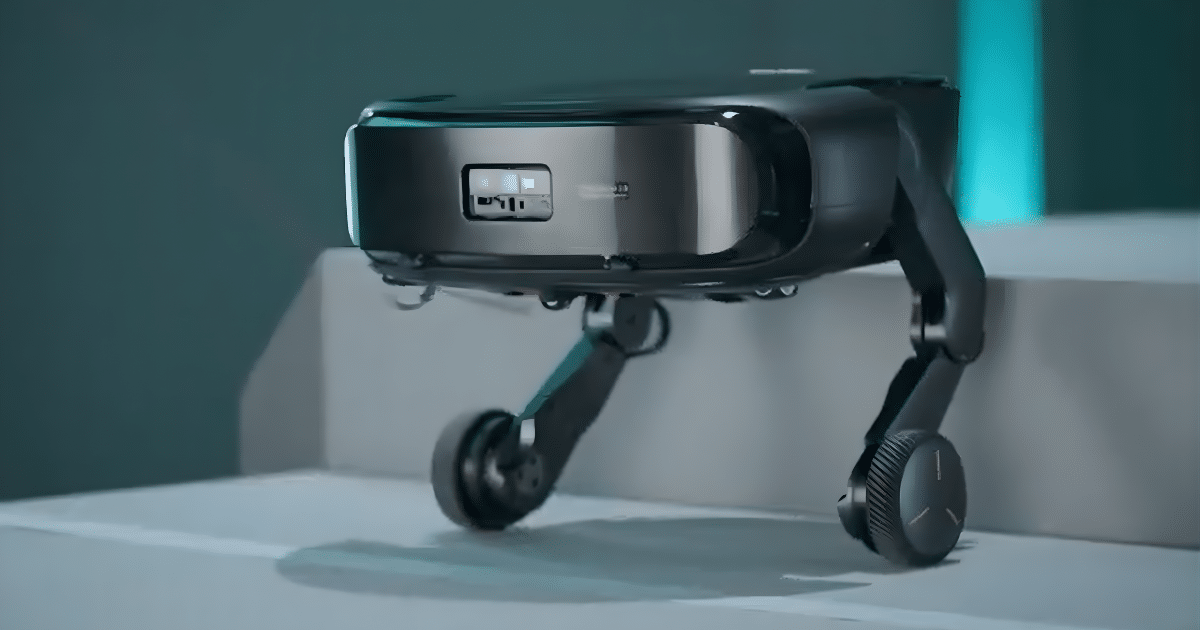
At CES 2026, Roborock has introduced the Roborock Saros Rover, a robot vacuum currently in development that the company says features the world’s first robot vacuum with stair-climbing legs. Roborock positions the Saros Rover as a solution for multi-level homes, reducing “no-go zones” by allowing the robot to transition into areas that have been normally unreachable by robot vacuums.
2025: The First Steps Toward More Interactive Robot Vacuums
CES 2025 was the year the robot vacuum category grew arms, with Roborock’s Saros Z70 becoming one of the most talked-about launches thanks to its mechanical OmniGrip arm designed to move small obstacles out of the way. IFA 2025 introduced promising stair-climbing innovations, with Dreame, MOVA, and Eufy each offering a possible solution in the form of a separate stair-climbing module to carry a robot vacuum up and down flights of stairs. These modules were large, and the designs were limited in that the robots could not clean the stairs themselves.
Roborock’s announced Saros Rover attempts to resolve both of these issues.
Don’t miss Vacuum Wars’ full CES 2026 coverage: Get expert insights, previews, and analysis of the newest robot vacuums and floorcare products unveiled at CES. Explore CES News
Roborock Saros Rover: The Robot Vacuum With Wheel-Legs
What Roborock Says the Saros Rover Is
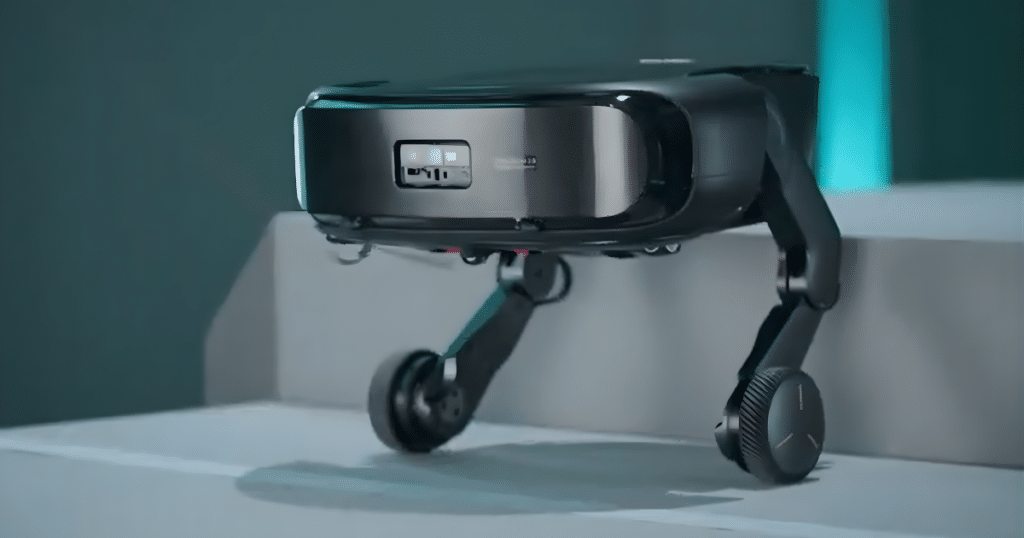
According to Roborock, the Saros Rover is built around a legs-with-wheels architecture, where each wheel is paired with a leg-like mechanism that can each deploy independently, keeping the robot body level on uneven surfaces, slopes, and stairs.
Roborock positions the Saros Rover as a solution for multi-level homes because, as the company states, it can reduce “no-go zones” by allowing the robot to transition into areas that are normally unreachable by robot vacuums.
Roborock says this design allows the robot to:
- raise and lower each wheel-leg independently
- maintain a level body as the ground changes
- execute agile turns and sudden stops
- change direction
- and even perform small jumps
Roborock describes each wheel-leg as providing reach, lift, and height, and says the motion is intended to imitate human mobility.
AI Navigation and 3D Spatial Awareness for Wheel-Leg Mobility
We do not know yet what type of sensor or intelligence technology is behind the Rover’s abilities. Roborock says the Saros Rover uses AI algorithms paired with motion sensors and 3D spatial information to understand its environment and react with precision.
Best Robot Vacuums – Vacuum Wars’ always up-to-date rankings of the best robot vacuums. Whether you call it a robot vacuum, a robotic hoover, or an automatic vacuum cleaner, our top picks will help you find the perfect cleaning companion for your home!
Can the Roborock Saros Rover Climb Stairs and Clean Multiple Floors?
The Saros Rover: A Stair-Climbing Robot Vacuum That Cleans Every Step
Roborock’s boldest claim is also the one that would represent the biggest breakthrough if it holds up in real-world use: the Saros Rover can clean each step of a staircase as it climbs. This is where Roborock breaks rank with the other stair-climbing solutions we saw featured at IFA 2025, as Roborock is the first brand to propose a solution for cleaning the stairs themselves.
Roborock says it will navigate not only traditional staircases, but also:
- curved staircases
- carpeted stairs with bullnose fronts
- slopes
- and complex multi-level room thresholds requiring extra height and power
In other words, it’s not being pitched as a robot that merely climbs, but one that maintains its cleaning role while navigating surfaces normally treated as obstacles.
What the Roborock Saros Rover Demos Show: Stair Climbing, Balancing, and Jumping
Beyond Roborock’s written claims, the most interesting part of this story is what you can see in the demonstrations, where it moves with fascinating agility.
Saros Rover Stair Climbing in the Demos
The Saros Rover navigates stairs with two legs that lift the body of the robot to be level with the stairs, then rolls forward to settle the robot on the next stairstep before folding the legs back beside the body. In the demos, it does this with an impressive amount of dexterity.
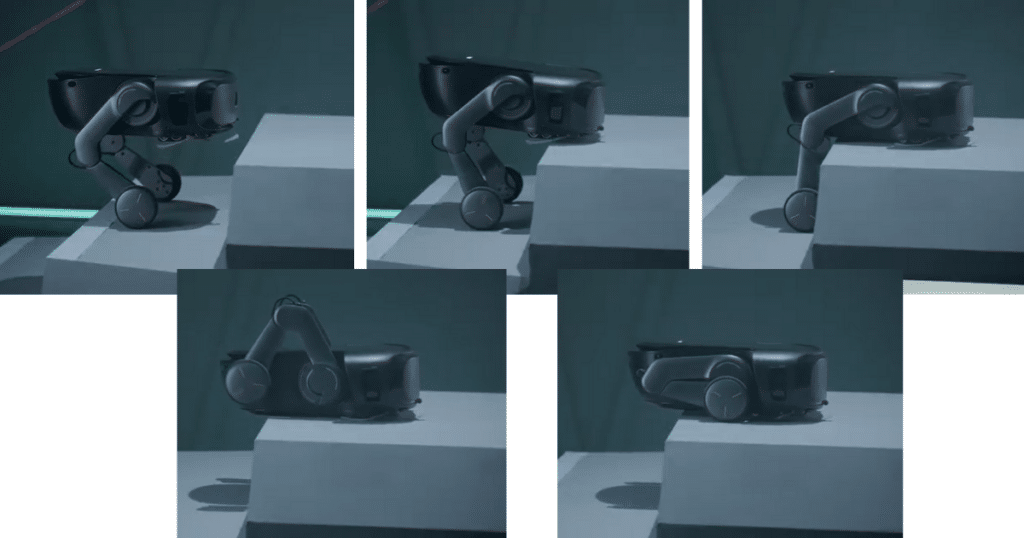
If that behavior translates into real homes, it would represent something the category has never truly had: a robot vacuum that treats stairs as part of the environment it can clean.
Balancing and Body-Leveling on Uneven Surfaces
Another striking behavior is the way the robot appears to keep its body relatively level even as the surface changes underneath it. Roborock claims the wheel-legs can raise and lower independently to maintain stability, and in demonstrations, the robot performed this extremely well.
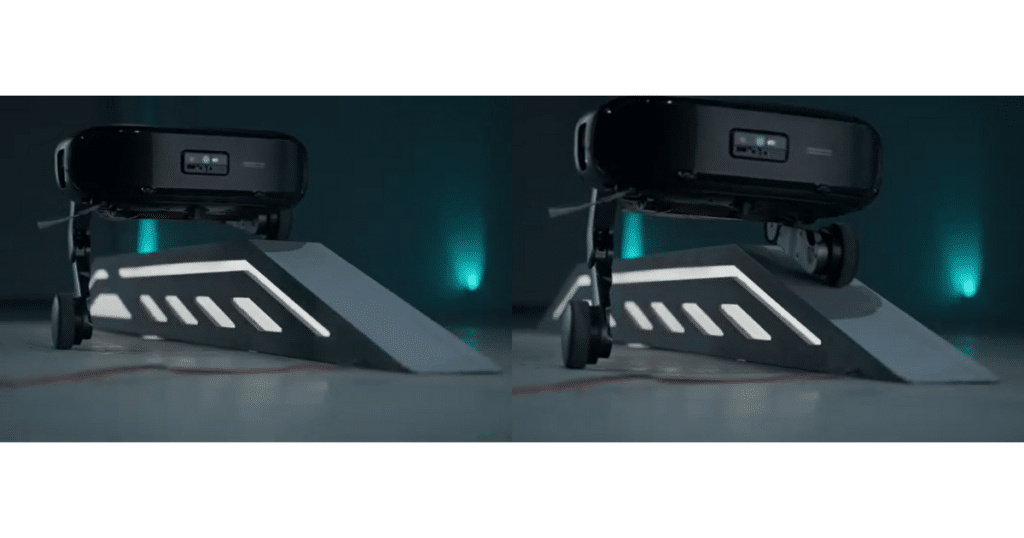
That matters because, for robots, balancing in motion is what makes multi-surface navigation plausible for a product that still needs to be reliable and to move safely inside a home without colliding or falling.
Small Jumps and Obstacle Crossing in Motion
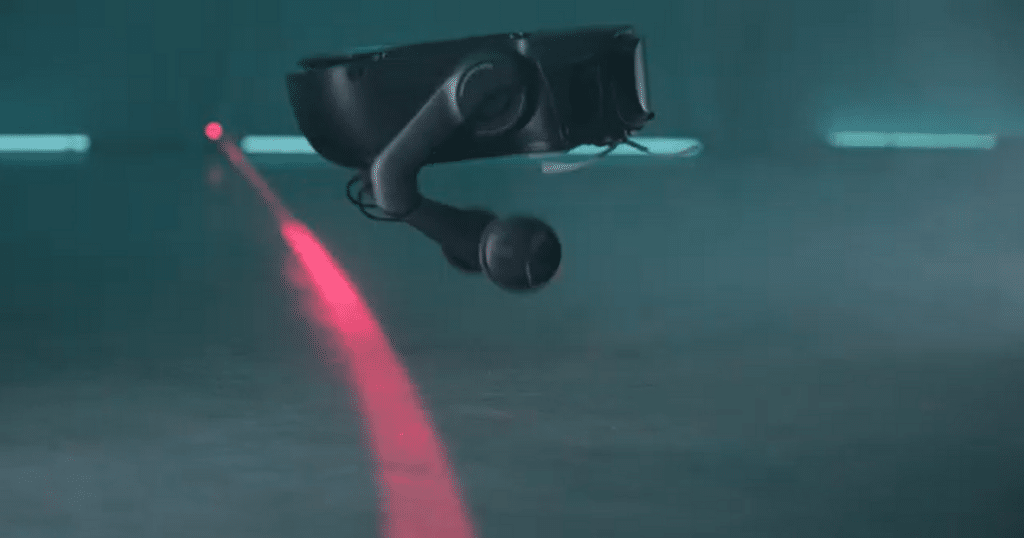
Roborock also claims the robot can execute “small jumps,” with one demo showing it jump over laser obstacles with a brief and extremely agile leaping movement. It also appears to handle abrupt stops and quick directional adjustments—movement that looks more like robotic mobility than typical robot vacuum driving behavior.
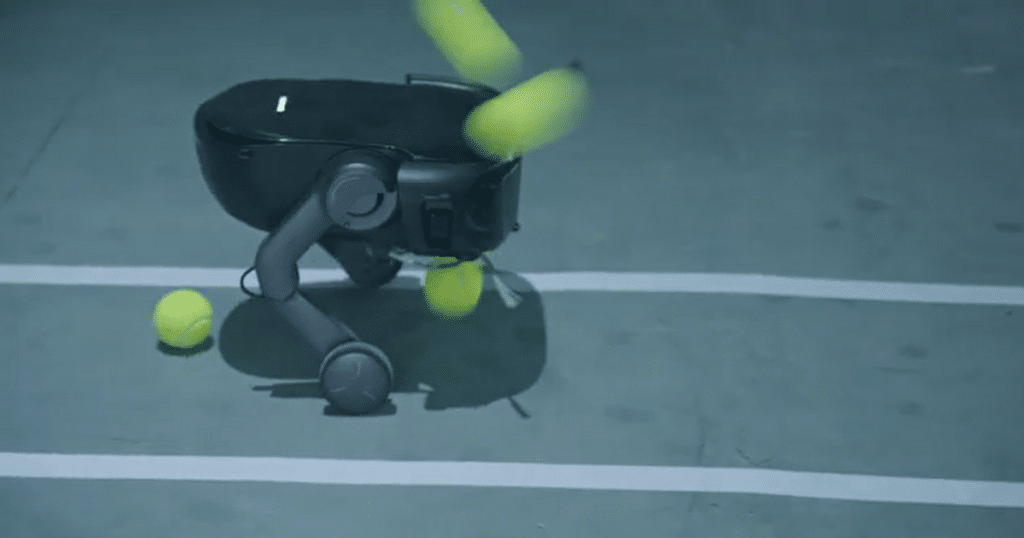
It negotiated moving hazards and projectiles when testers threw tennis balls at it, demonstrating something bigger than novelty: the movement enables environmental reactions as well as mobility and access. Robots have been getting better at recognizing clutter for years; Rover suggests the next frontier might be how robots physically respond to dynamic environments.
Roborock Saros Rover Release Date: What We Still Don’t Know
Roborock emphasizes that the Saros Rover is a real product in development, but also notes the launch date is unconfirmed. In fact, there are many things we still don’t know about what to expect from this product.
Key Questions About Real-World Stair-Climbing Robot Vacuums
Safety: How well does it prevent falls or mishaps on stairs?
Battery life: How much power does stair climbing cost?
Durability: How do wheel-leg mechanisms hold up after hundreds of cycles?
Real-world variety: What are the limits in homes with wildly different stair shapes, surfaces, clutter, and lighting conditions?
Bottom Line: Is Roborock Saros Rover the First Real Stair-Climbing Robot Vacuum?
Robot vacuums with arms are exciting because they can deal with floor clutter, which can be one of the biggest annoyances of running a robovac. Roborock’s Saros Z70 arm made CES 2025 headlines with its ability to move small items like socks and tissues out of the way. But while arms help robots clean through clutter, legs could solve the bigger limitation of where robot vacuums can get to in the first place.
In a world where many homes are multi-level, and where thresholds and uneven flooring still stop robots regularly, this could be a major shift in what consumers expect from future flagship models. A robotic arm is a quality-of-life upgrade, but legs could be a category shift. If the mobility Roborock is showing in demos proves reliable in consumer homes, it would represent one of the biggest leaps the category has seen since robot mopping went mainstream.
Read the press release on the Roborock website here.

Roborock Robot Vacuum Buyer’s Guide 2025
If you’re overwhelmed by Roborock’s sprawling lineup, you’re not alone. This guide distills the key differences among each series—Q, S, Qrevo, and Saros—so you can decide which features are worth paying extra for and which you can skip. From budget-friendly models to premium robots with cutting-edge capabilities, we’ll help you focus on the must-know points and find a Roborock that fits both your home and your wallet. See the Guide