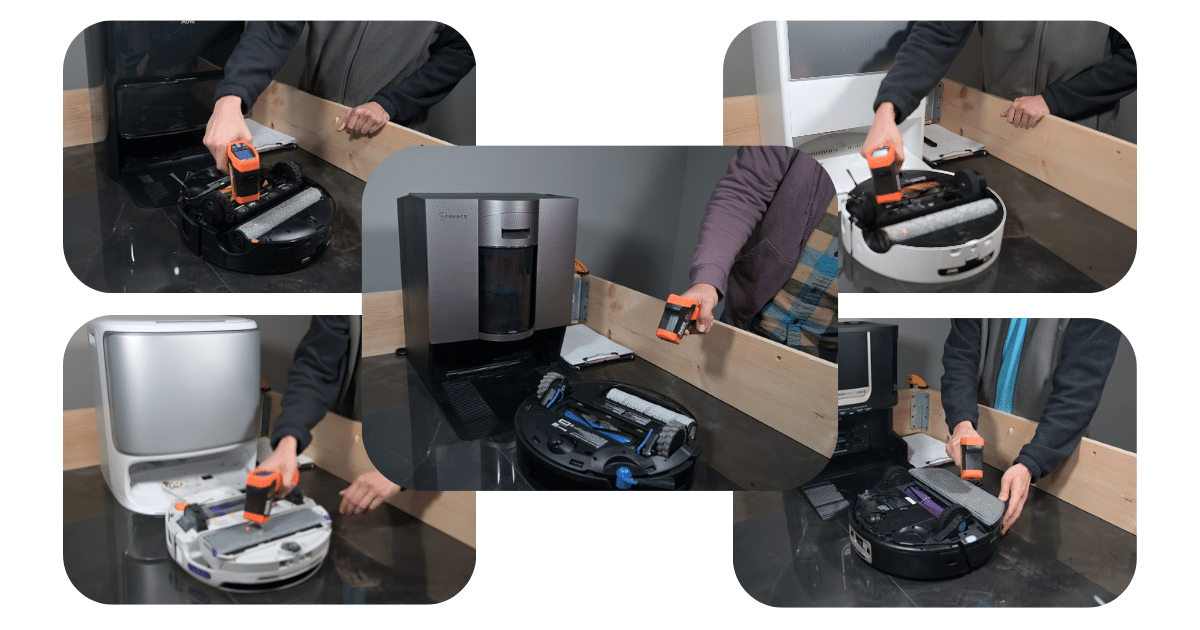
Modern robot vacuums are evolving quickly, and one of the most notable areas of innovation is in their mop-washing docks. As brands compete to improve cleaning efficiency, many are advertising hotter water temperatures for washing mop pads — sometimes even claiming near-boiling levels. But how hot do these docks really get in real-world use?
To find out, we conducted a series of independent robot vacuum dock temperature tests to see how actual performance compares to manufacturer claims and determine which dock truly reaches the hottest water temperatures.
TLDR: Roborock Saros Z70
The Roborock Saros Z70 measured the hottest water temperatures in our evaluations.
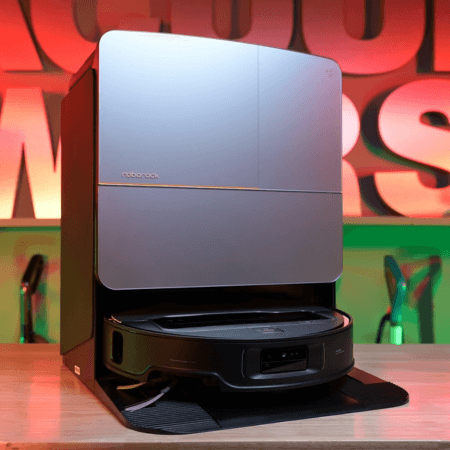
Roborock Saros Z70
Vacuum Wars Stars 3.17
The Roborock Saros Z70 earned our Most Innovative award for Mid-2025 thanks to its groundbreaking OmniGrip mechanical arm—the first of its kind to autonomously stow small objects into a user-defined compartment—alongside industry-leading mopping performance, near-flawless 3D Time-of-Flight obstacle avoidance, and a multifunction dock that washes, dries, and dispenses detergent for its mop pads. It also features ultra-quiet cleaning mode with noise levels as low as 50 dB, precision edge-cleaning brushes for skirting boards, customizable multi-floor mapping with auto-switch profiles, an extended 6,400 mAh battery delivering up to 300 minutes of runtime, and an AI-powered app that offers real-time cleaning reports and self-updating firmware. While its five-axis arm worked only about half the time in our tests, no other robot this year has pushed the boundaries of home robotics quite like the Z70. See additional info
Why Dock Temperature Matters
The Role of Water Temperature in Mop Pad Cleaning
In the earlier generations of mop-washing docks, the water used for cleaning mop pads was typically at ambient room temperature. The pads would be rinsed and scrubbed using paddles or squeegees, then either air-dried or dried with room-temperature air blown over them.
This approach is still common in many mid-range and lower-mid-range robot vacuums that feature multi-functional docks.
Best Robot Vacuums $300 to $600 – Vacuum Wars’ always up-to-date rankings of the best robot vacuums you can buy for less than $600. Whether you call it a robot vacuum, robotic hoover, or automatic vacuum cleaner, these models deliver impressive cleaning power, smart features, and great value—helping you find the perfect affordable cleaning companion for your home.
How Heated Docks Improve Cleaning Efficiency
However, as technology advanced, high-mid and premium robot vacuums began introducing warmed water and heated air to speed up cleaning and drying. Using warmer water helps reduce bacteria growth and prevents unpleasant odors from developing in the mop pads.
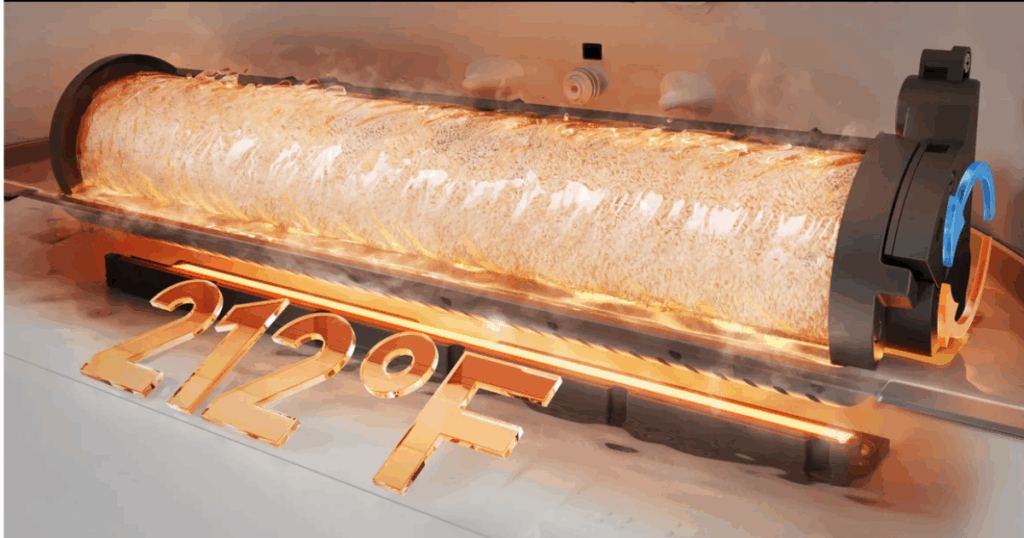
Warm water is also more effective at breaking down sticky messes, so the introduction of heated mop-washing was a logical step forward. As competition grew, manufacturers began touting increasingly high mop-washing water temperature claims — with some, like the Dreame Aqua10 Roller (see our review), even claiming boiling temperatures.
Heated Mop Docks vs. Heated Mopping Water
What’s the Difference Between Dock Water and Mopping Water?
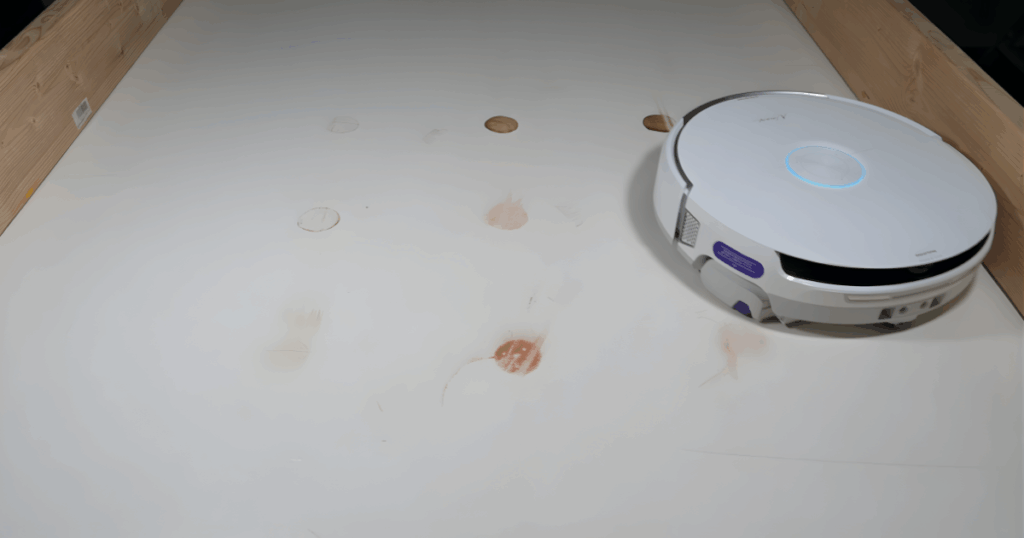
To clarify, these tests refer specifically to the water used to wash mop pads between cleaning sessions, not the water used while mopping floors.
A few newer models, such as the Narwal Flow (see our review), have started to incorporate systems that heat mopping water directly, but this feature is still relatively rare. Our testing focused solely on dock temperatures during mop cleaning cycles.
How We Tested Mop-Washing Dock Temperatures
Our Testing Process and Methodology
To get accurate, comparable data, we compiled the officially stated mop-washing temperatures from major robot vacuum brands, focusing on the model within each brand’s lineup that had the highest claimed temperature.
These official high-temperature ratings ranged from the Ecovacs X11 (see our review) at 167°F (75°C) to the Dreame Aqua10 at a claimed 212°F (100°C).
| Brand / Model | Official Mop-Washing Temperature |
|---|---|
| Dreame Aqua10 Roller | 212°F |
| Shark PowerDetect ThermaCharge | 185°F |
| Roborock Saros Z70 | 176°F |
| Narwal Flow | 176°F |
| MOVA Z60 Ultra | 176°F |
| Ecovacs X11 | 167°F |
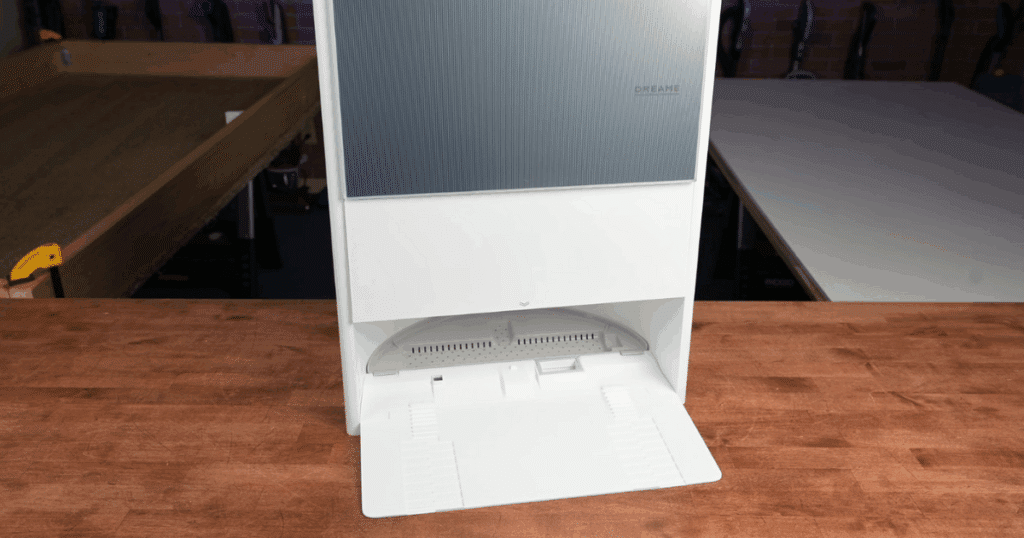
Manufacturer’s disclaim that the ambient temperature can affect the dock’s heating. For reference, we keep our testing area between 67-70 degrees Fahrenheit. This is the reading at the thermostat, and it can vary in different parts of the studio (the same way it would in a private home.)
For each dock, we ran multiple temperature tests using a laser thermometer. We took three readings immediately after each mop-washing cycle, and the process was repeated twice for consistency. Also, we performed a third test by interrupting the wash cycle mid-clean to measure the temperature of the active wash water before it drained.
All readings were adjusted by a 7.1°F calibration offset to ensure accuracy.
At Vacuum Wars, we purchase every hard floor cleaner ourselves and conduct our reviews without any sponsorships or brand influence—making our results some of the most trusted and unbiased in the industry.
The Results: Which Robot Vacuum Dock Got the Hottest?
Top Performers in Real-World Temperature Tests
After averaging and adjusting the readings, the Roborock Saros Z70 (see our review) recorded the highest actual temperature at 114.1°F in our tests, even though it didn’t have the highest official temperature claim.
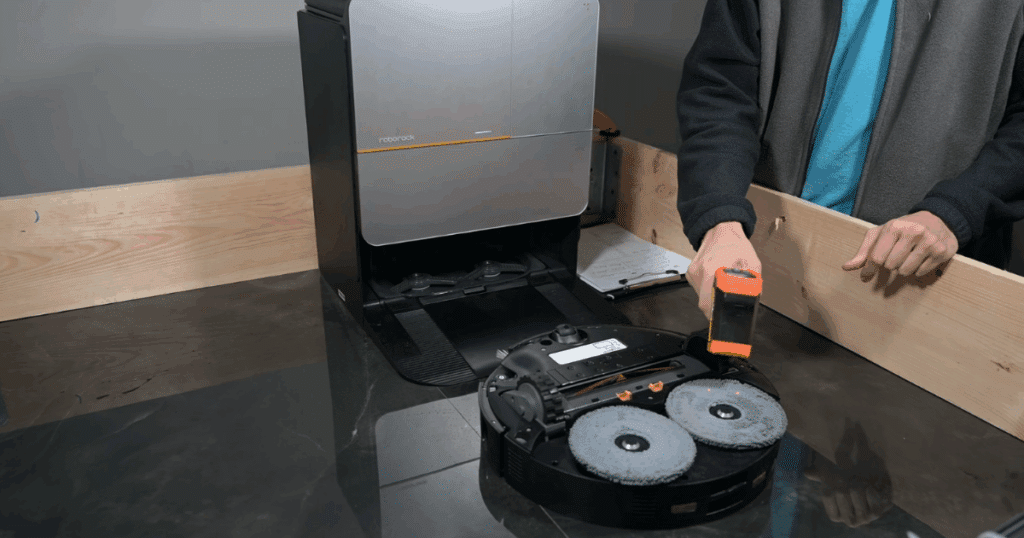
The Ecovacs X11, which had the lowest official temperature rating, achieved the second-highest measured result at 113.1°F. Surprisingly, the Dreame Aqua10, which claims the highest temperature at 212°F, came in third, tying with the Shark PowerDetect ThermaCharged at 111.1°F
Finally, the Mova Z60 Ultra trailed significantly behind the others at 83.1°F, despite having the same official temperature as the Roborock.
How the Results Compare Across Brands
With the exception of the Mova, most of the docks reached real-world temperatures within just a few degrees of one another, even though their official specs varied widely — a finding that highlights the gap between marketing and performance.
| Brand / Model (Amazon Links) | Measured Temperature (°F) |
|---|---|
| Roborock Saros Z70 | 114.1°F |
| Ecovacs X11 OmniCyclone | 113.1°F |
| Shark PowerDetect ThermaCharged | 111.1°F |
| Dreame Aqua10 Roller | 111.1°F |
| Narwal Flow | 101.1°F |
| MOVA Z60 Ultra | 83.1°F |
These are Amazon links. If you make a purchase, we may earn a commission at no charge to you.
What These Results Mean for Consumers
Our robot vacuum dock temperature testing reinforces a key takeaway: official specifications don’t always reflect real-world performance.
Because dock temperature claims are increasingly being used as a major selling point, we plan to make this test a standard part of future Vacuum Wars reviews. If brands are going to promote their products based on water temperature, consumers deserve to know what to realistically expect.
Vacuum Wars will continue updating its testing protocols to keep pace with the rapid evolution of robot vacuum technology.
Best Robot Vacuum Mops – Vacuum Wars’ always up-to-date rankings of the top robot vacuum and mop combos. Whether you’re looking for the best robot vacuum mop for hardwood floors, an intelligent robot vacuum and mop combo for carpets, or an automatic vacuum mop that saves you time, our expert-tested picks will help you find the perfect all-in-one cleaning solution for your home.
FAQs
How hot do robot vacuum mop docks actually get?
In our real-world testing, heated mop docks reached temperatures between 83.1°F and 114.1°F, even when manufacturers claimed higher numbers. Actual temperatures can vary depending on the model and test conditions.
Does hotter water make a difference when washing mop pads?
Yes. Warm or hot water helps dissolve sticky messes and grease more quickly and effectively than cold water, leading to cleaner mop pads and reduced bacterial growth.
What’s the difference between a heated mop dock and heated mopping water?
A heated mop dock warms the water used to wash mop pads between cleaning sessions. In contrast, heated mopping water systems warm the water used during floor cleaning. The latter is still rare and currently found on only a few high-end models, like the Narwal Flow.
Which robot vacuum has the hottest mop-washing dock?
In our independent temperature tests, the Roborock Saros Z70 recorded the highest actual dock temperature, outperforming models like the Dreame Aqua10 and Ecovacs X11 despite their higher official temperature claims.
Are heated mop docks worth it?
Heated mop docks help prevent odors and improve cleaning efficiency by keeping mop pads fresher between uses. However, real-world performance varies, so it’s best to look for verified testing data rather than relying solely on manufacturer claims.
Roborock Saros Z70