Home › Upright Vacuums › Top 10
Independently tested. Never sponsored
The Best Upright Vacuums of 2026
A continuously updated leaderboard of every upright vacuum we have lab tested, now more than 50 of them. We buy every unit at retail, so the ranking answers to our test data and nothing else.
Every upright vacuum runs the same suite in our lab: unsealed suction and airflow, carpet deep clean pickup, hard floor debris and crevice pickup, 7-inch and 14-inch hair tangle tests and fog-test filtration checks, plus maneuverability, lift-away function, cord length, weight and the attachments that come in the box. Scores update as models are retested.
BEST OVERALL

Shark Vertex
★ Vacuum Wars Stars · avg tested 3.22
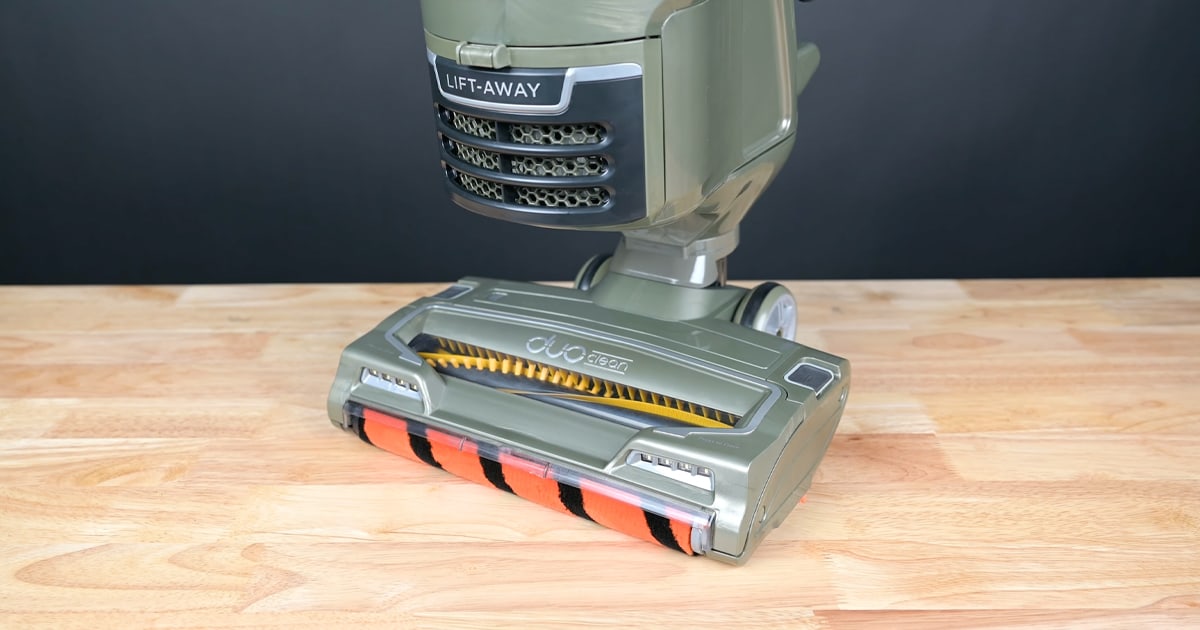
The Shark Vertex Powered Lift-Away boasts remarkable power, and its DuoClean technology handles large and fine debris on both hard floors and carpets, making it one of the most powerful vacuums we have tested.
$479.99 $299.99
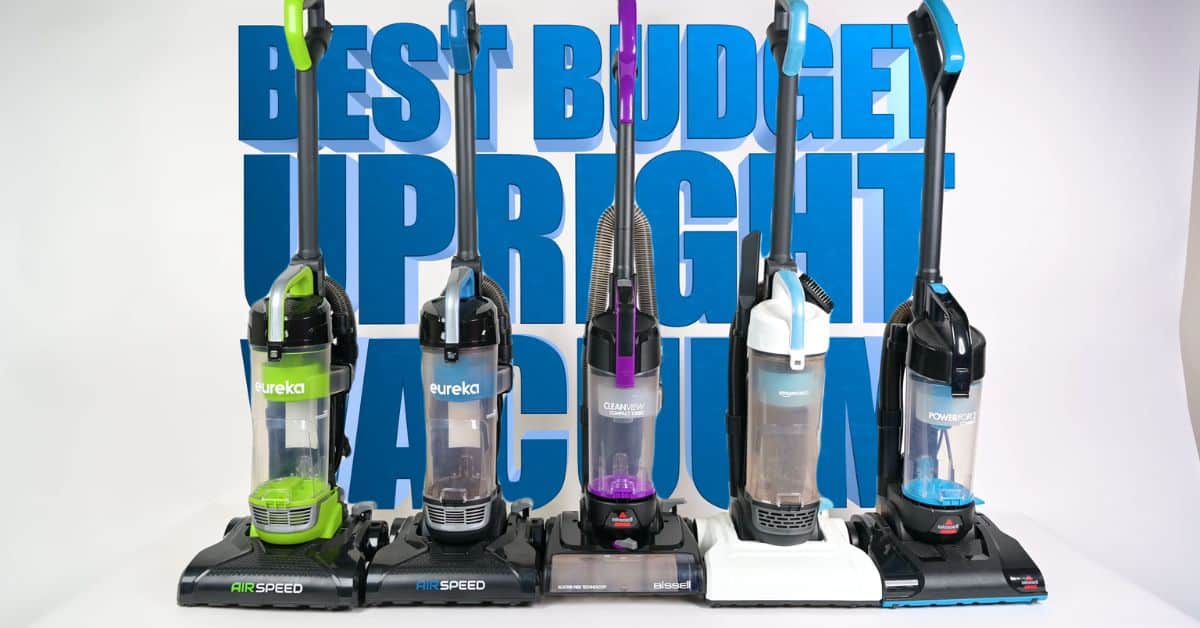
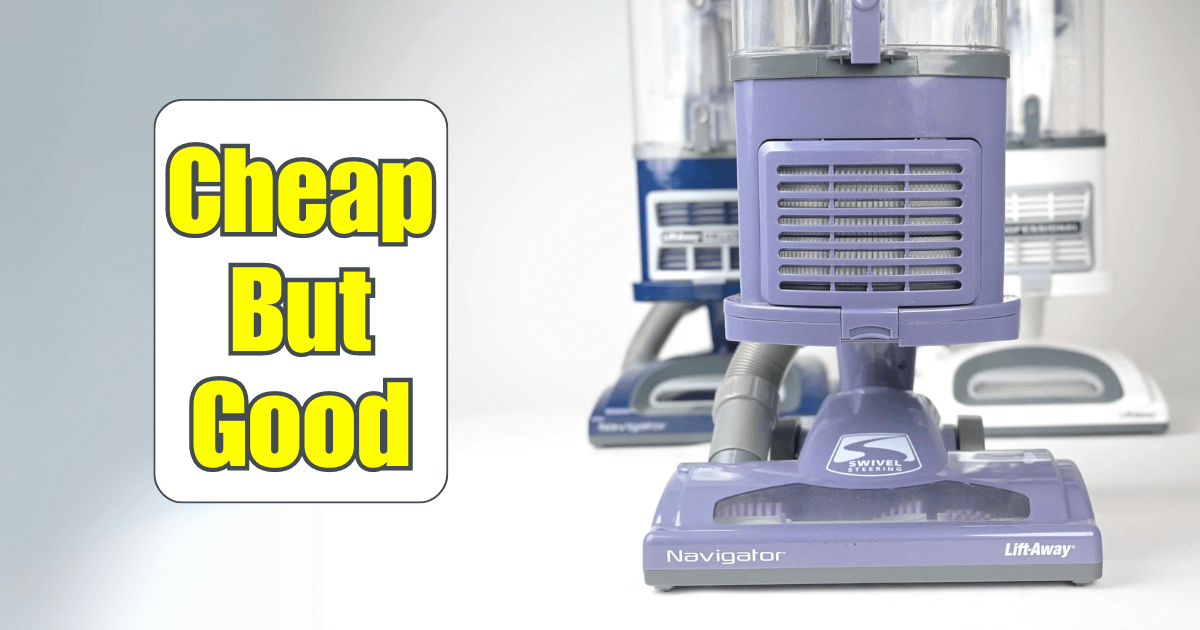
BEST BUDGET
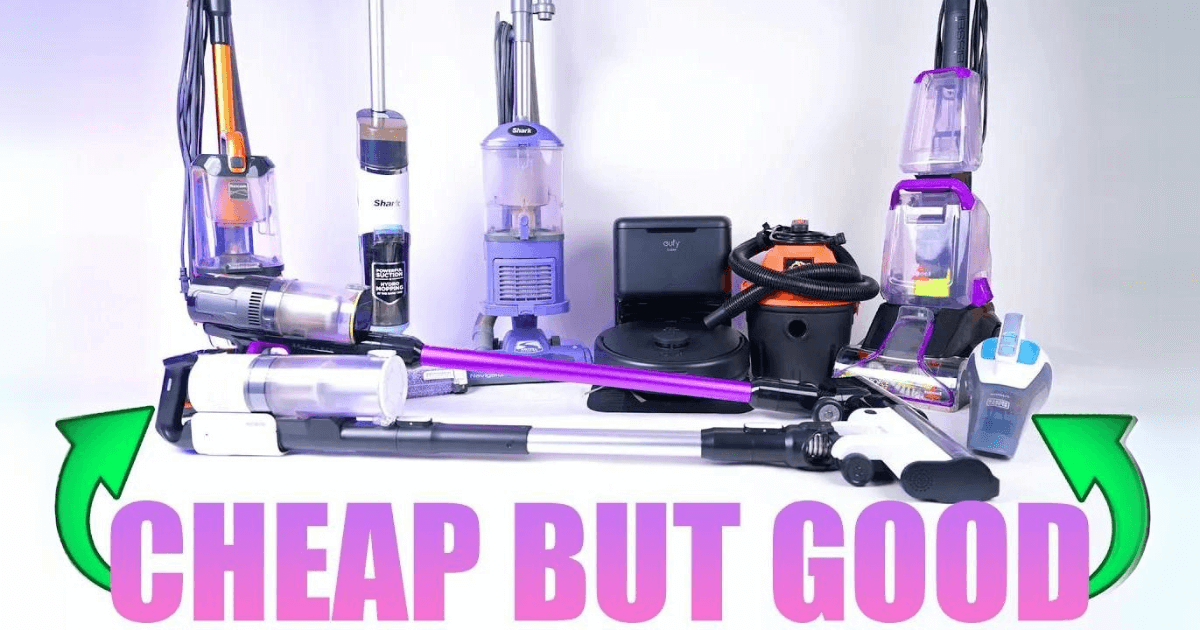
ULTRA BUDGET
The ranking
The Top 10
RankVacuumScorePrice today
Shark Vertex
Vacuum Wars Stars 4.67
We think that the Shark Vertex Powered Lift-Away is a formidable entrant in the premium vacuum market, boasting remarkable power and a range of versatile features. It showcases a significant upgrade from its predecessor with enhanced cleaning path width, dustbin capacity, and notably increased suction and airflow. The Vertex excels in debris pickup on both hard floors and carpets, thanks to its DuoClean technology which handles large and fine debris with equal prowess. Furthermore, its improved anti-hair wrap system and powered lift-away mode provide excellent versatility for under-furniture cleaning and using handheld configurations. Its performance in various tests, from crevice pickup to handling hair without tangles, underscores its capability as one of the most powerful vacuums tested. See additional info
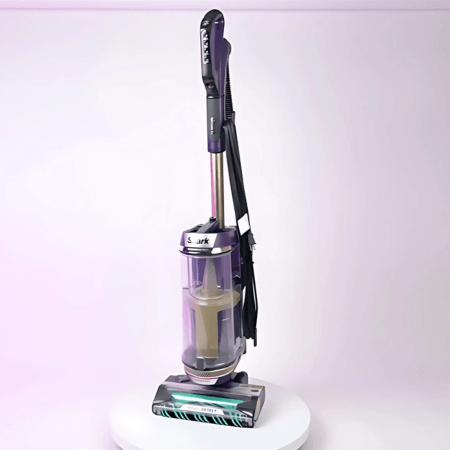
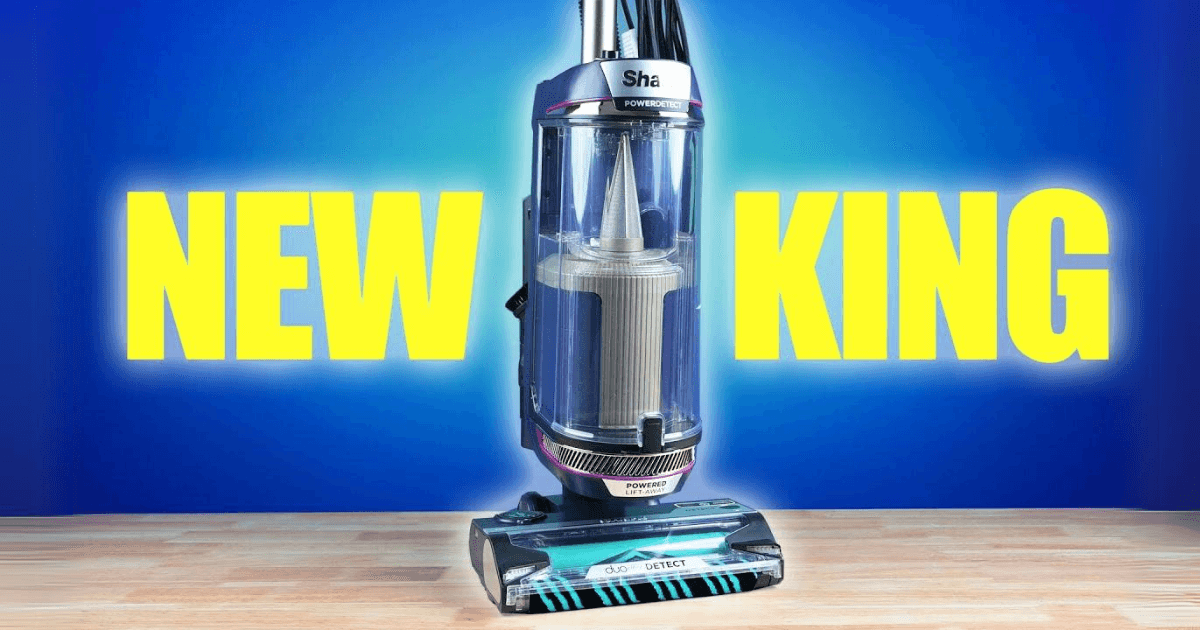
Shark PowerDetect
Vacuum Wars Stars 4.61
The Shark PowerDetect swiftly became one of our favorites among upright vacuums, blending unparalleled power with groundbreaking features. Its exceptional performance in picking up all types of debris and hair on various surfaces, coupled with innovative technologies like the DuoClean roller and Shark’s active hair removal system, solidifies its position as a top performer. The addition of ‘detect’ features—such as Floor Detect and Edge Detect—enhances its usability by automating adjustments for different cleaning scenarios, making it smarter than its predecessors. The Powered Lift-Away feature remains a standout, offering versatility in cleaning reach and method. Although it’s on the heavier side and priced at a premium, the comprehensive capabilities and ease of use presented by the Shark PowerDetect justify its position as a leader in the vacuum cleaner market. See additional info
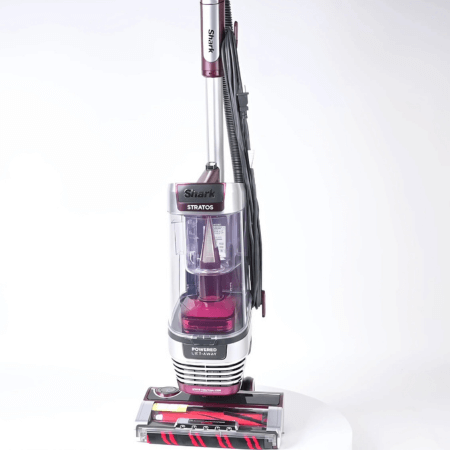
Shark Stratos Powered Lift-Away
Vacuum Wars Stars 4.59
We think that the Shark Stratos Powered Lift-Away is an exceptional performer in the premium vacuum category, boasting the strongest suction and airflow of any upright vacuum Shark has offered. Its DuoClean technology ensures top-tier performance on both carpets and hard floors, picking up everything from fine dust to large debris with ease. The new roller design enhances its carpet cleaning capabilities, making it the best Shark vacuum for deep cleaning carpets yet. It’s equipped with advanced features like active hair removal, powered lift-away for versatile cleaning, and a complete seal HEPA filtration system, which effectively traps dust and allergens. The Stratos’s power, combined with its innovative design, offers an unrivaled cleaning experience. See additional info
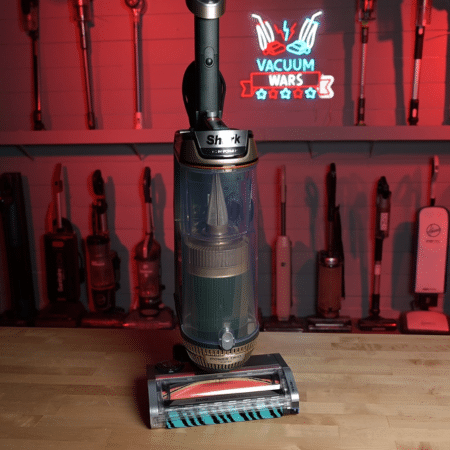
Shark PowerDetect Transformer
Vacuum Wars Stars 4.52
The Shark PowerDetect Transformer (LX5002) is Shark’s most advanced upright, converting into upright, corded stick, and handheld modes with separate motors and dustbins. It brings Floor, Edge, Dirt, and Direction Detect, Reveal LED lighting, DuoClean rollers, excellent large-debris and pet-hair pickup, strong anti-hair-wrap performance, odor neutralization, sealed HEPA filtration, and versatile power settings. Testing was outstanding: perfect pickup scores on hard floors and carpets, 100% carpet deep-clean performance, a perfect crevice score, flawless fog-test filtration, and above-average usable suction and head airflow. Stick mode is a notable compromise: its tiny dustbin fills quickly, airflow and suction were roughly one-third to over 50% lower, and deep-clean results averaged 97% versus 99% upright. See additional info
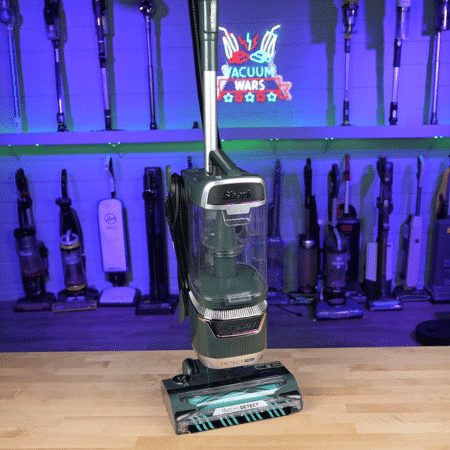
Shark Detect Pro Lift-Away ADV LA802
Vacuum Wars Stars 4.51
The Shark Detect Pro Lift-Away ADV LA802 is a corded bagless upright vacuum designed for whole-home cleaning across carpets and hard floors. It features Shark’s DuoClean Detect™ two-brushroll system that automatically senses debris and boosts suction and brushroll speed for improved pickup, while Direction Detect allows debris pickup in both forward and reverse passes. A network of sensors also enables Dirt Detect, Floor Detect, and Edge Detect functions that adjust cleaning performance based on hidden dirt, floor type, and proximity to edges. The Lift-Away ADV design lets the pod detach for portable cleaning of stairs, upholstery, and above-floor areas. The vacuum includes Anti-Allergen Complete Seal Technology with a HEPA filter to trap dust and allergens, plus LED headlights and swivel steering. See additional info
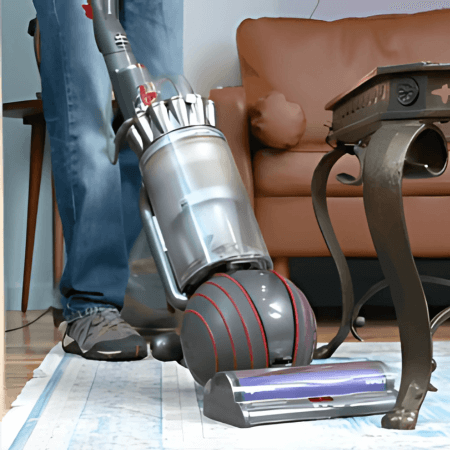
Dyson Ball Animal 3
Vacuum Wars Stars 4.24
We are impressed by the Dyson Ball Animal 3‘s performance. Particularly effective on carpeted floors, this vacuum offers strong suction and airflow, paired with an innovative brushroll design that allows you to toggle it on or off depending on the surface. The vacuum is relatively lightweight, enhancing its maneuverability for cleaning large spaces or navigating stairs. Features like the “Lift Off” capability for above-floor cleaning and the extended wand add to its versatility. Additionally, the sealed filtration system and thoughtful attachments, including a turbo brush, make it a compelling choice within its price range, especially for homes with a lot of carpeting. See additional info
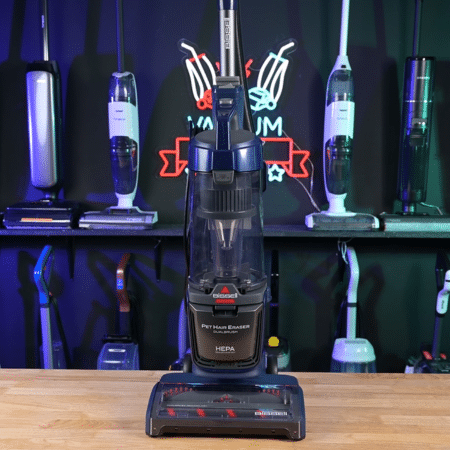
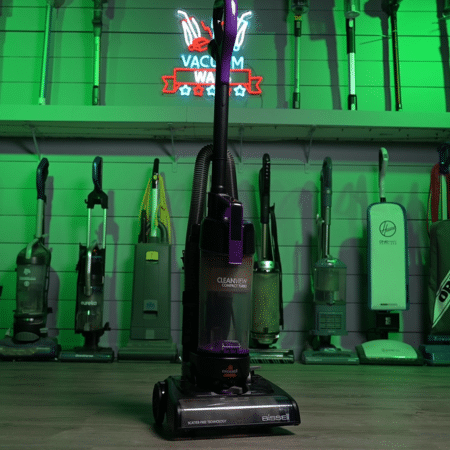
Bissell Pet Hair Eraser DualBrush
Vacuum Wars Stars 4.17
The Bissell Pet Hair Eraser DualBrush (model 42943) is a strong choice for pet owners and mixed-floor homes, offering excellent debris pickup on hard floors and carpets, impressive deep-cleaning performance, effective FurGuard anti-tangle technology, sealed HEPA filtration, bright headlights, automatic floor detection, and versatile Lift-Off cleaning. Its competitive price also adds value compared with many flagship uprights. Maintenance is straightforward. Downsides include a smaller-than-average dustbin, slightly above-average weight and noise, less-flexible above-floor tool use, and limited long-term reliability information because it is still a new product. Overall, it suits households wanting powerful pet-hair cleaning, strong filtration, and premium features without flagship pricing. See additional info
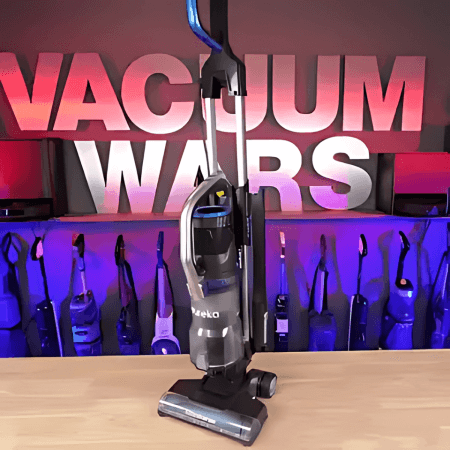
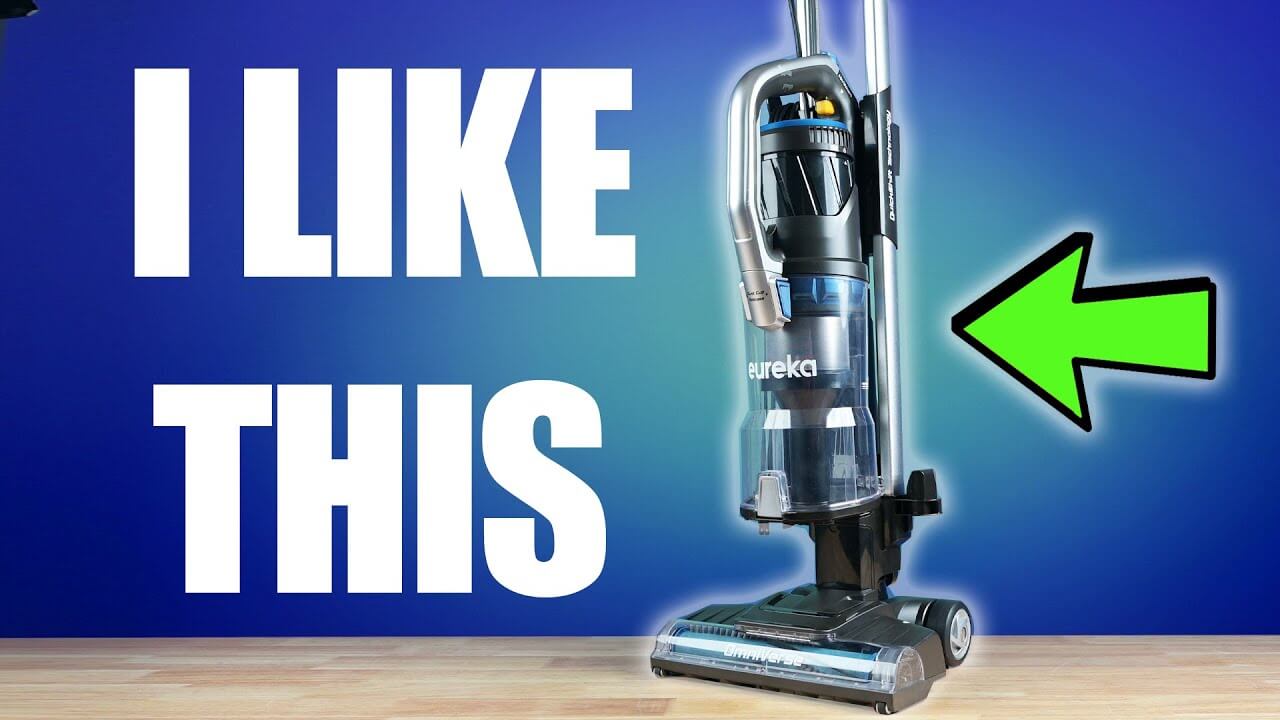
Eureka QuickShift OmniVerse
Vacuum Wars Stars 4.00
The Eureka QuickShift Omniverse excels with its superior pickup performance on both hard floors and carpets. Its lightweight, responsive swivel design enhances ease of use. The QuickShift technology allows the canister to be lifted or shifted, simplifying cleaning under furniture. The vacuum also features an anti-tangle roller that efficiently handles hair, and a sealed HEPA system that captures 99.9% of dust and dander, providing excellent filtration. This combination of features, along with its competitive pricing, makes it an exceptional value. See additional info
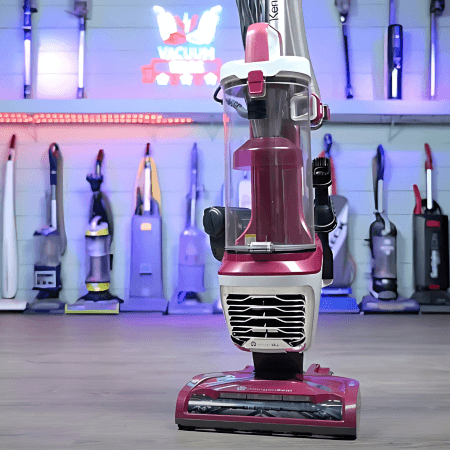
Kenmore Bagless Lift-Up
Vacuum Wars Stars 3.90
We are impressed by the Kenmore DU5092 bagless upright vacuum’s performance, particularly in debris pickup on various surfaces and its versatility due to multiple attachments. Its standout features include a hair eliminator nozzle, LED lights for spotting hidden debris, and HEPA filtration for excellent air quality. The Lift-Up design, swivel steering, 2-liter dust bin, 30-foot cord, and the included 3-in-1 combination tool and Pet HandiMate add to its everyday practicality. Despite some drawbacks in unsealed suction, it offers great value for its price, making it a reliable choice for homeowners. See additional info
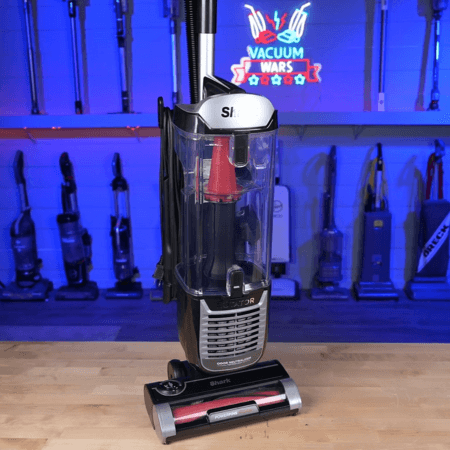
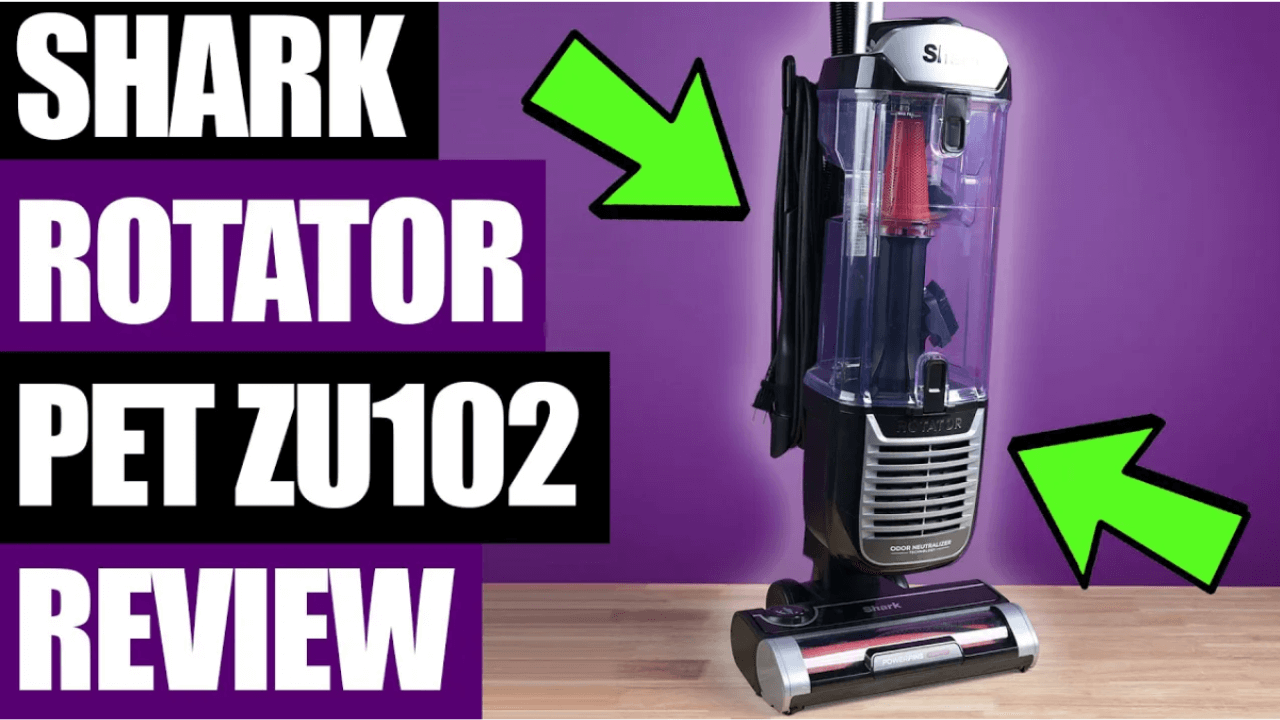
Shark Rotator Pet ZU102
Vacuum Wars Stars 3.75
The Shark Rotator Pet ZU102 is designed for both carpets and hard floors, featuring the PowerFins HairPro brushroll that grips and captures long, short, and pet hair. Its self-cleaning brushroll minimizes hair wrap, while Odor Neutralizer Technology helps reduce internal odors for a fresher-smelling vacuum. The vacuum includes a HEPA filter and Anti-Allergen Complete Seal Technology, which traps 99.99% of dust and allergens (based on ASTM F1977 for particles 0.3 microns and larger). With a 3XL dust cup, it supports extended cleaning sessions without frequent emptying. The vacuum also offers an extendable hose with up to 12 feet of reach for cleaning above-floor areas, swivel steering for easier maneuvering, and a 5-year limited warranty. See additional info
What changed in the rankingsChangelog 2.5 · updated as needed
2.5Incorporated 7-inch & 14-inch hair pickup results into overall score.
2.4Updated attachment scoring system.
2.3Changed the way the powered lift-away feature is scored.
2.2Added Ultra Budget category.
2.1Increased weight of 1-star review scores.
Browse by category
Find the right upright vacuum for your home
Every list below is drawn from the same test data as this ranking.
By need
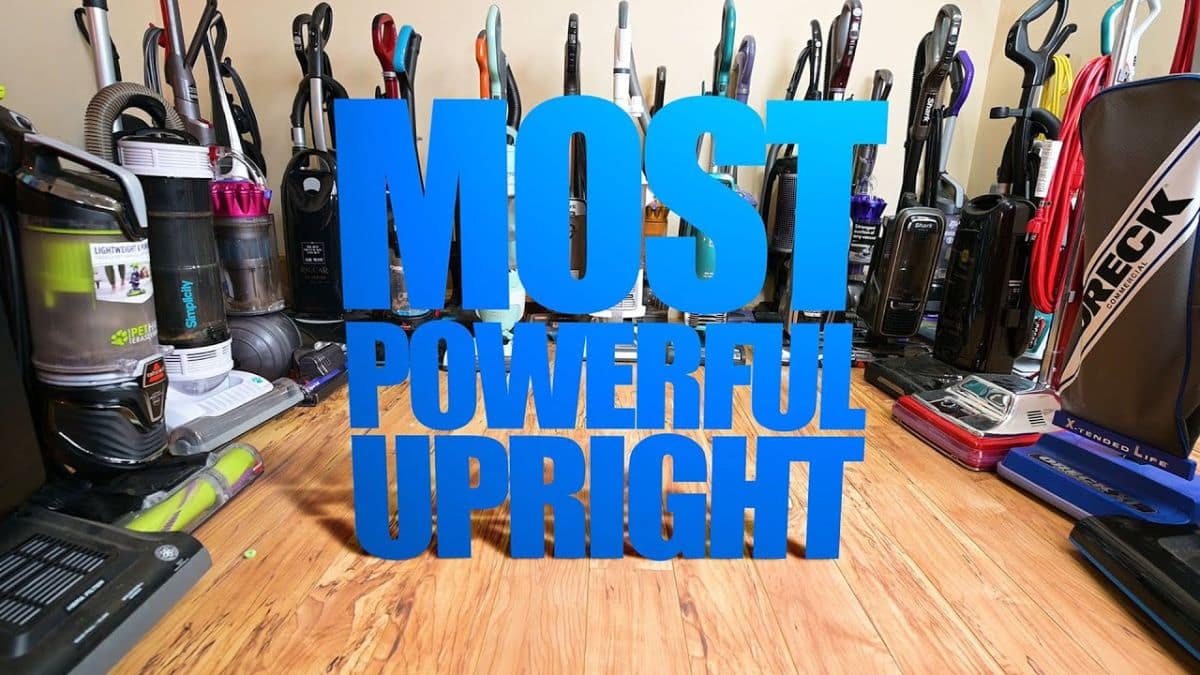
Most PowerfulRanked by power alone, from our suction and airflow tests.
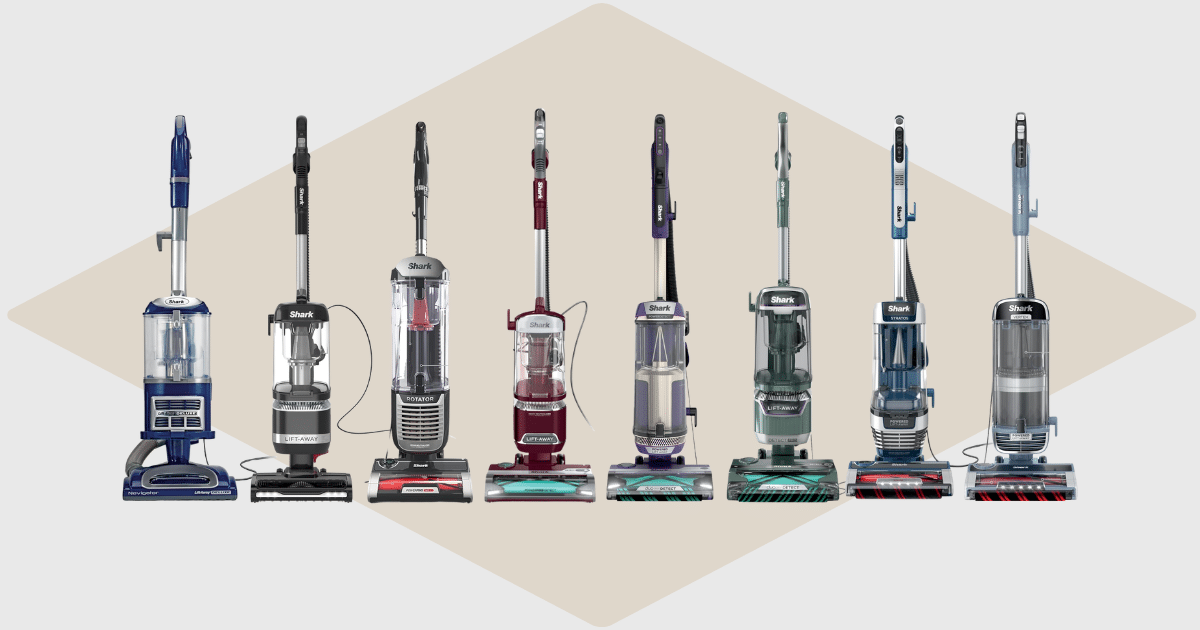
Shark ModelsEvery Shark upright we have tested, ranked.
Carpets · soonComing as we finish the carpet deep clean round.
Hard Floors · soonComing as we finish the hard floor and crevice pickup round.
Pet Hair · soonComing as we finish the pet hair and tangle round.
Lightweight · soonComing as we compare weight against cleaning power.
By price
Buying guide
How to select the best upright vacuum
Start with the key factors
Choosing a top-rated upright vacuum can feel overwhelming given the huge variety of models, features, and price points available. Upright vacuums are typically the most powerful type, known for excellent suction and deep-cleaning ability on carpets, but modern designs also incorporate convenient features for multi-surface and above-floor cleaning. Even if you don’t opt for the heaviest or most expensive model, many of today’s best uprights come with smart engineering tweaks and accessories that can significantly improve your cleaning routine. Here are some key factors and features to consider when selecting the best upright vacuum for your needs.
Suction power and carpet deep cleaning
A quality upright will generate strong airflow and use a motorized brush roll to pull out debris embedded in carpet fibers. Keep in mind, however, that raw suction specs don’t tell the whole story – the vacuum’s nozzle design and brush agitation are huge factors in real-world performance. In Vacuum Wars’ tests, even mid-tier uprights can remove nearly all embedded dirt from carpet (on average around 98% in deep-cleaning score), whereas cordless vacuums typically leave a bit more behind. If you have mostly carpets or rugs, prioritize an upright with high deep-cleaning performance and strong brushroll engagement. Many uprights also excel on hard floors with sheer power, but some models allow you to dial down suction or brush speed for delicate floors or high-pile rugs. The bottom line: for the most thorough carpet cleaning, pick a model known for top-tier suction, but also consider the floorhead design and brush quality rather than just the motor’s specs.
Floorhead design and height adjustment
Many uprights include a manual height adjustment knob or an auto-adjusting head that lets you raise or lower the brush roll to suit different floor types. Using a lower setting (or a head with very small intake gates) creates a tighter seal for better carpet suction, but it can also cause “snowplowing” – pushing around large debris on hard floors instead of sucking it up. Conversely, a higher head position or larger front opening will handle big crumbs on tile or wood easily, at the cost of some suction seal on carpet (leading to slightly weaker deep cleaning). If you have both hardwood and carpets, look for features like a brush-roll ON/OFF switch or a dedicated hard floor mode to prevent scatter on bare floors. Some high-end designs (pioneered by Shark’s DuoClean) even use dual brushrolls – a soft roller up front and a standard bristle brush – to tackle fine dust on hard floors and deep dirt in carpets in one go. Also consider adjustable height for plush carpets: a very low nozzle setting can make an upright hard to push on thick rug piles, so the ability to fine-tune or automatically adjust the floorhead ensures optimal contact on each surface without excessive effort.
Filtration and sealed HEPA systems
Many upright vacuums include a HEPA filter to capture fine particles, but equally critical is a sealed system that prevents any air leaks. Without a sealed design, even a HEPA-equipped vacuum can still leak microscopic dust back into the room. We recommend choosing an upright that advertises sealed HEPA filtration or similar terminology (manufacturers often use phrases like “complete seal” or “allergen lock” in their specs). Higher-end and newer models are more likely to have fully sealed air paths, whereas many budget vacuums under ~$200 lack this feature – meaning they may blow fine dust out of gaps and back into your environment while you clean. Note that bagged vacuums inherently trap dust during disposal (the bag itself works as an extra filter layer), though plenty of bagless uprights now also boast sealed systems. For the best air quality, look for a sealed HEPA system so that virtually all dust and allergens captured stay contained.
Hose length and above-floor reach
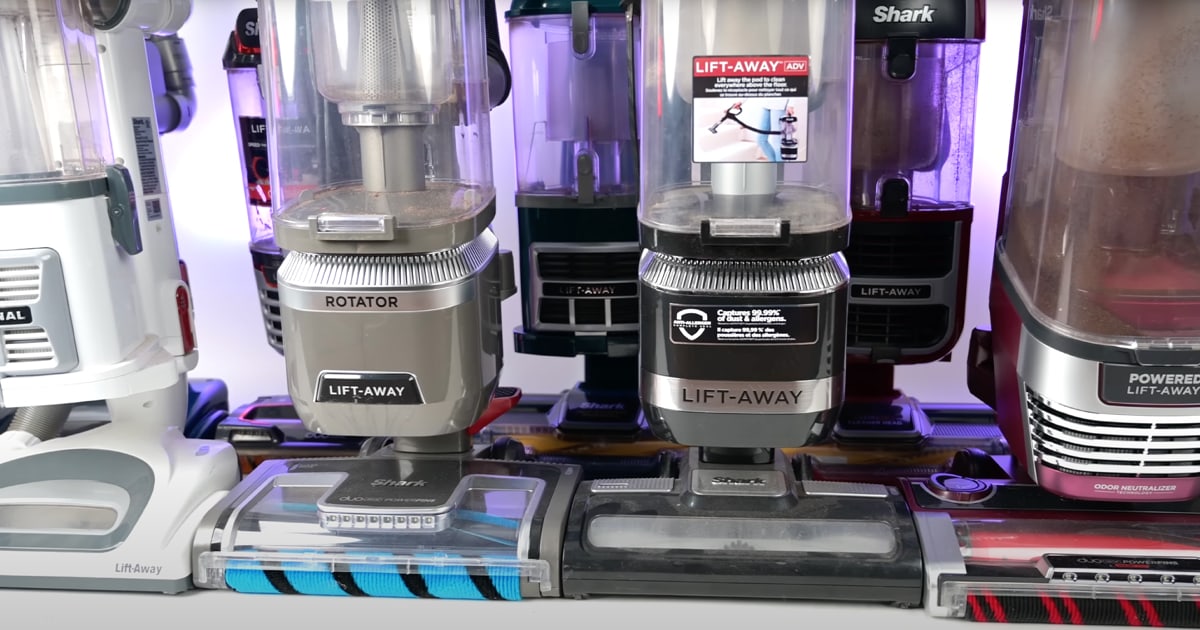
A longer, stretchable hose (plus a wand extension) lets you clean stairs, cobwebs on the ceiling, or car interiors without pulling the entire vacuum along. Many upright vacuums come with attachments like upholstery tools, crevice nozzles, and dusting brushes for these tasks, but they’ll only be convenient to use if the hose can reach far enough. If you have lots of stairs or tall ceilings, seek out an upright with an extra-long hose (some offer 9–12 feet of reach) or consider models with a detachable canister design. For example, Shark’s Lift-Away uprights allow you to remove the canister/motor unit and carry it in one hand, effectively turning the upright into a portable canister for above-floor jobs. Standard uprights can tip over if you stretch a short hose too far, so if above-floor cleaning is a priority, make sure the vacuum’s hose system is up to the task. The right design will let you vacuum furniture, stairs, curtains, and more with minimal hassle.
Brushroll design and anti-hair-wrap technology
Traditional bristle brushes tend to get wrapped with hair, but many newer uprights feature anti-hair-wrap technology to combat this. These brush rolls might have built-in combs or blades that actively slice through hair strands, or use innovative designs like rubberized fins that resist tangles. Vacuum Wars’ testing has shown that certain brush configurations – for example, dual-roll systems or soft roller heads – can significantly reduce hair wrapping by picking up hair without it winding tightly around the roller. If pet hair is a major concern, look for models specifically marketed for pets, as they often advertise tangle-free brushrolls (e.g. “self-cleaning” or “hair eliminator” nozzles) and usually include a pet hair upholstery tool as well. Coupled with strong suction and good filtration (to trap dander), an anti-tangle brushroll will make an upright vacuum much more pet-friendly and easier to maintain over time.
Weight and maneuverability
Full-size models often weigh in the 13–17 pound range (the average upright we’ve tested is about 15 lbs), which can make them cumbersome to carry up stairs or move around tight corners. If you have multiple levels or limited strength, consider a lighter upright or one specifically designed for easier handling – for example, many modern uprights use swivel steering so they turn more easily, and some have additional carry handles to help lift the unit. A detachable canister feature (like a Lift-Away design) can also lighten the load when cleaning stairs by letting you set the base aside and carry just the canister and hose. Keep in mind that a bigger, heavier vacuum often comes with benefits like a wider cleaning head and larger dustbin (meaning fewer passes and less frequent emptying). Think about your home’s layout: if you’ll be vacuuming large open areas, a sturdy high-capacity upright may be fine, but if you need to weave around furniture or frequently lug the machine upstairs, you’ll want a more maneuverable model even if it sacrifices a bit of size or power.
Bagged vs. bagless designs
Bagless vacuums collect dirt in a removable dust bin that you empty into the trash. This avoids buying bags and lets you see what you’ve picked up, but it can also expose you to dust clouds when dumping the bin (fine particles may recirculate into the air during the emptying process). You’ll also need to rinse or replace filters periodically in bagless units to keep them performing well. Bagged vacuums, by contrast, capture debris in disposable bags that serve as an extra filtration layer. When a bag is full, you simply throw it out and replace it – providing a very hygienic solution that minimizes any contact with dust during disposal. The trade-off is that you have to purchase replacement bags (adding a minor ongoing cost and some waste). In terms of cleaning ability, one style isn’t inherently better than the other, but if you have allergies or want the easiest dust disposal, a bagged upright is worth considering, whereas if you prefer not to deal with bags, a bagless design will be more convenient.
Cord length and cord management
A longer cord (around 30 feet or more) can greatly increase your cleaning range, allowing you to cover more area without having to stop and switch outlets. If you have large rooms or limited outlets, a long cord is a huge convenience because you won’t need to unplug the vacuum as often. Also consider how the cord is stored when not in use: most uprights have manual wrap hooks on the back, but some models offer automatic cord rewind (auto-retracting cords) that spool up the cable with the press of a button. An auto-retract feature makes it quicker to pack up after cleaning, though it’s not very common on higher-end uprights and can add a bit of weight. If a retractable cord isn’t available, look for simple cord management touches like a swivel hook that releases the coiled cord quickly or clips to secure the plug. In short, choose a cord length that fits your home’s size – and if you absolutely hate dealing with cords, you might even consider whether a cordless vacuum could be a better fit (trading unlimited runtime for battery convenience).
How we test upright vacuums
At Vacuum Wars, we are dedicated to providing the most thorough and insightful vacuum cleaner reviews. This commitment is embodied in our detailed and specialized testing methods designed to assess various aspects of vacuum performance, from basic suction to more complex tasks like hair entanglement.
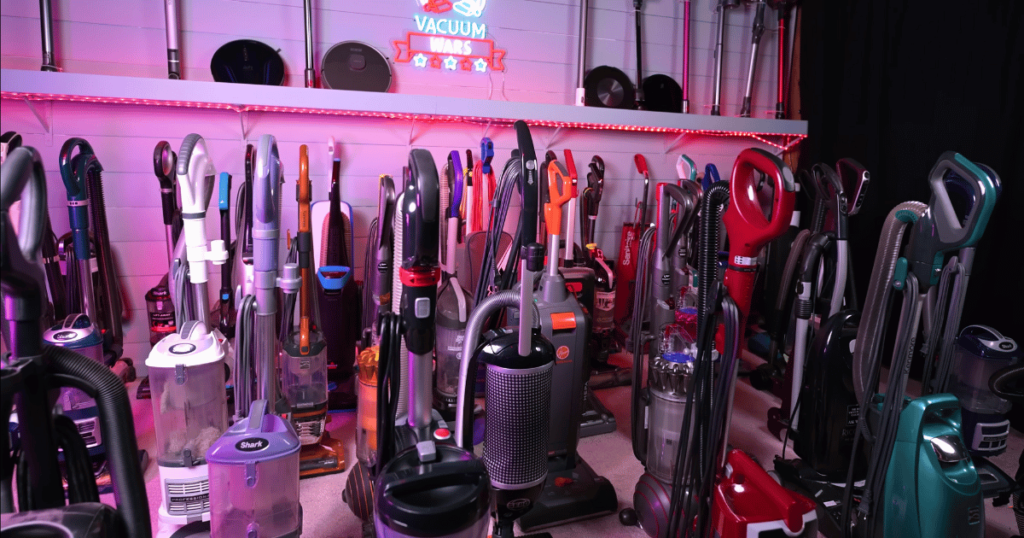
We do not claim that our testing methods are the gold standard, or anywhere near true laboratory tests, but they are our best efforts at honestly and fairly evaluating the relative differences in these products from a consumer advocate perspective. And we have many years of data from doing these tests the same way over and over for hundreds of products. So we can easily spot if a product is much better, or much worse than average. Each of these tests are carefully designed to mimic real-life situations that a vacuum might encounter, ensuring that our reviews are both comprehensive and useful to consumers.
Here’s an in-depth look at our upright vacuum testing methods:
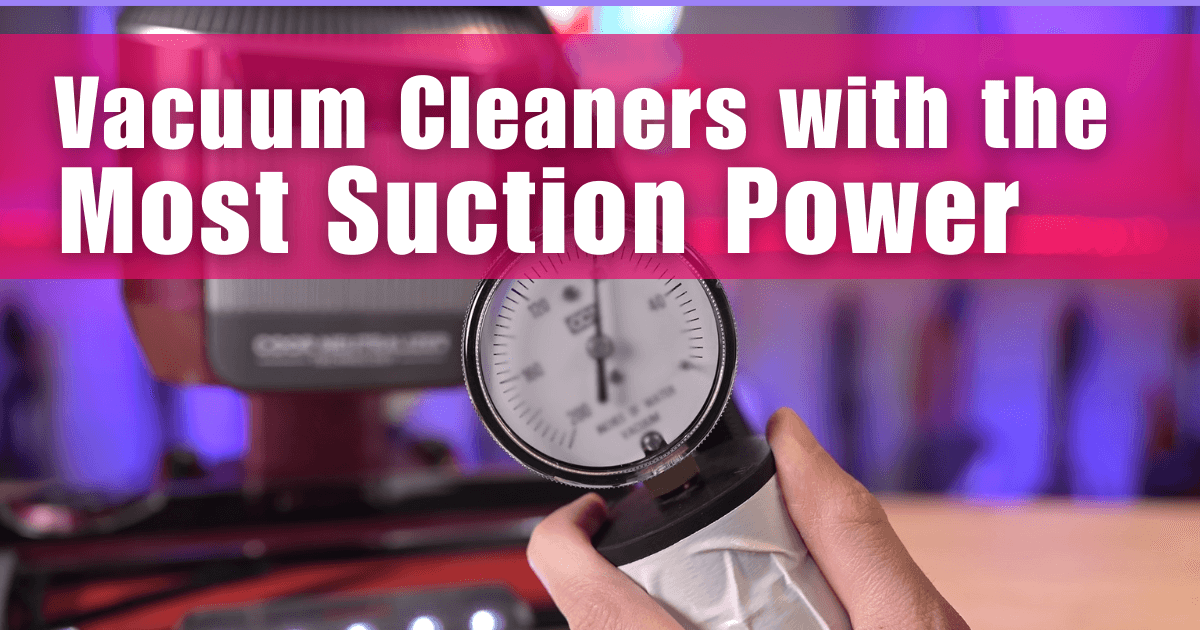
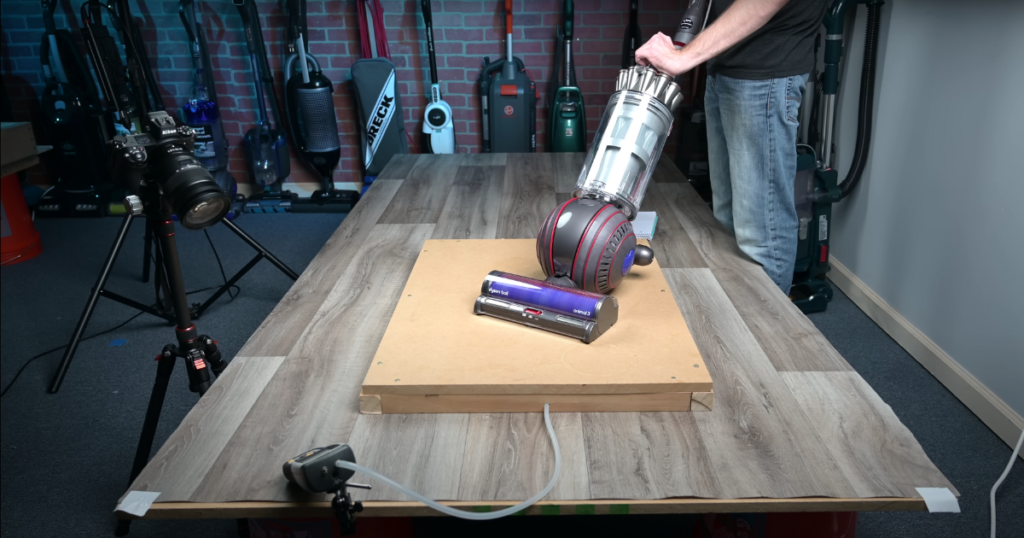
Unsealed suction test. In our “unsealed suction test,” AKA “usable suction” we have connected a digital manometer to a specially designed testing surface so that we can evaluate the real-world upright vacuum suction performance. This approach allows us to take into account the entire design of the vacuum cleaner, in particular the influence of the floor head elements, such as air gates and the seal created by certain elements on the bottom of the floorhead. These factors play a crucial role in the vacuum’s cleaning efficiency. This test is done on max power, and the highest score (in Kpa) is recorded. We like it because it’s not just about raw power but vacuum engineering as well.
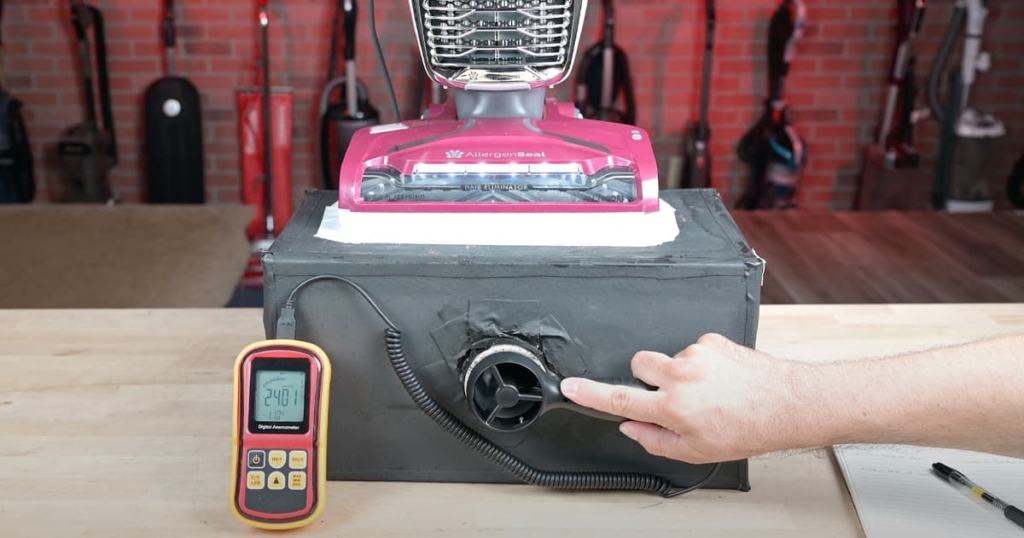
Airflow test. We measure airflow using a digital anemometer, which calculates the volume of air passing through the vacuum in cubic feet per minute (CFM). Airflow is the stream of air that moves through the vacuum cleaner, carrying dust and debris from the cleaning surface into the vacuum and through to the dust collection system. Higher airflow means that more air is moving through the vacuum, which can carry more particles and larger debris with it. Essentially, better airflow results in better overall performance, though this is not always the case. We focus on measuring airflow at the brush and any other operational configurations such as from a detachable hose, or at the wand, in order to understand how the vacuum performs in diverse household scenarios. We typically measure the airflow in all of the power settings of the vacuum, though our scores are based on the maximum power setting.
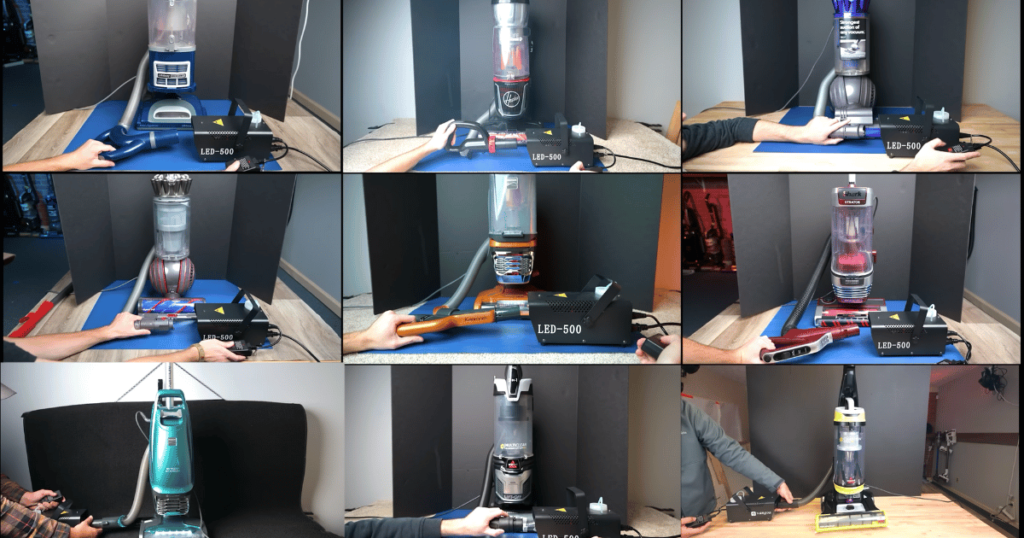
Filtration tests. At Vacuum Wars, our filtration tests assess how effectively vacuum cleaners can enhance indoor air quality and control allergens, which is especially crucial for individuals with allergies, asthma, or other respiratory issues. Using a fog machine, we visually confirm the effectiveness of the vacuum’s filtration system and its capacity to contain vacuumed particles. This approach allows us to directly observe and evaluate the vacuum’s ability to prevent these particles from re-entering the home environment, thereby providing a clear and tangible assessment of its filtration performance.
HEPA Filtration: We score higher for vacuums that use HEPA filters. Defined as High-Efficiency Particulate Air filtration, HEPA filters must meet stringent 3rd party standards that requires them to capture at least 99.97% of particles that are 0.3 microns in diameter. The benefits of such high-efficiency filtration include significantly reducing household dust, pollen, pet dander, and other allergens.
Sealed Systems: Our filtration test ensures that the vacuum is sealed effectively. A vacuum with a sealed system ensures that the air drawn into the machine passes through the filter before being expelled back into the room. This prevents unfiltered air from escaping through gaps in the vacuum’s body, which is essential for trapping allergens, dust, and particles inside the vacuum and preventing them from being recirculated into the air. Our tests check for the integrity of these systems, confirming that they work effectively alongside the HEPA filters to enhance the vacuum’s overall filtration efficacy.
Carpet deep clean test. In our Carpet Deep Clean Test, we evaluate a vacuum’s ability to pick up fine debris that settles below a carpet’s top surface area, becoming embedded between the carpet fibers. In this test, we apply 100 grams of sand to an area of medium-pile carpet, and we work the sand into the carpet fibers to ensure that the sand has come to rest below the surface of the carpet. The vacuum is run over the carpet a set number of passes at the same basic rate of motion. These tests are performed on the vacuum’s maximum power setting. If the vacuum has adjustable gates, the tests are performed with the gates set to their lowest setting.
After vacuuming, the content of the vacuum’s dustbin is weighed to determine how much sand has been picked up. We typically run this test at least three times to ensure accuracy. A perfect score of 100 indicates that all the embedded material was removed from the carpet.
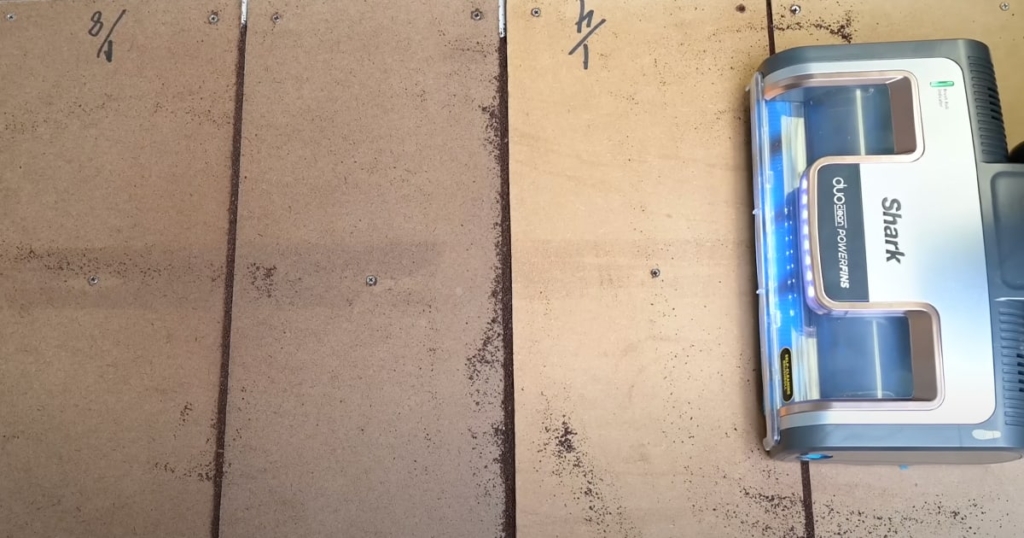
Crevice pickup test. The crevice pickup test is an assessment of the vacuum’s power and floorhead design, showing its ability to effectively vacuum debris that can collect in the cracks and crevices of a floor’s surface, such as seams, transitions, or tile grout.
In this test, we apply coffee grounds over a specially designed testing surface that has a ¼ inch deep crevice and a 1/8 inch deep crevice. We run the vacuum over it once at its highest setting, with adjustable gates closed if applicable. Vacuums that collect all of the debris from both crevices get a perfect score.
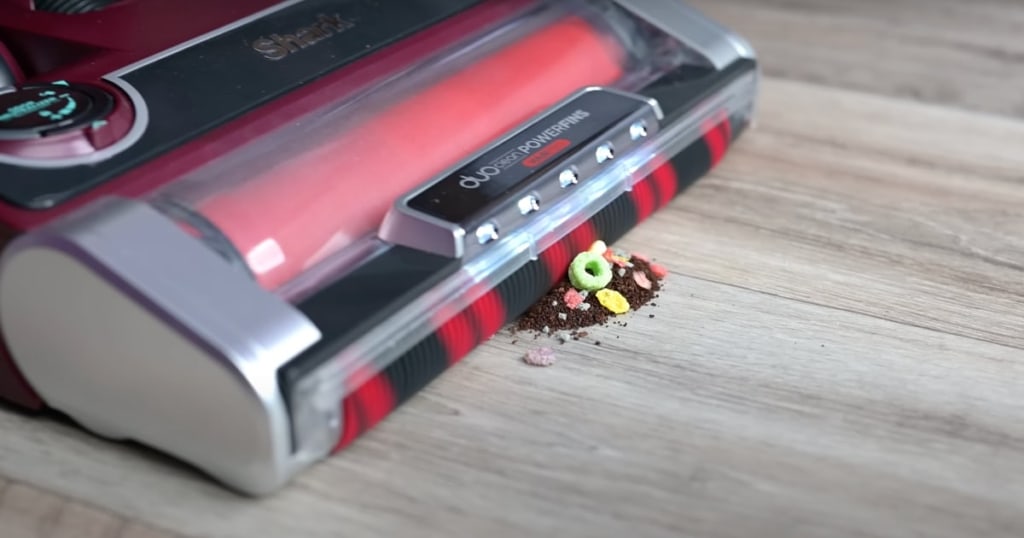
Surface debris pickup test. In the Surface Debris Pickup Test, we assess how well vacuums pick up debris on hard floor and carpet without needing to adjust their settings. We use various sizes of debris, such as fine coffee grounds to the largest items such as cereal. The aim is to assess both the effectiveness and the aesthetics of the cleaning, ensuring that vacuums can handle everyday messes across different surfaces.
We take away points for issues like:
Snowplowing: Snowplowing is where the debris is pushed forward ahead of the vacuum instead of being picked up.
Scattering Debris: Some vacuums will scatter debris, particularly fine debris, instead of quickly picking it all up.
Ineffective Pickup: A vacuum is simply leaving behind debris that it has passed over and should have been able to pick up.
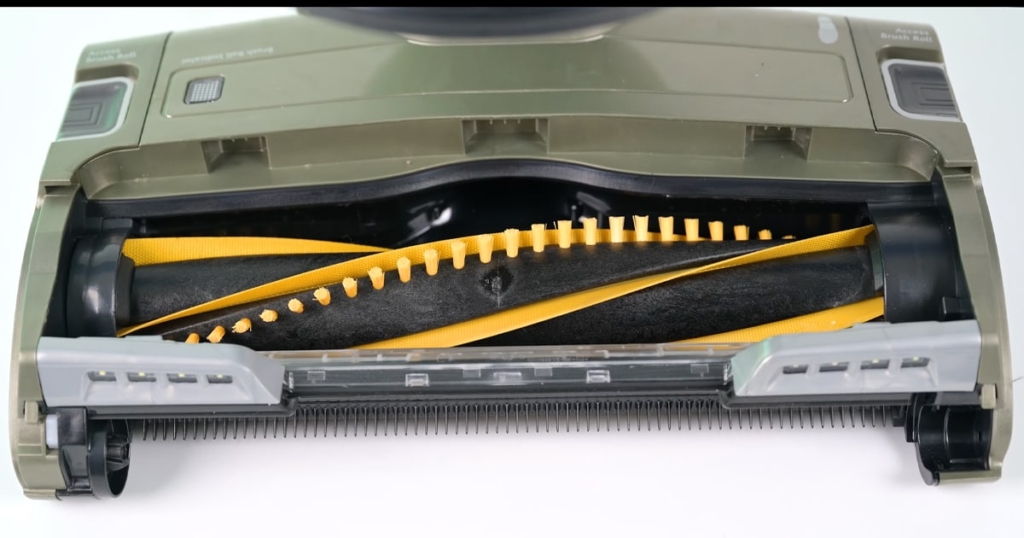
Anti-hair wrap test. The Anti-Hair Wrap Test challenges vacuums to handle 1 gram of 7-inch and 14-inch hair without getting it tangled in the brush roll. This test is crucial for understanding how well the vacuum deals with hair, a common issue for many homeowners, especially those with pets. In this test we lay the hair before the vacuums, run a pass over the hair, and then visually inspect the roller for hair tangles. Vacuums with no hair tangles receive a perfect score.
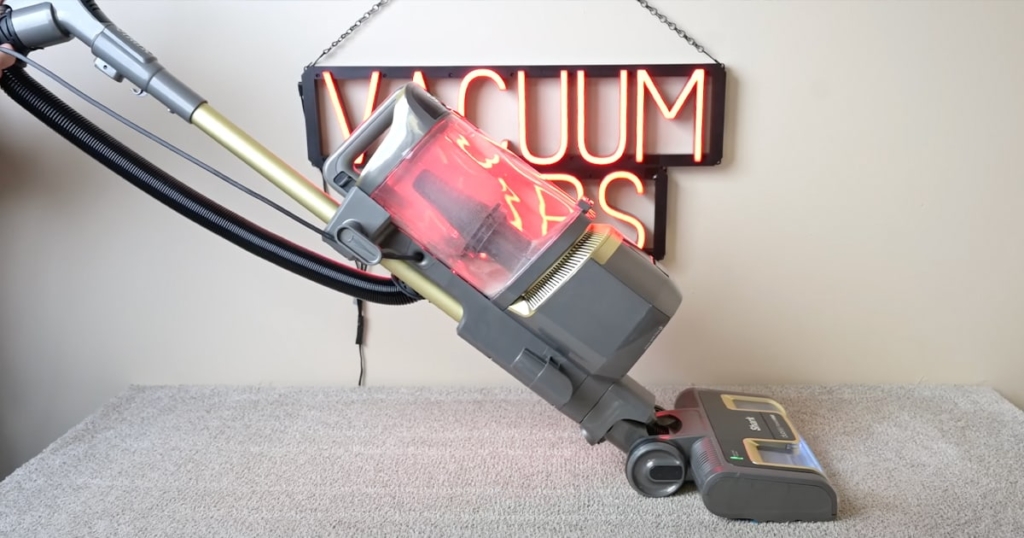
Maneuverability. During our vacuum testing process, we assess the vacuums in a simulated household environment that includes common obstacles such as chair legs, low furniture, and area rugs. Our focus is to evaluate whether the vacuum navigates easily across both hard floors and carpets and if it can be smoothly steered around furniture. This testing helps determine the vacuum’s maneuverability and overall ease of use in typical home settings.
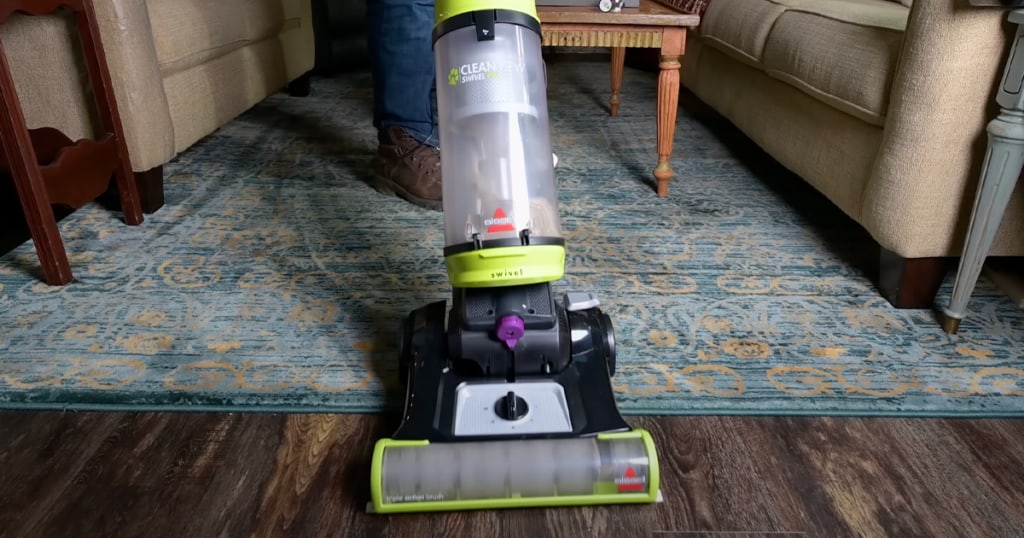
Lift-away functionality. We specifically test the lift-away capabilities of various upright vacuums, which are sometimes referred to as lift-up features. This functionality allows the main unit of the vacuum to detach from the floor head, enabling users to clean hard-to-reach areas more effectively. Importantly, some models offer a powered lift-away option, where the floor head remains active and motorized even when detached.
Our testing focuses on the ease of use of these lift-away mechanisms and their overall effectiveness in everyday cleaning scenarios. We assess how seamlessly these vacuums transition from traditional upright operation to their lift-away state and back, ensuring that these features enhance the vacuum’s versatility without compromising performance.
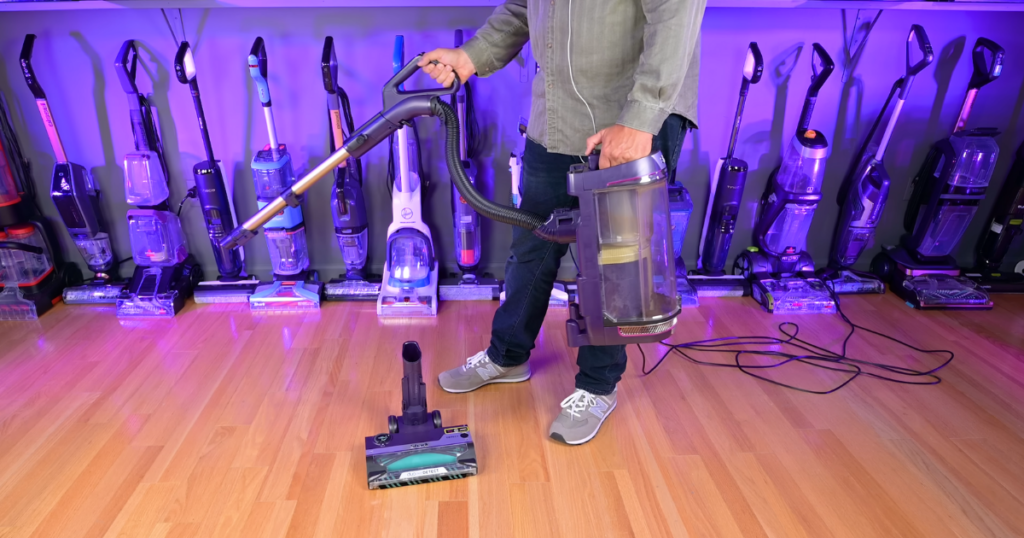
Feature evaluations. We also award points for the inclusion of features that enhance the functionality and effectiveness of upright vacuums. These feature assessments include:
Number of Attachments: Includes tools such as crevice tools, upholstery brushes, and more, enhancing the vacuum’s versatility.
Hose/Wand: Provides extended reach for cleaning above-floor areas like drapes and ceilings.
LED Lights: Located on the vacuum head to illuminate dark spaces and ensure thorough cleaning.
Swivel Steering: Facilitates maneuverability around furniture and obstacles, improving the cleaning experience.
Bin Size: Larger bins accommodate more debris, allowing for extended cleaning sessions before needing to be emptied.
Cord Length: The length of the power cord can determine the range of cleaning from one outlet.
Noise Level: The operational sound level of the vacuum.
Handle Weight: The weight of the handle affects the ease of maneuvering and using the vacuum, especially when cleaning for extended periods.
Overall Weight: The total weight of the vacuum affects maneuverability and ease of transport from one area to another.
How we compare and score
When we have completed our evaluations of a vacuum, we log and track the results according to our established upright vacuum testing standards. This structured approach enables us to compare the performance of each vacuum against others we have tested within the same category. By doing so, we can tailor our recommendations based on specific criteria such as price category, floor type, and features. This methodical comparison ensures that our vacuum performance testing and recommendations are objectively grounded, providing a consistent, fair, and unbiased framework for our analysis.
Why trust us
Every score on this page comes from our own lab
Vacuum Wars purchases every upright vacuum at full retail price and does not accept free samples, loaner units, or paid promotions. Brands only see our conclusions after they are published. Each upright model goes through the same standardized test process, unsealed suction and airflow measurements, carpet deep clean pickup, hard floor debris pickup including crevice tests, hair tangle stress tests and filtration efficiency checks, which is what makes the scores on this page comparable to one another rather than to a spec sheet.
Independent and reader fundedOne test suite for every upright vacuumTransparent methodsData kept current
FAQ
Frequently asked questions
What is the best upright vacuum right now?
Our Best Overall pick carries the badge at the top of this page, and the same vacuum holds rank #1 in the ranking below it. The ranking is continuous, so the top spot changes whenever our testing says it should.
How do you decide the rankings?
When we have completed our evaluations of a vacuum, we log and track the results according to our established upright vacuum testing standards. This structured approach enables us to compare the performance of each vacuum against others we have tested within the same category. By doing so, we can tailor our recommendations based on specific criteria such as price category, floor type, and features. This methodical comparison ensures that our vacuum performance testing and recommendations are objectively grounded, providing a consistent, fair, and unbiased framework for our analysis.
How often is this page updated?
Upright vacuum models and prices do change over time. We continually track new product releases, model updates, and major price swings, updating our Top 10 list on a regular schedule. Each entry on the list includes a clear “last updated” date so you know when its information was most recently verified. In short, our rankings stay up-to-date as new vacuums come out or old models get discounted, ensuring you’re always seeing the best options available right now.
Do you buy the upright vacuums you test?
Vacuum Wars has made a significant shift toward complete independence by officially adopting a policy of not accepting free products from companies or doing sponsored content. This ensures that all reviews are based on products purchased with our own funds, thereby reducing the potential bias that can come from manufacturer influence.
What are the differences between bagged and bagless upright vacuums?
When choosing between bagged and bagless vacuums, consider your household’s specific needs and preferences for debris disposal. Consumers have voiced the following opinions about bagged and bagless vacuum cleaners:
Bagless vacuums collect debris in a removable dustbin that is then emptied into a trash receptacle. Some consumers are concerned about potential re-exposure to dust and allergens that may recirculate into the air during the emptying process.
Bagged vacuums, on the other hand, capture debris in disposable bags that also serve as additional filtration layers. These bags are discarded and replaced when full, providing a hygienic solution that minimizes re-exposure to dust and debris. Some consumers are concerned that the use of disposable bags contributes to landfill waste and involves ongoing costs for new bags.
Are upright vacuums better than cordless vacuums?
The choice between upright and cordless vacuums depends on your specific needs.
Upright vacuums, typically corded, offer continuous power, which supports more powerful motors, larger floor heads, and bigger dustbins. Continuous power also allows for whole-household and large-area cleaning sessions all at once.
Cordless vacuums, on the other hand, boast portability and convenience, perfect for quick cleanups and shorter cleaning sessions, though they may require more frequent emptying due to their smaller dustbins. Some cordless vacuums may not perform as well on deep carpet cleaning, but there are recent and more powerful cordless models that outperform older upright vacuums.
Can upright vacuums be used on all types of flooring, such as hardwood and carpet?
Contemporary upright vacuums are often designed to effectively clean multiple floor types. Features like adjustable suction and brush roll settings allow them to transition from hardwood floors to carpets without hassle. Vacuums with more power often do well at deep cleaning carpets and collecting debris from crevices. Always check the manufacturer’s guidelines to ensure suitability for delicate surfaces like hardwood and delicate rugs.
Are there specific upright vacuum models that are better for pet hair?
Vacuums equipped with specialized pet hair removal technologies, such as silicone brush rolls or higher suction settings, tend to perform better on pet hair. Models that include anti-hair wrap features and those with powerful filtration systems are particularly effective. Look for vacuums that specifically mention pet hair capabilities in their feature list.
Can upright vacuums also be used for cleaning curtains and upholstery?
Yes, many upright vacuums come with attachments such as upholstery tools and crevice tools that make them suitable for cleaning curtains, upholstery, and other above-floor areas. Models with a hose and wand provide extended reach for these tasks. Check the specific features of your model to ensure it includes the necessary tools for such cleaning jobs.
How often should I replace the filter on my upright vacuum?
Depending on usage and the manufacturer’s recommendations, filters should generally be replaced every 6 to 12 months. If the filter is washable, be sure to clean it regularly, and if the vacuum is used heavily or in a pet-friendly household it may need to be both washed and replaced more frequently. Regular checks will help maintain optimal vacuum performance.
What are the best methods for maintaining an upright vacuum cleaner?
Regular maintenance of an upright vacuum includes emptying the dustbin after each use, cleaning and replacing filters as needed, checking for clogs in the hose and attachments, clearing hair and debris from the brush roll, and storing the vacuum in a clean, dry place.
How do I troubleshoot loss of suction in my upright vacuum?
Loss of suction often results from a clogged hose, full dustbin, or blocked filters. Start by emptying the dustbin and checking the filters for blockages. Inspect the hose and attachments for obstructions. If the vacuum has adjustable gates or settings, ensure they are correctly configured for the surface being cleaned.