MOVA has released a second generation of their popular P10 Pro Ultra robot vacuum. The first-generation model was crowned our value pick in the mid-2025 Robot Vacuum Awards and held that title for several months, so expectations for the Gen 2 were high.
However, after several weeks of in-house testing, the results were more mixed than expected.
While the MOVA P10 Pro Ultra Gen 2 delivers major improvements in mopping performance and strong results in deep carpet cleaning, it also introduces some significant trade-offs—particularly in obstacle avoidance, hair handling, and overall efficiency.
In this review, we break down exactly where the Gen 2 improves, where it falls behind, and whether it ultimately outperforms its highly successful predecessor.
Mova P10 Pro Ultra Gen 2
Vacuum Wars Stars 2.89
The Mova P10 Pro Ultra Gen 2 is a midrange robot vacuum and mop combo that improves significantly in some areas while regressing in others, making it a mixed but still compelling option. Its biggest strength is mopping performance, with dual spinning pads that extend for edge cleaning, lift over carpets, apply 12N of pressure, and spin at 260 RPM, resulting in excellent stain removal and low water residue. Vacuuming is also solid, highlighted by a strong 26,000 Pa rating, good debris pickup, and impressive carpet deep cleaning scores, along with useful features like an extending side brush and carpet boost. The fully automated dock adds convenience with hot water mop washing, drying, detergent dispensing, and auto-emptying. However, major downsides include extremely poor obstacle avoidance due to the removal of the RGB camera system, weak pet hair pickup, significant hair tangling, below-average real-world suction efficiency, and reduced battery performance and coverage. Navigation efficiency also dropped compared to the previous model. Overall, it excels at mopping and general cleaning but requires more manual prep and struggles with hair and obstacles. See additional info
Mova P10 Pro Ultra
Vacuum Wars Stars 3.59
The Mova P10 Pro Ultra stands out as a strong mid-range contender. Its 13,000 Pa turbocharged suction and multi-level LiDAR mapping handle dust, debris, and pet hair on hard floors and carpets, while the all-in-one dock automatically empties the bin, refills water, adds cleaning solution, washes and heat-dries the mop pads, and self-cleans its washboard. The mop lifts 10.5 mm to stay clear of carpets, and an RGB camera plus 3D structured-light sensor can recognize up to 70 obstacle types—even in low light. With a FlexReach extending side brush for corners, pet-care monitoring, and “Hey MOVA” voice control, the P10 Pro Ultra delivers flagship-level conveniences at a mid-range price—making it a compelling option for mixed-floor homes and pet owners. See additional info
MOVA P10 Pro Ultra Gen 2 Price and Value in the Robot Vacuum Market
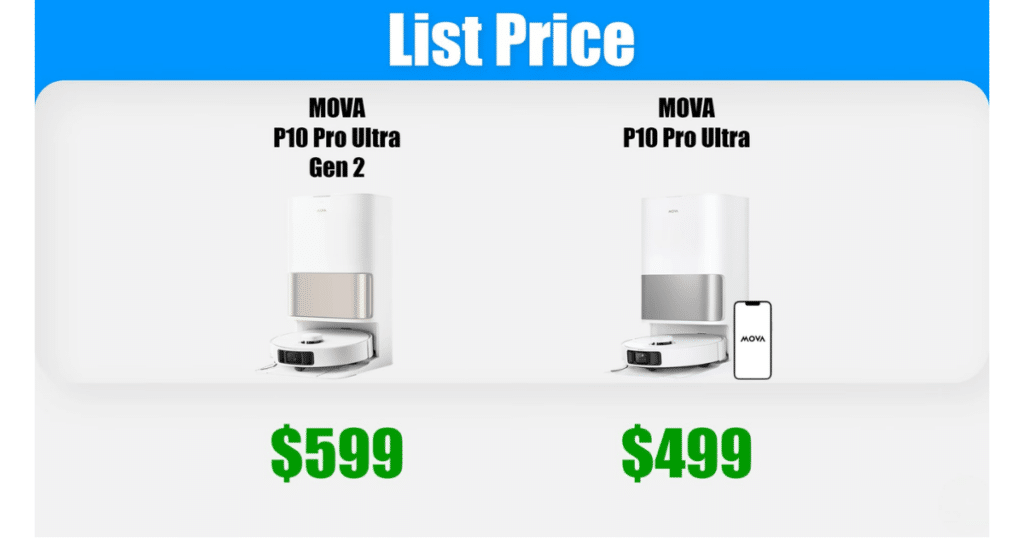
In terms of price, the P10 Pro Ultra Gen 2 sits in the lower-middle range for robot vacuum and mop combos, with a list price of nearly $600. The first-generation P10 has a list price closer to $500, so Gen 2 does cost a bit more, but both are frequently on sale for a good bit less than their retail price.
This puts it in direct competition with other robot vacuum mop combos under $600, which is one of the most competitive segments in the market right now.
Since this is a second-generation model, a lot of this review compares it directly to our test results for the first generation.
MOVA P10 Pro Ultra Gen 2 Mopping Performance Test Results
Starting with the pros, the biggest improvement in the Gen 2 is in its mopping.
Both robots use dual spinning mop pads that extend for better edge coverage along walls and furniture, a feature that isn’t always expected at this price. They also lift 10.5 millimeters over carpet, allowing them to clean a mix of hard floors and carpets in a single run.
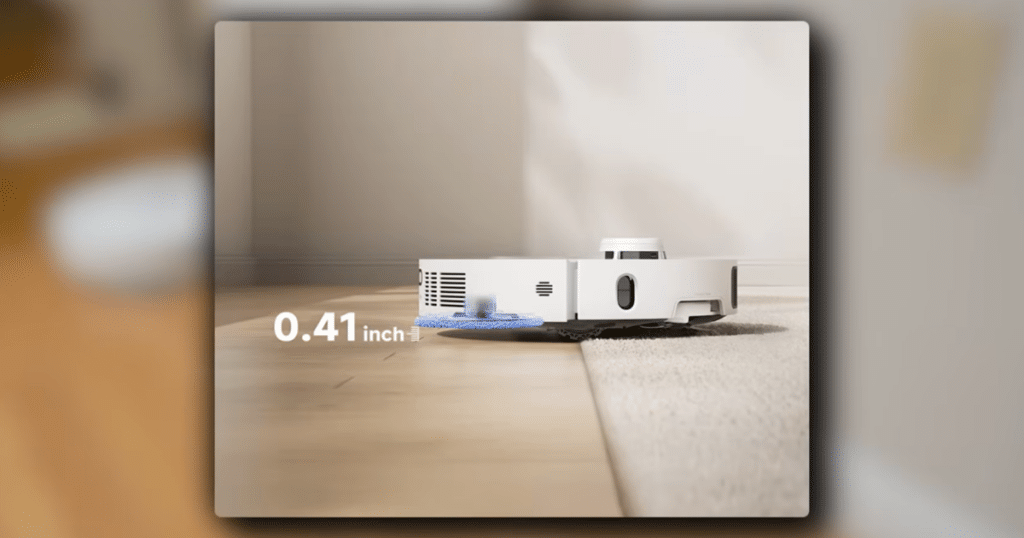
Gen 2 adds 12 Newtons of downward pressure for deeper scrubbing, which is new, and the pads spin at 260 RPM. These hardware upgrades really made a difference in our performance tests.
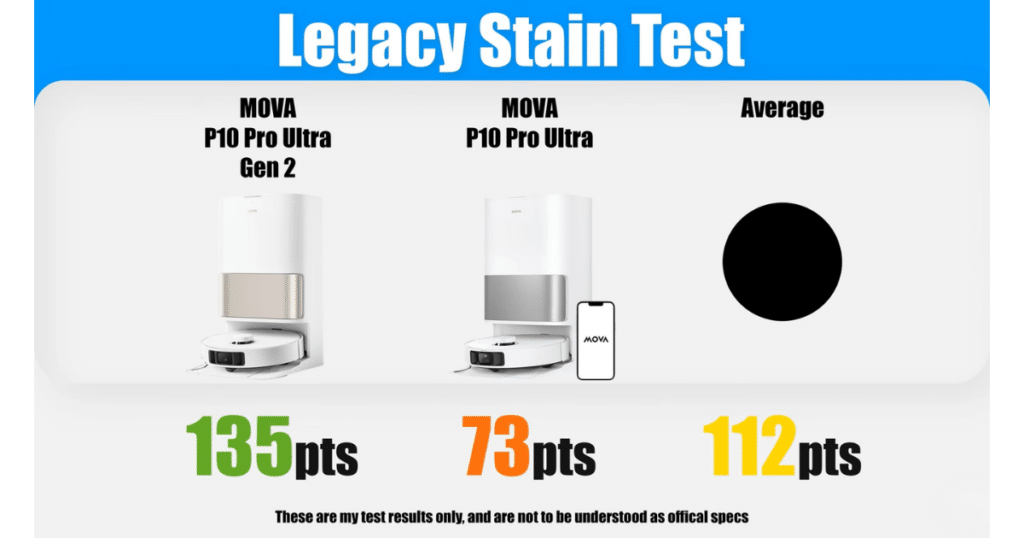
We test both dried-on stain removal and how much water the robot leaves behind while mopping, because a mop that removes stains but leaves excess water on the floor can cause streaking. The Gen 2 scored an impressive 135 in our dried-on stain test—well above the 112 average and far higher than the original P10’s score of 73.
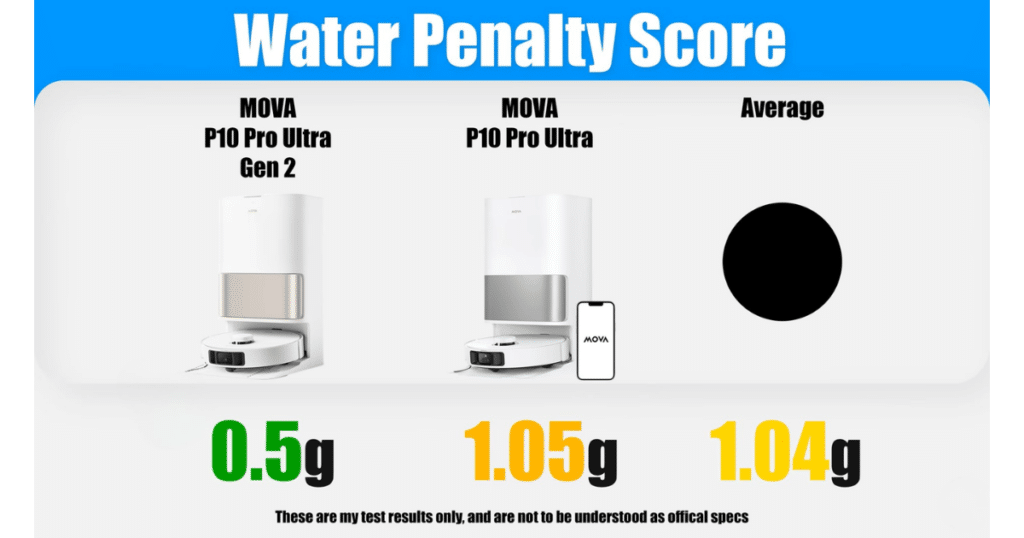
It also left behind only 0.5 grams of water, which is about half the 1.04-gram average, while the first generation was right at the average at 1.05 grams.
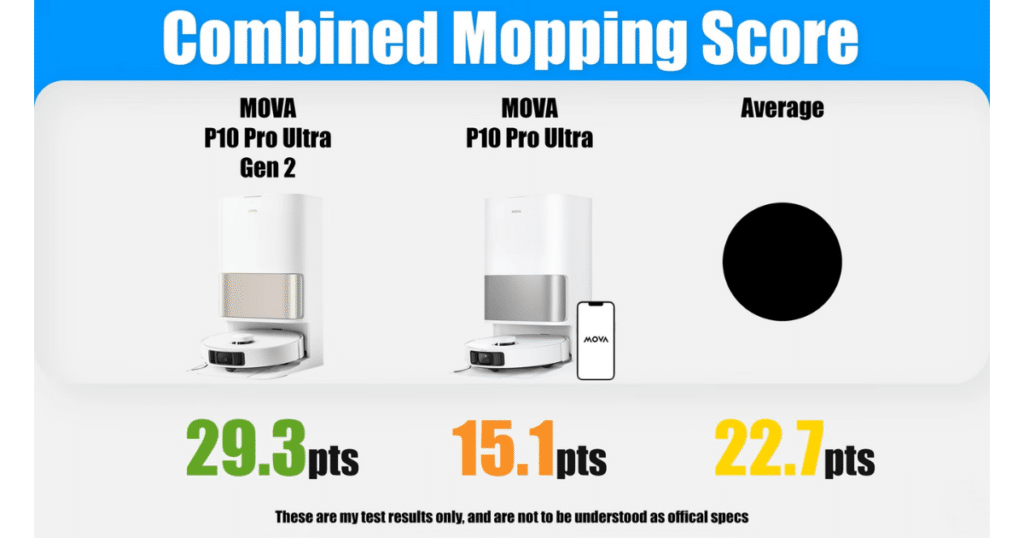
This was a major improvement, since the original P10 had a below average mopping score, and it was actually our biggest issue with it. The Gen 2’s combined mopping score of 29.3 was well above the 22.73 average and nearly doubled the first generation’s overall mopping result of 15.1. This makes it one of the better robot vacuum mops for hard floors in this price range.
See also: How Vacuum Wars Tests Robot Vacuum Mops
MOVA P10 Pro Ultra Gen 2 Vacuuming Performance and Carpet Deep Cleaning
Vacuuming was another pro. Both models use a single rubber main brush, with the option to upgrade to MOVA’s anti-tangle CleanChop brush. For reference, we tested the standard brush that came with the robot in order to evaluate base performance.
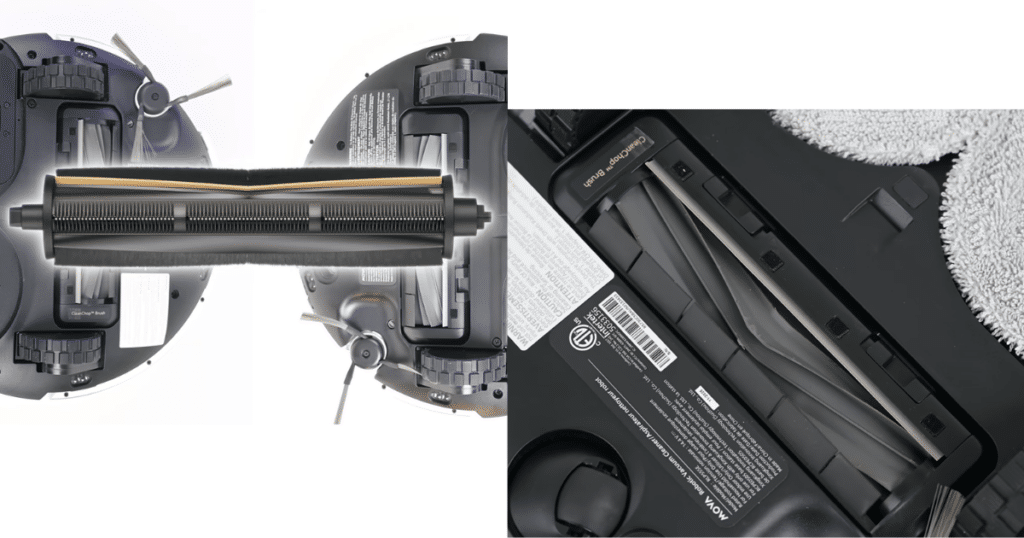
Both generations also have an extending side brush—another feature we like that’s not always found at this tier.
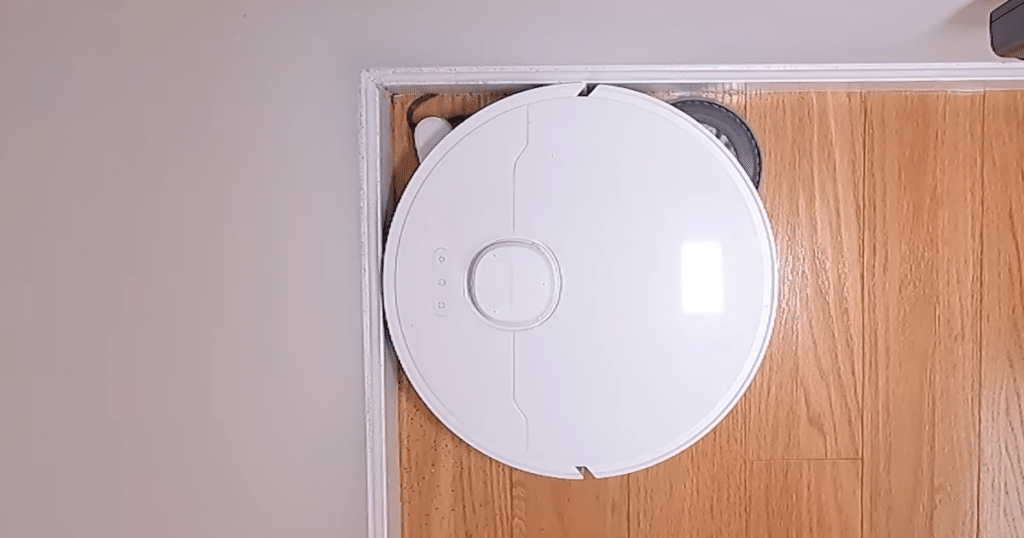
Both models include carpet boost, which increases the suction automatically when the robot senses carpet, and the official suction doubled from 13,000 Pascals on the first gen to 26,000 Pascals on Gen 2. The Gen 2 and its predecessor both did a good job of sweeping debris of different sizes from the surfaces of both hard floors and carpets.
Top 20 Robot Vacuums
Explore Vacuum Wars’ always up-to-date rankings of the best robot vacuums, based on independent, hands-on testing. We purchase every unit ourselves and have evaluated more than 150 models, giving us a deep benchmark for cleaning performance, navigation, battery life, and advanced features like obstacle avoidance and mopping.
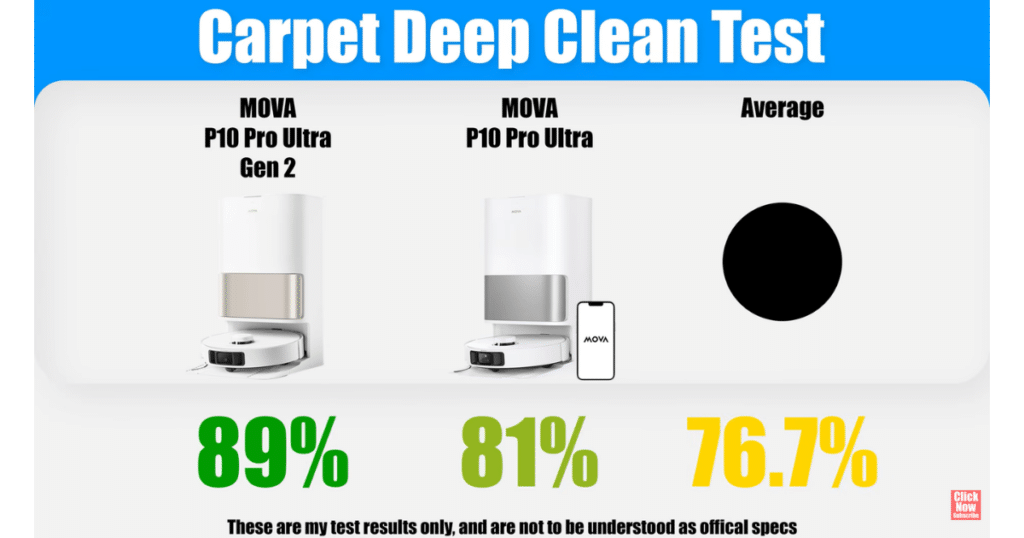
But the Gen 2 stood out in our carpet deep clean test, where we embed sand into a medium pile carpet and then measure how much of it the robot can vacuum out. The Gen 2 scored a really impressive 89 percent, which was higher than the first P10’s score of 81 and much higher than the 76.7 percent average.
The airflow bench test was an above average 18 CFM compared to the 16 CFM average, though the original had performed slightly better at 20 CFM.
How Vacuum Wars Tests Robot Vacuums: Step into the world of Vacuum Wars, where real-world tests, straight-forward reviews, and no sponsored products redefine robot vacuum evaluations.
Dock Features: Self-Emptying, Mop Washing, and Automation
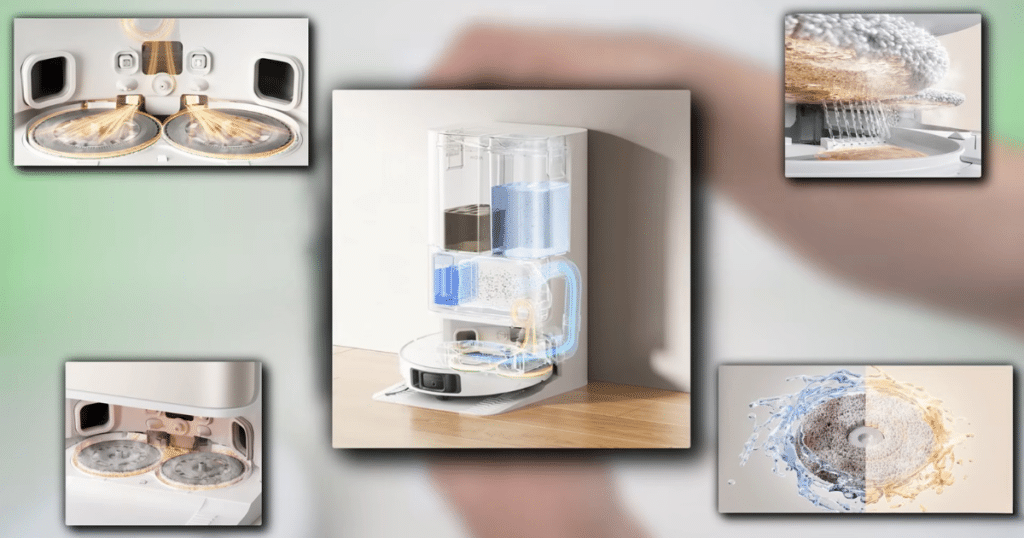
The dock is another pro, and both generations include a fully automated base station. The robot empties debris into a 3.2-liter disposable bag, and it also handles both mop washing and drying, and can detect dirty water to trigger a re-mop if needed.
Gen 2 increases the mop-washing temperature to 212°F (100°C), compared to the original’s temperature of 140°F (60°C). Higher heat can reduce bacteria and odors, and the Gen 2’s dock also includes automatic detergent dispensing and fast charging.
Navigation Efficiency and App Features
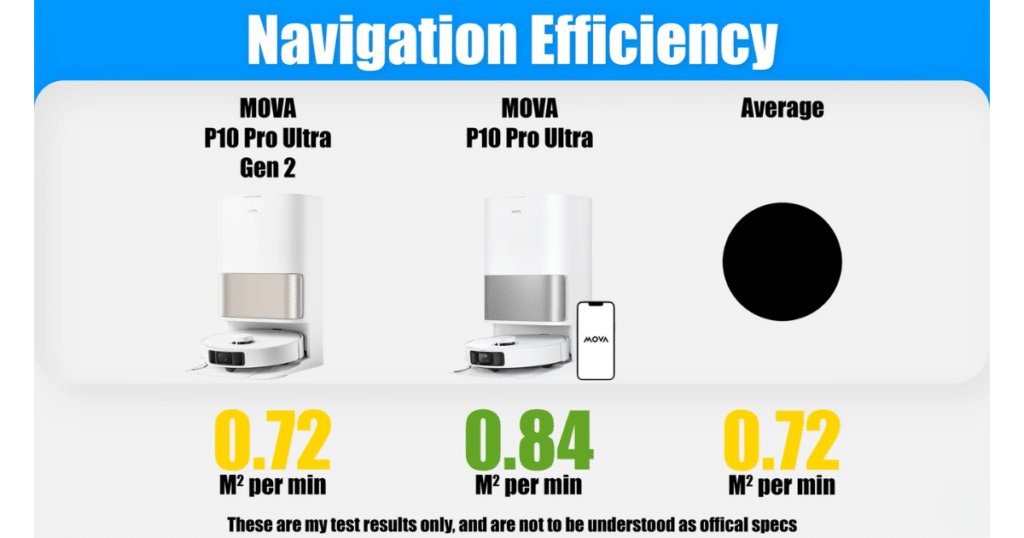
Navigation for the Gen 2 is conducted by a top-mounted LiDAR system, and we measure the efficiency of the navigation in how many square meters the robot can cover in one minute. The Gen 2 did alright in this test by hitting 0.72 square meters per minute, which is right at the average, although the first generation had done much higher at 0.84, so that was a little bit of a downgrade.
The app for MOVA has a lot of features and customizations that we would expect from a bigger brand. It allows for individual room cleaning and settings, multi-level mapping, and no-go or no-mop zones. The app also allows for mopping along the direction of the floor, which is a nice feature that we like because it can reduce the appearance of streaks.
Obstacle Avoidance Test Results: A Major Downgrade
The biggest con on the second generation was obstacle avoidance. The first-generation P10 blew us away with its obstacle avoidance, which was a system built with an RGB camera and AI object recognition. This made it one of the better robot vacuums for obstacle avoidance at this price.
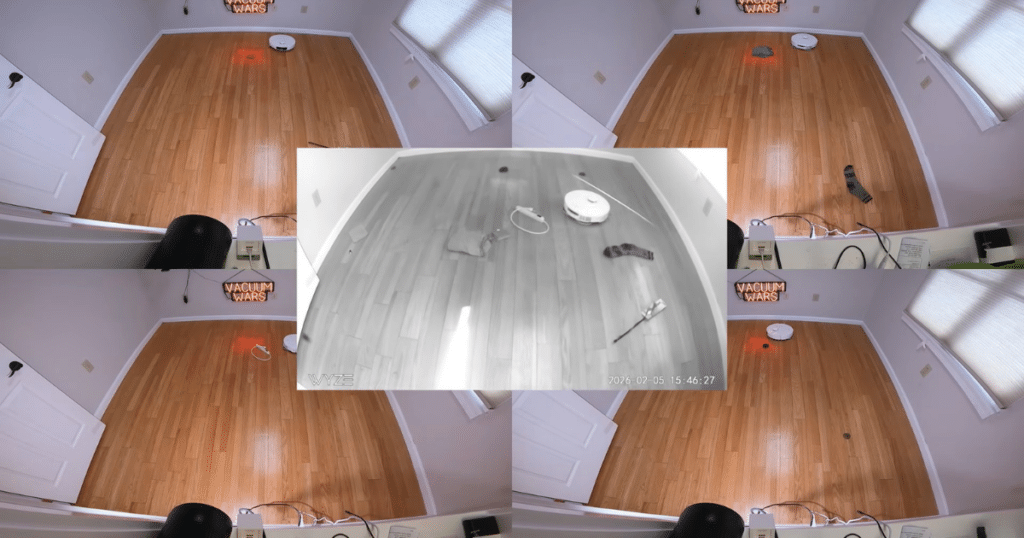
We were a little worried when we saw that the Gen 2 had replaced the camera-based tech with a single laser sensor. The low-tech shift made an enormous difference in the Gen 2’s obstacle avoidance performance.
Between our standard tests and our torture test, the Gen 2 only avoided a total of 4 objects out of a possible 24, which is dramatically below the 16 average. This was pretty terrible considering how the first generation had avoided a total of 19 out of 24 objects.
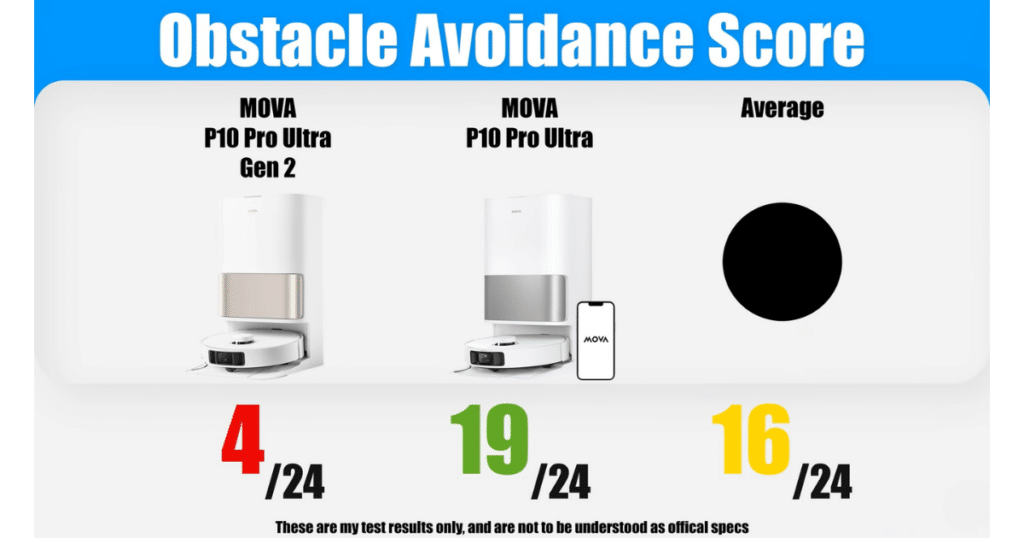
We found the obstacle avoidance on the Gen 2 to be almost as bad as if it didn’t have any at all, and it shared our worst obstacle avoidance score on record with the much cheaper MOVA S10. This means that the Gen 2 is going to require a pre-tidy before you run it, as it will likely not be able to sense things like small toys, cables, socks, and the like.
See also: How Vacuum Wars Tests Obstacle Avoidance
Pet Hair Pickup and Hair Tangle Performance
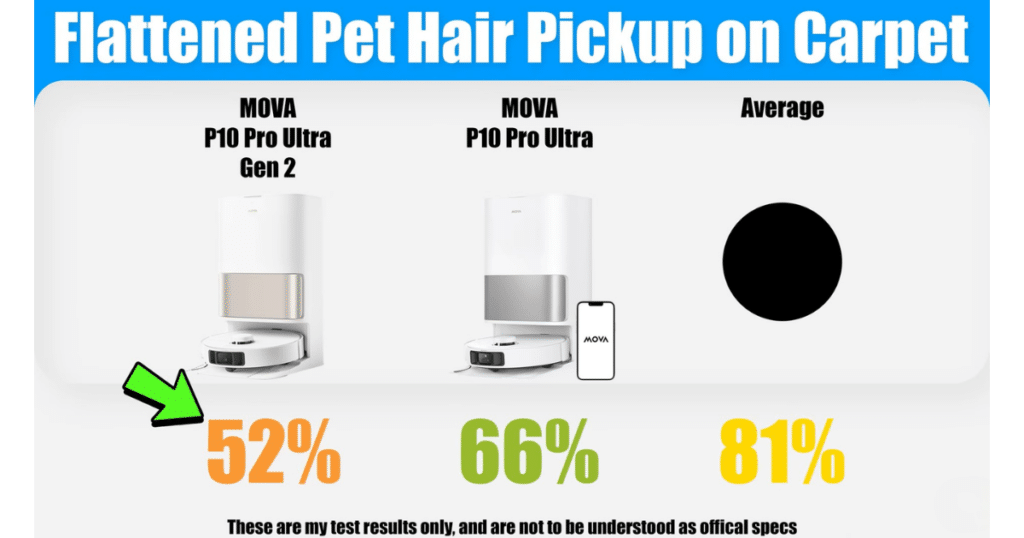
Another con was in hair management, both with pet hair on carpets and with our tangle tests. In our flattened pet hair test, where we press 2.5-inch hair onto carpets to mimic real-world conditions, Gen 2 removed only 52%, which is worse than the already below-average original P10 at 66% and far below the 81% average.
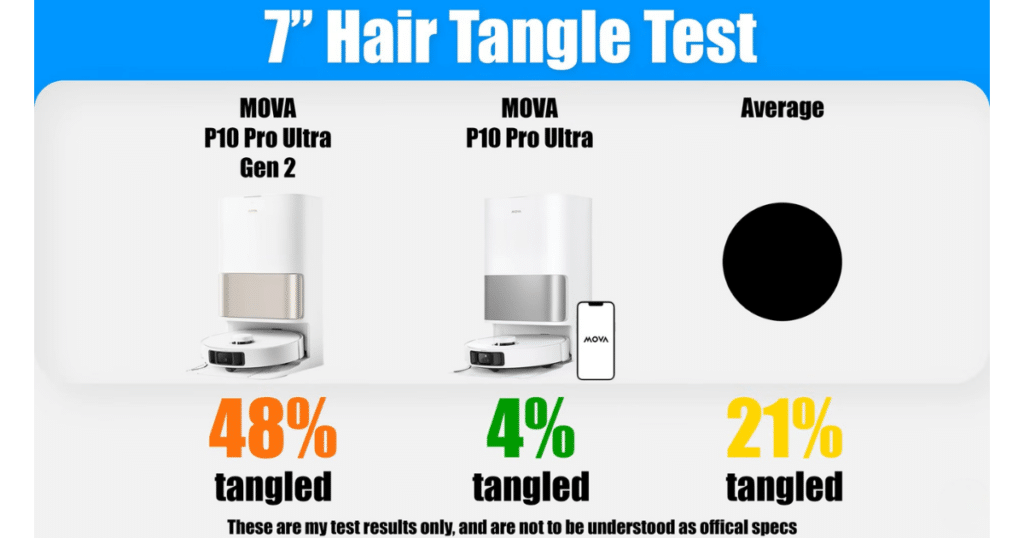
And in our 7-inch hair tangle test, 48% of the hair got wrapped around the main brush, compared to just 4% on the first P10 and a 21% average.
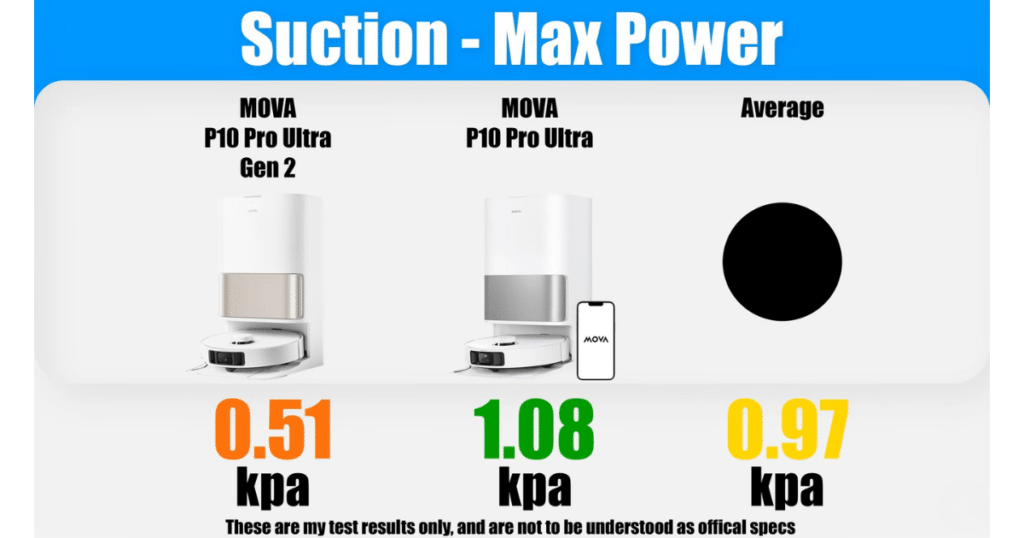
We also found that its suction bench test was below average at 0.51 kPa, despite the official suction increase, compared to 1.08 kPa on the original and a 0.97 kPa average. This emphasizes that official suction numbers never really tell the whole story.
Battery Life and Cleaning Efficiency
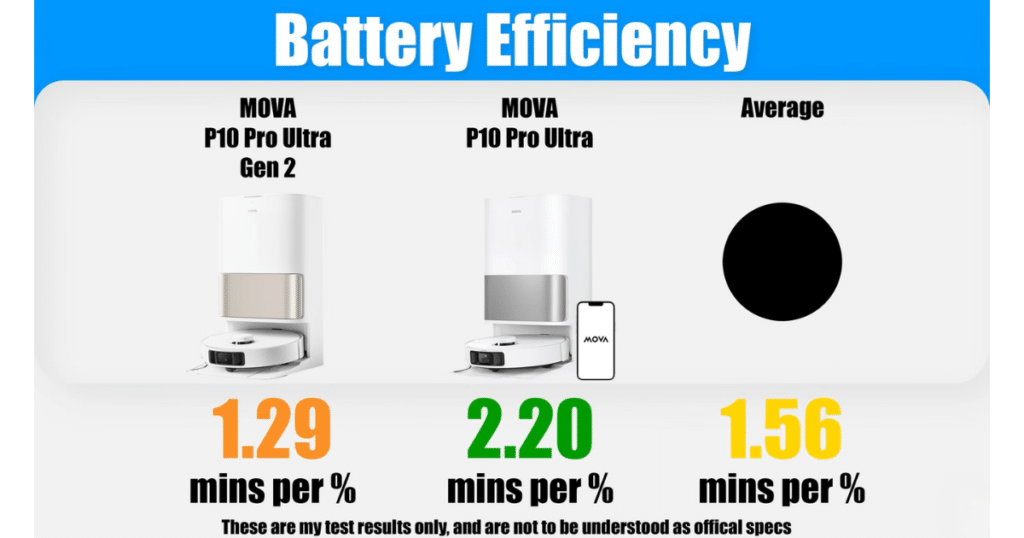
Battery performance was another con, even though that was another place where the official numbers had gone way up over the first generation. The Gen 2 has an official battery life of 210 minutes compared to 150 minutes on the original. However, our efficiency test showed about 1.29 minutes per 1% of battery, which was below the 1.56 average and far lower than the earlier generation’s 2.2.
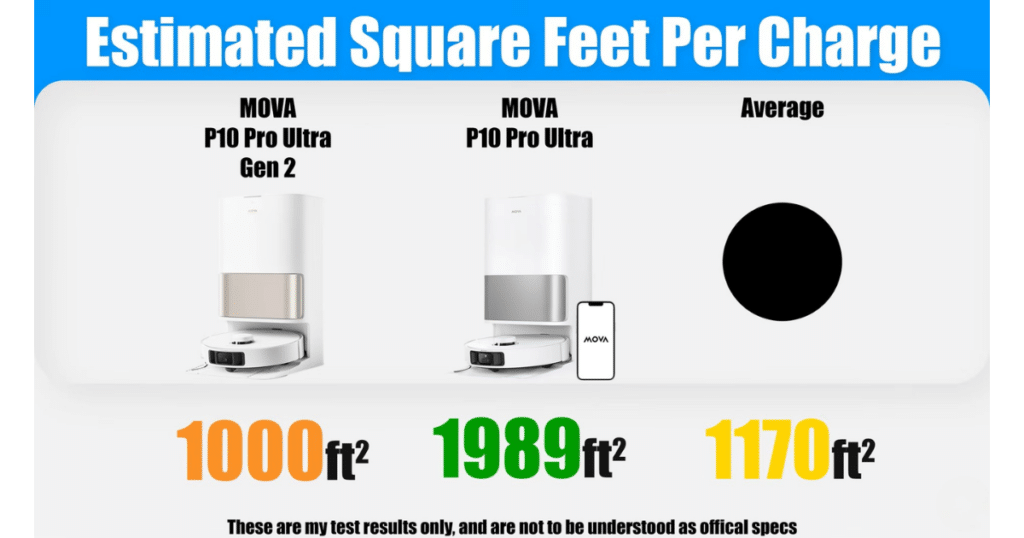
Estimated square footage per charge also dropped from nearly 1,989 square feet on the first generation to about 1,000 on the Gen 2, compared to a 1,170 average.
Final Verdict: Should You Buy the MOVA P10 Pro Ultra Gen 2?
Overall, the MOVA P10 Pro Ultra Gen 2 ended up being a more specialized upgrade rather than a true successor.
If your priority is mopping performance—especially on hard floors—the Gen 2 is a clear improvement, with significantly better stain removal and less water left behind than the original.
However, those gains come with notable compromises. Obstacle avoidance is dramatically worse, hair pickup and tangle performance are below average, and battery efficiency took a step back compared to the first generation.
Because of these trade-offs, the original MOVA P10 Pro Ultra (see it at Amazon) remains the better all-around option for most users—particularly in homes with pets, clutter, or a mix of floor types.
The Gen 2 is still a strong contender under $600, but it’s best suited for users who prioritize mopping above all else and are willing to manage its limitations.
Frequently Asked Questions
Is the MOVA P10 Pro Ultra Gen 2 better than the original P10 Pro Ultra?
Not overall. While the Gen 2 significantly improves mopping performance and carpet deep cleaning, it falls short in key areas like obstacle avoidance, hair pickup, and battery efficiency. For most users, the original P10 Pro Ultra remains the better all-around option.
How good is the mopping performance on the Gen 2?
Mopping is the biggest upgrade. The Gen 2 adds increased downward pressure and faster spinning mop pads, resulting in much better dried-on stain removal and less water left behind compared to the first generation.
Does the MOVA P10 Pro Ultra Gen 2 have good obstacle avoidance?
No. Obstacle avoidance is a major weakness. The Gen 2 replaces the original’s camera-based system with a simpler laser sensor and performed poorly in testing, often failing to avoid common household items like cables and small objects.
Is the MOVA P10 Pro Ultra Gen 2 good for homes with pets?
It depends. While it performs well in general debris pickup, its pet hair pickup and hair tangle performance were below average in testing, making it less ideal for homes with heavy shedding pets.
Is the MOVA P10 Pro Ultra Gen 2 worth the price?
At under $600, it offers strong value—especially for homes with mostly hard floors where mopping is a priority. However, the trade-offs in navigation and hair handling mean it may not be the best choice for every household.
Compare the MOVA P10 Pro Ultra Gen 2 vs Original P10 Pro Ultra
MOVA Robot Vacuum Buyer’s Guide 2026
We outline the key distinctions across MOVA’s robot vacuum lineup to help you decide which features are worth the extra cost and which ones you can skip. Whether you’re eyeing a wallet-friendly model or a top-tier robot with advanced capabilities, we’ll cover the must-know details so you can choose the right MOVA for your home and your budget. See the Guide
MOVA P10 Pro Ultra Gen 2