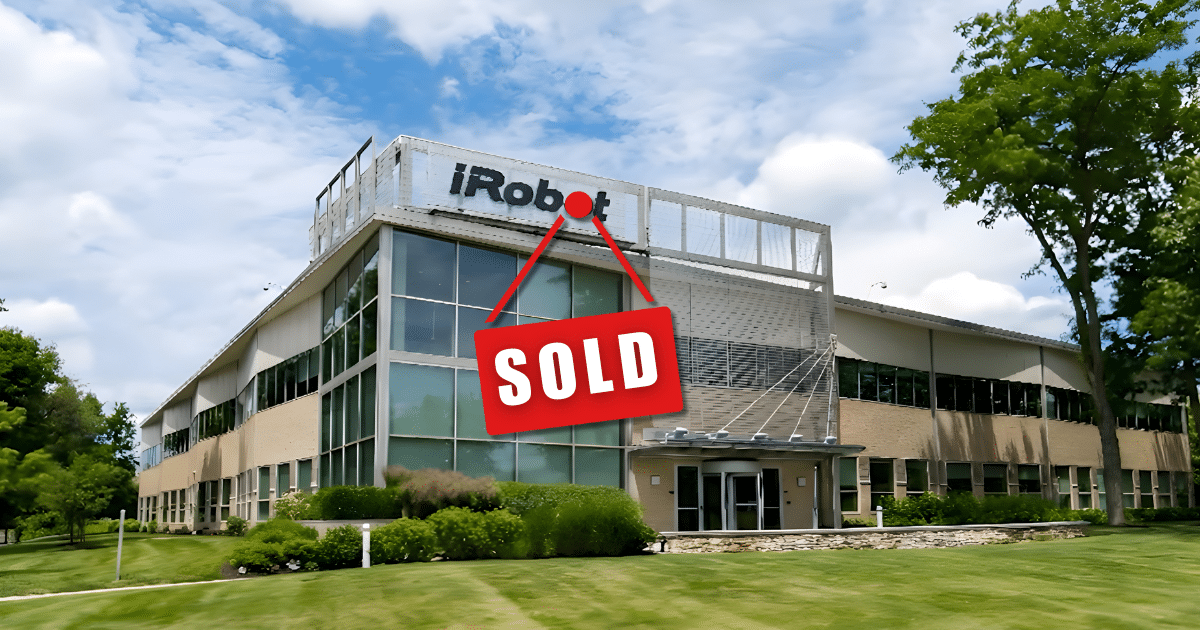
In December 2025, iRobot—the Massachusetts-based company credited with popularizing household robotics through its Roomba line—filed for Chapter 11 bankruptcy and announced that its primary contract manufacturer, Shenzhen-based Picea Robotics, would acquire the company’s equity through a court-supervised restructuring process.
The bankruptcy and planned sale of iRobot have prompted a wide range of responses, including the company’s founder and co-founders, as well as commentary from a leading Chinese robotics executive. Below is a roundup of these notable reactions and perspectives.
Colin Angle (Founder and Former CEO): Competitive Pressures and Regulatory Hurdles
Colin Angle, a co-founder and former CEO of iRobot, has framed the company’s bankruptcy as a cautionary tale about global competition and regulatory challenges. Speaking on the Hard Fork podcast (Watch on YouTube), Angle pointed to intense competition from Chinese “fast follower” companies—those that entered the robot vacuum market after iRobot had established the category, then rapidly iterated on existing designs with improvements in cost, features, and manufacturing efficiency.
According to Angle, these firms benefited from vertically integrated supply chains, faster product cycles, and access to the Chinese domestic market, enabling them to scale more quickly and undercut pricing from U.S.-based competitors.

Angle also reiterated that a proposed acquisition by Amazon—originally valued at about $1.4 billion—was blocked by antitrust regulators in the United States and Europe, a development he believes hindered iRobot’s ability to scale and survive as an independent entity. In his telling, regulatory delays and competitive disadvantages contributed to the company’s downward trajectory.
In a separate commentary, Angle has publicly criticized the Federal Trade Commission’s opposition to the Amazon deal as “wrong-minded,” suggesting that, in hindsight, the regulatory intervention may have steered iRobot toward bankruptcy instead of providing a lifeline that could have preserved its independence. [Fox Business]
Helen Greiner (Co-Founder): Personal Response and Broader Implications
Helen Greiner, another iRobot co-founder, has expressed a markedly different tone in reaction to the bankruptcy and sale. In a recent interview on Bloomberg’s Insight, Greiner described herself as “heartbroken” over the company’s bankruptcy and the transfer of its assets and technological know-how to a Chinese manufacturer. She characterized the relative public silence over this shift as “bizarre,” particularly given iRobot’s pioneering role in consumer robotics. [Bloomberg]
Greiner’s comments also touched on broader trends in U.S. manufacturing and innovation. She warned that—even with tariffs—maintaining competitiveness in complex hardware sectors like robotics remains challenging for U.S. firms in the face of global competition and persistent structural issues such as skills shortages.
Her perspective reflects concern not just for iRobot’s legacy but also for the future direction of U.S. tech leadership in robotics, as intellectual property and engineering capabilities move under foreign control.

Meng Jia (Dreame Executive): Industry View from a Competitor
Meng Jia, a senior executive at Dreame Technology, described iRobot’s bankruptcy as an “alarm bell” for the robotics industry, pointing to the pace of competition and rapid product iteration as defining challenges in the category. In an interview, Jia emphasized that long-term success in robotic vacuums depends on continuous innovation and close attention to user needs, rather than legacy brand strength alone. He framed iRobot’s situation as a broader industry lesson, rather than a failure of any single company. [Futubull]
Contextual Reactions Across the Industry
Beyond these individual voices, industry observers and former iRobot employees have reflected on what the bankruptcy means for the broader robotics ecosystem. Some have lamented the end of an era for a company that helped mainstream autonomous home robotics and pushed competitors to innovate. Others see iRobot’s experience as a reminder that first-mover advantage does not guarantee enduring market leadership, especially when resource constraints, manufacturing challenges, and strategic missteps intersect with global competitive forces and regulatory environments. [The Robot Report]
Best Robot Vacuums – Vacuum Wars’ always up-to-date rankings of the best robot vacuums. Whether you call it a robot vacuum, a robotic hoover, or an automatic vacuum cleaner, our top picks will help you find the perfect cleaning companion for your home!
Takeaways From the Commentary
Across the spectrum of reactions, several themes emerge:
- Competitive pressures from Chinese firms played a central role in shaping iRobot’s challenges, according to its founder and other industry participants.
- Regulatory decisions, particularly the blocking of the Amazon acquisition, are cited by some (including Angle) as consequential factors in the company’s fate.
- Emotional and strategic concern from co-founders like Helen Greiner highlights broader anxieties about U.S. innovation leadership and the implications of foreign acquisition of domestic technology.
- Industry competitiveness and market dynamics remain a central lens through which Dreame and other competitors view iRobot’s bankruptcy.
As iRobot transitions to private ownership under Picea Robotics, the responses from leaders and industry voices underscore both the end of a significant chapter in consumer robotics and the beginning of ongoing debates about innovation, competition policy, and global technology leadership.