Home › Robot Vacuums › Obstacle Avoidance
Independently tested. Never sponsored
The Best Robot Vacuum Obstacle Avoidance in 2026
A continuously updated ranking of the robot vacuums that performed best in our obstacle avoidance evaluations. We buy every unit we test, so these picks are based on how reliably each robot navigates around real household objects—not manufacturer claims about its sensors.
Our obstacle avoidance evaluations measure the performance of the complete system rather than awarding points for particular cameras or sensors. Robots face a standardized 24-object course made up of common household obstacles, along with a more chaotic torture test that challenges detection, navigation, and processing simultaneously. We assess whether each robot detects objects early, avoids direct contact, and behaves consistently across repeated runs and different conditions.
The ranking
The Top 5 for Obstacle Avoidance
To sort and filter by test data, use the comparison tool
RankRobotScorePrice today
Eufy Omni S2
Vacuum Wars Stars 3.90
The Eufy Omni S2 is Eufy’s flagship robot vacuum and mop, pairing its AeroTurbo 2.0 vacuum system with 30,000Pa of suction, a DuoSpiral split main brush, an extending side brush, and the HyperStream 2.0 self-cleaning roller mop. In testing, it excelled on carpets, removing 87% of embedded sand compared to the S1’s 61%, while lifting more than 88% of flattened pet hair from carpet. Its anti-tangle brush design also achieved a perfect score, with no hair wrapping during the 7-inch hair test. Obstacle avoidance was another standout, earning a flawless 24 out of 24 by avoiding every object in both standard and torture tests. The roller mop spins at 240 RPM, applies 15N of downward pressure, lifts 28mm over carpet, and is supported by the Uniclean dock, which washes the roller with 140°F water, dries it with 131°F hot air, auto-dispenses detergent, fast charges the robot, and stores up to 68 days of debris. Downsides include below-average mopping stain performance with an 82-point score, reduced water output, lower-than-average navigation efficiency and estimated square footage per charge, some fine debris scattering on hard floors, inconsistent 32mm threshold climbing, and no live camera viewing despite the onboard camera. See additional info
MOVA V70 Ultra Complete
Vacuum Wars Stars 4.08
The MOVA V70 Ultra Complete is a flagship robot vacuum and mop with a manufacturer-rated 42,000 Pa of suction and unusually far-reaching edge-cleaning hardware. Its MaxiReachX system can extend the rotating mop up to 17 cm and the side brush approximately 12 cm beyond the robot. StepMaster 2.0 raises the chassis to cross single thresholds up to 45 mm or two-stage obstacles measuring a combined 90 mm, while retractable DToF navigation helps the robot fit beneath lower furniture. The EcoCyclone dock automatically empties debris into a washable, reusable bagless container rated for up to 100 days of collection. It also washes the mop pads with water heated to as much as 212°F, dries them with 158°F air, dispenses cleaning solution, and cleans its washboard. Additional features include automatic mop removal for carpet cleaning, a 6,400 mAh battery, fast charging, automatic recharge-and-resume cleaning, ultrasonic carpet detection, app customization, and recognition for more than 300 object types. See additional info
Ecovacs Deebot T90 Pro Omni
Vacuum Wars Stars 3.90
The Ecovacs T90 Pro Omni impressed in Vacuum Wars testing as one of the brand’s best-performing robots to date, combining powerful vacuuming, excellent mopping, and premium automation features. Powered by Ecovacs’ latest Blast technology, it delivers a claimed 30,000Pa suction level and achieved airflow and debris pickup results well above average, including excellent carpet deep-cleaning performance. In pet hair testing, it earned a rare 100% pickup score versus the 82% average, while its ZeroTangle 4.0 brush system also achieved a perfect score in seven-inch hair tangle tests. Obstacle avoidance was another standout, successfully avoiding 23 of 24 objects in testing. The Osmo Roller 3.0 mopping system scored 157 points in dried stain tests, nearly 50% above average, giving it the second-highest combined mopping score ever recorded by Vacuum Wars. Additional pros include Matter compatibility, hot-water mop washing, fast charging, strong battery efficiency, and a low-profile embedded LiDAR design. The main drawback was its very small 250ml dustbin, roughly 30% smaller than average, though frequent auto-emptying helps reduce the issue. Navigation efficiency was slightly above average and threshold crossing reached 32mm though navigation quirks still occasionally appeared during testing sessions. See additional info
Ecovacs Deebot X12 OmniCyclone
Vacuum Wars Stars 3.77
The Ecovacs Deebot X12 OmniCycloneis a premium flagship robot vacuum and mop with a bagless OmniCyclone dock and a standout FocusJet pre-soak mopping system that sprays stains before cleaning them with its Osmo 3.0 roller mop. The mop spins at 220 RPM, lifts 15 mm over carpets, cleans itself with fresh water, and earned a very high combined mopping score thanks to above-average dried stain removal and low water usage. Vacuuming performance was also excellent, with strong suction, above-average airflow, perfect first-pass debris pickup, 100% pet hair removal, and zero hair tangles in seven-inch hair tests. Obstacle avoidance was another major strength, avoiding 23 of 24 objects, while the robot also crossed a 25 mm threshold after a second attempt. Additional pros include efficient battery life, rapid charging that restores 13% battery in three minutes, advanced app controls, Matter compatibility, live video monitoring, and excellent pet hair handling from the dock. Downsides included only average deep carpet cleaning, below-average crevice pickup, slightly below-average navigation efficiency, a small 250 ml dustbin, and a taller-than-average profile. It currently ranks among the highest-performing robot vacuums tested by Vacuum Wars in recent evaluations. See additional info
Eufy E28 Omni
Vacuum Wars Stars 3.20
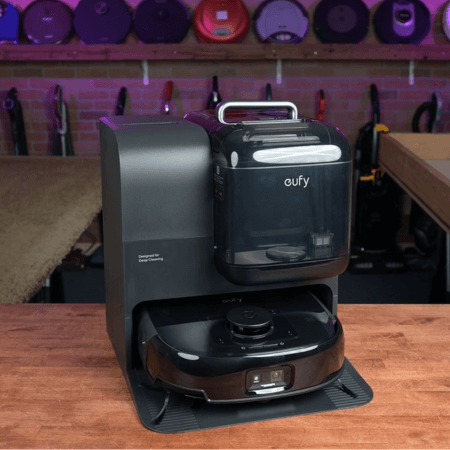
The Eufy E28 Omni robot vacuum/mop combo features advanced specifications designed for comprehensive home cleaning. It boasts a robust 20,000 Pa turbo suction capable of deep-cleaning carpets and floors. Its innovative HydroJet System includes dual water reservoirs and a dual-scraper structure, refreshing the mop continuously by cleaning the roller 360 times per minute. The E28 uniquely integrates a detachable FlexiOne portable deep cleaner for fabric surfaces and carpets. DuoSpiral detangle brushes ensure minimal hair tangling and lower maintenance requirements. Enhanced edge cleaning is provided by the CornerRover Arm, covering edges fully without manual intervention. Its all-in-one station offers self-emptying, self-cleaning, hot-air drying, automatic detergent dispensing, wastewater collection, and self-refilling. Additionally, the robot recognizes over 30 stain types and supports Matter protocol but operates exclusively on 2.4GHz Wi-Fi networks. See additional info
What changed in the rankingsUpdated 9.14 · as testing changes
9.17Added the MOVA 70 in the second spot.
9.14Updated the leaderboard with our latest 24-object results. The Eufy Omni S2 leads with a perfect 24/24, followed by three models that avoided 23/24 objects and the Dreame X60 Max Ultra Complete at 22/24.
Buying guide
How to choose a robot vacuum with obstacle avoidance
The sensor list tells only part of the story. Reliable obstacle avoidance depends on detection hardware, object-recognition software, navigation decisions, lighting, floor type, and how well the complete system works together.
What obstacle avoidance does
Basic bump sensors help a robot change direction after contacting furniture, while wall sensors and top-mounted LiDAR improve navigation around rooms. Dedicated obstacle avoidance adds front-facing sensors closer to the floor so the robot can detect items such as cords, shoes, socks, toys, and pet waste before running into or over them.
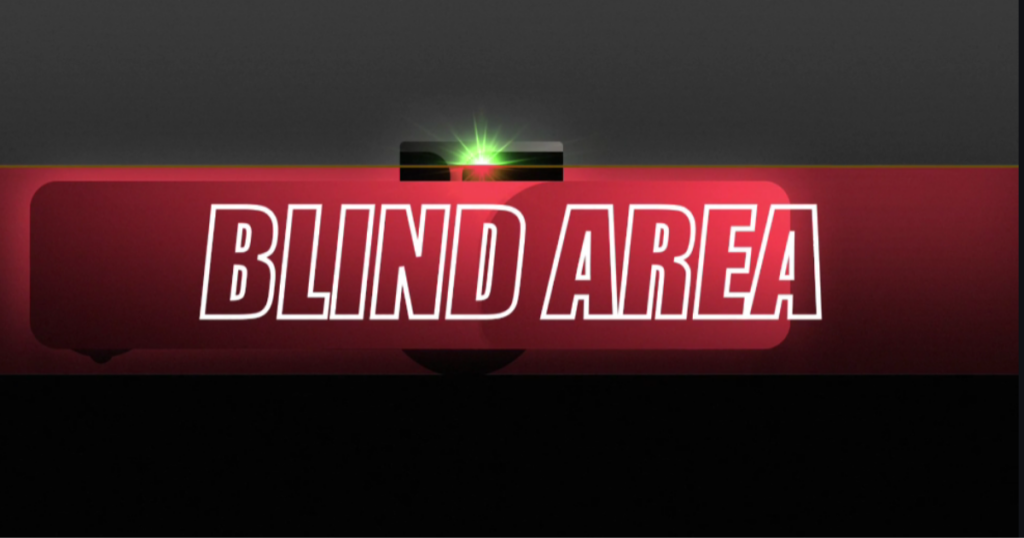
Top-mounted LiDAR is primarily a mapping and navigation tool. Because it sits several inches above the floor, it can miss low-profile objects, which is why robots with strong obstacle avoidance use additional front-facing hardware.
Best forHomes where cords, toys, pet items, or everyday clutter may remain on the floor during scheduled cleaning.
Camera-based systems
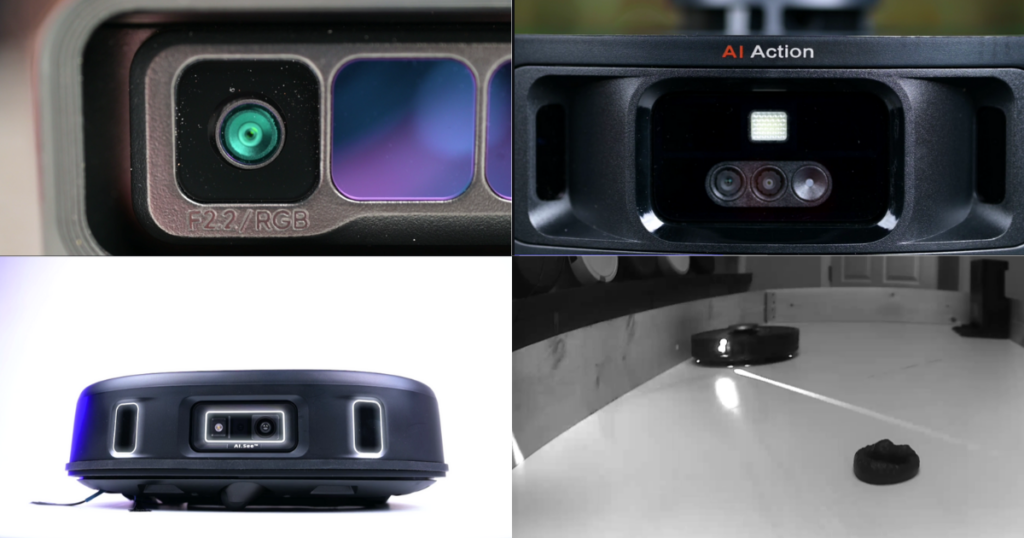
High-end robot vacuums commonly use front-facing cameras to recognize common household obstacles rather than merely sensing that something is present. Early systems relied on a single RGB camera, while modern versions often combine cameras with infrared illumination or other depth-sensing hardware to improve performance across different lighting conditions.
Camera hardware alone does not guarantee excellent results. The onboard object library, AI classification, image processing, and navigation decisions all influence whether the robot identifies an item correctly and gives it enough clearance.
Look forA camera paired with infrared illumination or another depth sensor, plus strong measured results in both bright and dim conditions.
IR laser, structured light, and ToF sensors
IR laser systems project one or more infrared lines in front of the robot and analyze the reflected light. They are often called crossed-laser or dual-line-laser systems and can provide dependable detection in low-light environments.
3D structured light projects an infrared pattern and measures how objects distort it, giving the robot a depth-based understanding of nearby items. Time of Flight (ToF) sensors emit light pulses and measure their return time to estimate distance and object size. These systems are frequently paired with cameras rather than used alone.
Watch forStructured-light-only systems without a camera or IR laser have been among the lower-scoring configurations in our evaluations.
Why sensor fusion matters
Most modern robots do not rely on one obstacle avoidance technology. Cameras can classify cords, shoes, toys, or pet waste; IR laser and structured light can provide more consistent detection in dim rooms; and ToF sensors can improve distance, size, and clearance estimates.
The robot’s software must combine that information and decide whether to slow down, steer around an item, or avoid an area entirely. Sensor fusion and software tuning can matter as much as the hardware listed on the product page, which is why we rank actual performance instead of sensor specifications.
Look forConsistent real-world avoidance across object types and lighting conditions, not simply the longest sensor list.
How Vacuum Wars tests obstacle avoidance
Our current evaluation uses a standardized 24-object course with cords, shoes, fabric, toys, simulated pet waste, and other low-profile items that commonly cause problems. We measure whether the robot recognizes each obstacle early enough to avoid direct contact while still navigating efficiently.
We also use a torture test that places multiple obstacles in the room at once. The chaotic arrangement challenges not only the sensors but also the navigation algorithms and processing power required to manage several objects simultaneously. Performance in different lighting conditions is important because visible-light cameras may behave differently from IR-based systems in dim rooms.
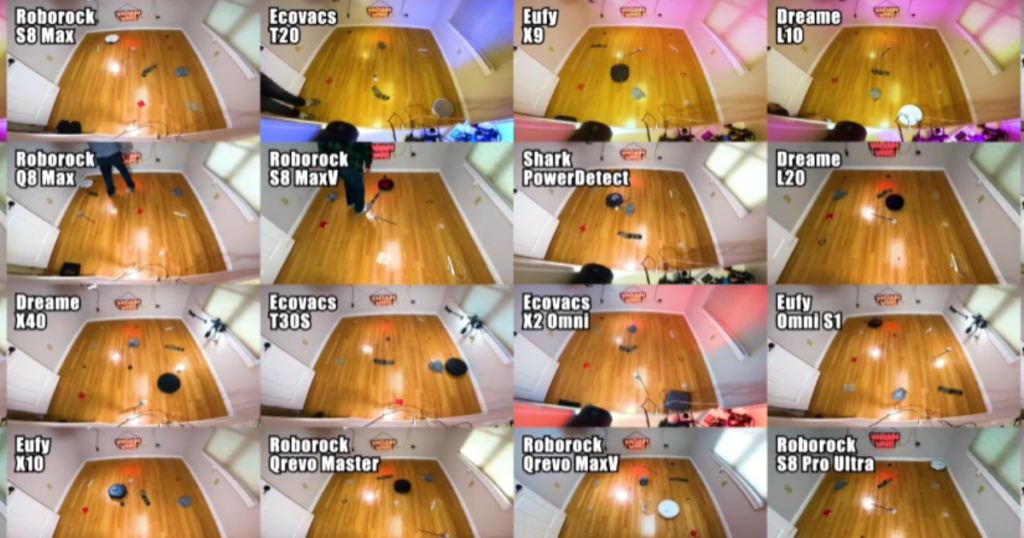
How we rankWe combine the standardized object results with broader robot vacuum performance rather than rewarding a particular sensor type.
The hardest objects to avoid
Charging cables, drawstrings, socks, lightweight fabric, and very small toys are often the most difficult obstacles. Objects that blend into the floor or sit on patterned carpet can be harder for vision systems to distinguish, while reflective, dark, or unusually shaped items can challenge depth sensors.
No robot is guaranteed to avoid every object every time. Lighting, color, shape, reflectivity, floor pattern, and room clutter can all change the outcome. Even our strongest performers should not be treated as a substitute for removing dangerous items or cleaning up pet accidents before a run.
RememberA high score means fewer interventions—not permission to leave every cord, spill, or fragile object in the robot’s path.
Is obstacle avoidance worth paying for?
Better obstacle avoidance can reduce cord tangles, dragged objects, interrupted cleaning cycles, and the risk of the robot contacting pet waste. That makes it especially useful for scheduled cleaning when no one is present to rescue the robot.
If your floors are usually open and cleared before each run, a simpler robot may provide better value. Many budget models still rely primarily on bump sensors and basic infrared sensing, which can navigate around walls and furniture but may not recognize smaller objects.
Best forPet owners, families with children, cluttered rooms, and anyone who wants dependable scheduled cleaning with less babysitting.
How obstacle avoidance evolved
Early robot vacuums depended on bump sensors: they detected furniture only after making contact. Infrared wall sensors made navigation gentler, and LiDAR later improved mapping, but top-mounted scanners still could not see many low-profile objects.
The first robot we reviewed with a dedicated obstacle avoidance system was the Ecovacs T8 AIVI in 2020. Its front-facing camera could recognize certain objects, but it also revealed how much detection depended on lighting, object libraries, and software. Since then, manufacturers have combined cameras with IR lasers, structured light, and depth sensors, while our testing has evolved from smaller grouped challenges to a 24-object course and a more demanding torture test.
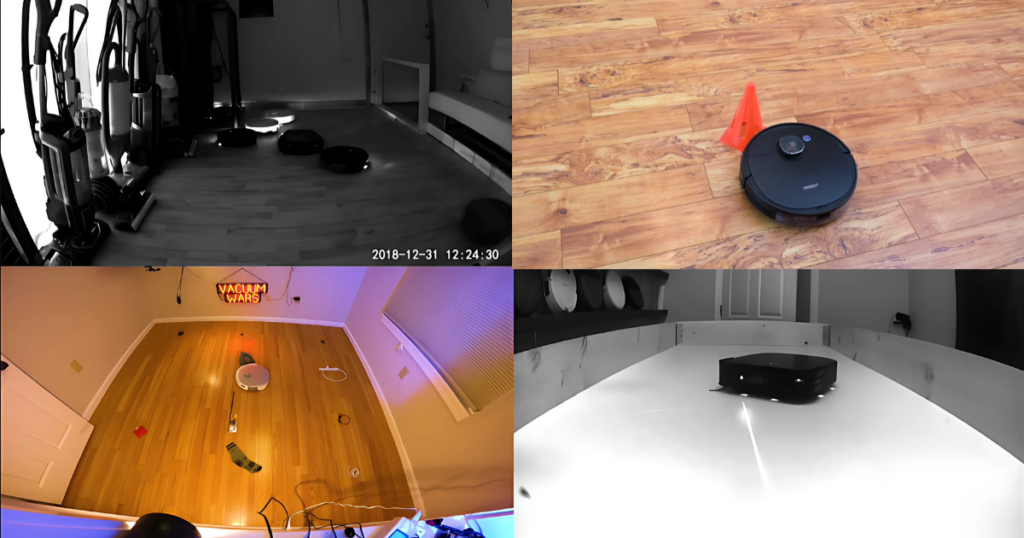
The technology continues to improve, but there is still no single sensor arrangement that guarantees the best results. Our current rankings will change as new robots are tested and existing models receive meaningful updates.
For our complete robot vacuum testing methodology, visit How Vacuum Wars Tests Robot Vacuums. To compare models directly using our full test data, use the Robot Vacuum Comparison Tool.
Why trust us
Every recommendation comes from our own studio evaluations
Vacuum Wars buys every robot vacuum at retail and accepts no free samples, loaner units, paid placements, or sponsored reviews. Brands see our conclusions only when readers do. Every unit faces the same standardized obstacle course and broader cleaning evaluations, making the results directly comparable.
Independent and reader fundedOne test suite for every robotStandardized obstacle courseRankings kept current
Browse by category
Find the right robot for your home
Every list below is drawn from the same test data as this ranking.
By need
Mop CombosRobots that vacuum and mop in one pass, ranked by our 14 stain test.
Without MoppingVacuum only robots that give up nothing on carpet performance.
Obstacle AvoidanceThe robots that cleared the most of our 24 object course.
Pet HairTop pickup scores paired with genuine anti tangle brush rolls.
Hardwood Floors · soonComing as we finish the hard floor and water penalty round.
Large Homes · soonComing as we finish battery and coverage efficiency testing.
By price
FAQ
Frequently asked questions
What is the best robot vacuum for obstacle avoidance right now?
The #1 spot above is out current top pick. That position is for the model that avoided all 24 objects in our standardized evaluation.
Do all robot vacuums have obstacle avoidance?
No. Many budget and entry-level robots use bump sensors and basic infrared sensors that help with walls and furniture but do not reliably detect cords, socks, toys, or other small floor-level objects.
Which obstacle avoidance sensor is most accurate?
No single sensor type wins consistently. The strongest systems often combine cameras for object recognition with IR lasers, structured light, or ToF sensors for depth measurement and low-light reliability. Software tuning and sensor fusion are equally important.
Is LiDAR the same as obstacle avoidance?
No. Top-mounted LiDAR is primarily used for mapping and navigation. Because it sits above many small objects, robots that excel at obstacle avoidance usually add front-facing sensors closer to the floor.
Are camera-based robots reliable in low light?
Visible-light cameras can become less reliable in very dim rooms. Many modern robots compensate by combining the camera with infrared illumination, IR lasers, structured light, or another depth-sensing technology.
Does obstacle avoidance mean a robot will never hit anything?
No. Even advanced systems can make occasional contact or miss an object. Performance can change with lighting, floor patterns, object color, shape, reflectivity, and room clutter.
Is obstacle avoidance worth paying extra for?
It often is for homes with pets, children, cords, toys, or everyday clutter, especially when the robot cleans unsupervised. If your floors are consistently open and cleared before each run, a simpler model may be sufficient.
How does Vacuum Wars test obstacle avoidance?
We use a standardized 24-object course and a more chaotic torture test. We evaluate detection, direct contact, consistency, navigation behavior, and performance across different conditions, then score the effectiveness of the complete system.