Ahead of IFA 2026 in Berlin, Vacuum Wars sat down with Junbin Zhang of Narwal Robotics to talk about the company’s latest technology, its plans for artificial intelligence and home robotics, and its future in the U.S. market. We were joined by Narwal’s Global Communications and Public Relations contact, Gabriele Fraccaro.
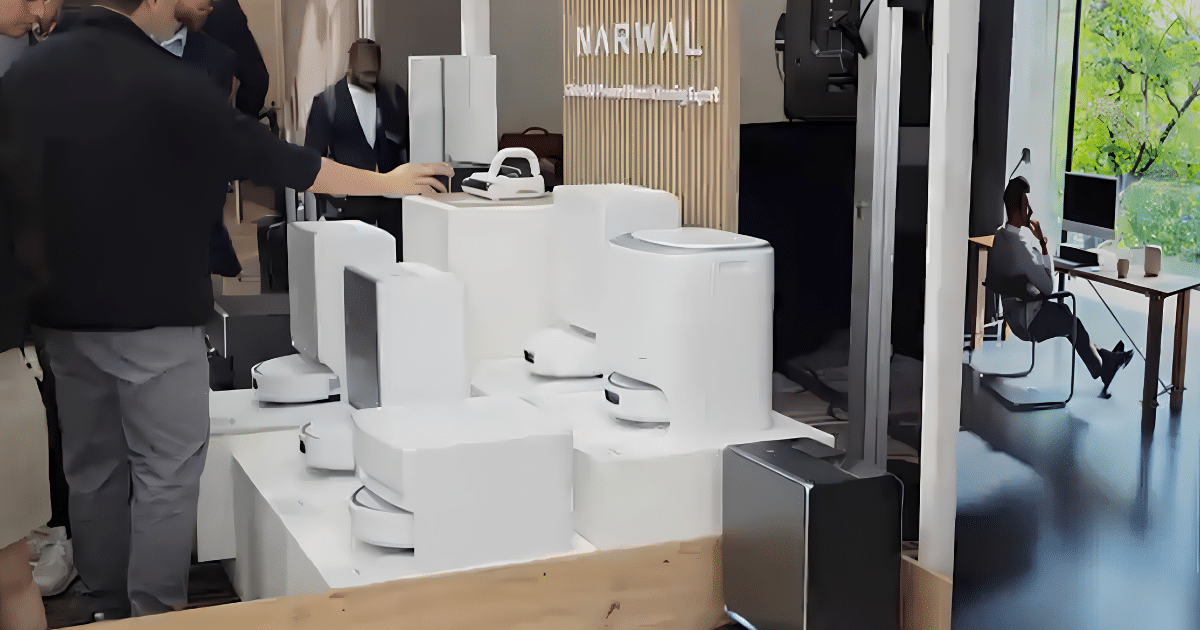
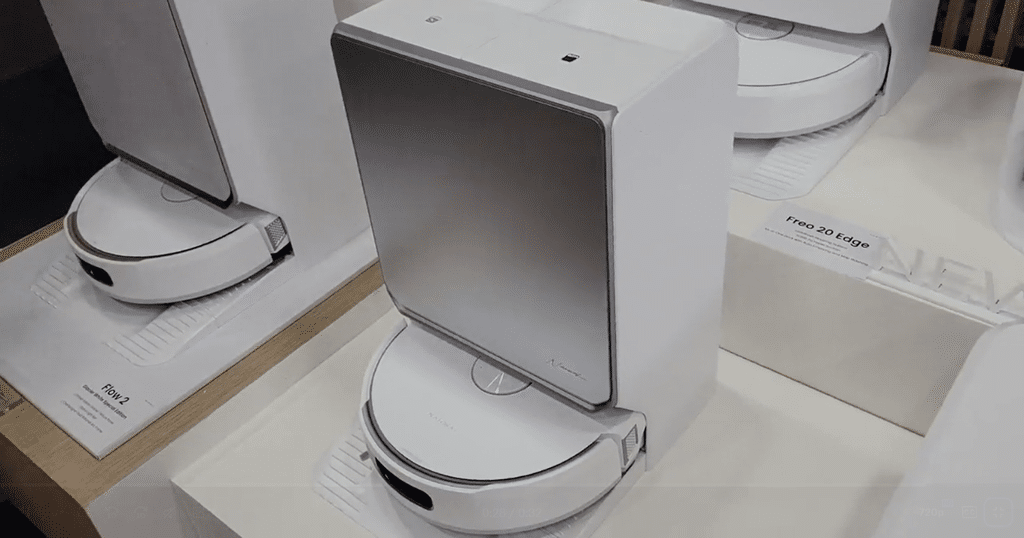
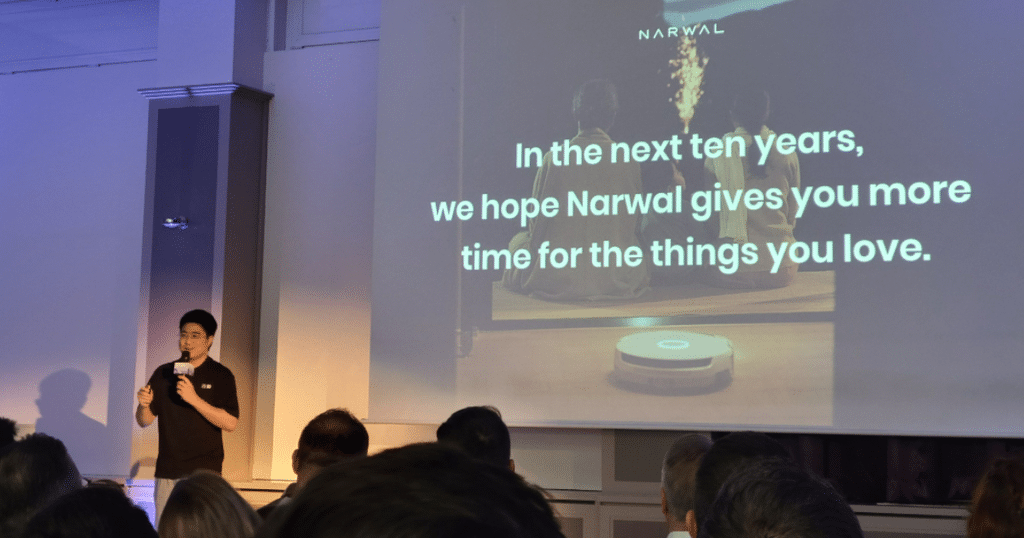
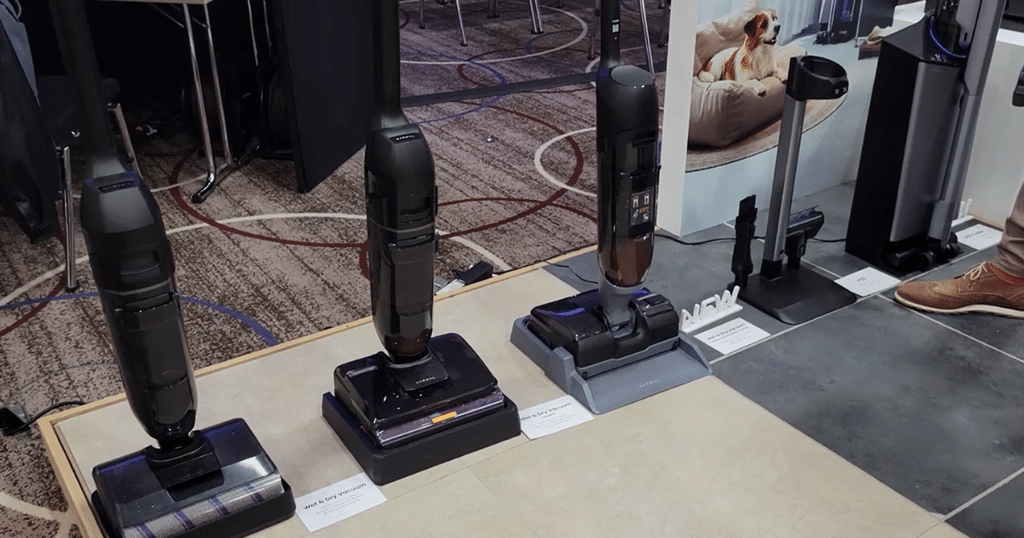
The interview took place on September 3 following a Narwal press event marking the company’s tenth anniversary. The event included a keynote led by Zhang and a hands-on look at several new and upcoming floor-care products, including the Freo 20 and Freo 20 Edge robot vacuums, the V50 Cube cordless vacuum with an auto-empty station, and an upcoming wet-dry vacuum series that had not yet been formally named or launched.
Our conversation ranged from Narwal’s evolving vision system and NarMind AI to a much bigger question: what problems are robot vacuums still unable to solve? Zhang also addressed the uncertainty surrounding future FCC regulations in the United States and explained why Narwal remains committed to the U.S. market.
The following interview has been lightly edited for clarity and length.
Flow 2 and Narwal’s Next Vision System
Vacuum Wars: Congratulations on your first decade as a company. You released a lot of new products this year. What do you see as your biggest development?
Junbin Zhang: The biggest development? I think the first thing is Flow 2. We also changed the base-station design, which has received a lot of good feedback from overseas customers.
Vacuum Wars: You mean the aesthetic?
Zhang: Yes. Previously, we were more round-shaped. Right now, we are flatter, so the design is different.
We also made improvements to the track mop. We introduced the track mop last year, but this year we have made a lot of internal improvements involving noise, quality, and cleaning efficiency. Our track mop this year has very good performance compared with the first generation we developed last year.
We also have double-eye vision, along with AI and software improvements that help the robot better understand the environment and dirt. It has different intelligent modes to tackle different cleaning problems in the home.
This year, we also released a special robot in China, but we haven’t brought it to the rest of the world. It has a special perception system that brings double-eye vision and LiDAR together at the front. It is a very compact robot perception system. We have tested it, and it has much better obstacle-avoidance and object-detection performance compared with the previous double-eye vision system.
We are currently testing it in the Chinese market, and we will bring it to customers next year. We began using double-eye vision in 2024, and we believe this is the best way for a robot to understand the world, avoid obstacles, and clean.
Many competitors use structured light, double eyes, LiDAR, or sensors on the top surface. I don’t think those are the most intelligent ways for a robot to understand the world. The intelligent way is to use cameras, like Tesla does, so we use double eyes.
The software workload is very large because the double-eye vision software requires significant R&D. But we think it is the best way, so we upgrade it generation after generation to give customers a better experience.
The R&D is difficult, but the technology has a very high ceiling for robots. In the future, robots may become smart enough to clean areas by themselves without requiring you to use an app and tell them what to do. Maybe you won’t need an app. The robot will understand everything and clean the home very intelligently. That is why double-eye vision is very important.
Dual-Fisheye Vision and NarMind AI
Vacuum Wars: What is the mechanical advantage of the double-eye system? Is it depth perception? Is it a larger field of vision?
Zhang: The first thing is that we use two fisheye cameras. It isn’t simply double eyes; it is two fisheyes. Because a fisheye has a very wide range, there are two fisheye cameras at the front.
Second, we have very high-resolution cameras. That gives the robot good perception of very small things. For many robots on the market, the resolution is quite poor. We have 1080p resolution for the double eyes. These very high-resolution cameras can see details on the ground. If you have more detailed information, you can take better action.
Vacuum Wars: NarMind uses this system with the double eyes plus AI to make smarter decisions. What do you see AI doing for a robot besides obstacle avoidance? How do you think AI will grow with robots?
Zhang: The first thing is recognition. AI has better recognition capabilities now than it did maybe 10 years ago. You have a smarter brain and more information collected, so the robot can see objects more precisely and determine what they are.
I think this is very important for robot vacuums because there are some things you cannot clean directly. You need to move around them, such as pet waste. You can’t simply clean it, because that could damage the machine. Different kinds of dirt and obstacles have different shapes and appear in different scenarios. AI can help the robot identify different objects more precisely.
The second area is communication with robots. Previously, communication with a robot was not very good. With AI, you can talk to it directly, and it can understand your purpose. First, it needs to understand your intent. Second is language and translation. The robot needs to understand your language, translate it, and then understand what you mean.
Once it understands, it can break the command into a mission. For example, you might say, “Hello, Narwal, the mop is too wet.” The robot needs to understand that it should adjust the water-injection rate.
This type of understanding is perfect for AI. We will open the API as a collection of skills for the AI. One skill might be movement, and another might be adjusting the water-injection rate. When the robot understands a customer’s command, it needs to activate the appropriate skills. AI plays a very important role in the middle.
What Robot Vacuums Still Haven’t Solved
Vacuum Wars: Narwal has a reputation for problem-solving, as in the invention of the mop-washing base station. What problems do you think the industry still hasn’t solved?
Zhang: I think it is coverage. Robots still cannot achieve 100% cleaning coverage. Homes are very complicated, and we have a lot of furniture and objects in them.
To achieve 100% coverage, a robot arm is needed. It is the only solution. A robot that only moves around is not enough, because there will always be areas it cannot enter. There may be corners with objects in the way. The robot cannot go inside, so it needs an arm to clean those areas.
I think achieving 100% cleaning coverage is one of the main problems for cleaning robots. It is also what customers need most.
The FCC and Narwal’s Future in the United States
Vacuum Wars: Because we’re U.S.-based, I have to ask about the FCC. How is Narwal thinking about the U.S. market in light of the changes involving the FCC?
Zhang: We still pay a lot of attention to the U.S. market, even with the FCC. Our new products, including the Freo 20, Freo 20 Edge, and Flow 2, have already entered the U.S. market, and we have received FCC authorization. It is not a big problem for us this year or next year.
For future products, we still need to wait for the final decisions between the governments. But we will try our best to deliver products to U.S. customers. In the future, that could mean modifying or removing some features to avoid FCC issues.
If the robot is clever enough, perhaps it does not need to connect to the internet. It could have a very powerful edge-computing chip and operate simply as a tool inside your house. You would not need to connect it to the internet and could use it freely. That is also a possible solution.
I think customers in the United States are the same as customers in China: they all want good products. I don’t think a robot vacuum is a dangerous machine for our country. It is just a cleaning tool. I believe this can be resolved in the future. It is not a big problem, and we won’t stop anything involving the U.S. market.
Gabriele Fraccaro: The core message for us is that the U.S. market will continue to be a very important market. Our focus will remain on the United States, and at the moment we have no plans to leave the market.
We are going through all the processes to make sure we remain in the market, and we will try our best to continue providing value to customers. As soon as we have updates, we will let you know. For now, I can tell you that we are trying our best to make sure of that.
Zhang: Besides robot vacuums, we also have wet-dry machines that are growing rapidly in the U.S. market, as well as cordless vacuums and mite-cleaning products. Next year, we may bring more categories. The U.S. market is very important to us.
What Narwal Wants Vacuum Wars’ Audience to Know
Vacuum Wars: What is something you would want our audience at Vacuum Wars to know that we haven’t talked about? Is there one thing you want our readers and viewers to know about Narwal?
Zhang: Narwal is not a technology-chasing brand. We are a customer-experience-based company. Everything we do is driven by customer needs and the user experience.
We focus on detailed design, and when we launch a function, we want to launch the best version of it. That is what Narwal is doing. Like Apple, we are not in a hurry to launch a function. We will polish it and then bring it to customers. I think that is how Narwal works.
We focus on customers’ real problems and solve those problems. Details are very important to us. We polish many small things that customers may not be able to see, but that does not stop us from doing it.
“We want to deliver products with the best user experience. We do not want to add functions merely to showcase technology if those functions create more problems for the robot. That is what we want to bring to our customers.”
— Junbin Zhang, founder and CEO of Narwal
Fraccaro: Overall, I think what you just said is also the message you probably received from the keynote. I could not say it better. To put it simply, we are customer-first. We put the customer’s pain points first. The technology serves the customer.
Zhang: Yes. We have the number-one review rating in the Chinese market. Compared with our competitors, we have received the best review ratings, and we have certification from third-party organizations.
We believe we have the products with the best user experience and the best user feedback in the Chinese market. We think we can perform just as well in overseas markets, and we are determined to do so.
Narwal Robot Vacuum Buyers Guide – 2026
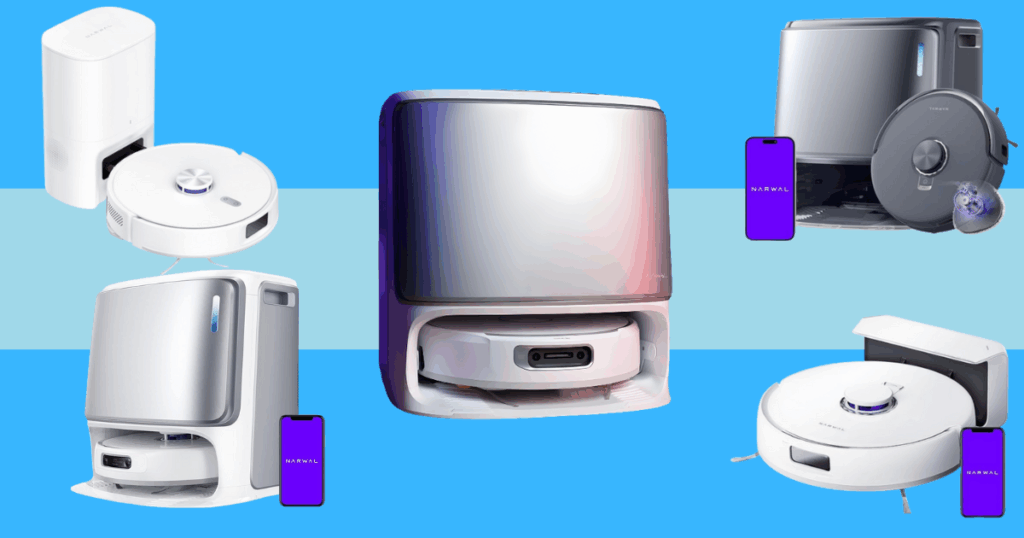
Our Narwal Robot Vacuum Buyer’s Guide explains the differences between models so you can easily compare features and prices. We cover everything from the best budget-friendly Narwal vacuums to the most advanced systems with self-cleaning docks and smart navigation. Whether you’re upgrading or buying your first robot vacuum, this guide will help you choose the best Narwal robot vacuum for your home and budget. See the Guide
Top 20 Robot Vacuums
Explore Vacuum Wars’ always up-to-date rankings of the best robot vacuums, based on independent, hands-on testing. We purchase every unit ourselves and have evaluated more than 150 models, giving us a deep benchmark for cleaning performance, navigation, battery life, and advanced features like obstacle avoidance and mopping.