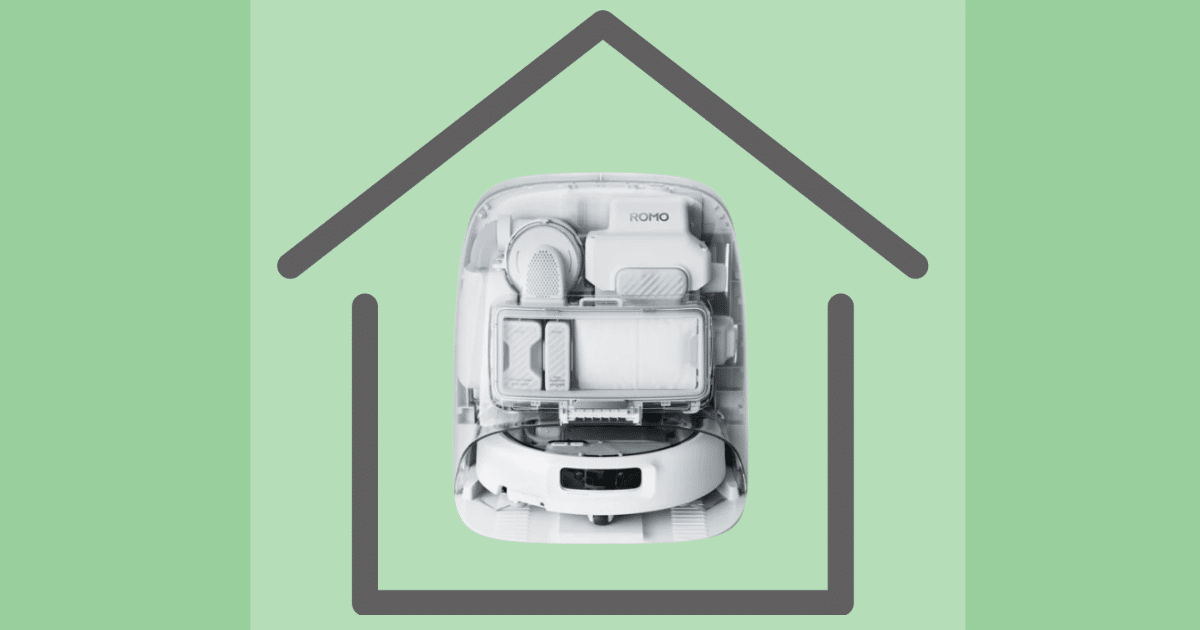
DJI has announced Local Data Mode for its ROMO 2 robot vacuums, a privacy option the company says keeps navigation data on the device while core cleaning functions work offline. The October 29 announcement brings a new development to a product family we have followed through its China launch, European rollout, reported security vulnerability, and unresolved U.S. availability.
The distinction for U.S. readers is important: a privacy feature does not establish a U.S. launch or FCC authorization. DJI’s regulatory difficulties predate the broader rules affecting foreign-produced robot vacuums. Its earlier restrictions, the later robotics rules, and ROMO’s U.S. availability each have their own timeline.
What Local Data Mode Does
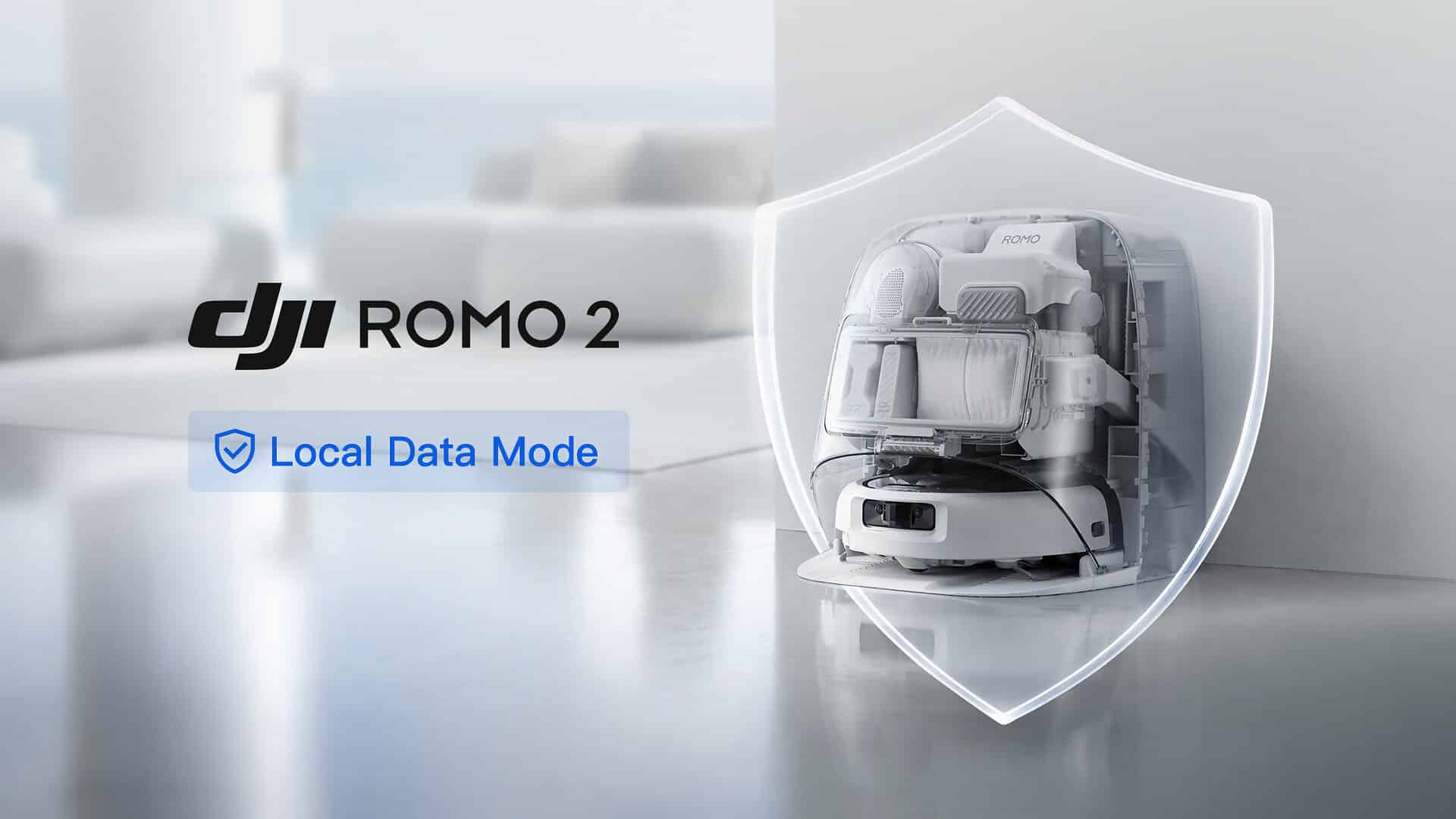
According to DJI’s ROMO privacy guidance, Local Data Mode disconnects the DJI Home app from the internet and keeps maps and images stored and processed on the robot. Initial mapping still requires an internet connection. DJI says the robot connects when first powered on to map its surroundings, then stores that mapping data locally once the mode is activated.
DJI says navigation and obstacle avoidance continue offline. Users can start or customize cleaning and return the robot to its charging dock without an internet connection. To enable the feature, owners need supporting firmware, then select Device Settings → Security Settings → Local Data Mode in DJI Home.
The rollout starts with ROMO 2, with future ROMO models also planned. The announcement does not confirm an update for the original ROMO S, A, or P.
Why Privacy Matters for ROMO
DJI is a Shenzhen, China-based company best known for drones. Our original ROMO coverage followed its move into robot vacuums with the S, A, and P models in 2025, including camera-based obstacle sensing adapted from its drone technology. We subsequently covered the European rollout, while a U.S. release remained unconfirmed.
In February 2026, we reported on a ROMO security vulnerability described by The Verge. A researcher reportedly gained access to data from approximately 7,000 devices across at least 24 countries, including camera feeds and home maps. The reported problem involved cloud authorization controls: encryption during transmission did not prevent an authenticated client from accessing data it should not have been allowed to see.
Our report noted that DJI said it had deployed automatic patches on February 8 and 10, with additional fixes then forthcoming. That history explains why local processing is relevant, but the new mode should not be described as proof that every security issue has been eliminated.
Other Privacy and Security Measures
DJI’s release cites security certifications and says a 2026 TÜV SÜD penetration test of ROMO P2 and DJI Home found no critical, high, or medium-risk findings. These are company-reported assurances, not independent Vacuum Wars verification of the new mode.
DJI also describes opt-in data permissions and controls for obstacle photos. Its Trust Center says turning off On-Site Photo stops those images from being uploaded for viewing in the app without disabling obstacle detection. That photo setting is distinct from Local Data Mode.
How the FCC Timeline Fits
The earlier DJI restrictions and the later robot-vacuum rules are separate developments. On December 22, 2025, the FCC added foreign-produced drones and critical components to its Covered List, alongside communications and video-surveillance equipment and services specified in Section 1709 of the FY2025 National Defense Authorization Act. A subsequent FCC notice about DJI’s reconsideration request expressly identifies DJI communications and video-surveillance equipment within that action. Its scope was therefore not limited to drones.
On July 28, 2026, the FCC separately added foreign-produced advanced robotic devices, with an exception for devices granted Conditional Approval. The agency restates that date and scope in its September conditional-approval notice. As we explained in our coverage of the broader robot-vacuum restrictions, the definition can encompass modern connected robot vacuums and is not based solely on where a brand is headquartered.
Those restrictions generally affect eligibility for new FCC equipment authorization. Previously authorized robot-vacuum models remain a separate case: the broader action did not prohibit owners from using them or prevent continued production, importation, and sale under their existing authorizations.
Our earlier ROMO first look explained that the product was not officially supported in the United States and that region workarounds fell outside our review standards. The new privacy announcement does not provide a ROMO-specific FCC authorization, exemption, or U.S. release date.
What This Announcement Changes
Local Data Mode gives ROMO 2 owners an additional way to limit cloud dependence, according to DJI. For U.S. shoppers, the outstanding question remains official availability and the applicable authorization. For readers following security, the useful distinction is between what the manufacturer says the mode does and what independent testing has established.
Browse by category
Find the right robot for your home
Every list below is drawn from the same test data as this ranking.
By need
Mop CombosRobots that vacuum and mop in one pass, ranked by our 14 stain test.
Without MoppingVacuum only robots that give up nothing on carpet performance.
Obstacle AvoidanceThe robots that cleared the most of our 24 object course.
Pet HairTop pickup scores paired with genuine anti tangle brush rolls.
Hardwood Floors · soonComing as we finish the hard floor and water penalty round.
Large Homes · soonComing as we finish battery and coverage efficiency testing.
By price
More Vacuum Wars Coverage of the FCC Action
Matic Robot Floor Cleaner Granted Conditional Exemption From FCC Covered List – October 5, 2026
Narwal CEO Junbin Zhang Explains How Dual-Fisheye Vision and NarMind AI Are Changing Robot Vacuums – September 9, 2026
Matic Says It Does Not Yet Meet FCC’s 65% U.S.-Content Threshold – August 20, 2026
What the FCC’s New Robot Vacuum Rules Could Mean for Future Manufacturing – August 7, 2026
Why Is the U.S. Restricting New Foreign Robot Vacuums? – August 4, 2026
Robot Vacuum Brands Respond to FCC Restrictions as U.S. Robotics Groups Voice Support – August 4, 2026
Conditional Approval for Future Foreign-Produced Robot Vacuums – August 4, 2026
Will Your Robot Vacuum Still Work? What the FCC’s New Rules Mean – August 3, 2026
America’s Robot Vacuum Ban: What You Need to Know – July 30, 2026