Updated August 3, 2026: This article has been expanded with additional details about which robot vacuums may be affected, how the FCC defines an advanced robotic device, how “foreign-produced” is determined, the Conditional Approval process, and what the policy could mean for manufacturers and consumers. The FCC has not announced a new policy since our original report.
The Federal Communications Commission (FCC) has added foreign-produced advanced robotic devices to its Covered List, a move that could significantly affect the future availability of many robot vacuums in the United States.
While the announcement has prompted concerns about a potential ban on robot vacuums, the new policy does not affect robot vacuums already in consumers’ homes, previously authorized models currently being sold, or newly manufactured units of those previously authorized models. Instead, the restrictions primarily apply to foreign-produced robotic devices seeking FCC authorization after the Covered List was updated on July 28, 2026.
What the FCC’s Decision Means
Even before this restriction, wireless radios—such as the Wi-Fi and Bluetooth transmitters used in robot vacuums—had to comply with FCC requirements before the products could be authorized for sale in the United States. Without that authorization, companies cannot legally introduce new products into the U.S. market.
The FCC’s Covered List identifies products and services that the federal government has determined pose unacceptable risks to U.S. national security. Products on the list generally cannot receive the FCC authorization required before they can be imported, marketed, or sold in the United States.
The recent change adds what the FCC calls “foreign-produced advanced robotic devices” to that list. As a result, new products in that category will, by default, not receive the FCC approval needed to enter the U.S. market unless they qualify for an exemption through the Conditional Approval process.
The FCC emphasized that the decision does not:
- Prevent consumers from continuing to use robot vacuums they already own.
- Prevent retailers from selling robot vacuum models that already received FCC authorization.
- Prevent manufacturers from continuing to produce and import newly made units of previously authorized models.
- Prevent certain software or firmware updates needed to protect consumers and maintain existing products.
- Apply to products sold exclusively to the U.S. federal government.
Do Robot Vacuums Fall Under the New Rules?
Although the FCC’s announcement does not specifically mention robot vacuums, the accompanying FAQ defines an “advanced robotic device” in a way that appears to cover most modern robot vacuums.
According to the FCC, an advanced robotic device includes a mechanical mobile device that:
- can move on the ground, navigate, or avoid obstacles,
- can operate at a distance from a human based on commands, sensor data, or both,
- uses one or more sensors to perceive its surroundings,
- communicates through Wi-Fi, Bluetooth, cellular, or another network connection,
- runs software that controls autonomous movement, perception, data collection, or remote operation,
- and weighs more than 4.4 pounds, including its docking station when applicable.
Most modern robot vacuums check all of these boxes. They navigate autonomously, use sensors to understand their surroundings, connect to home networks, run software that controls movement and mapping, and typically exceed the FCC’s weight threshold once the robot and dock are considered together.
The same change can also affect other qualifying connected robots, including robot lawn mowers and humanoid robots that meet the same criteria. The FCC separately added some foreign-produced power inverters, many of which are now network-connected devices.
Why the Government Says It Is Taking Action
The FCC says the decision is based on national security concerns. According to the determination, connected robotic devices could create both supply chain risks and cybersecurity concerns.
- Supply chain risks, which could affect U.S. economic and national security.
- Cybersecurity risks, including vulnerabilities that could potentially expose data or allow unauthorized remote access and control.
Connected robot vacuums can include cameras, microphones, LiDAR and other sensors, mapping capabilities, network connections, and remotely updated software. These technologies are central to how modern robots navigate and operate, but the government’s determination identifies them as potential sources of risk if a device or connected system is compromised.
To be clear, the FCC is not making a finding that every robot vacuum currently on the market has been used for surveillance. The ruling focuses on broader risks associated with foreign-produced connected robots.
Vacuum Wars previously covered robot vacuum security research in which vulnerabilities were demonstrated and, in a small number of widely publicized cases, exploited.
Robot Vacuum Security: What Users Should Know
Learn how cameras, microphones, mapping data, cloud connections, and software vulnerabilities can affect robot vacuum privacy and security.
Which Robot Vacuums Are Affected?
The policy appears to cover most new foreign-produced robot vacuums seeking FCC authorization after the Covered List was updated on July 28, 2026. Many robot vacuums meet the FCC’s definition of an advanced robotic device, and most are produced outside the United States.
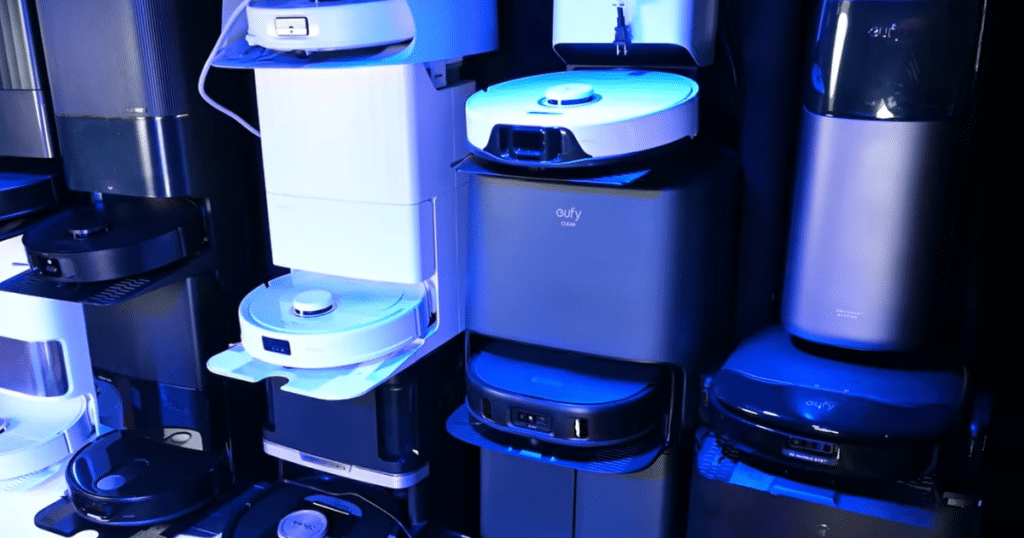
Many of the brands Vacuum Wars regularly covers—including Roborock, Dreame, MOVA, Narwal, Eufy, ECOVACS, and Samsung—currently sell robot vacuums produced outside the United States.
However, the rule applies product by product based on where and how a device is manufactured, not simply where a brand is headquartered. A company’s nationality alone does not determine whether a particular robot is considered foreign-produced.
This Is Not Targeted at One Country
The FCC says the new restrictions are country-neutral. They apply to qualifying foreign-produced advanced robotic devices regardless of which country they come from.
For this rule, whether a product is considered foreign-produced is tied to the federal government’s definition of a domestic end product. What matters is where the robot is manufactured and, in some cases, where its components come from. The federal standard also includes exceptions and technical details, so the analysis can be more complicated than simply looking at a brand’s headquarters or where final assembly takes place.
There Are Few Domestically Produced Robot Vacuums
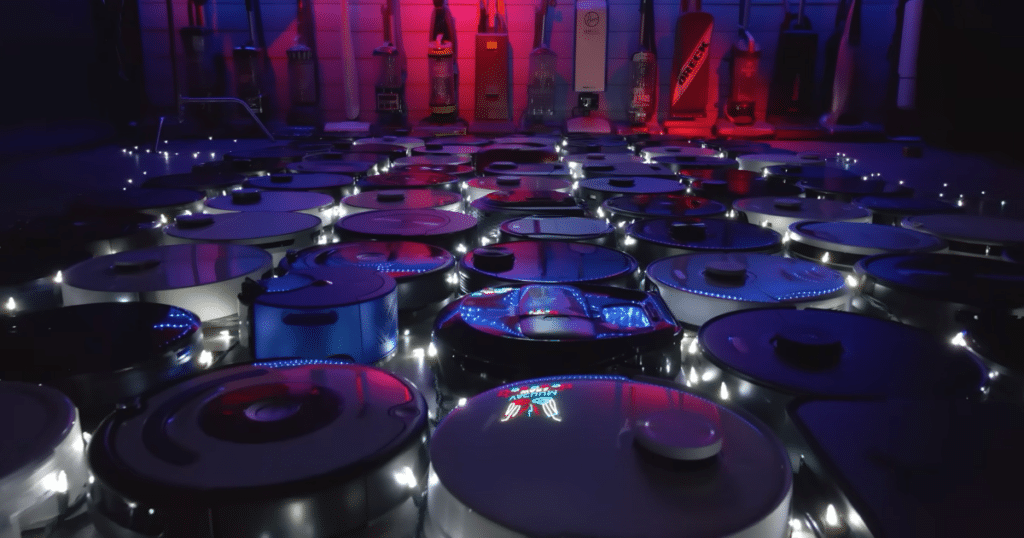
One obvious challenge for the industry is that there are currently very few domestically produced robot vacuums. As Vacuum Wars previously reported, iRobot—one of the oldest U.S.-based robot vacuum companies—was sold to Picea, a robot manufacturer in China. Even before that acquisition, iRobot and other domestic brands had already trended toward overseas production and components.
Manufacturers Can Apply for Conditional Approval
The policy includes a possible path forward. Manufacturers can apply for what the FCC calls Conditional Approval.
Companies would need to demonstrate that their products or product categories do not pose unacceptable national security risks. If the appropriate government agencies determine that a device or category of devices is safe, those products can be exempted from the Covered List and remain eligible for FCC authorization.
We do not yet know which robot vacuum companies will pursue Conditional Approval, how quickly applications will be reviewed, or whether the process will be otherwise prohibitive for some manufacturers.
What This Means for Current Owners and Shoppers
For American consumers today, the immediate effect is limited. The robot vacuum already in your home remains legal to use, and previously authorized models currently available in stores and online can continue to be sold.
Manufacturers can also continue importing newly produced units of those previously authorized models. In other words, the policy does not limit sales to units that were already sitting in stores or warehouses when the Covered List was updated.
The FCC has also issued a waiver allowing previously authorized products to continue receiving software and firmware updates needed to protect consumers and maintain functionality through at least January 1, 2029. This includes security patches and updates needed to maintain compatibility with operating systems.
How Manufacturers Could Respond
The future of the U.S. robot vacuum market will depend largely on how manufacturers respond. Companies have several possible options.
- Continue selling their current authorized lineups in the United States while pursuing approval for future models.
- Shift portions of manufacturing or assembly in an effort to qualify future products as domestic end products.
- Prioritize markets outside the United States until the regulatory picture becomes clearer.
- Create an opening for American manufacturers to enter or expand within the robot vacuum market.
Moving manufacturing or assembly would likely require significant investment and time. It is also too early to know whether any major robot vacuum brand will pursue that route.
Matic, for example, (see our review) is a U.S. brand that says it assembles its cleaning robot in the United States. However, whether any specific product qualifies as a domestic end product would depend on the applicable federal standard.
What Happens Next?
In the near term, the policy will likely slow or complicate the introduction of some new robot vacuums and technologies in the United States. However, until manufacturers announce their plans, it is too early to know how much disruption consumers will actually see.
Previously authorized models can continue to be manufactured, imported, marketed, and sold, which gives companies the option of maintaining their current U.S. lineups while deciding how to handle future products.
This remains a developing situation. Vacuum Wars will continue to follow manufacturer announcements, Conditional Approval decisions, and other relevant changes as more information becomes available.
More Vacuum Wars Coverage of the FCC Action
Matic Robot Floor Cleaner Granted Conditional Exemption From FCC Covered List – October 5, 2026
Narwal CEO Junbin Zhang Explains How Dual-Fisheye Vision and NarMind AI Are Changing Robot Vacuums – September 9, 2026
Matic Says It Does Not Yet Meet FCC’s 65% U.S.-Content Threshold – August 20, 2026
What the FCC’s New Robot Vacuum Rules Could Mean for Future Manufacturing – August 7, 2026
Why Is the U.S. Restricting New Foreign Robot Vacuums? – August 4, 2026
Robot Vacuum Brands Respond to FCC Restrictions as U.S. Robotics Groups Voice Support – August 4, 2026
Conditional Approval for Future Foreign-Produced Robot Vacuums – August 4, 2026
Will Your Robot Vacuum Still Work? What the FCC’s New Rules Mean – August 3, 2026
America’s Robot Vacuum Ban: What You Need to Know – July 30, 2026
Browse by Category
Jump to our tested picks for each type of robot vacuum, or compare any two or three robots head-to-head using our comparison tool.
Why You Can Trust Vacuum Wars Robot Vacuum Reviews
Vacuum Wars stays 100% independent and reader-supported. We buy every robot vacuum ourselves and test each one under identical lab conditions — no freebies, no sponsorships, no outside influence. Our reviews are driven entirely by data from our standardized performance tests.
Top 20 Robot Vacuums
Explore Vacuum Wars’ always up-to-date rankings of the best robot vacuums, based on independent, hands-on testing. We purchase every unit ourselves and have evaluated more than 150 models, giving us a deep benchmark for cleaning performance, navigation, battery life, and advanced features like obstacle avoidance and mopping.