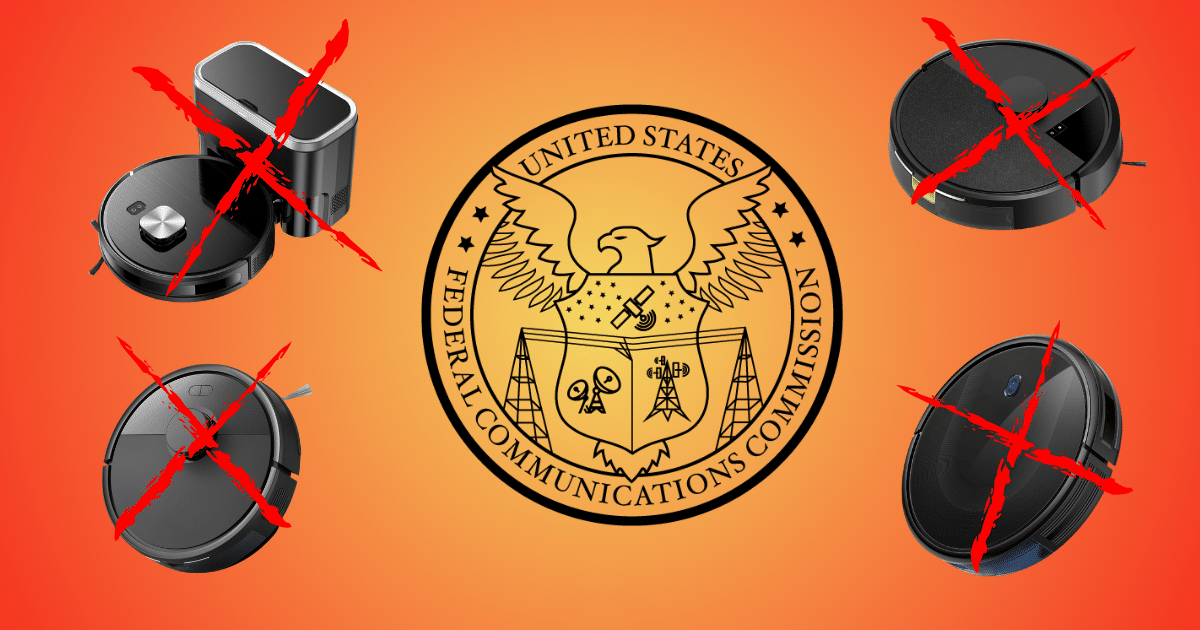
When the Federal Communications Commission (FCC) recently added foreign-produced advanced robotic devices to its Covered List, many robot vacuum owners immediately wondered what had prompted such a significant move.
The restrictions primarily affect new foreign-produced robot vacuums seeking FCC authorization, not the robots people already own. Existing FCC-approved models remain legal to purchase, import, sell, and use, and manufacturers may continue providing basic software and firmware updates.
But the larger question remains: Why is the federal government taking this step in the first place?
The Decision Didn’t Originate with the FCC
Although the FCC implemented the restrictions, the agency says it was acting on the direction of national security authorities—not making an independent policy decision.
Under the Secure and Trusted Communications Networks Act, the FCC can add products to its Covered List only after receiving a determination from qualifying national security agencies.
According to the FCC, a White House-convened Executive Branch interagency body concluded that foreign-produced advanced robotic devices “pose unacceptable risks to the national security of the United States and to the safety and security of U.S. persons.”
The Government’s Concerns
The FCC says national security agencies identified two primary risks posed by foreign-produced advanced robotic devices.
The first is supply chain security.
Officials concluded that reliance on foreign-produced robotics could create supply chain vulnerabilities capable of disrupting both U.S. economic security and national security. The government’s emphasis on supply chains is noteworthy. The official National Security Determination repeatedly cites supply-chain vulnerabilities as a separate national security concern.
The second is cybersecurity.
In the government’s National Security Determination, officials wrote that modern connected robots create “extensive vulnerabilities and vectors for attacks” that could affect both the information robots collect and their physical operation.
The determination also states that advanced robotic devices collect data that could potentially be used by malicious actors to surveil Americans, enhance the capabilities of foreign intelligence services, or remotely commandeer robots.
Unlike many connected consumer devices, advanced robots combine cameras, sensors, wireless communications, autonomous software, and physical mobility. The government argues that this combination creates risks that extend beyond ordinary data privacy concerns we commonly see with robot vacuum users.
Robot Vacuum Security: What Users Should Know
Learn how cameras, microphones, mapping data, cloud connections, and software vulnerabilities can affect robot vacuum privacy and security.
Why Robot Vacuums?
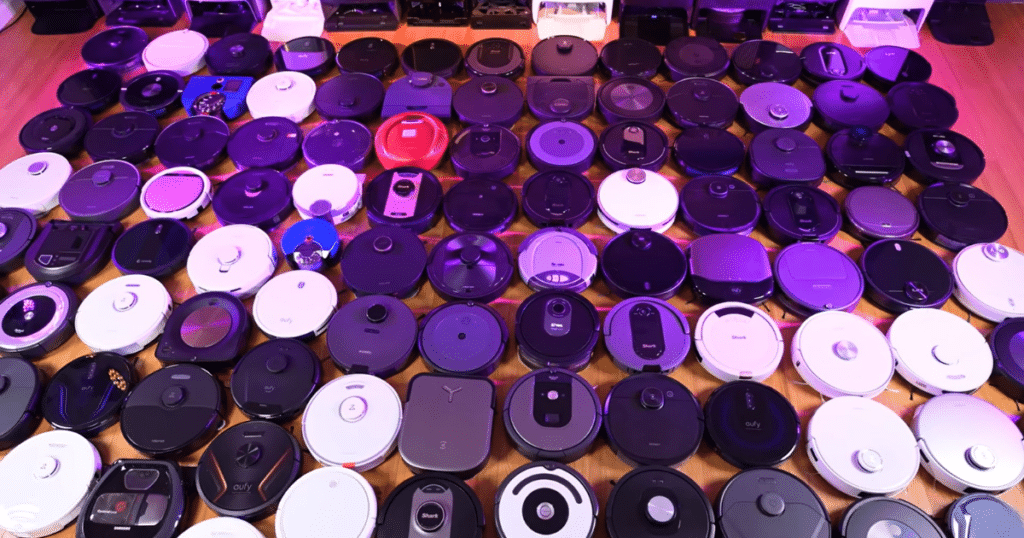
While the FCC’s action applies broadly to advanced robotic devices—including humanoid robots and quadrupeds—the definition encompasses many robot vacuums because they autonomously navigate, use sensors to perceive their surroundings, communicate over Wi-Fi or Bluetooth, and rely on onboard software to move themselves.
The government has not alleged that today’s robot vacuums are actively being used for espionage or sabotage. Rather, officials argue that the capabilities of modern connected robots and the foreign supply chains behind them present national security risks significant enough to justify restricting new foreign-produced models before they enter the U.S. market.
Other product types affected by this ruling are robotic lawnmowers and pool cleaners.
A Broader National Security Trend
The concerns surrounding robotics did not emerge in isolation.
During a recent House Homeland Security Committee hearing, lawmakers and witnesses repeatedly pointed to Chinese AI company DeepSeek and robotics manufacturer Unitree as examples of broader concerns surrounding connected technologies, supply chain dependence, cybersecurity, and foreign intelligence risks.
Witnesses argued that connected robots deserve particular scrutiny because they combine mobility with cameras, microphones, LiDAR, mapping systems, and wireless connectivity. Several also urged policymakers to avoid repeating what they viewed as the delayed response to the rapid growth of Chinese-made commercial drones.
These comments reflect the views of lawmakers and witnesses during the hearing, while the FCC’s action itself is based on the formal national security determination issued by Executive Branch agencies.
Although the recent House hearing centered largely on Chinese companies Unitree and DeepSeek, the FCC’s rule is broader. It applies to “foreign-produced advanced robotic devices” regardless of the country or nationality of the manufacturer.
What This Means for Consumers
For American customers, nothing changes today.
The FCC has emphasized that:
- Existing robot vacuums remain legal to own and operate.
- Previously authorized models can continue to be sold and imported.
- Basic software and firmware updates remain permitted through at least January 1, 2029.
- The restrictions primarily affect new foreign-produced models that have not yet received FCC authorization.
What This Means for Manufacturers
Manufacturers may also apply for Conditional Approval, allowing national security agencies to evaluate whether a specific device does not present the risks identified in the government’s determination in addition to providing a time-bound plan to move production of that product to the United States.
Those seeking Conditional Approval must provide extensive information about where their robots are designed, assembled, and manufactured, the origin of major components, software ownership, and the resilience of their supply chains. Together, those requirements suggest the government is deeply interested not only the cybersecurity of connected robots, but also the security and resilience of the industrial ecosystem that produces them.
More Vacuum Wars Coverage of the FCC Action
Matic Robot Floor Cleaner Granted Conditional Exemption From FCC Covered List – October 5, 2026
Narwal CEO Junbin Zhang Explains How Dual-Fisheye Vision and NarMind AI Are Changing Robot Vacuums – September 9, 2026
Matic Says It Does Not Yet Meet FCC’s 65% U.S.-Content Threshold – August 20, 2026
What the FCC’s New Robot Vacuum Rules Could Mean for Future Manufacturing – August 7, 2026
Why Is the U.S. Restricting New Foreign Robot Vacuums? – August 4, 2026
Robot Vacuum Brands Respond to FCC Restrictions as U.S. Robotics Groups Voice Support – August 4, 2026
Conditional Approval for Future Foreign-Produced Robot Vacuums – August 4, 2026
Will Your Robot Vacuum Still Work? What the FCC’s New Rules Mean – August 3, 2026
America’s Robot Vacuum Ban: What You Need to Know – July 30, 2026
Browse by Category
Jump to our tested picks for each type of robot vacuum, or compare any two or three robots head-to-head using our comparison tool.