Quick Answer: The FCC has not banned robot vacuums that consumers already own, and previously authorized models can continue to be sold.
- Current robot vacuums remain legal to own and use.
- Existing FCC-approved models can continue to be manufactured, imported, marketed, and sold.
- Basic firmware updates are permitted through at least January 1, 2029.
- The restrictions primarily affect future foreign-produced models that have not yet received FCC authorization, although manufacturers may apply for Conditional Approval.
If you’ve been wondering whether the FCC’s recent action means your robot vacuum is now banned or will stop working, the short answer is no.
In a fact sheet released after updating its Covered List, the Federal Communications Commission emphasized that the new restrictions do not affect robot vacuums consumers already own, nor do they prevent retailers from continuing to sell existing FCC-approved models.
What Changed?
The FCC’s Covered List identifies communications equipment and services that U.S. national security authorities consider unacceptable national security risks. Products placed on the FCC’s Covered List generally cannot receive the equipment authorization needed to be imported, marketed, or sold as new models in the United States.
On July 28, the FCC added a new category of products it calls “foreign-produced advanced robotic devices” to its Covered List.
While the FCC’s official announcement refers broadly to advanced robotic devices, its accompanying FAQ defines the category as including any foreign-produced robotic device that:
- is capable of locomotion, obstacle avoidance, navigation, or movement on the ground;
- operates at a distance from a human operator based on commands, sensor data, or both;
- weighs more than 4.4 pounds when combined with an applicable ground station or dock;
- contains an environmental sensor;
- has wired or wireless network connectivity of at least 200 kbps in either direction; and
- runs software controlling navigation, movement, perception, data collection, or remote command and control.
That definition encompasses many modern robot vacuums.
The Covered List is the FCC’s official list of communications equipment and services determined by U.S. national security authorities to pose unacceptable national security risks. Products placed on the Covered List generally cannot receive the FCC equipment authorization required before they can be imported, marketed, or sold as new models in the United States.
What This Means for Current Robot Vacuum Owners
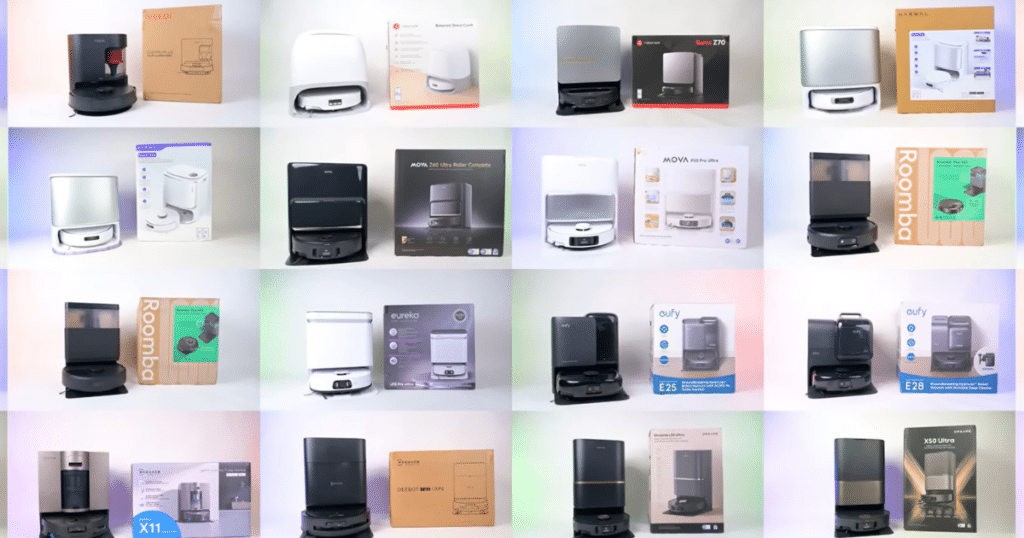
According to the FCC, nothing changes for existing customers.
The agency specifically states that:
- Previously purchased robot vacuums are not affected.
- Existing FCC-approved models can continue to be imported, marketed, and sold.
- Retailers can continue selling inventory of previously authorized models.
- Previously approved models can continue to be manufactured and imported under their existing FCC authorization.
In other words, if you already own a robot vacuum, this action does not make it illegal, disable its features, or require you to replace it.
The FCC says existing robot vacuums are not affected—they remain legal to own, use, and purchase. The FCC also recognized that existing products still need software maintenance, and even authorized products on the Covered List are generally unable to receive firmware updates. In a separate order, the FCC’s Office of Engineering and Technology (OET) issued a waiver allowing manufacturers to continue providing basic firmware updates for covered devices through at least January 1, 2029. Based on past FCC rulings for other products, it is possible that waiver can be extended if it “is warranted and in the public interest.”
What About Future Robot Vacuums?
The new restrictions primarily affect new foreign-produced robot vacuum models seeking FCC authorization in the future.
Without FCC equipment authorization, companies generally cannot introduce new wireless-enabled products into the U.S. market.
However, the FCC also announced a path forward. Manufacturers may apply for Conditional Approval through the appropriate federal agencies. If approved, those products may still be eligible to receive FCC equipment authorization and be sold in the United States.
Because of that exemption process, it is too early to conclude which future robot vacuum models will or will not reach the U.S. market.
Why Did the FCC Take This Action?
The FCC says it was required to update the Covered List after an interagency national security determination concluded that foreign-produced advanced robotic devices could present supply chain and cybersecurity risks.
According to the determination, network-connected robots could potentially be exploited to collect sensitive data, enable surveillance, or create cybersecurity vulnerabilities if compromised.
The FCC notes that it does not make these determinations independently. Under federal law, the agency updates the Covered List only after receiving formal determinations from the appropriate national security authorities. There was also a similar ruling happened with DJI drones. DJI did not plan a release for their Romo robot vacuums after the drone restriction, which prevented us from purchasing and testing the DJI Romo robot vacuums.
Robot Vacuum Security: What Owners Should Know
Learn how cameras, microphones, mapping data, cloud connections, and software vulnerabilities can affect robot vacuum privacy and security.
The Bottom Line
For most robot vacuum owners, the FCC’s announcement has no immediate impact.
Your current robot vacuum remains legal to own and use, and retailers can continue selling models that already received FCC approval. This would probably include any new robot launches that had already received approval before the ruling.
The biggest impact will be on future robot vacuum models that have not yet received FCC authorization. Whether those products eventually reach the U.S. market will depend in part on whether manufacturers obtain the Conditional Approval process outlined by the federal government.
Vacuum Wars will continue monitoring manufacturer responses and any additional guidance from the FCC as more information becomes available.
More Vacuum Wars Coverage of the FCC Action
Matic Robot Floor Cleaner Granted Conditional Exemption From FCC Covered List – October 5, 2026
Narwal CEO Junbin Zhang Explains How Dual-Fisheye Vision and NarMind AI Are Changing Robot Vacuums – September 9, 2026
Matic Says It Does Not Yet Meet FCC’s 65% U.S.-Content Threshold – August 20, 2026
What the FCC’s New Robot Vacuum Rules Could Mean for Future Manufacturing – August 7, 2026
Why Is the U.S. Restricting New Foreign Robot Vacuums? – August 4, 2026
Robot Vacuum Brands Respond to FCC Restrictions as U.S. Robotics Groups Voice Support – August 4, 2026
Conditional Approval for Future Foreign-Produced Robot Vacuums – August 4, 2026
Will Your Robot Vacuum Still Work? What the FCC’s New Rules Mean – August 3, 2026
America’s Robot Vacuum Ban: What You Need to Know – July 30, 2026
Top 20 Robot Vacuums
Explore Vacuum Wars’ always up-to-date rankings of the best robot vacuums, based on independent, hands-on testing. We purchase every unit ourselves and have evaluated more than 150 models, giving us a deep benchmark for cleaning performance, navigation, battery life, and advanced features like obstacle avoidance and mopping.