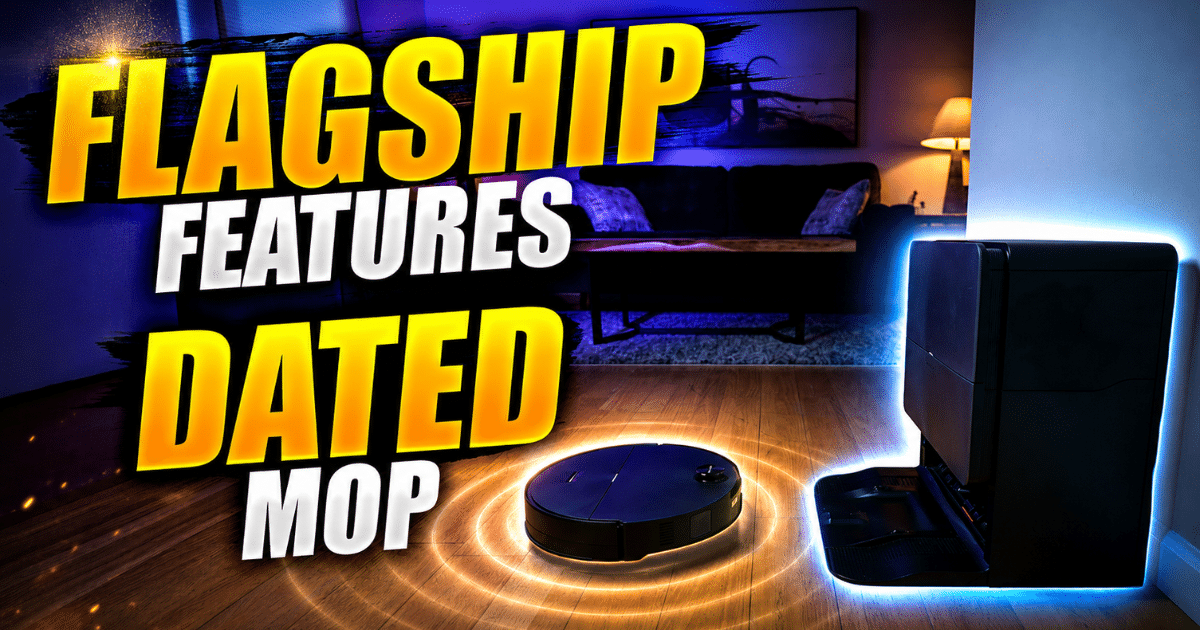
The Roborock Saros 20 Sonic is one of the newest premium robot vacuums in Roborock’s Saros lineup. We first saw it at CES 2026 in Las Vegas, and we have been interested in trying it ever since. After buying one and putting it through our studio evaluations, we found a robot with excellent carpet cleaning, outstanding mobility, effective obstacle avoidance, and one of Roborock’s most comprehensive docks—but also a mopping system that did not perform at the level we expect for this price point.
Roborock Saros 20 Sonic
Vacuum Wars Stars 3.81
The Roborock Saros 20 Sonic is a premium robot vacuum with strong vacuuming, mobility, obstacle avoidance, battery efficiency, docking automation, and app features, though its mopping and pet-hair performance were weaker. It achieved 92% in our carpet deep-clean test, the fourth-highest result we have measured, and its DuoDivide main brush and anti-tangle side brush earned a perfect score with 7-inch hair. Its AdaptiLift Chassis 3.0 cleared a 57mm single threshold, tying the Saros 20 for our all-time best result, while its retractable LiDAR lowers its height to 3.13 inches. Reactive AI 3.0 avoided 19 of 24 obstacles, beating the average and base Saros 20, and battery efficiency was above average, producing higher estimated coverage per charge despite average navigation efficiency. The RockDock washes the mop with boiling-temperature water, dries it and the dustbin channel with 131°F air, dispenses detergent, refills warm water, and supports mop removal and independent washing. The app offers detailed controls, SmartPlan, Matter, voice assistance, live video, and pet finding. However, dried-stain removal and combined mopping were well below average, pet-hair pickup reached only 78%, and the dustbin is much smaller than average in our standardized testing. See additional info
Roborock Saros 20 Sonic Overview
The Saros 20 Sonic sits in the premium tier of Roborock’s lineup, where the company places its most advanced features and automations.
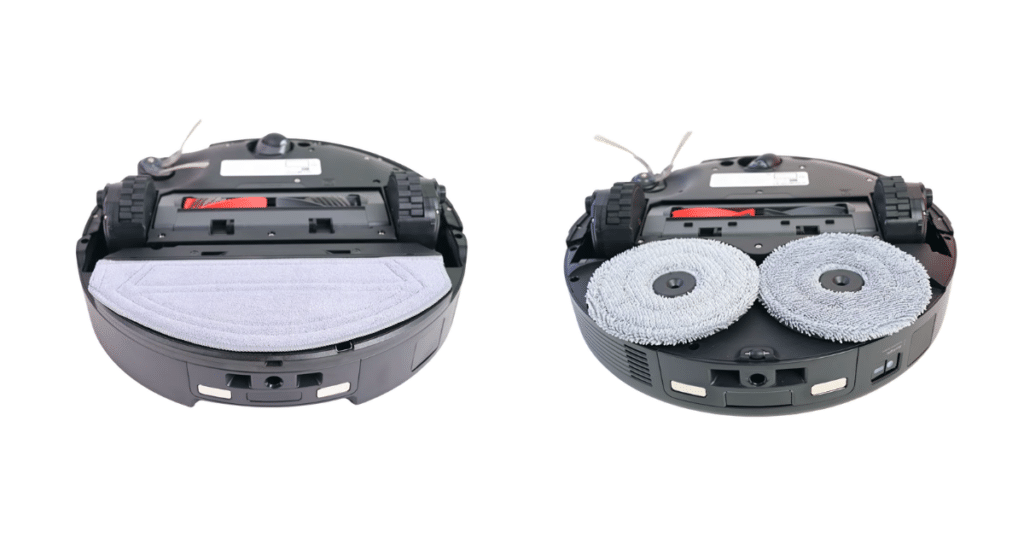
The main difference between the Sonic and the standard Saros 20 is the mopping system. The Saros 20 uses two spinning mop pads, while the Sonic uses a flat pad that scrubs the floor with sonic vibrations. That vibrating pad is where the Sonic gets its name.
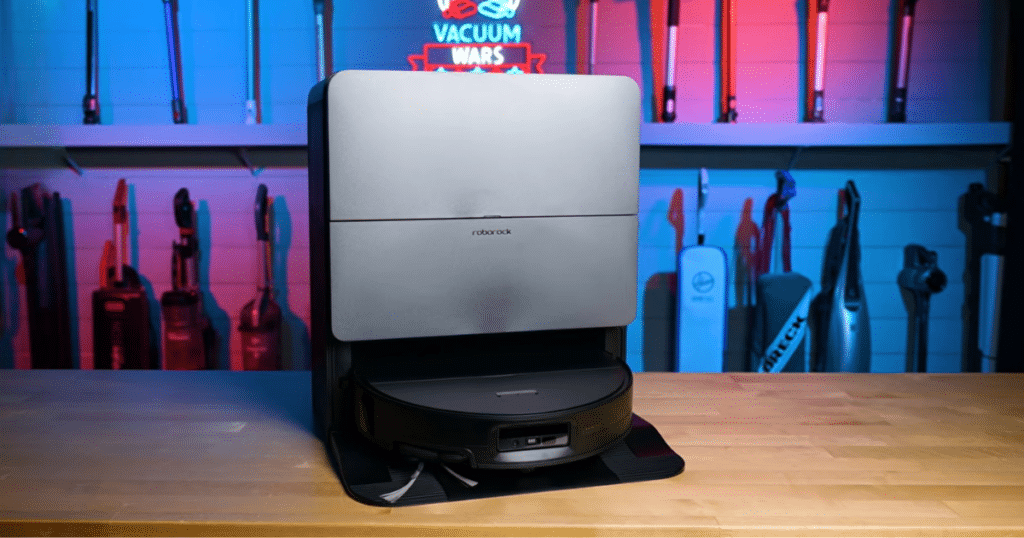
The robot also includes Roborock’s retractable LiDAR navigation system, AdaptiLift chassis, Reactive AI obstacle avoidance, DuoDivide anti-tangle brush system, extending side brush, and the latest RockDock automation features.
Vacuuming Performance on Carpets and Hard Floors
The Saros 20 Sonic performed well at its main job as a vacuum cleaner. It picked up debris of different sizes from both hard floors and carpets, and its divided main brush did a good job of directing debris toward the center of the intake.
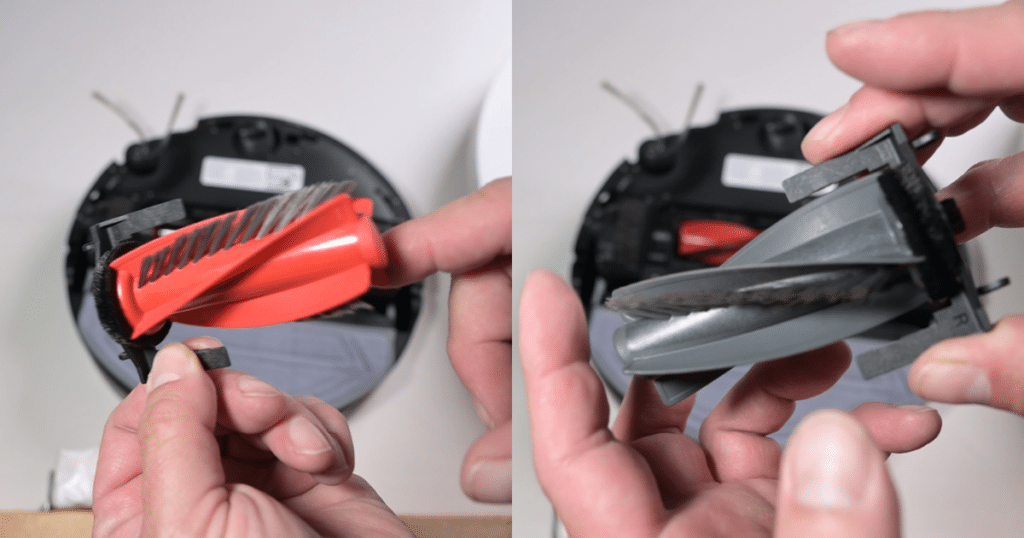
The DuoDivide brush uses two sections with a gap in the middle. Hair and debris move toward that center opening and into the dustbin rather than collecting around the ends of a traditional brush roll.
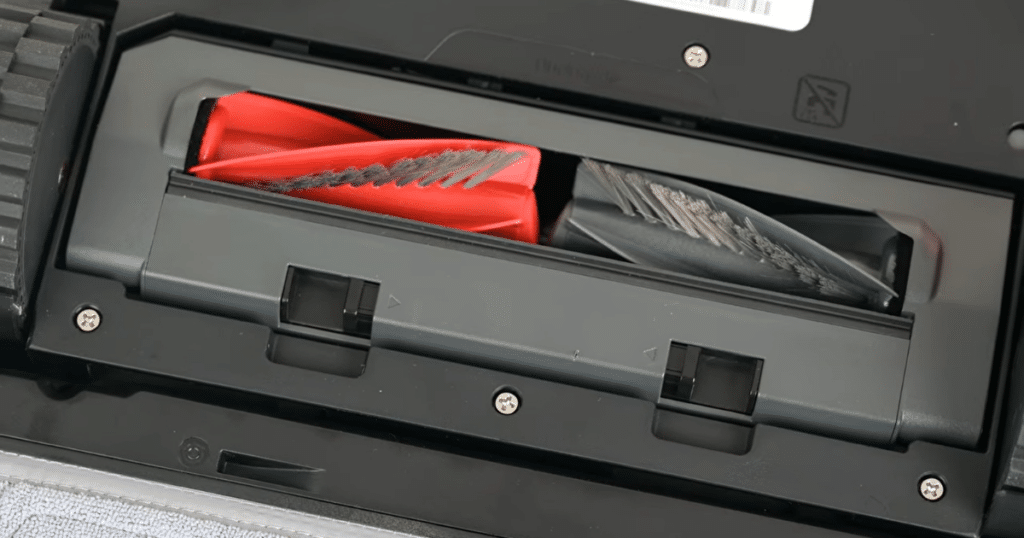
Its side brush can also extend outward to reach corners and edges, and it is designed to reduce hair wrapping.
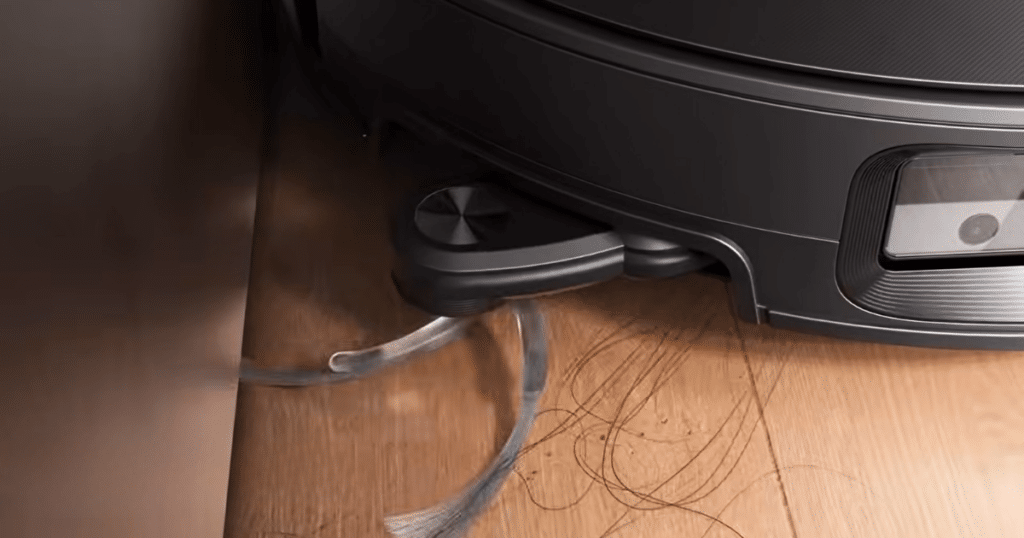
How Vacuum Wars Tests Robot Vacuums: Step into the world of Vacuum Wars, where real-world tests, straight-forward reviews, and no sponsored products redefine robot vacuum evaluations.
Excellent Carpet Deep-Cleaning Performance
The Sonic’s carpet deep-cleaning result was one of its biggest strengths.
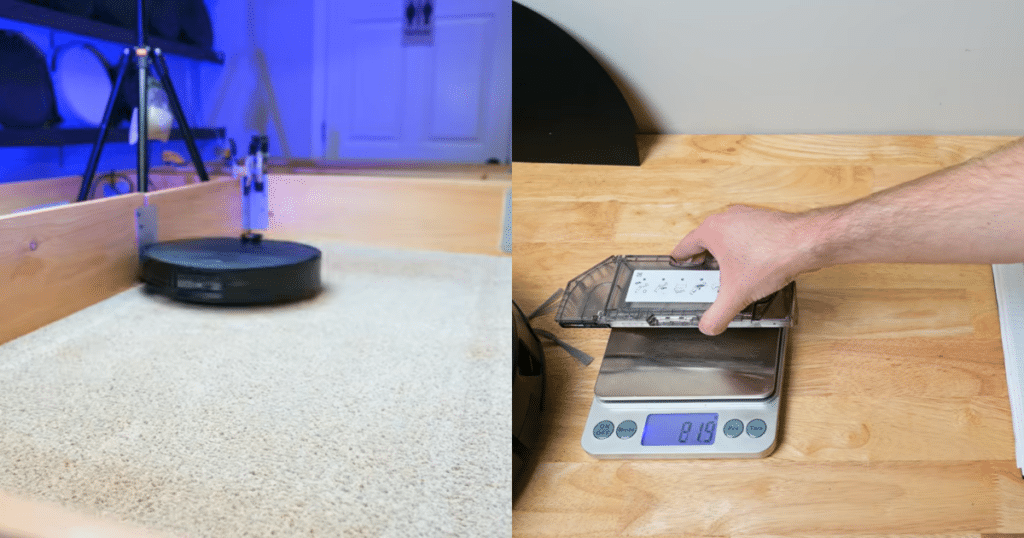
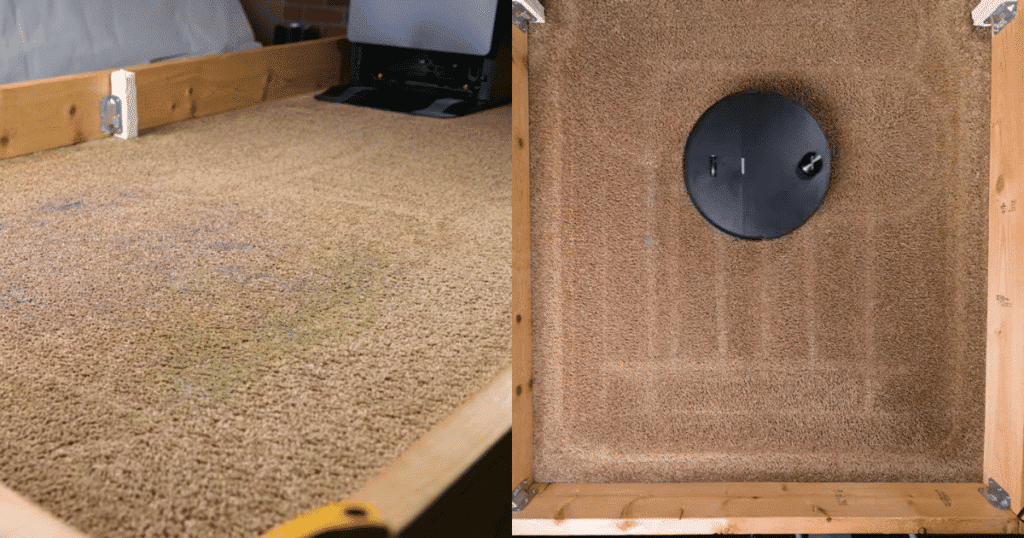
In this evaluation, we embed sand into medium-pile carpet and measure how much the robot removes. The Saros 20 Sonic removed 92%, compared with 89% for the standard Saros 20 and a 78% category average. That was the fourth-highest carpet deep-clean score we had measured at the time of testing.
That result makes the Sonic especially compelling for homes with a meaningful amount of carpet. Many premium robot vacuums now include elaborate docks and mopping systems, but their carpet results are not always equally strong. The Sonic delivered both advanced features and genuinely high carpet-cleaning performance.
DuoDivide Hair-Tangle Resistance
Hair-tangle resistance was another major advantage.
We evaluate anti-tangle systems using 7-inch hair and measure how much remains wrapped around the brush after the test. The Saros 20 Sonic had 0% hair tangling, compared with the 26% average. The standard Saros 20 also earned a perfect result.
The DuoDivide system has developed a very strong track record in this evaluation. For homes where long human hair regularly becomes wrapped around vacuum brush rolls, this is one of the Sonic’s most useful practical advantages.
Carpet and Tangle Scores at a Glance
| Test Name | Saros 20 Sonic | Category Average |
|---|---|---|
| Carpet Deep Cleaning | 92% (4th highest tested) | 78% |
| Hair Tangle Resistance | 0% | 26% |
Record-Setting Threshold Climbing
Threshold climbing was one of the Saros 20 Sonic’s standout results.
Roborock equips the robot with its AdaptiLift Chassis 3.0. The manufacturer says the system can cross a tiered threshold measuring as much as 88 millimeters, or approximately 3.46 inches. For a single vertical threshold, Roborock lists a limit of 45 millimeters.
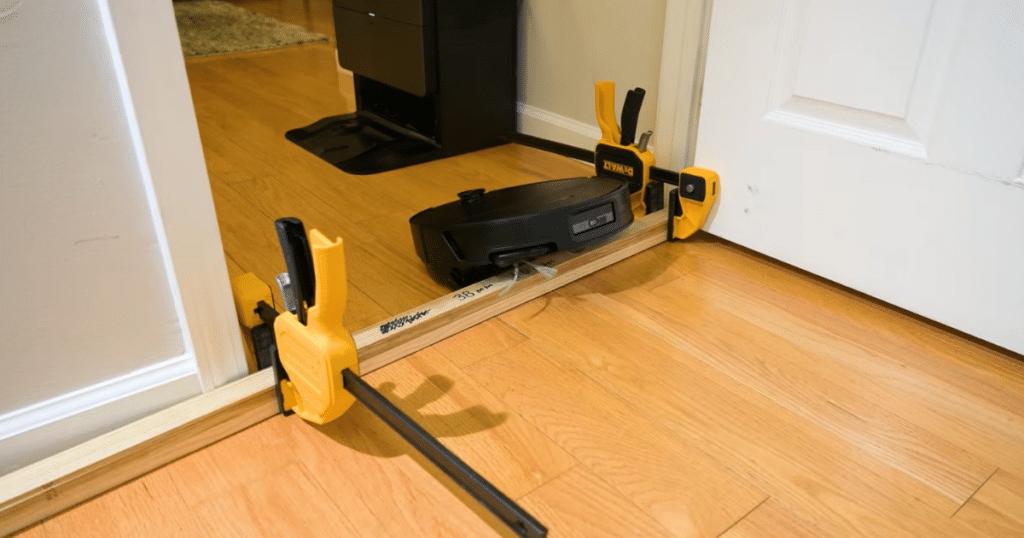
In our single-tier threshold evaluation, the Saros 20 Sonic cleared 57 millimeters. That was well above its stated single-threshold limit and tied the standard Saros 20 for the highest result we had recorded.
This capability could matter in homes with raised transitions, unusual flooring changes, thick rugs, or room dividers that stop less capable robot vacuums.
Roborock also says the lifting chassis allows the Sonic to clean carpets up to 30 millimeters thick without becoming stuck.
Low-Profile Design and Retractable LiDAR
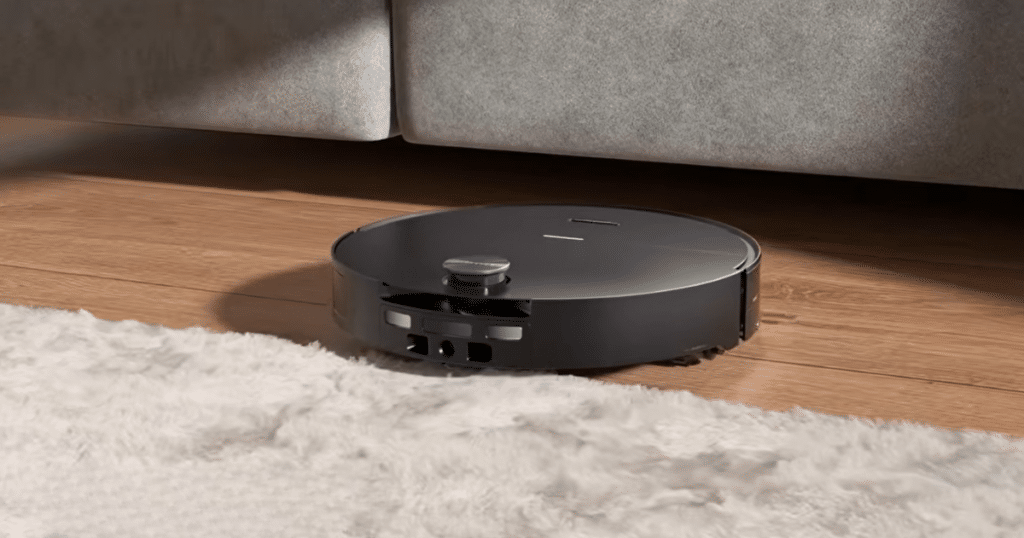
Despite its chassis-lifting hardware, the Sonic can still lower itself to approximately 3.13 inches, or 80 millimeters, when its LiDAR turret retracts. This gives it access beneath some beds, sofas, cabinets, and other low furniture that taller LiDAR-equipped robots may not be able to reach.
The retractable system lets the robot retain the navigation advantages of LiDAR while reducing its height when necessary.
Mobility at a Glance
| Category | Saros 20 Sonic |
|---|---|
| Official Threshold Climbing (Single Threshold) | 45 mm |
| Tested Threshold Climbing | 57 mm |
| Robot Height (LiDAR Retracted) | 80 mm (3.13 in) |
Obstacle Avoidance
The Saros 20 Sonic uses Roborock’s Reactive AI 3.0 obstacle-avoidance system.
Its hardware includes:
- An AI-powered RGB camera
- 3D structured light
- Roborock’s VertiBeam lateral sensor
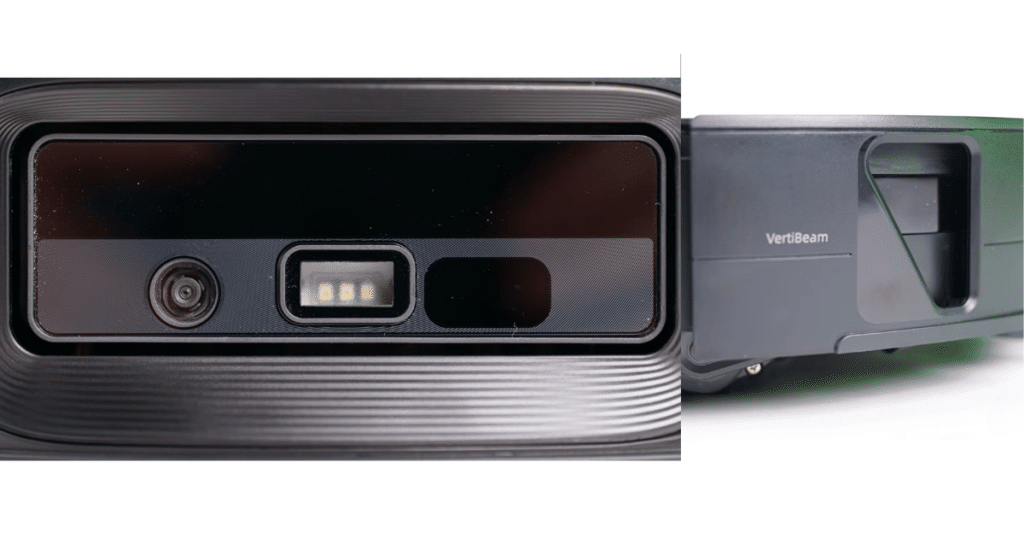
The camera is trained to identify common household objects and stains, while the structured-light and lateral-sensing systems help the robot understand the shape and position of obstacles.
Across our standard and torture evaluations, the Sonic avoided 19 out of 24 obstacles. The standard Saros 20 avoided 17, while the category average was 16. The Sonic’s above average score should reduce the amount of preparation required before starting a cleaning run.
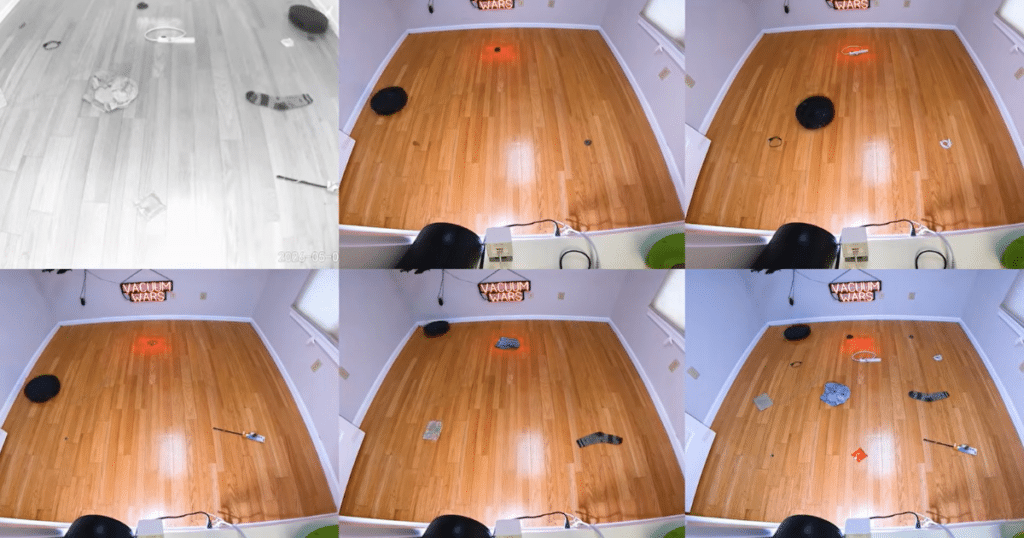
See also: How Vacuum Wars Tests Obstacle Avoidance
Navigation and Battery Efficiency
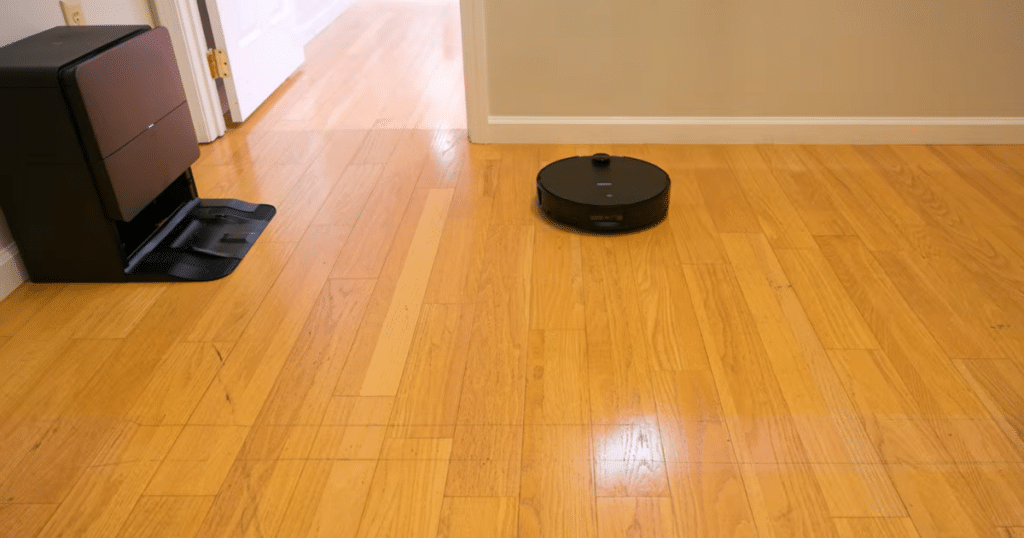
The Saros 20 Sonic’s navigation efficiency was close to average, but its battery efficiency was stronger.
It cleaned 1.65 square meters for every 1% of battery used, compared with 1.44 square meters for the standard Saros 20 and a 1.56-square-meter average.
Its navigation rate was 0.69 square meters per minute, which was just below the 0.71 average. Even so, the more efficient battery use gave the Sonic an estimated coverage of approximately 1,225 square feet per charge, compared with 1,038 square feet for the standard Saros 20 and a 1,170-square-foot average.
That combination should make it suitable for larger homes, even though its route efficiency was not among the very best we have measured.
Obstacle Avoidance and Navigation at a Glance
| Test Name | Saros 20 Sonic | Category Average |
|---|---|---|
| Obstacle Avoidance | 19 / 24 | 16 / 24 |
| Navigation Efficiency | 0.69 m²/min | 0.71 m²/min |
| Battery Efficiency | 1.65 m² per 1% battery | 1.56 m² per 1% battery |
| Estimated Coverage per Charge | 1,225 ft² | 1,170 ft² |
RockDock Automation
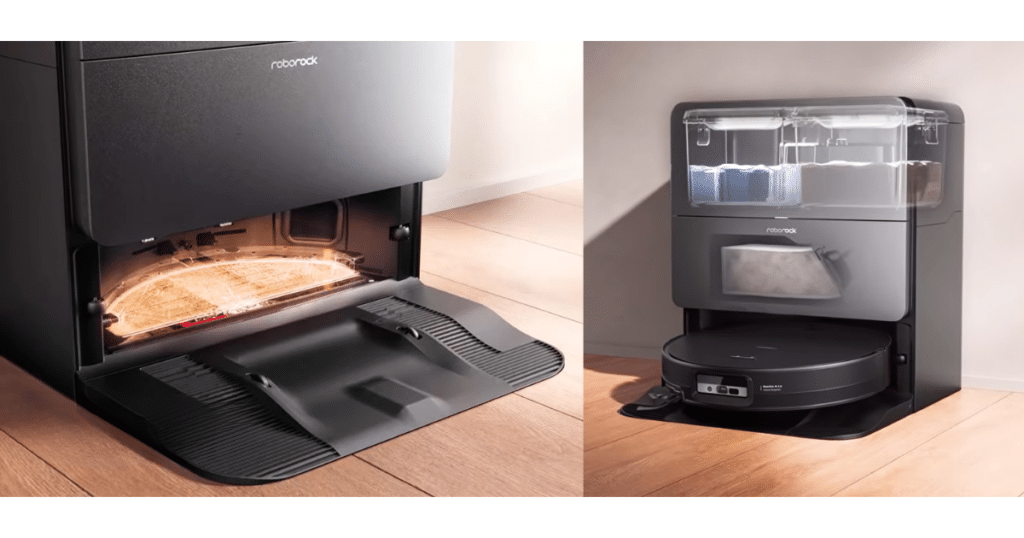
The RockDock is one of the strongest parts of the Saros 20 Sonic package.
It can wash the mop pad using water heated to 212°F and dry it using 131°F air. The dock also uses 131°F air to dry the dust channel, which is intended to reduce moisture buildup and help prevent debris from clogging the dock.
The dock also supports:
- Automatic dustbin emptying
- Automatic detergent dispensing
- Warm-water tank refilling
- Hot-water mop washing
- Heated mop drying
- Dust-channel drying
- Independent mop washing
- Mop removal for vacuum-only runs
The mop-drop system allows the robot to leave the pad in the dock when it is scheduled to vacuum carpets or complete a vacuum-only run. The dock can also wash the mop while the robot continues vacuuming, which can reduce the overall cleaning time.
Roborock App and Smart Features
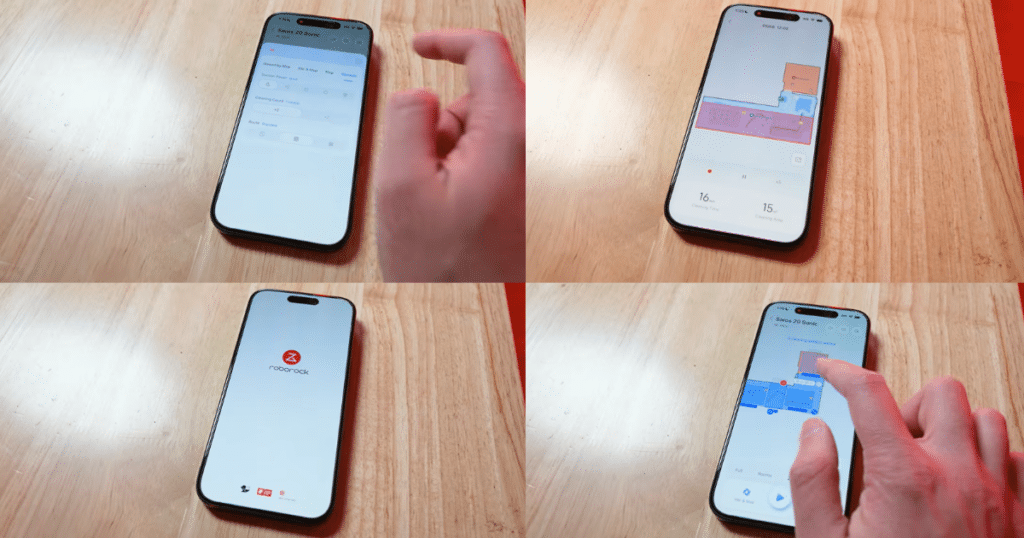
Roborock’s app remains one of our favorites because it combines a relatively intuitive interface with a large number of controls. Users can create schedules, adjust room-specific settings, define no-go zones, change suction and water levels, edit maps, and customize how the robot cleans individual zones.
Roborock has also updated its AI SmartPlan mode for users who prefer to let the robot choose its own cleaning settings and sequence.
Additional smart features include:
- Matter compatibility
- An onboard voice assistant
- Live camera viewing
- Remote monitoring
- Pet finding
- Room-specific cleaning settings
- Custom schedules and routines
The app can become detailed, but most of the advanced controls are optional. Users who prefer a simpler experience can rely more heavily on the automated modes.
Sonic Mopping System
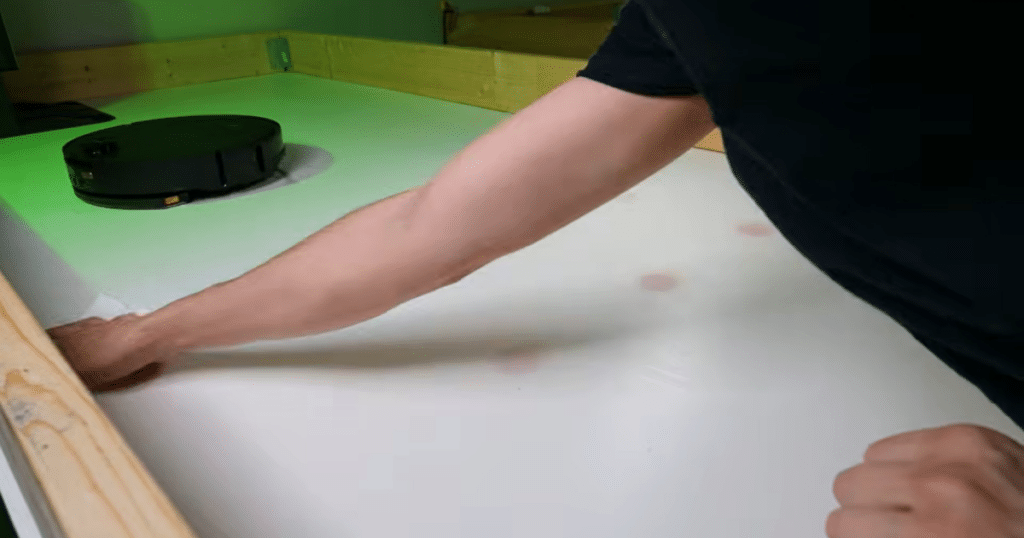
On paper, the Sonic’s mopping system is highly advanced. The flat pad vibrates at 4,000 movements per minute and applies 14 Newtons of downward pressure. It can extend toward walls and furniture for better edge coverage, and it lifts high enough to avoid wetting thicker carpets.
These are meaningful improvements over a basic drag-behind mop pad. However, the actual mopping results did not match the sophistication of the hardware.
Dried-Stain Performance
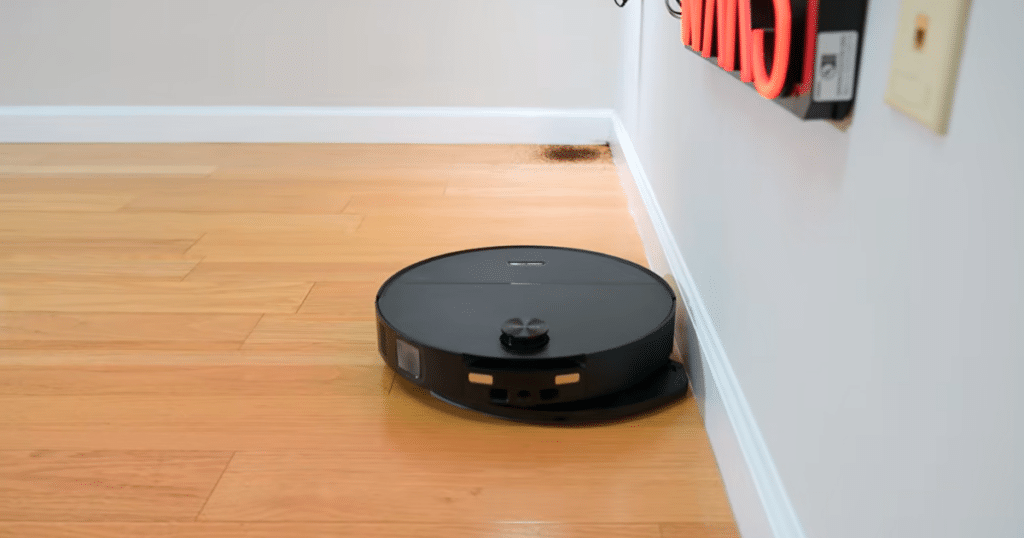
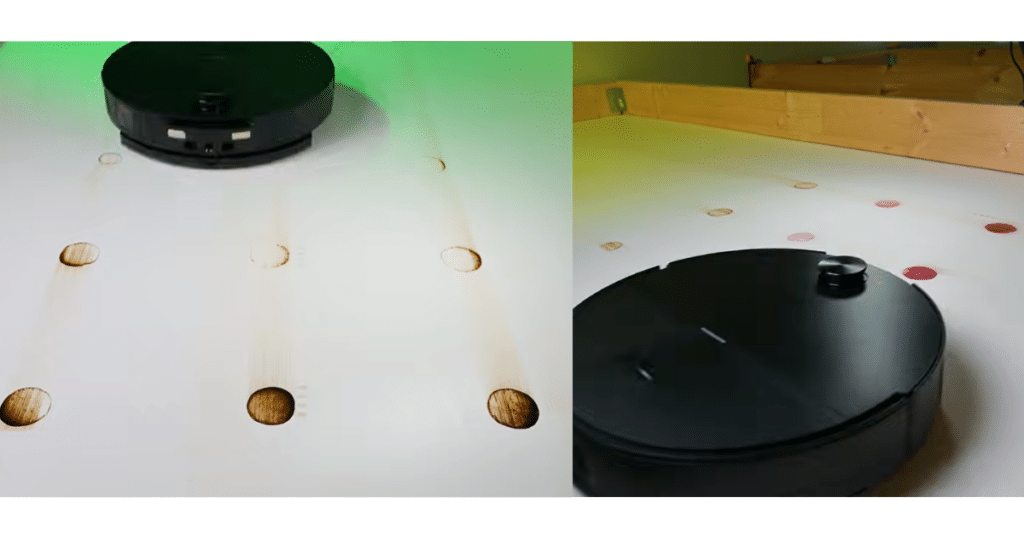
In our dried-stain evaluation, the Saros 20 Sonic received a score of 62. The standard Saros 20, with its spinning mop pads, scored 116. The Sonic was slightly better than the original Saros 10 flat-pad system, which scored 57, but the improvement was limited.
We also checked the result using our newer coffee-only evaluation and saw a similar pattern.
Flat mopping pads can work well for routine wiping, light dust, and maintaining floors between deeper cleanings. In our evaluations, however, they have consistently had more difficulty with dried stains than strong spinning-pad and roller-based systems.
Water Left Behind
The Sonic left 0.73 grams of water behind in our water-collection evaluation, compared with 0.65 grams for the standard Saros 20 and a 1.07-gram average.
Leaving less water behind is normally a positive because it can reduce streaking and allow floors to dry more quickly. In this case, though, the relatively limited water use may have contributed to the Sonic’s weaker stain-removal result.
Combined Mopping Score
The Saros 20 Sonic earned a combined mopping score of 15.8, below the 20.3 category average. The standard Saros 20 scored 25.2, giving its spinning pads a substantial advantage.
We saw a similar pattern with the previous Saros generation. The flat-pad Saros 10 scored 16.9, while the spinning-pad Saros 10R scored 20.1.
That does not mean the Sonic cannot mop. It can handle routine floor maintenance and light surface cleaning. But shoppers paying for a premium robot and prioritizing dried-stain removal may be better served by the standard Saros 20 or another strong spinning-pad or roller-mop model.
Saros 20 Sonic Mopping at a Glance
| Test Name | Saros 20 Sonic | Category Average |
|---|---|---|
| Dried Stain Removal | 62 | 108 |
| Water Left Behind | 0.73 g | 1.07 g |
| Combined Mopping Score | 15.8 | 20.3 |
Pet-Hair Pickup
Pet-hair pickup was another weaker area.
In this evaluation, we compress 2.5-inch pet hair into carpet and measure how much the robot removes. The Saros 20 Sonic picked up 78%, compared with 88% for the standard Saros 20 and an 82% category average.
This is worth distinguishing from the hair-tangle result. The Sonic was excellent at preventing long hair from wrapping around its brush, but it was less effective at lifting compressed pet hair out of carpet.
The two evaluations measure different things:
- Hair-tangle resistance measures how much hair wraps around the brush.
- Pet-hair pickup measures how effectively the robot removes hair embedded in carpet.
The Sonic performed extremely well in the first and below average in the second.
Small Dustbin
The onboard dustbin holds 228 milliliters, compared with a 377-milliliter category average.
Because the dock automatically empties the robot, this may not be a major problem during ordinary use. It could still matter in homes with a large amount of pet hair, debris, or tracked-in material, where a small bin may fill before the robot returns to the dock.
Pet Hair Management at a Glance
| Test Name | Saros 20 Sonic | Category Average |
|---|---|---|
| Pet Hair Pickup | 78% | 82% |
| Dustbin Capacity | 228 mL | 377 mL |
Roborock Saros 20 Sonic vs. Saros 20
The standard Saros 20 (see our review) and the Sonic share many of the same premium features, including excellent threshold climbing, advanced obstacle avoidance, low-profile navigation, anti-tangle brush systems, and extensive dock automation.
The Sonic did have the stronger carpet deep-clean result, scoring 92% compared with 89%, along with slightly better obstacle avoidance and battery efficiency, but the main distinction is the mop design.
The standard Saros 20’s spinning pads delivered much better mopping results in our evaluations, including a combined mopping score of 25.2 compared with 15.8 for the Sonic.
Saros 20 vs Saros 20 Sonic: Main Differences at a Glance
| Feature | Saros 20 Sonic | Saros 20 |
|---|---|---|
| Mop System | Flat vibrating sonic mop | Dual spinning mop pads |
| Carpet Deep Cleaning | 92% | 89% |
| Combined Mopping Score | 15.8 | 25.2 |
| Obstacle Avoidance | 19 / 24 | 17 / 24 |
| Battery Efficiency | 1.65 m² per 1% battery | 1.44 m² per 1% battery |
Is the Roborock Saros 20 Sonic Worth It?
The Roborock Saros 20 Sonic is a capable premium robot vacuum, but it is not equally strong in every category.
Its vacuuming performance was excellent, especially on carpet. It tied our highest threshold-climbing result, resisted long-hair tangles, provided above-average obstacle avoidance, and covered an estimated 1,225 square feet per charge. Its dock and app are also among the most comprehensive available.
The main concern is that the Sonic’s advanced flat-pad mopping hardware did not translate into strong dried-stain removal. Pet-hair pickup was also below average, and the small dustbin could be limiting in homes with heavy debris.
Even with those drawbacks, the Saros 20 Sonic earned a place on our Top 20 robot vacuum list at the time of testing. It is best suited to shoppers who place more importance on carpet cleaning, mobility, automation, and intelligent navigation than on aggressive mopping or pet-hair removal.
As with all of the robots we evaluate, we purchased the Saros 20 Sonic ourselves. Vacuum Wars does not accept sponsorships or paid placements from manufacturers, so our conclusions are based on our own results and experience with the product.
Compare Premium Robot Vacuums Referenced in This Review
See how the Roborock Saros 20 Sonic compares with the standard Saros 20 and other premium robot vacuums. Select a model to view the full comparison. You can also compare additional models using our robot vacuum comparison tool.
Top 20 Robot Vacuums
Explore Vacuum Wars’ always up-to-date rankings of the best robot vacuums, based on independent, hands-on testing. We purchase every unit ourselves and have evaluated more than 150 models, giving us a deep benchmark for cleaning performance, navigation, battery life, and advanced features like obstacle avoidance and mopping.
Roborock Robot Vacuum Buyer’s Guide 2026
If you’re overwhelmed by Roborock’s sprawling lineup, you’re not alone. This guide distills the key differences among each series—Q, S, Qrevo, and Saros—so you can decide which features are worth paying extra for and which you can skip. From budget-friendly models to premium robots with cutting-edge capabilities, we’ll help you focus on the must-know points and find a Roborock that fits both your home and your wallet. See the Guide
Roborock Saros 20 Sonic