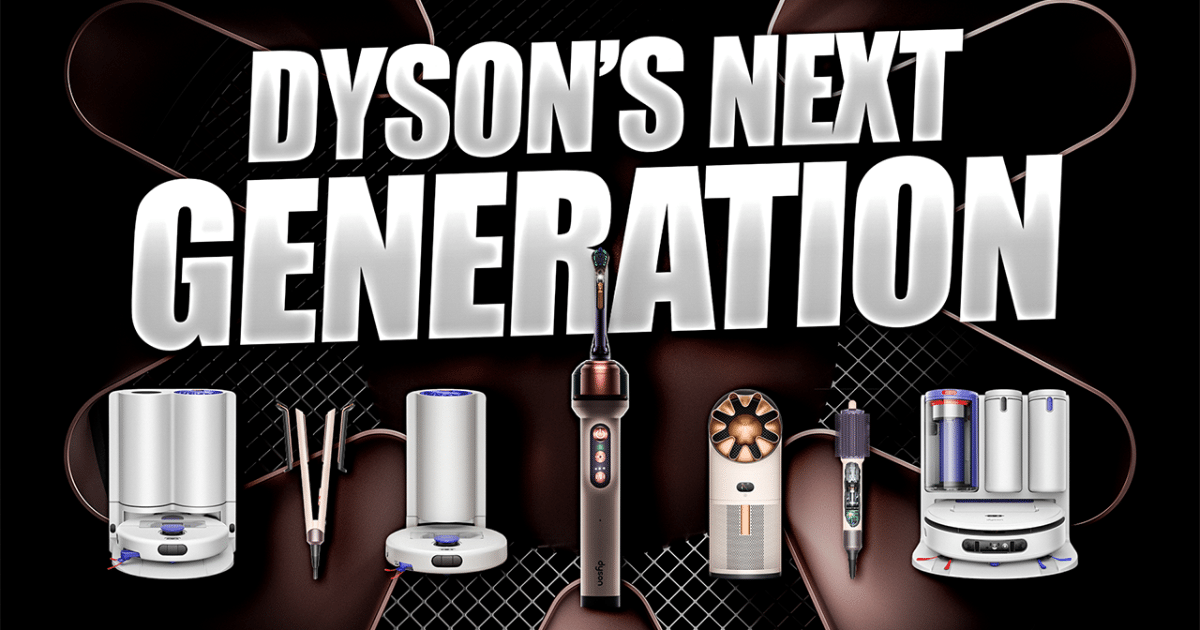
Dyson has unveiled a wide-ranging Fall 2026 product lineup spanning robot vacuums, wet floor cleaners, air purifiers, oral care, hair care, and customer support. The biggest announcement for floor-care shoppers is Nurovi, a new three-model robot vacuum family with distinct approaches to vacuuming and mopping.
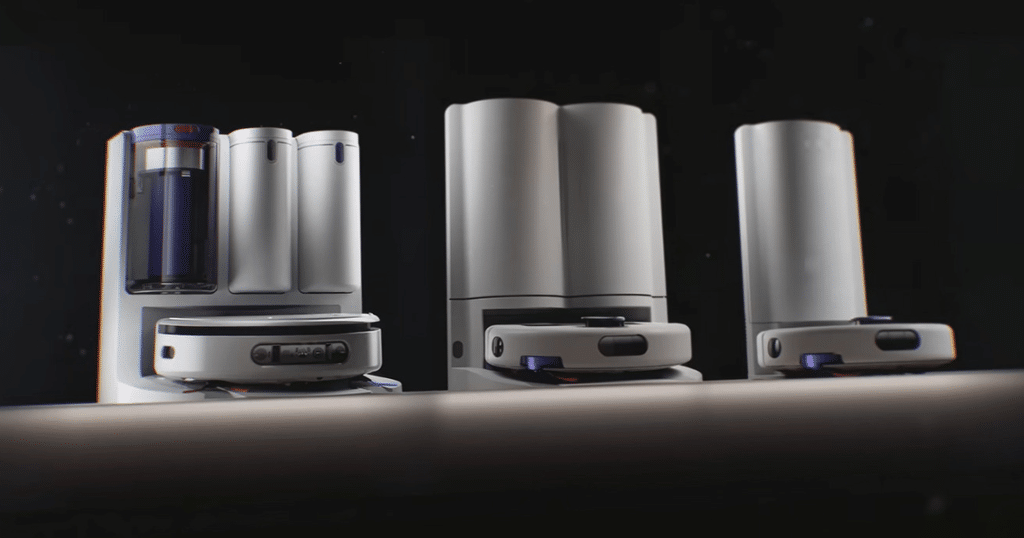
Our team recently attended Dyson Unveiled 2026 in Berlin, where we saw the new machines, spoke with a Dyson engineer, and joined a small round-table discussion with Jake Dyson. Here is what Dyson announced, starting with the R1, R2, and R3 Nurovi robots.
Dyson Nurovi Robot Vacuums at a Glance
| Model | What distinguishes it |
| R1 Nurovi Dry (Amazon) | Vacuum-only model; Twin-capture system; claimed 21,000 Pa suction |
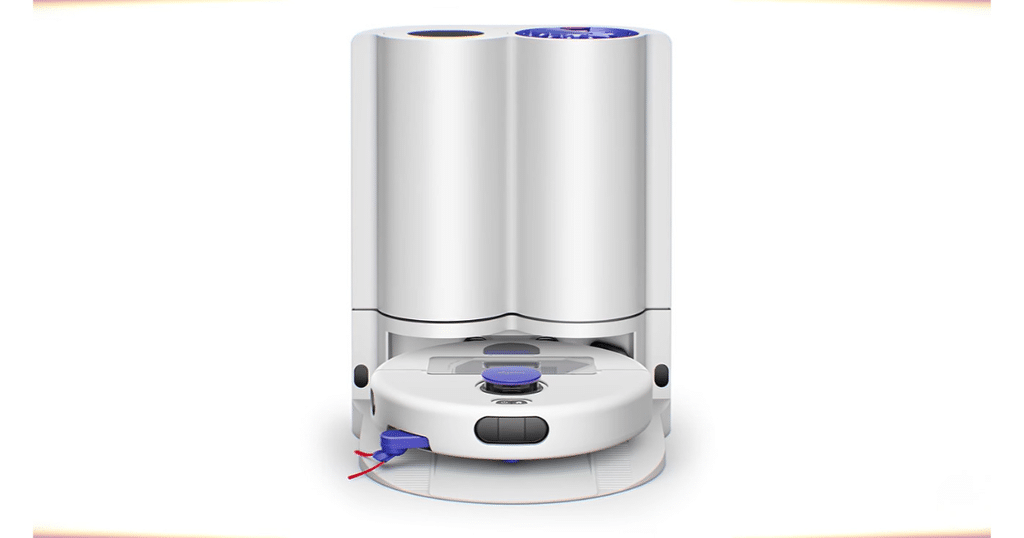
| R2 Nurovi Wash+Dry | Twin-capture vacuuming; Reuleaux-triangle mop pads; bagless cyclonic dock |
| R3 Nurovi Spot+Scrub UV (at Amazon) | Self-cleaning roller mop; UV-assisted stain detection; claimed 30,000 Pa suction |
The three robots have clearly separated roles. The R1 is the vacuum-only option. The R2 combines a vacuum-focused design with an unconventional spinning-pad mop. The larger R3 dedicates more of its hardware to advanced mopping, stain detection, and a self-cleaning roller.
R3 Nurovi Spot+Scrub UV: The Most Advanced Mopping System
Dyson R3 Nurovi Spot+Scrub UV
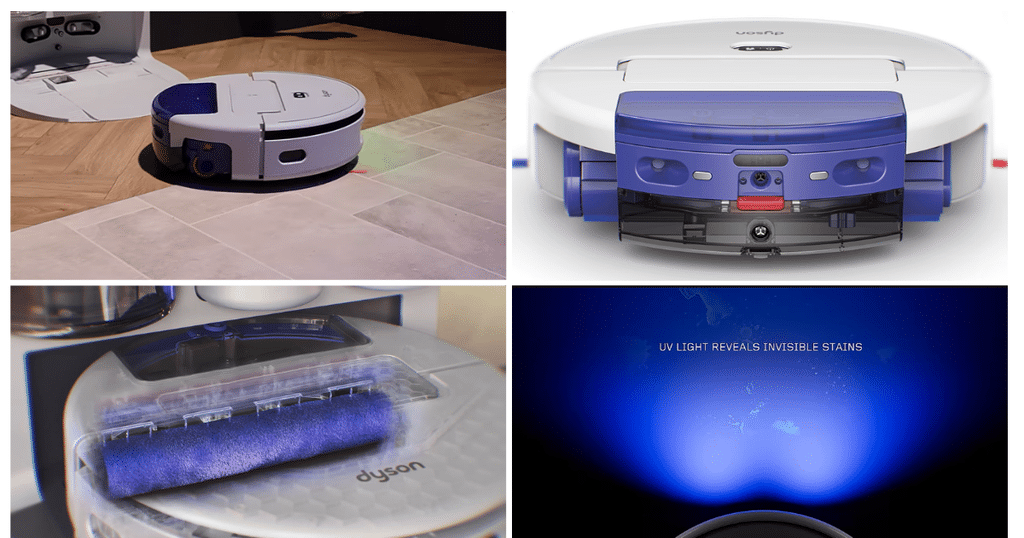
The Dyson R3 Nurovi Spot+Scrub UV combines vacuuming with a self-cleaning microfiber roller mop and a bagless, cyclonic self-emptying dock. Dyson rates suction at 30,000 Pa and says the roller uses fresh water heated to 158°F, with 12 hydration points and an extending design for edge cleaning. Its UV-assisted stain-detection system combines UV light, green illumination, cameras, and AI vision to identify residue and revisit detected stains. Vacuum Wars has not yet independently tested this model; performance claims come from Dyson. See additional info
At the top of the lineup is the R3 Nurovi Spot+Scrub UV, which Dyson says will arrive in the U.S. on September 15, 2026. It succeeds the current Spot+Scrub AI and retains the same basic roller-mop concept. Its self-emptying dock remains cyclonic and bagless, avoiding a disposable dust bag.
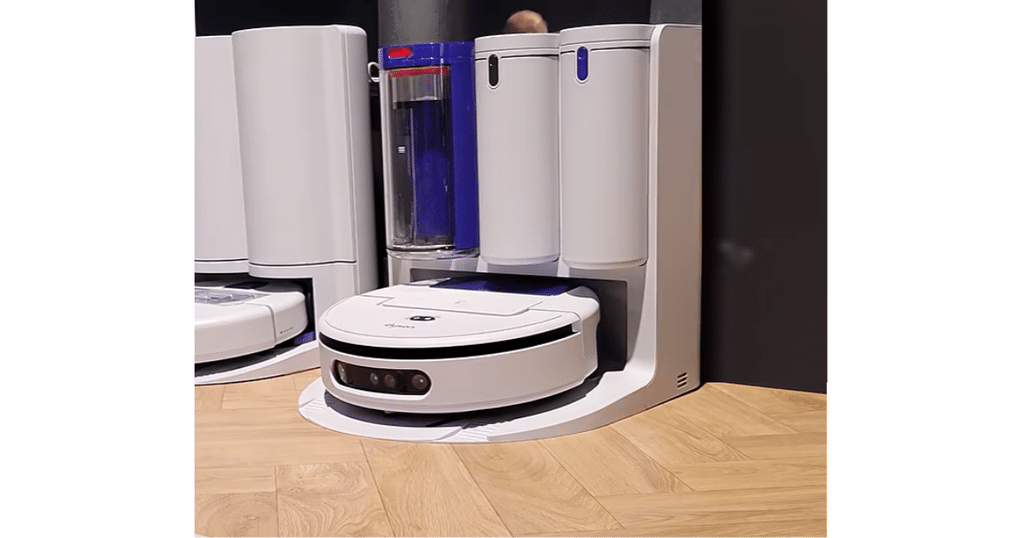
The R3 is noticeably larger than the other Nurovi robots. Dyson engineers told us the roller-mop hardware needs more internal space, which helps explain the size difference within the lineup.
A full-width microfiber roller receives a continuous supply of fresh water, cleans itself while rotating, and can extend toward walls and edges. Dyson says the new system has 12 hydration points and uses water heated to 158 degrees Fahrenheit.
The standout addition is UV-assisted stain detection. The R3 combines UV light, green illumination, cameras, and AI vision to look for stains and residue. According to Dyson, the system can identify nearly 200 types of household substances and objects, then return to a detected stain until it is no longer visible to the robot’s detection system. The goal is to find residue that can remain even when a floor looks clean to the eye.
Dyson also claims 30,000 pascals of suction, or 65% more suction pressure than the current Spot+Scrub AI.
R2 Nurovi Wash+Dry: A Different Shape for Corner Mopping
The R2 Nurovi Wash+Dry vacuums and mops, but its mop system is entirely different from the R3’s roller.
Instead of circular spinning pads, the R2 uses two Reuleaux-triangle-shaped pads. Their eccentric movement produces a more square-shaped cleaning path, allowing the pointed portion of each pad to reach farther into 90-degree corners. It is a thoughtful response to a familiar geometric limitation: round pads naturally leave some space in square corners.
Dyson also told us the pad design helps distinguish the R2 from the more elaborate R3. It costs less to build and may be sufficient for households that do not need a larger self-cleaning roller system. That is the intended positioning, but cleaning performance still needs to be tested.
For dry pickup, the R2 uses Dyson’s new Twin-capture system. Bristles direct larger debris inward while the suction path focuses on finer dust. An acoustic piezo sensor monitors dust levels, and Auto mode can adjust the robot’s behavior based on the floor type.
The R2’s dock is cyclonic and bagless. Dyson says it can hold up to 90 days of dry debris, wash the mop pads with water heated to 167 degrees Fahrenheit, and dry them with warm air.
R1 Nurovi Dry: A Robot That Only Vacuums
Dyson R1 Nurovi Dry
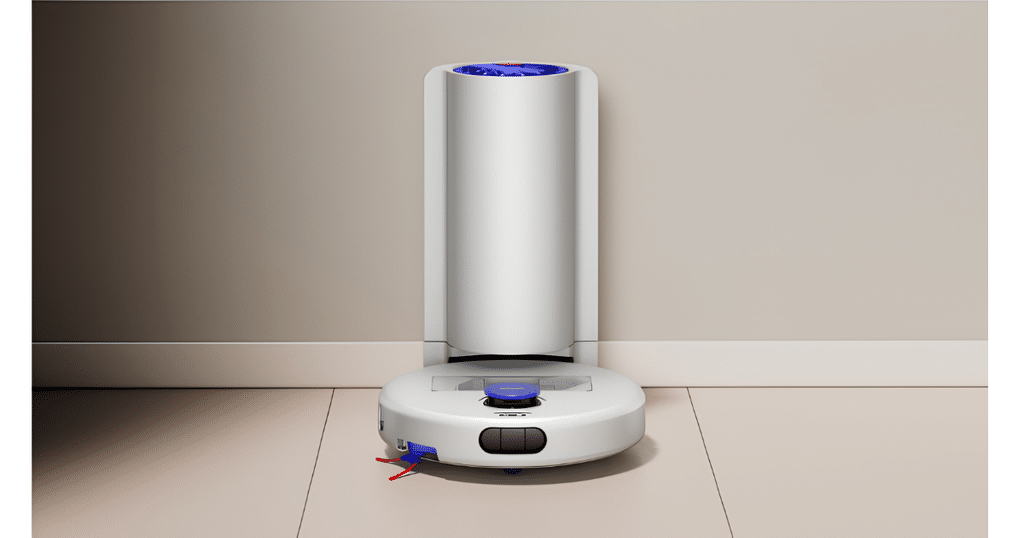
The Dyson R1 Nurovi Dry is the vacuum-only model in Dyson’s 2026 Nurovi robot lineup. Dyson rates it at 21,000 Pa of suction and uses its Twin-capture system, which combines bristles that guide larger debris inward with vacuum suction focused on finer dust and particles. The dock self-empties into a bagless 2.6 liter dustbin, providing hands-free maintenance for up to 90 days. The redesigned side brush extends toward walls and corners and are intended to reduce debris scatter and hair tangling. See additional info
The R1 Nurovi Dry is the simplest model in the family, and that is also what makes it notable. While much of the robot vacuum market has moved toward increasingly complex mopping systems, we continue to hear from viewers who want a capable robot focused only on vacuuming.
The R1 uses the same Twin-capture concept as the R2 and carries a claimed suction rating of 21,000 pascals. Dyson also redesigned the side brushes with a flexible, webbed structure between the arms. The shape is intended to guide debris toward the intake, reduce scattering, reach along walls and into corners, and limit hair tangling.
W1 PencilWash Adds a Self-Cleaning Dock
For manual floor care, Dyson announced the W1 PencilWash with Dok, the next generation of its slim wet floor cleaner. The basic idea is unchanged: a lightweight machine that washes hard floors with a fresh-water roller system.
The W1 has a denser, more absorbent roller with a claimed 84,000 microfiber filaments, plus nylon bristles designed to help collect hair. Dyson also redesigned the waste system.
The most practical update may be the Dok base. After a cleaning session, the machine can clean its own roller in the dock, addressing one of the less pleasant maintenance tasks associated with wet floor cleaners. Dyson expects the W1 PencilWash to arrive in fall 2026 for $349.
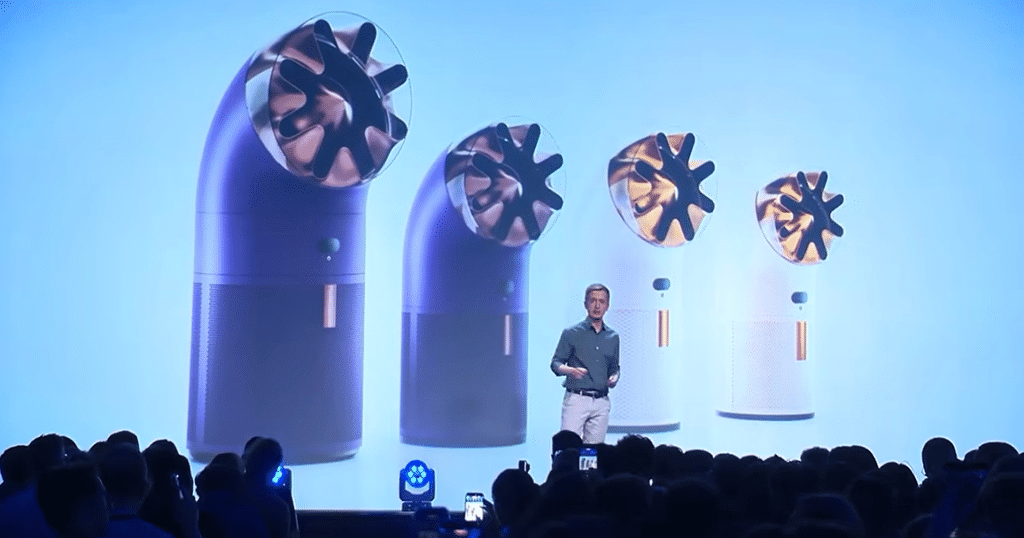
Dyson Expands the HushJet Air-Treatment Lineup
Dyson also introduced three larger HushJet machines. The HushJet Big+Quiet Cool Pure+ Formaldehyde is the flagship, designed for larger and connected spaces with three-stage filtration and formaldehyde destruction.
Under controlled test conditions, Dyson claims 99.999% filtration of particles as small as 0.01 microns. The company also says the machine can produce up to 334 liters per second of purified air while reaching 24 decibels in Sleep mode.
Two models sit below it. The HushJet Pure Cool+ Formaldehyde combines purification with fan-driven personal cooling. The HushJet Hot Cool Pure+ adds heating, and Dyson describes it as the company’s most powerful three-in-one purifier.
Important distinction: Dyson products with ‘Cool’ in the name use fans, not refrigeration. They can move air across the user, but they do not work like air conditioners or lower the room temperature through active cooling.
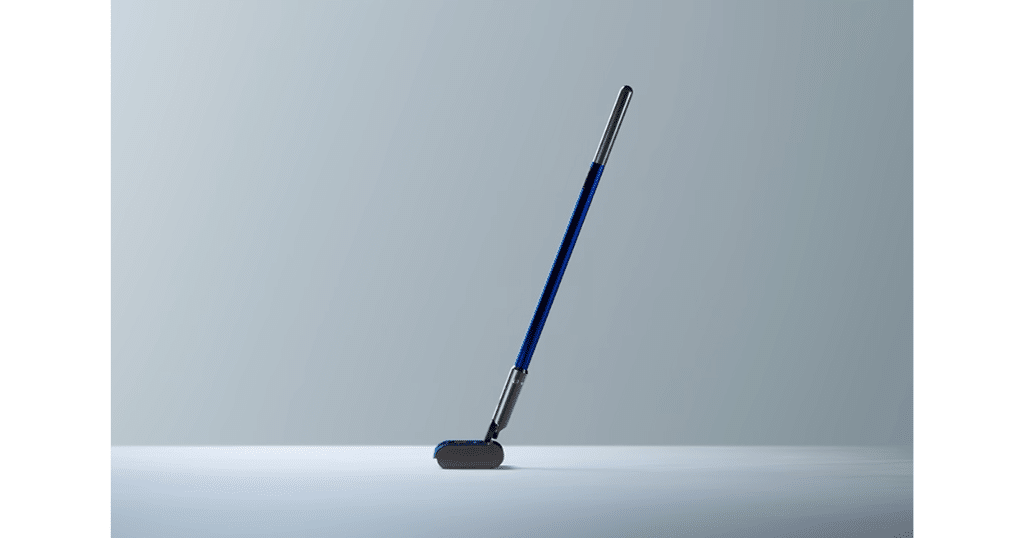
CameraJet Takes Dyson Into Electric Toothbrushes
One of the event’s most unexpected products was the Dyson CameraJet, the company’s move into electric toothbrushes. It uses a small camera and machine learning to identify gaps between teeth, then directs a precision jet of liquid into those gaps while the user brushes.
The camera can also provide a live view through the MyDyson app, along with cleaning guidance and coverage information. The concept applies Dyson’s work in cameras, motors, fluid dynamics, and connected devices to a category that is entirely new for the company.
New Airsmooth and Corrale CoolShine Hair Tools
Dyson announced two new hair-care products. Airsmooth is the company’s first dedicated hot-air styling brush. It uses PivotFlex and anti-snag bristles to dry, stretch, smooth, and shape hair in one tool.
The Corrale CoolShine uses heat-extracting copper pipes that contain sealed distilled water. As the water inside the pipes vaporizes, Dyson says it draws heat away from the hair during styling. The company claims this can leave hair cooler after each pass while reducing heat damage and increasing shine.
My Dyson Support Adds Concierge Help, Repairs, and Loaners
Dyson rounded out the event with a broader service program called My Dyson Support. Dyson Concierge offers real-time setup and product guidance. Dyson Service Bar provides in-store diagnostics and repairs at participating locations. The Dyson Loan Promise can provide a temporary Dyson machine when an eligible product cannot be repaired immediately.
For the vacuum industry, this may be one of the more consequential announcements to watch. Robot vacuums and premium floor-care products are becoming more complicated, so better diagnostics, easier repair access, and loaner products could improve the ownership experience if Dyson executes the program well and makes it broadly available.
What Vacuum Wars Will Watch Next
The three Nurovi robots are the main products we will be watching. The R3 has the most advanced mopping and stain-detection concept. The R2 brings one of the most unusual mop-pad designs we have seen. The R1 gives vacuum-only buyers a new option from a major brand.
Those engineering ideas are interesting, but they are not the same as verified cleaning performance. We have not independently tested the new machines, so the performance claims above come from Dyson. Once we can run the new floor-care products through our tests, we will publish full reviews showing how they perform in practice.
FAQ
Frequently asked questions
What is Dyson Nurovi?
Nurovi is Dyson’s new three-model robot vacuum family for fall 2026. It includes the vacuum-only R1 Nurovi Dry, the R2 Nurovi Wash+Dry with spinning mop pads, and the R3 Nurovi Spot+Scrub UV with a self-cleaning roller mop and UV-assisted stain detection.
What is the difference between the Dyson R1, R2, and R3 Nurovi robots?
The R1 is a vacuum-only robot. The R2 vacuums and mops with two Reuleaux-triangle-shaped pads. The R3 uses a full-width self-cleaning roller mop and adds UV-assisted stain detection. The three models also differ in size, claimed suction, dock functions, price, and release timing.
How much do the Dyson Nurovi robot vacuums cost?
Dyson announced the R1 Nurovi Dry at $549, the R2 Nurovi Wash+Dry at $699, and the R3 Nurovi Spot+Scrub UV at $1,199. Prices and availability should be confirmed at publication and may change.
When are the Dyson Nurovi robots available?
The R2 launched at Costco on September 3, 2026, according to Dyson, and the R3 is scheduled for a U.S. release on September 15, 2026. The supplied announcement did not include a release date for the R1, so that timing should be verified before publication.
Has Vacuum Wars tested the Dyson Nurovi robots?
Not yet. Vacuum Wars saw the products at Dyson Unveiled 2026 and spoke with Dyson representatives, but the new robots have not completed our independent testing. Performance claims in this article are attributed to Dyson.
Is a Dyson HushJet Cool purifier an air conditioner?
No. Dyson’s HushJet products with “Cool” in the name are fan-driven air purifiers. They move air across the user but do not refrigerate the room like an air conditioner.